Language
You can read the magazine in one of the following languages

6-min read

 Bookmark now

 Copy Link
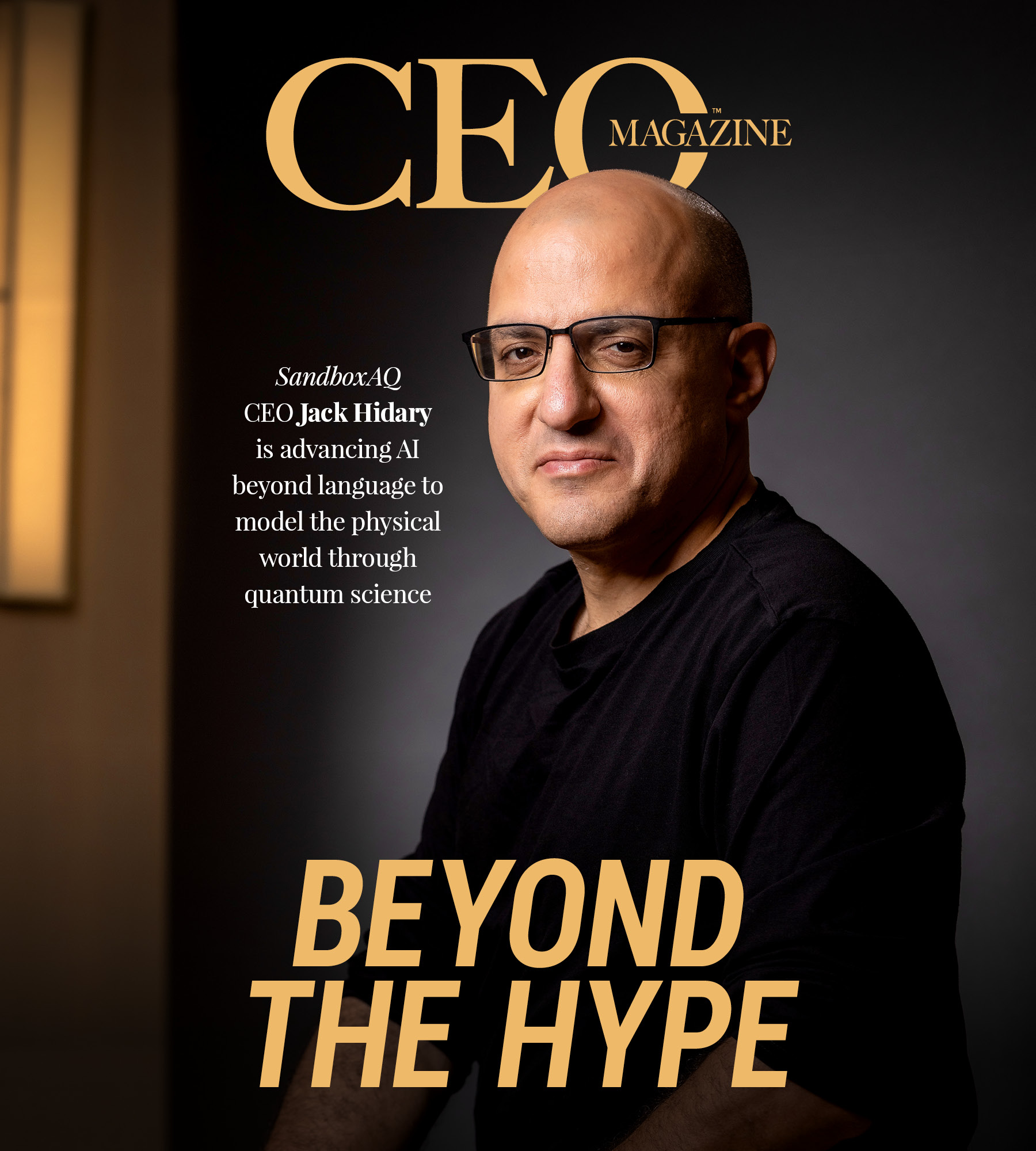
SandboxAQ doesn’t fit neatly into the dominant AI conversation. While much of the industry has focused on language – what machines can say, generate or summarize – it is working on something far more consequential: teaching machines to understand the physical world itself.
Spun out of Alphabet’s moonshot ecosystem, the company sits at the intersection of AI and quantum science, building predictive models rooted in physics, chemistry and biology. And its ambition is lofty: SandboxAQ doesn’t want to simply mimic human expression, it wants to anticipate how real systems behave, whether that’s a molecule binding to a protein, a material storing energy or an aircraft navigating safely when GPS fails.


Interestingly, its direction was shaped long before SandboxAQ even existed. As a researcher at the United States National Institutes of Health (NIH), Jack Hidary, now CEO of the AI and quantum technology company, spent time inside the organization’s clinical core, watching promising ideas struggle to survive the journey from theory to application.
“I saw the difficulty and the challenges of developing a novel drug, a novel therapeutic, a novel diagnostic – things that mostly did not work,” Hidary tells The CEO Magazine.
Even with world-class resources, progress was slow, uncertain and often unsuccessful. That experience exposed a gap, certainly not in ambition, but in tools.
Alongside his scientific work, Hidary has been coding since childhood. By the time he was at NIH, he was already applying early neural networks to brain imaging, using computation to detect patterns too complex for traditional methods. What was missing, he realized, was the ability to apply those techniques reliably to the rest of the world.
That opportunity emerged when Alphabet, the American multinational tech conglomerate that owns Google, began assembling its moonshot division. Hidary joined just months before its launch, drawn to the environment that was designed for both bold and commercially sustainable ideas.
“The mission of SandboxAQ is to create deep impact at scale, initiatives that could change the world. That marriage of audacious high-impact goals with a large global business attracted me,” he recalls, reflecting on the early, deliberately exploratory years in the business when ideas were tested, thrown away and rebuilt.
“I discarded many, many initial ideas. To get to the good stuff, you have to get through the thick rind.”


What did endure, however, was a belief that the future of AI wouldn’t be built on language alone. SandboxAQ would focus instead on quantitative AI – systems trained on physics, chemistry, biology and real-world data – and quantum-level understanding.
“If we’re going to create new kinds of medicines, then we need to understand the world at the subatomic level,” Hidary explains. “That lock and key happens at the electron level.”
After years of experimentation and false starts, the team achieved a world-first in large-scale computational chemistry at the electron level. The milestone triggered SandboxAQ’s spin-out as an independent company, with its name reflecting its foundation: A for AI and Q for quantum.
Despite his scientific background, Hidary admits his leadership instincts were shaped far away from research labs. Growing up in Brooklyn, New York, he was surrounded by small business owners.
“Everybody around me was entrepreneurial,” he notes. “My uncle had a small shoe company and each of my parents had joined a family business or started their own small business.”
That exposure left a lasting imprint. By his teens, Hidary was already launching ventures of his own, including selling books through a community center, turning his family home into a makeshift fulfillment center.
“My house became the warehouse, much to my mom’s consternation, since there was no room left for the rest of us,” he muses.
“But I knew early on that I was going to be an entrepreneur. As much as I love research, I knew I wanted to build something that was global in nature and, hopefully, impactful for billions of people.”
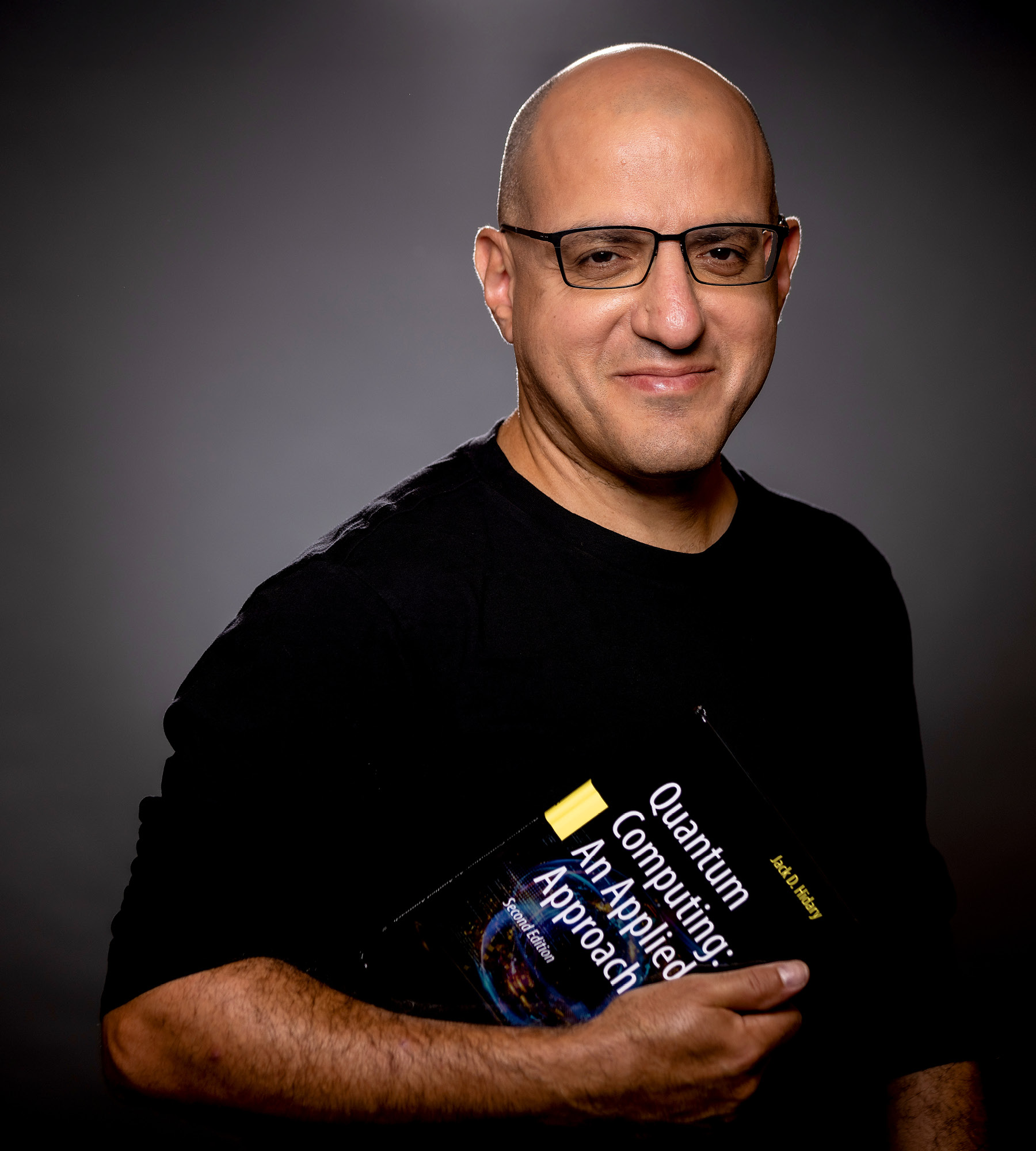

At SandboxAQ, that early influence became a defining cultural principle.
“One of our principles is owner mentality,” Hidary says. “Everyone is an owner because everyone has shares in the company.”
There, ownership is reinforced structurally and symbolically. Every month, employees nominate peers for an ‘owner mentality’ award, recognizing those who step up to solve problems without being asked.
“That’s what you need,” Hidary insists. “When you want to launch a company and get it going, you really need that ownership mentality.”
One of SandboxAQ’s most high-profile breakthroughs emerged from that culture of experimentation. The idea behind AQNav – a GPS-independent navigation system – came from a PhD resident from Harvard who was part of the company’s early residency program.
The breakthrough was in a new generation of quantum sensors capable of detecting Earth’s magnetic field at room temperature. Unlike earlier cryogenic sensors, these were portable, low-power and scalable, Hidary explains.
The question quickly became where it could matter most. Navigation stood out as a critical vulnerability.
“GPS had become so successful that ironically, it became a weakness on the world stage in that it became a single point of failure – it’s easy to disrupt,” he points out. “Anyone reading this article today can get equipment to jam a GPS signal.”


Even more dangerous is spoofing – the act of feeding false coordinates to aircraft or drones.
“Each year, hundreds of thousands of flights all over the world experience GPS disruption,” Hidary says, citing incidents affecting commercial and military aviation and world leaders alike.
AQNav combines quantum sensing with quantitative AI, which is a key distinction.
“Our AIs are not trained on bags of words,” he says. “They’re trained on data; not a model you could write a poem with but a model that you can navigate a plane with in real time.”
And they’re trusted. The technology has since been validated through extensive testing with the United States Air Force, Airbus and other partners, with published results confirming successful GPS-denied navigation across tens of thousands of kilometers.
Beyond SandboxAQ, Hidary is increasingly focused on education and workforce readiness.
“Our education system is not fit for purpose,” he says bluntly. He worries that traditional models are failing to prepare people for an AI and quantum-driven future marked by both promise and disruption.
Inside the company, continuous learning is encouraged – from coding and mathematics to new scientific domains. Hidary himself has taught AI, Python and linear algebra, with recorded courses still circulating inside Google.
“It’s very satisfying to know that people are benefiting from those courses,” he confirms.
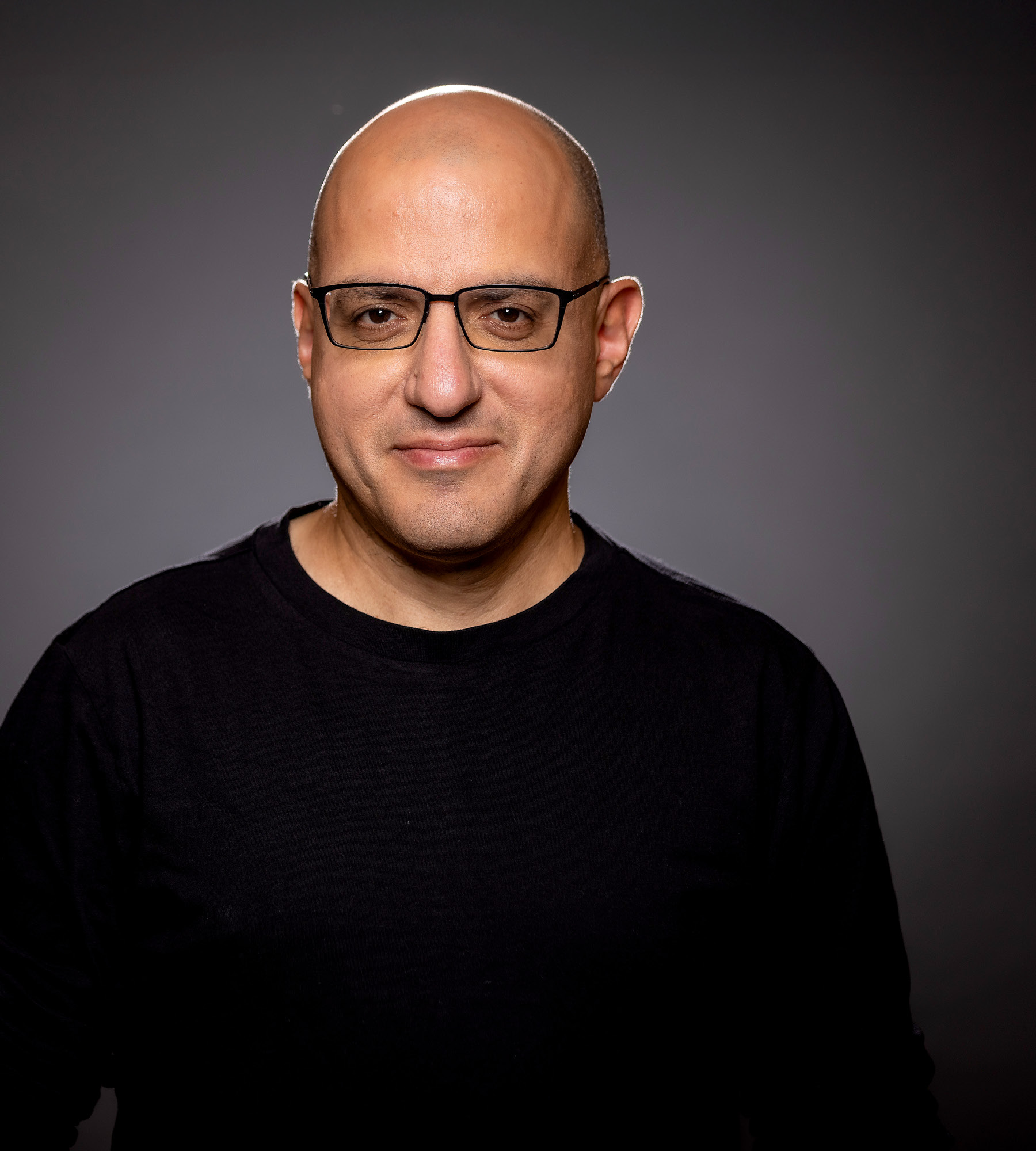

More broadly, Hidary’s work with XPRIZE has reinforced the value of long-term thinking. He points to the ‘100-year test’ – imaging the world a century from now and then working backward.
“There’s nothing special about humans 100 years from now,” he notes. “We might as well be those humans right now.”
That mindset is embedded in the company’s name.
“The reason we call this company SandboxAQ is to remind ourselves of the child’s mind, looking at problems in a fresh and novel way,” Hidary says.
 RELATED ARTICLES
 4-min read
6-min read



 Home
Home
 Podcasts
 Covers
 Be Featured
 Community