Language
You can read the magazine in one of the following languages
3-min read

 Bookmark now

 Copy Link
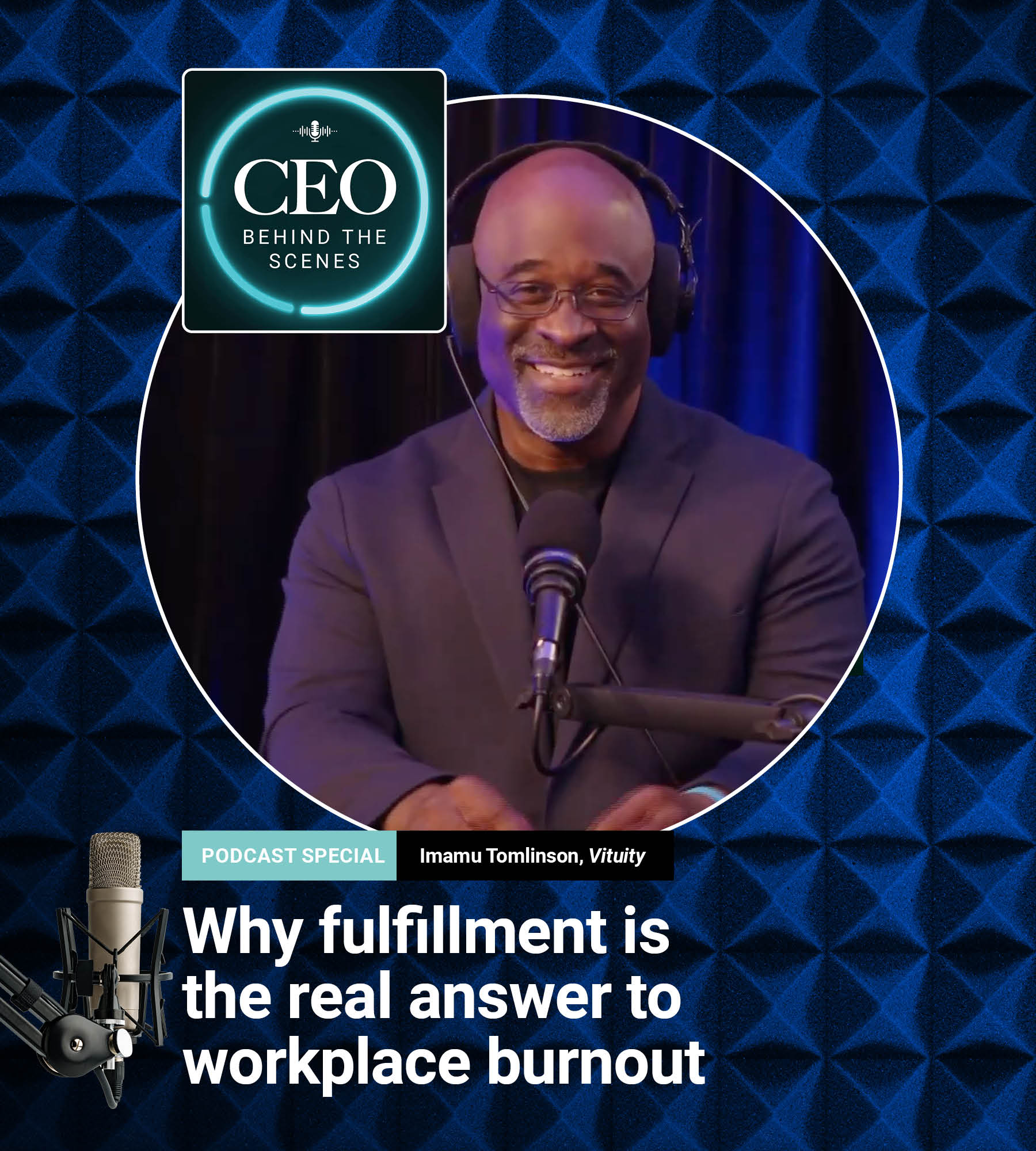
Burnout has become a catch-all diagnosis for modern workplace malaise. Long hours, constant pressure and endless change are often blamed for disengaged teams and exhausted leaders. But according to Imamu ‘Mu’ Tomlinson, CEO of Vituity, this way of thinking ignores the real cause.
“I don’t even like the term burnout,” Tomlinson says. “The right term is fulfillment.”
Tomlinson is a practicing emergency physician and leader of one of the largest physician-owned partnerships in the United States. Speaking on CEO: Behind the Scenes, he challenges the way organizations think about work, motivation and resilience.
His argument is simple: people don’t burn out because they work hard. They burn out because the work stops meaning something.
For Tomlinson, this belief isn’t theoretical. His leadership philosophy has been forged on the front line – in emergency departments, moments of personal adversity and a career that nearly ended before it began.
After surviving a house fire during medical school that left him with burns across 20 percent of his body, his perspective on pressure, pain and purpose shifted permanently.
“When you compare anything to being on fire, your gratitude changes,” he says. “Adversity gives you a sense of duty and responsibility when you’re in leadership moments.”

“People don’t burn out because they work hard. They burn out because the work stops meaning something.”
That sense of responsibility is why Tomlinson still practices medicine while serving as CEO. At Vituity, executives don’t lead from a distance. They work alongside clinicians, making decisions with a healthy respect for their real-world consequences.
“We believe you can’t ask people to do things you wouldn’t be willing to do yourself,” he says. “Being close to patients and providers changes how you think.”
While much of healthcare innovation is driven by technology teams far removed from clinical reality, Tomlinson flips the model. At Vituity and its venture arm, Inflect Health, innovation starts with frontline problems and scales outward from there.
But it’s in his thinking about people – not platforms – that Tomlinson is most disruptive. When conversations turn to burnout, engagement or satisfaction, he believes leaders are measuring the wrong things.
“If you’re worried about compensation, there’s a base level – you’ve got to pay people,” he says. “But above that, if you think burnout comes from workload alone, you’re missing the mark.”
The real differentiator, he argues, is fulfillment. Fulfilled people can be tired, stretched and challenged – and still deeply committed to what they do.
“I’m never satisfied as a parent,” he explains. “But I am fulfilled. When my kids were sick, when I was exhausted – I was still fulfilled. Burnout is much harder when fulfillment is there.”

“You have to ask different questions if you want different answers.”
That insight has led Vituity to rethink how it listens to its workforce. Traditional engagement surveys are being replaced with questions that probe meaning and impact instead.
“Do you wake up worried, or do you wake up ready to change the world?” Tomlinson asks. “You have to ask different questions if you want different answers.”
For leaders across any industry, the implication is clear: Preventing burnout isn’t about reducing ambition or eliminating pressure. It’s about reconnecting people to why their work matters – and giving them real opportunities to make an impact.
Tomlinson’s advice is characteristically blunt: stop putting people in boxes, stop chasing textbook leadership models and stop assuming there is a single right way to lead.
“Don’t pick winners and losers before the race is even run,” he says. “Be a less-than-one-percenter.”
In a world obsessed with balance, ease and optimization, Tomlinson offers a tougher, more human proposition: Work will always be demanding. Leadership will always carry weight. But when people are fulfilled, they don’t run from the challenge – they rise to it.

Listen to the latest episode of our CEO: Behind the Scenes podcast with Imamu Tomlinson on Amazon, Apple or Spotify.
 RELATED ARTICLES


 Home
Home
 Podcasts
 Covers
 Be Featured
 Community