Language
You can read the magazine in one of the following languages

7-min read

 Bookmark now

 Copy Link
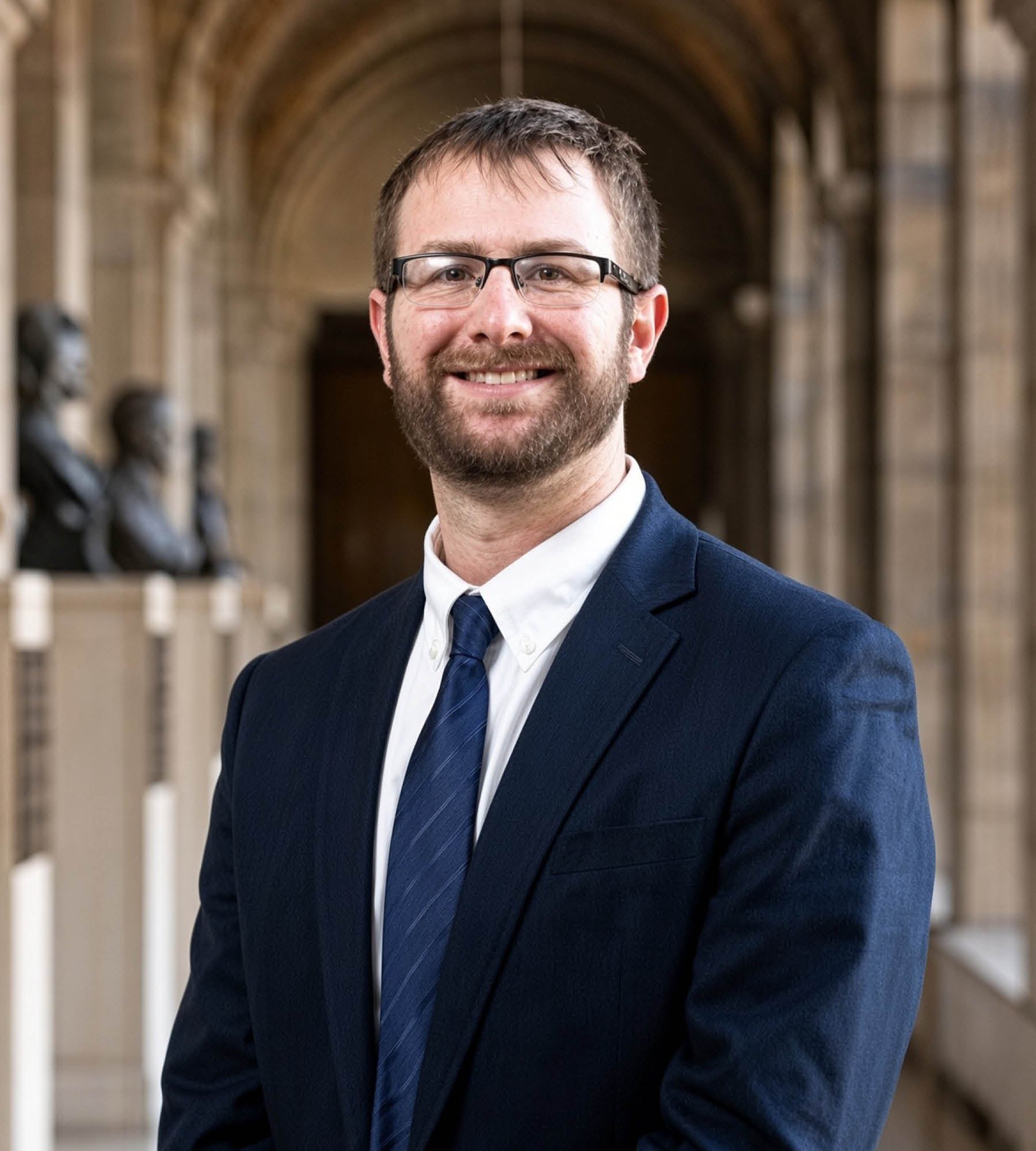
Ashish Gandham has spent much of his career learning how to feel at home in new places. From India to London and Singapore, each new market has required him to listen closely, understand its people and resist the temptation to arrive with all the answers.
Now as Managing Director of Suntory Global Spirits Oceania, his latest chapter has brought him to Sydney.
“Is there anything to complain about when you live in a city like Sydney? It is one of the best cities in the world,” he tells The CEO Magazine.
The move marks a significant new chapter for Gandham – and for a business with more than 125 years of history behind it. Founded in Japan by Shinjiro Torii, Suntory has grown into one of the world’s leading beverage companies, spanning premium spirits, soft drinks, coffee, water and wellness brands.
Today, the business remains publicly listed on the Tokyo Stock Exchange while continuing to be shaped by the Torii family, whose long-term approach has balanced business success with a commitment to giving back to society. That heritage is now meeting a new market in Oceania.
Launched in July 2025, Suntory Oceania is Suntory’s first fully integrated multi-beverage business globally, bringing together premium spirits and non-alcohol portfolios under a single operating model.

Suntory Oceania’s new US$400 million-plus multi-beverage facility in Queensland, Australia
“We want to create lasting impact for our consumers, customers and the communities where we operate.”
The roughly US$2.1 billion business spans premium spirits, ready-to-drink (RTD) beverages, juice, water, soft drinks, coffee, energy and sports drinks, supported by a US$282 million-plus carbon-neutral manufacturing and distribution facility in Queensland, Australia.
In its first year, Suntory Oceania has launched 21 new products, increased production by 36 percent and established itself as Australia’s second-largest RTD supplier. And, according to Gandham, the company is only getting started.
“We have a massive ambition to be the biggest spirits player in the market,” he says.
“But beyond scale, we want to create lasting impact for our consumers, customers and the communities where we operate.”
Gandham’s career began far from the consumer products industry. A computer engineer by training, he spent a year working in IT before it hit him – life behind a desk was not where he belonged.
“What I really enjoyed was interacting with people,” he says.
This realization led him to Johnson & Johnson and later to senior positions at Diageo across India, Singapore and London. He joined Suntory Global Spirits in 2019 and most recently led its global travel retail business.
Across more than two decades in fast-moving consumer goods, Gandham learned that leadership must change with its environment. Working with a rural business owner in India requires a different approach from dealing with a major British retailer or establishing operations alongside partners in South-East Asia, he points out.

Gandham leads Suntory Oceania alongside Dai Minato, CEO of Suntory Beverage & Food Oceania
“It’s always about the people around you that help you become successful, the wider team and ecosystem.”
But regardless of location, each new market reinforced the same lesson: The best leaders enter unfamiliar situations with curiosity rather than certainty.
“I don’t have all the answers,” he admits. “But that’s a good starting point, because if I walk into a situation thinking I know everything, then that’s it. I’m probably missing out on the insights that matter most.”
Those experiences also helped to cement his belief that no executive succeeds alone.
“It’s always about the people around you that help you become successful, the wider team and ecosystem,” he says.
The philosophy aligns closely with Suntory’s culture. Gandham points to the Japanese concept of Yatte Minahare which encourages people to take bold action and dream big, and he believes this spirit of ambition will be critical as Suntory Oceania enters its next phase.
Rather than settling for established ways of working, the company encourages its people to keep pushing boundaries and pursuing what’s possible.
“The freedom to fail is built into the DNA of the company,” he insists. “It’s okay to try and if it fails, you just change the approach and try again.”
Gandham sees it as his responsibility as a leader to establish an ambitious destination while giving employees the confidence and freedom to determine how the business gets there.
“They will own the ambition,” he says. “Sometimes our teams will push us harder, and that is the aspiration that we have for the business.”
Gandham describes Australia as a market with tremendous potential, despite the headwinds facing consumers and the broader beverage industry.
He’s particularly struck by the resilience of Australia’s bars and restaurants amid cost-of-living pressures.
“I have not seen any other market, whether Europe, Asia or the Americas, behave like this,” he points out. “It’s very unique to this market.”

The Ojira River Spring at Suntory’s Hakushu Distillery in Japan
“The freedom to fail is built into the DNA of the company.”
Gandham believes it comes down to the importance Australians place on shared experiences. Going out for a drink is less about drinking than it is about spending time with friends and enjoying life. That focus on connection, coupled with the growing influence of Japanese food, drink and hospitality in Australia, presents a compelling opportunity for Suntory.
“Japan is having a moment,” he says. “As Australians look to do things together, we are positioned to win in terms of bringing the right products and experiences to the consumer from a Japanese lens.”
For Gandham, understanding what consumers choose is only part of the equation. Increasingly, he believes, the more important question is why they make those choices in the first place.
Across categories, consumers are becoming more deliberate in how, when and where they spend their time and money. Understanding the motivations behind those choices is central to Suntory’s concept of Seikatsusha. Rather than reducing people to demographics and behavioral data, it encourages the business to bring a whole-person perspective.
“Seikatsusha asks us to go beyond making the consumer a data point,” Gandham says. “We must go beyond the insights.”

A sample of Suntory’s Japanese premium spirits
“At Suntory, we believe we need to give back more than we take.”
The next level, he explains, is understanding how consumers feel when they make a choice and what motivates them to return to that experience.
“If you can get an understanding of that feeling and anchor to it, then you no longer have to give them a reason to buy,” he says.
This whole-person perspective is what makes Suntory’s multi-beverage model so powerful. A consumer may choose an energy drink, water, coffee, soft drink or whisky at different points throughout the day. By understanding those moments end-to-end, the business can deliver richer consumer insights and offer customers a uniquely comprehensive beverage portfolio across every occasion.
“The same consumer toggles between, ‘I want to drink a hydration drink or an energy drink or an alcoholic beverage’, so we have to understand them end-to-end,” Gandham confirms.
Suntory’s growth ambitions are backed by substantial investment, including its roughly US$282 million manufacturing facility in Queensland, Australia. Yet Gandham is equally focused on how that growth is achieved.
Suntory Oceania increased production by 36 percent while reducing Scope 1 and 2 greenhouse gas emissions by 55 percent against its 2019 baseline, reaching its 2030 reduction target five years early. Recycled materials now account for 45 percent of its product packaging.
The facility operates as a fully carbon-neutral site and is setting a new benchmark for sustainable manufacturing. Supported by rooftop solar, biomass technology and a power purchase agreement, the facility reflects Suntory’s belief that growth and environmental stewardship should go hand in hand.
“At Suntory, we believe we need to give back more than we take,” Gandham says.

“We want to be known for the quality of our products, the quality of innovation and the quality of partnership that we bring.”
Water is central to that commitment. Under its Mizu Mirai (‘Water Future’) platform, Suntory is bringing together research, replenishment and education initiatives designed to strengthen long-term water resilience in Queensland. As part of the program, the company announced a US$700,000, three-year research partnership with Griffith University’s Australian Rivers Institute, its largest local water commitment to date.
The partnership will help build understanding of how climate change, shifting rainfall patterns, drought and flooding are reshaping Australia’s river and catchment systems. Suntory is also working toward replenishing 100 percent of the water used at its manufacturing facility through projects aimed at improving catchment health and supporting long-term water security in Queensland’s Lockyer Valley.
Through its Mizuiku water education program, delivered in partnership with Earthwatch Australia, the company is helping inspire the next generation of water stewards across South-East Queensland.
These programs, Gandham insists, are more than a way to tick a box for corporate responsibility initiatives – something that became abundantly clear to him on his visits to Japan. There he witnessed an affection people held for Suntory because of the way the company had woven itself into the society through water stewardship, sport, culture and music.
Gandham now wants the Oceania business to build a similarly meaningful legacy.
“We want to be known for the quality of our products, the quality of innovation and the quality of partnership that we bring,” he concludes.
 RELATED ARTICLES
 5-min read
4-min read
 SPOTLIGHTS ON LEADERS


 Home
Home
 Podcasts
 Covers
 Be Featured
 Community