Language
You can read the magazine in one of the following languages

5-min read

 Bookmark now

 Copy Link
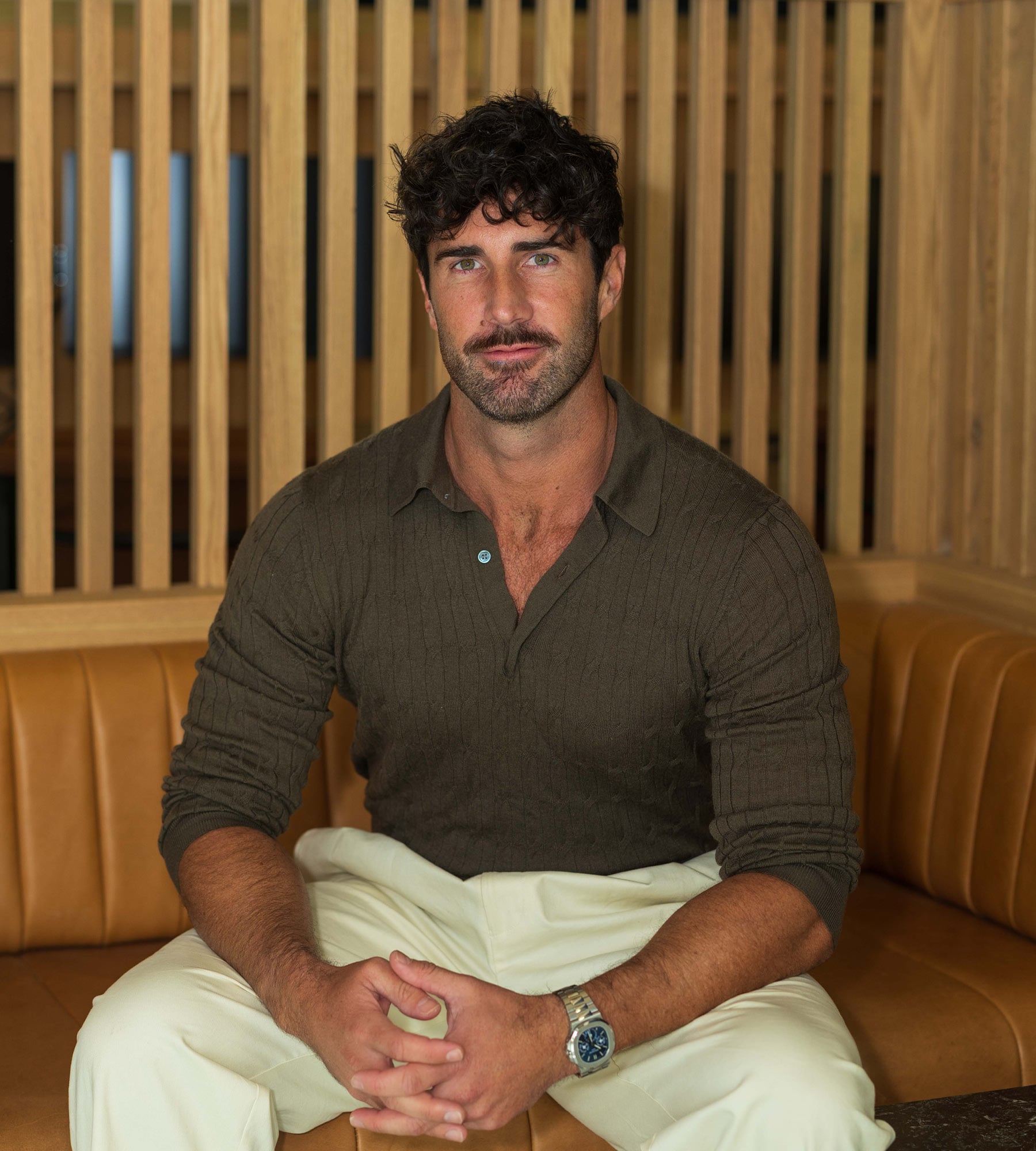
When Steve Boland joined Acrow 12 years ago as CEO, he knew he was stepping into a challenge – but even he was surprised by what he found. Weighed down by legacy issues and beset with a range of unprofitable contracts, the then-struggling commercial scaffolding and formwork business had been acquired by a private equity firm.
“Frankly, the business was a fair bit worse than I expected it to be when I arrived,” he tells The CEO Magazine. “It was one of those classic turnaround situations.”
Unsurprisingly, Boland’s immediate priority for the business was sheer survival.
“The first five years were just about stabilizing the business so it wasn’t losing money and making a reasonable amount of profit,” he says.
At the time, Acrow operated two very different businesses: a commercial scaffolding division with little strategic upside and a promising formwork hire business that operated primarily in Queensland, Australia.
“The commercial scaffold business was not a great industry to be in,” he explains. “But we had a very good formwork hire business in Queensland, but not really anywhere else in the country.”

“Becoming a publicly traded company gave us access to capital, reset the strategy and made it clear we were in this for the long haul.”
Although Boland could see the potential to expand Acrow’s formwork model nationally, the business was limited by a lack of capital and risk appetite under its then-owners.
“You could see what could happen, given a different environment,” he says.
That environment arrived in 2017, when Acrow listed on the Australian Securities Exchange.
“That changed everything,” he acknowledges. “Becoming a publicly traded company gave us access to capital, reset the strategy and made it clear we were in this for the long haul.”
Freed from the short-term focus of private equity, Boland and his team set about scaling the Queensland formwork model across Australia.
“That was the first strategic pivot – away from commercial scaffolding and into formwork hire and sales,” he says.
It took time to gain traction, but once momentum built, the numbers followed.
“The business went from US$6.5 million to US$7.8 million to US$11.8 million EBITDA over a couple of years, and then it really turbocharged.
We are now trending toward a US$52 million EBITDA business, with revenues in excess of US$175 million.”

“Today, we’re number one by quite a distance.”
Acrow is now the country’s largest formwork hire and sales company.
“We were number four in the market – a long way from the top spot. Today, we’re number one by quite a distance,” Boland says, beaming. “I think our formwork revenues are probably more than the other three biggest guys combined.”
Now holding 60–70 percent market share in Queensland’s formwork sector, Acrow is gearing up to ride a wave of infrastructure activity ahead of the Brisbane Olympics.
“It’s going to bring a massive uplift in work,” he says. “And we’re absolutely going to capitalize on that.”
With a clarity of direction and the formwork firmly established, Acrow’s next big move is into industrial access. In just 18 months, the company has made four key acquisitions: MI Scaffold in Mackay, Benchmark Scaffold in Townsville, Brand in the Hunter Valley and Above in Sydney.
“In all four of those businesses, the culture’s right,” Boland says. “We’ve actually walked away from other opportunities where the numbers might’ve been good, but the culture didn’t feel like the right fit.”
Above, for example, handles complex access work on the Sydney Harbour Bridge and naval fleet maintenance at Garden Island.
“It’s niche and very specialized, which is exactly the kind of work we want to be doing,” he shares.
And every acquisition is expected to outperform its previous trajectory.
“That’s our principle,” he says. “Every business we bring in should do significantly better after we take it on. And in every case so far, that’s panned out.”
A key part of Acrow’s identity is that it’s homegrown and not just another division of a multinational.
“In all of the areas we compete, the biggest players have traditionally been Australian subsidiaries of European companies,” Boland explains. “We’re setting ourselves up to be the Australian guys.”

“We’re setting ourselves up to be the Australian guys.”
He emphasizes that being Australian-owned and managed offers a competitive edge.
“We understand this market. We are Australian-owned, Australian-listed and Australian-managed. This is our focus – not a satellite operation of a much bigger business based out of Europe. We also now have a major focus on internal product development which gives us significant benefits in cost, supply chain access and quality.”
That independence shapes how the company moves: fast, entrepreneurial and built on what Boland calls the ‘Acrow way’.
“It’s the way we operate, not the way some European company says you have to operate in this market. It’s a different mindset,” he points out.
As Acrow continues to expand, Boland says talent development has become a central focus.
“We have about 60 engineers in the business now,” he says. “And every year, we bring in three-to-five young engineers to do cadetships during their degrees to essentially ‘breed our own talent.’”

“We’ve done a really good job here. And we’re on a journey to take this business a lot further.”
That model is now extending into sales, HR and trades. Earlier this year, Acrow acquired ATEC, a scaffold training company based in Brisbane, and it has just finished building a new training facility in Mackay.
“For me, it’s not about making money from training,” Boland says. “It’s about establishing the ‘Acrow way’, creating career opportunities, supporting our clients and building a strong pipeline of skilled, safe, reliable talent.”
Taking the business from strength to strength has been a career highlight for Boland, who has worked closely with influential leaders like Visy’s Richard Pratt and Veolia’s Doug Dean.
But the moment that really crystallized how far the business has come was in 2023, when Acrow held its first national sales and engineering conference – a celebratory gathering of 130 employees from across the country.
“We were also rebranding the company, launching a new logo and new strategy and the vibe was fantastic,” he reflects. “People had come from different companies we’d acquired, and there they were, all aligned, all in.”
More than a celebration, it was an affirmation.
“Ten years ago, I wouldn’t have thought that was even remotely possible,” he says. “But we’ve done a really good job here. And we’re on a journey to take this business a lot further.”
 RELATED ARTICLES
 SPOTLIGHTS ON LEADERS



 Home
Home
 Podcasts
 Covers
 Be Featured
 Community