Speaker 1 00:00
The last two three years, it feels like I'm building the company all over again, because
everything had to change, and I think the time we live right now, where AI is changing every
single business, I think everyone needs to think like, what do I need to do differently in order to
be able to adapt to what's coming. 12 months ago, the customers were actually seeing AI as,
like, okay, I'm curious, I'm very curious about AI. I want to, I want to know more. I'm interested.
12 months later, it's not a matter of if, it's a matter of when. So, now it's more about they want
to act, they want to move fast, they want to be able to implement SEO and founders
specifically. If we don't have confidence, if we don't have a big belief in something, it's very
hard to convince your team to have that belief. You can't expect the team to believe in you if
you don't have that belief. So, one way or the other, you need to have conviction in your
decisions.
Speaker 2 00:56
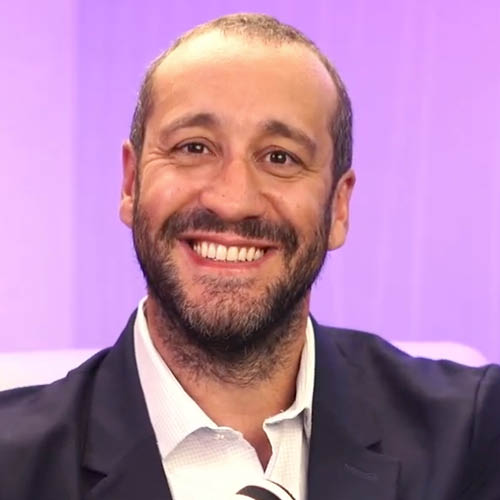
Welcome back to CEO Behind the Scenes. I'm Lara Necession. Today's conversation is about
what it really takes to not just build a company, but to rebuild one from the inside out, while
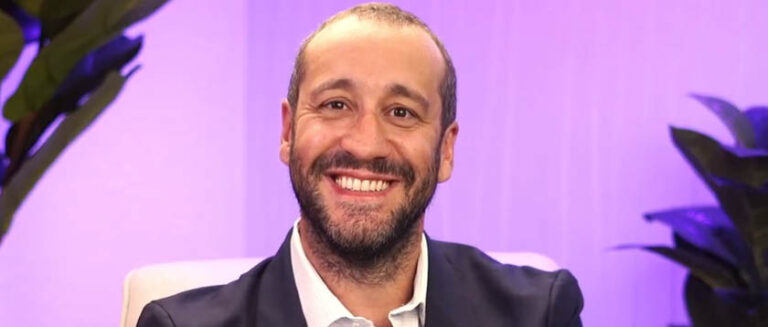
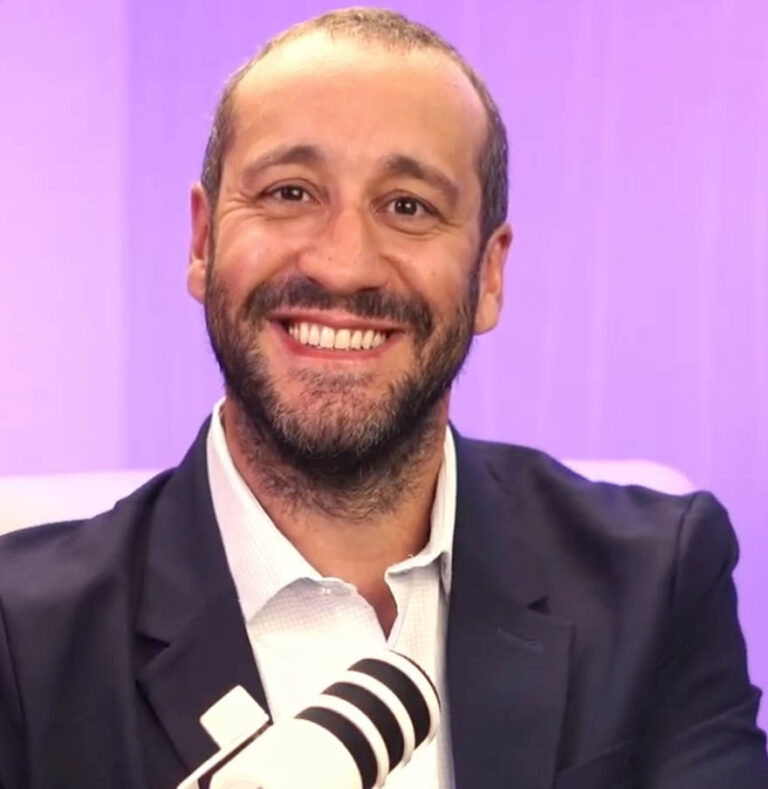
still still running it. Joining me is Tiago Paiva, CEO and founder of Talk Desk, a company that
began as a hackathon project in Lisbon, and grew into a Silicon Valley unicorn. More recently,
Tiago has led a complete reinvention of the business, shifting from a traditional contact center
model to what he calls customer experience automation. In this episode, we'll explore the
founder journey behind that transformation, what AI really means for leadership, not just
technology, and how to keep a company moving with startup speed at global scale. Please
enjoy, Tiago. Welcome to the show.
S
S
Speaker 1 01:52
Thanks for having me. It's a pleasure to be here.
Speaker 2 01:54
It's such a pleasure to have you, and I'm so looking forward to this conversation, and where I
really wanted to start is the fact that you started Talk Desk with a hackathon win in Lisbon.
What did you see in that moment that others did not?
Speaker 1 02:13
Oh, yeah, that's that's that's how Talk Desk started, and it's.. it feels like a lifetime ago, and it
was 1415 years ago, started in Portugal, akaton, that's that's kind of the story everyone talks
about, and is actually the real story. And it all started because I really wanted two things: first,
to build a company, and second, I really wanted to move to America, and the easiest way to
move to America was actually to build something that was meaningful, that allowed me to
actually move to San Francisco, and Talk Desk allowed me to do all of that, and I was lucky
enough to win that hackathon. After that hackathon, we raised a little money, and that money
was enough for the next few years, while we're building the company and figuring out, and
really, what we saw at that time, it's honestly, it's pretty much the problem that the industry
has had for many, many years. It's, it's, it's a very complex industry. It's very complex to be
able to have something up and running that actually delivers value to customers, and we really
wanted to solve that. So, being young, I think helps a lot when you see things from a lens of
like simplicity, and that's kind of the core of Talk Desk, and it still is, even 15 years later, you
know, 1000s of customers later, many enterprises later, it's still about turning the complex
simple, that's really what we do every single day,
Speaker 2 03:33
that's such a great story, and what was it that kind of gave you that that vision to begin with, I
know you said, like, wanting to create something that was meaningful and also bringing
simplicity, but what was it that really sparked that idea and that vision to kind of turn Talk Desk
into what it is today?
S
S
S
S
Speaker 1 03:53
Going back a little bit, I was working at Procter and Gamble at that time, that was, I tell
everyone, that was the only job I had, I was there for six months. I usually joke that I, I left a big
impact in that company in six months, but I was, I was at Pro Tony Gamble for six months. But
what I was able to see is how difficult things were on the service space, and from a technology
perspective, everything was changing 1415 years ago, and I was able to take that complexity
that I saw, plus the simplicity on the new technology, and there was big change 14 years ago
on moving from on-premise solutions to the clouds, very similar to now cloud to AI that we are
all going through, and I was able to leverage that technology to really build something that was
completely differentiated at some time, at that time, as an example, back when we started Talk
Desk, setting up a contact center, it will take weeks and months and many, many, many
millions of dollars, and Talk Desk literally changed the industry. We were doing what the others
were doing for in months, we were doing in five minutes, that was actually our tagline back
then, create a call center in five minutes, so. Being able to take something that was so
complex, so complicated, and make it simple, that's really what started Talk Desk, and I think
the experience being very limited kind of allowed us to look at it and say there must be a better
way to do this versus what everyone has been doing for 30 years, and that's how Talk Desk
started. We were very lucky to get in an industry that was changing very fast, and we saw that
very early on, and the company grew from, you know, one person to people back then to 1000s
of people 10 years later.
Speaker 2 05:29
What a journey. And you've gone from building Talk Desk to now rebuilding it within the
company itself. Could you talk us through what that journey has been like, and what Talk Desk
looks like today.
S
S
Speaker 1 05:44
In the last two three years, it feels like, and I tell this to all my friends and other CEOs, it feels
like I'm building the company all over again, because everything had to change, and I think the
time we live right now, where AI is changing every single business, I think everyone needs to
think like, what do I need to do differently in order to be able to adapt to what's coming, and
from a talk desk perspective, the change was was drastic, and the reason is, if you think about
the industry we are in, and we build software that sells to humans, a human is behind the
computer using talk desk and supporting the customers, when you think about AI, AI comes in
very different shapes and forms in our space. The first one is building software that helps the
humans do a better job, and that's how the AI started two, three years ago. But very early on,
we actually saw that the technology is evolving so fast that you're actually helping the humans,
for sure, but you are also taking a lot of the work that humans do, you're actually replacing that
part of the work with AI, so it's probably one of the industries where AI is having the most
impact, and when you think about that, when you think about how you are selling to customers,
are you are pitching to customers, how you are internally talking about your product,
everything changed. So, in the last two years, two and a half years, we've had a dramatic
change in talk desk. We've changed everything from our day to day. What do we talk
internally? We don't talk anymore about contact centers like we used to. We talk about how is
AI changing the space, how is automation changing the space. So, it starts with that, with those
conversations starts with having an executive team that's completely aligned with you, which
again seems obvious hindsight, but when people have been doing things for 1020, 30 years, it's
not that obvious. Change is actually very hard, right? So getting an executive team that's
aligned with you and an executive team that's that's on board to, in a way, burn the boats,
right? Like, we have to kind of burn what what we've been doing for 1015 years and approach
things in a different way, and that means sales, that means product, that means partners, that
means go to market. So, I'll say that in the last 18 months, 24 months, we've changed pretty
much every single area in the company.
Speaker 2 08:01
Wow, that is a lot of change. I'm curious to know, how did you effectively manage that change?
Because you've said it's touched absolutely every touch point within the company, and you
haven't just made changes, you've effectively rebuilt everything from the inside out. How did
you lead through that change and that transformation in a successful and effective way?
Because change in itself can be so challenging, as you've said, but what was what were some
of the things that you think really helped it to be successful?
S
S
Speaker 1 08:36
The thing we need to, we needed to accept right in the beginning when we started this
transformation is, and this might sound harsh, but not everyone is going to make it. That was
the first thing we knew it, because we were changing. We were in the same industry in a way,
but changing pretty much everything, and a lot of the old ideas was no longer the way to go. So
we had to accept that. And then the second thing we had to decide, and we did this as a team,
right, as an executive team, was who's on board, who's on board for what's coming, who's on
board to go through pain of starting in a way a new company again, to go through pain and
figuring out what the customers want, figure out the products to build, and not everyone is
willing to do that, because building a company almost from scratch versus being in a company
with 2000 people that's been selling a product for 1015, 20 years, it's completely different jobs.
And the first thing I had to do was figure out, like, who are the 2345, people that will help me
get to the point where I want. So the moment you have those people on boards, then it's about
let's go down a few levels and let's figure out, like, which people from each of these teams is
actually on board, and honestly, that's that's really what we did. We went person by person, we
went team by team, and we did, we tried very, very hard to really sell, sell the new pitch, sell
the new company that we wanted to build, and some people said, you know, I'm on board, I
want to do this with you, or I'm not on. Board, and I'm going to be looking for another job, and
that happened. We went through, through some, some losses in the company, some that we
wanted, some that we didn't, but we knew we were to go through that pain until we were able
to kind of have a team that believes, and this is really where we are now. We have a company
of more than 1000 people, around 1500 people, every single person in the company believes in
the mission. Every single person in the company believes in what we are doing. They
understand that what we've done for the last, again, 1015 years is still there. We've learned a
lot. It's still a great product. Our customers still love the product, but we are adding a new
product on top of it, and that product means we have to have different conversations. We have
to learn. We need to be on at the point now where every single day we are learning something,
especially in AI. It's changing so fast that it's hard for all of us to even keep track of it. So it's a
complete different type of culture that we've created, and I think we got to a point where
everyone understands, like we are in a bar fight right now, and we have to move fast, and we
need to be able to build a product at a speed that we haven't done before. We have to move
sales at the speed that we haven't done before, and again, not everyone is willing to move at
that speed, but when you find people that move at that speed, you just need to hold onto them
and allow them, empower them to be able to build their teams, to be able to deliver, and that's
really what we've done in the last 18 months, and the results, it's a completely different
company 18 months later, and it's it starts with getting the people with the right mentality, and
right now the right mentality speeds, and really believing in what we are trying to do,
Speaker 2 11:34
and speaking about speed, you've said that AI is more than just a tool, it's a cultural shift. Could
you speak to what you mean by that?
S
S
Speaker 1 11:44
Of all these years, I've been, I've been doing this, and I know many other CEOs kind of feel the
same. I don't think we've seen a technology impact the business from end to end as much as
AI, and AI for us specifically, it's really twofold. It impacted, like I said, the product we are
selling a completely different product and platform to our customers right now. Most of what
we sell is actually our AI platform. We still sell contact center, but it's most of the AI platform.
The conversations we have with our customers is all about how do we work together to deploy
this platform to have ROI in your business. That is the first impact in the business. The second
one is our day to day. We are no longer in a world where the problems are solved by hiring
more people. We live through that. We live through that in Covid. Many of us live through that
in Covid. It just, you don't add more people to solve the problems. You need to figure out, like,
how does AI actually solve the problems that we have. How does AI optimize the business? How
do you have AI in finance? How do you have AI in sales, and you have AI in product, of course.
So, for the first time, I think we all think like, how does technology really empower the teams
we have to be more productive and to be able to deliver more without having to go and hire
hundreds more people or 1000s more people, so it is completely transformational from a dayto-
day perspective and from a product perspective. So, for us, the impact was was drastic,
Speaker 2 13:12
and something that we're hearing quite a lot is that AI is going to completely transform
customer experience, but I'm curious to know what gaps you're seeing that's made you take a
slightly different approach.
Speaker 1 13:25
The interesting thing about, about AI, and we are all different, and sometimes we think AI is
taking over the world, other times we think, you know, it's not going as fast, so it kind of
changes on a daily basis, but what we are seeing in our space is the destruction, let's say, of
contact center in humans in the contact center space, it's greatly exaggerated. We, we see that
with our customers. What we see is more an hybrid approach is customers still having their
humans, still having their people servicing their customers and adding AI to support 20% 30%
some more, some less, but it's we are seeing AI working end to end with with customer service
agents versus replacing them completely, and there was a time where we all thought, you
know, the technology is getting so good that humans are not necessarily, and we might get
there, of course, like technology is getting so good so fast, but right now, what we see is how
does one complement the other versus the other way around.
S
S
S
Speaker 2 14:25
It's such an interesting perspective when you're thinking about this hybrid workplace and really
seeing AI and humans working collaboratively together. What do you think are some of the key
things that leaders really need to look out for in order to be able to operationalize that.
Speaker 1 14:44
That's a great question, and every business is different, and every business sees it in a
different way. We are lucky enough that we work with some of the biggest companies in the
world, and we work all across industries, so health care, financial services, government, retail.
Know you can approach AI in two different aspects, really. The and usually most customers use
both, but the first one is really cost savings. There's there's a lot of companies that look at AI as
cost savings, right? Like, I have all these things I need to do, I'm spending millions, if not
billions of dollars on this solution, or on this group of people, or on payroll, or on you name it,
and they use AI as I want to cut costs as fast as possible. So we see, we see that a lot, and the
interesting thing is, 12 months ago the customers were actually seeing AI as like, okay, I'm
curious, I'm very curious about AI, I want to, I want to know more, I'm interested. 12 months
later, it's not a matter of if it's a matter of when. So, now it's more about they want to act, they
want to move fast, they want to be able to implement. And the first one, like I said, is cutting
costs. Cutting costs is the first one, but once you go past, like, I want to cut costs and make
sure I optimize the business, you very quickly go to the second point, which is, how do I provide
a better service now? Because it's not just about cutting costs, it's not just about removing
people, it's about supporting the customers, up sales, being able to sell more, being able to do
more with the customers. But the interesting thing is, it's a never-ending conversation. So, the
answer I'm giving you today, next week, there's going to be more data points, because no one
is stopping like that. When you deploy this, we call it the CXA platform, which is the customer
experience automation platform. When you deploy this platform, you might be trying to solve
one use case, and then tomorrow you solve the second use case, and then tomorrow you solve
the third use case, and then you have hundreds of different things inside your business that
you'll want to solve, so in a way we don't even know what's possible, right? So we are all
learning, and this is what we tell our customers: we are all learning on a daily basis what's
possible, what can be done, what's your biggest problems in the business, and then we are just
with them trying to solve them, but it starts usually in the contact center, saving costs,
improving customer service, but then it expands very quickly from there. So it's very exciting
time on the customer experience space,
Speaker 2 17:07
very much so. And it's constantly evolving. Something that I've heard you speak to is this
concept of reducing friction. I know that you mentioned simplicity has been a big part of your
principles and philosophy, and what you do, but where did this concept of reducing friction
really come from?
S
S
S
Speaker 1 17:27
This has been something I think from day one of Talk Desk, that's that's been kind of our north
star in a way. A lot of the early people in Talk Desk were all engineers. My background is also in
engineering, and I think where you, what you'll learn is really, how do you take something
complex and make it simple? How do you reduce friction, right? And we try to do really, we try
to do that in pretty much every everything across the company, and it's not just for our
customers. We do it internally as well. We're always trying to figure out, how do we make
things simple? How do we make this process simpler? When a company grows as fast as
TalkDesk and many other companies grow, you end up getting into very complex processes.
You end up making decisions along the way that actually are not as good as you want. So, you
always need to be aware that you need to go back and think from a perspective of how can we
make this simpler, how can we change this process, how can we actually make these in a way
that moves faster, and in the way, if you think about the entire goal of a company, is to actually
move as fast as possible, build the best products possible, and really remove bureaucracy and
kind of process along the way. If you think about these couple of things, then the decisions
become pretty simple. Then every decision you are making is towards this ultimate goal of
simplicity and speed, and you just need to go one by one, and kind of remove the bottlenecks,
and have a team that understands that it's a daily conversation, and it's never perfect, it's
never perfect, but it's really something that we were lucky enough in Talk Desk to never really
lose that mentality, right, like of making things simple, even in our products now, AI can be
very complex, very complex, like we were, we read in the news that AI is simple and is doing
this and is doing that, it can be very complex to our customers. So we are constantly,
constantly, this daily conversation we have is, how do we make our products so easy that our
customers can just implement, get value within 24 hours, be up and running, and really take
advantage of everything we are doing, because if you are building something complex, it just,
it's just not going to work.
Speaker 2 19:29
And on this same vein, when we're looking at the market right now, there seems to be this shift
away from these more fragmented solutions to more integrated ones. What do you believe is
really driving that change
S
S
Speaker 1 19:42
in almost every single industry, companies have two decisions, have two options to go, and the
first one is they go with a platform that integrates a lot of this functionality, and you can deploy
this platform across the organization and solve a lot of the problems, beginning to end, and you
use one platform, we've seen companies being. Very successful that way, some of the biggest,
if not the biggest SaaS companies in the world, and biggest companies in the world. That's how
they work. They have a platform customers sign up for that platform, and they try to solve
most of the problems, if not all, using that platform. The other option customers have, or
companies have, is going with point solutions, and that it always sounds good in the beginning,
for speed, you want to move fast, so you want to do a point solution that solves that solves a
chat bot problem, that solves a voice problem, so you try to put 1020, 30 solutions together,
and then most more often than not, you realize this was a mistake, and you shouldn't be doing
all these point solutions, so the way we see a talk desk, we have a very strong opinion on that.
We believe that customers want one solution to provide every single functionality. They want to
use one platform that you can deploy in different areas of the company and be able to solve
the problems, and the problems are all different across the company. But we try to provide that
platform that allows them to solve those problems, so we, you know, we know customers use
point solutions plus talk desk at the platform that we are building, but I think long term it's
going to be more on a platform basis, and you're going to pick one platform to solve the
problems, and 90% of everything you are doing is under one platform, and companies on the
other side have the choice to decide to be what they want to be. Some companies decide to be
point solutions, and that usually works fine if you are moving fast. If you are adding something
to the market that doesn't exist, if you want to go the platform route, usually takes longer.
Usually the conversations are at a much higher level, because we are talking about C-level
conversations when you are spending millions and millions and millions. But long term, we
believe that that's how customers should purchase customer experience software. In our case,
but again, each person has different opinions. We are big believers in one platform with all the
functionality underneath it.
Speaker 2 21:55
I want to talk about leadership and conviction, because this is something we touched on earlier,
but the fact that back in 2017 you made the call to integrate AI early, what gave you the
confidence to move ahead of the market,
S
S
Speaker 1 22:11
SEO and founder specifically? If we don't, if we don't have confidence, if we don't have a big
belief in something, it's very hard to convince your team to have that belief, you can't expect
the team to believe in you if you don't have that belief. So, one way or the other, you need to
have conviction in your decisions, right? And then it gets to which decisions are you making?
What do you think the world is going to move? What direction the world is going to move? So,
in 2017 even though it was way before the Chat GPT and the Geminis, and all these things we
live on every single day. It was very clear that the technology was evolving so fast that, that it
will, it was going to change our space. That was very, very clear. We didn't have the technology
at that time, but in 2017 was when we actually started investing in this platform. I just, I just
talked about, so this platform has been being built for for a long time, and the pieces started at
a time, and the reason why I did it was was simple. If the technology was going to go there, if
the space was gonna, was going to change, it's better for us to be in line and making a bet of
something that's going to change versus not making a bet, and then things change, and we are
behind, and hindsight, that was probably one of the best decisions we've made, because in our
platform right now we have around 15 different products, and these products solve different
problems for the for our customers, and a lot of these products started being built back in 2017
so even though AI is a new thing, and AI is a new technology that we are using, we set kind of
the ground, like the beginning of this platform actually has been working for 678 years, so that
allowed us to, when Chat GPT was launched, when all the new models and LLM models were
launched, to pretty much put these models inside our technology, inside our platform, and be
able to make them 50 times better, but again, talking about speed, that allowed us to get to
market really, really fast.
Speaker 2 24:09
And something that you've also said is that founders need to be all in. I'm wondering, what is
that required of you personally?
S
S
Speaker 1 24:19
I tell everyone, my experience is Talk Desk, and I only have one experience in my life. I started
talk desk when I was 24 years old, so my experience is limited to one company and one pretty
much one job, let's put it that way. And, but I have a few beliefs in running talk desk and
running a company, and one of the first one that matters is you need to be all in, and then you
need to be all in for several reasons. You need to be all in because you have a team that's
that's betting on you. You have a team, and this team, they all have families, and on a day to
day, they are betting their family's survival and everything on you. So that's that's a lot of
responsibility. So I feel like if I don't give my my all, like what's the point, right? Like, what's the
point? I have so many people working so hard, and again, at Talk Desk, our culture is we work
hard, all of us, we work very hard. There's no room for people that won't work, don't work, don't
want to work hard. So, if I, if I'm demanding that from my people and from the people in the
company, I need to give the same. So that's the first one. And then, what's the cost, you know,
there's always cost for the decisions you make, and then you have to balance that cost. One of
the costs, when you are rolling on anything, anyone will tell you is you just spend a lot of time
thinking about that thing, you spend a lot of time on the road, you spend a lot of time talking
with customers, you spend a lot of time, so you pretty much just dedicate your life to that, and
for many, many years, Talk Desk is the only thing I do, beginning to end. Now I do a little more,
because I have a four year old - it's not four yet, it's almost four, so I have a three year old, so I
have to spend some time with him. So I try to split my time a little bit, but Talk Desk is still, it's
still the main thing that happens on a daily basis, and I owe that to the team, and that's, that's,
that's the only way we know how to do things here.
Speaker 2 26:08
Something that you also talk about is risk failure, starting all over again. How do those
experiences shape how you're building and shaping and thinking about the company's future.
Speaker 1 26:23
When we started Talk Desk, I remember saying back, back in the, in those days, when you
don't have a plan B, you only have one way, and you have to make things work. And I said this
probably 1015 years ago, when people asked me, What are you doing? And I'm saying, like,
this is my only option, I'm going to make Talk Desk successful. That was back in the day when
we were five people, 10 people, and pretty much 15 years later, I still feel it's the same way. I
still feel we've built this company, we've, we've, we have 1000s of customers, and now we are
going through this second, call it second build, building off talk desk, and I pretty much feel the
same way. There's no plan B. We will, we have to push, we have to make the company
successful, and there's going to be ups and downs. There's going to be some tears, probably on
the way along the way. There's always some tears along the way from, from someone, and
from, from me, or
S
S
S
Speaker 2 27:15
sweat and tears.
Speaker 1 27:16
Exactly, that's that's actually so true. But the feeling is the same. There's there's no plan B. And
then we had that conversation, actually, with the company. We have that conversation every
week with the executive team, and we are all aligned. We know this is the future, and there's
no other way. We can't, we can't turn back. We are all in on the platform we are building. We
are all in on solving our customers' problems, and that's it. Like, there's.. we never talk. What
if? What if this doesn't work? What if we don't? We don't do it now. We are doing it, and we are,
we are making it work. That's been a mentality that we've had for many, many years for
different reasons in the beginning, but now it's the same.
Speaker 2 27:51
And when you think about Talk Desk next phase, what excites you the most?
Speaker 1 27:56
This is probably one of the most exciting times we've had in our space. The reason I started to
talk to us is because in the end, like, I love product, I love engineering, I love solving problems,
and we were lucky enough to get into an industry that had a lot of problems to solve. That's
what kept us going for 15 years, and what's happening now is probably the biggest problem
that we've ever had in front of us is to be solved. And think about the situation we are in right
now, we are, we have a company with 1000 plus great people, we have some of the best minds
in the industry, we have some of the best people that can actually understand what's coming in
the world, it's they are working in talk desk and we have this big problem, which is what is AI
going to do in our space, and that's really the motivation, is what is AI going to do, and every
single day we are trying to figure that out, and that's the most exciting thing there is. I think
figuring out problems for a lot of us, or most of us at Talk Desk, that's what drives us, and you
know, when you figure out the problems, you are pretty much figuring out problems for our
customers, so it helps, it's a win, win, win, but yeah, it's exciting. So I think the next thing for us
is really, what, what's next? Like, what's what technology is going to reinvent everything we are
doing, and, and I also tell customers all the time, we don't know what's coming in, literally in a
period of 12 months, we've went from AI to Gen AI to Agentik AI, so what's coming next? And
what my word, the word I give to our customers and our partners is, you can be sure that we
are working every single day to figure out what's coming next, and whenever that next comes,
we'll be on top of it. So that's what excites me, is this new problem solving that that doesn't
seem to end, and I don't think it's ending anytime soon, because we are just getting started in
the industry. It's
S
S
S
S
Speaker 2 29:45
very exciting times indeed. Now, Tiago, we have a closing tradition here at CEO. Behind the
scenes, we love to wrap up all of our interviews with the same two questions. So, the first
question I want to ask you is, what is one thing. Something that you've changed your mind
about recently, and why.
Speaker 1 30:04
Here's one thing I've actually changed my mind recently, and it's a little bit around what I
mentioned in the beginning. For a while, I really, really thought AI was moving so fast that will
everyone in the industry will be out of a job. I actually thought that, and I came more to the
realization now that AI, yes, is still moving very fast, but it will always be a combination of an
hybrid workforce in our, in our lives, where we're going to have humans, and humans will be
worth much more, because their job becomes a lot more relevant, and we're going to have a lot
of AI in pretty much everything we do, but I don't think it's one or the other. I think it's going to
be both together. So that's probably a big realization internally and externally that I've got in
the last 12 months.
Speaker 2 30:50
Yeah, that's a huge one. Thank you for sharing that. And second question is, what is one thing
that you've not changed your mind about, a belief that you'd want to share to help others lead
or live better.
Speaker 1 31:04
Maybe some people around me will say I'm stubborn, but I'll say for anyone, like no matter if
it's, if it's now 10 years from now, 10 years ago, I think for anyone to want to be successful and
want to be able to do something, you really need to have strong convictions. You really have to
build to have strong beliefs, and really do whatever it takes to actually push things forward.
Everything is art. I've also come to the realization, the grass is not always greener, everything
is art, every business is difficult, there's nothing that's easy, and being able to believe that and
understand and accept that's what you are doing and push forwards. I think that's very, very
important, and it's probably the number one reason why companies succeed, is because
someone in those companies have this mentality that they need to push forward, they need to
make things work, and realize it's not easier somewhere else.
S
S
S
S
Speaker 2 31:55
Well said. Well, Tiago, thank you so much for joining me for this conversation. It's been so
incredible to hear your insights, and also gain your perspective about what it's really like to
rebuild a company from the inside out, whilst you're still leading it, and also your perspective
on AI as well, and really breaking that down beyond the hype. So, thank you so much for joining
me for this conversation.
Speaker 1 32:18
No, thanks. Thanks for having me, and I hope, I hope it was helpful for someone.
Speaker 2 32:22
It most certainly is. And thank you so much to our audience for listening. If you enjoyed this
episode, and if you found value in Thiago's insights and wisdom that he has shared with us
today, please be sure to subscribe, rate, and review the show, and share it with someone in
your network. Thank you so much for joining us, and we'll see you next time on CEO: Behind the
Scenes.



 36.3K
36.3K
 34
34
 2
2


 Host
Host
 POPULAR TOPICS
  FEATURED PODCASTS


 Home
Home
 Podcasts
 Covers
 Community
 Sign In