Speaker 1 00:00
A happy employee will create a happy customer engagement. As you're training AI, you can't
use bad data, otherwise you will get hallucinations.
Speaker 2 00:11
What is one principle that you would hand to any leader who feels like they're under pressure
to do
Speaker 1 00:20
AI without context. AI is just making a best guess.
Speaker 2 00:29
Welcome back to CEO behind the scenes. I'm Lara necession, and today we're talking about the
foundation of modern business data you can actually trust and how that unlocks real AI
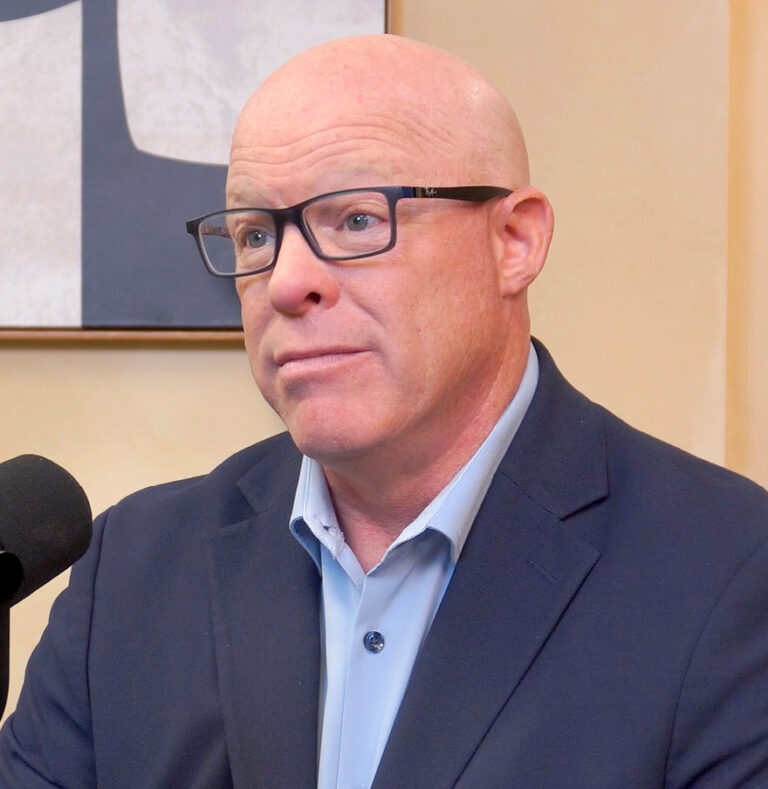
outcomes. My guest is Mark Potter, CEO at Actian. Under his leadership, Actian has pivoted
decisively into data intelligence, including the acquisition and integration of Xenia and a radical
simplification of how customers buy and use the platform. Please enjoy mark. Welcome to the
show. Thank you. Glad to be here. I'm so looking forward to having this conversation with you,
and where I would really love to start is if you could share with us a little bit more around what
Atkin does. What is the real problem that you are solving right now? And why is this urgent for
leaders?
S
S
S
S
Speaker 1 01:31
Yeah, the main problem that we solve for customers is to make data easy to access and to get
insights at your fingertips in real time. This is a really difficult challenge today because of the
lack of high quality data to make good decisions and with AI, this is made the challenge that
much more important to solve where you may have ignored these quality issues in the past,
and 80% good data might have been good enough as you're training AI. You can't use bad
data, otherwise you will get hallucinations. So the problem we solve for all customers in today's
world is giving them AI ready data so they can make decisions they trust.
Speaker 2 02:26
And why do you feel like there is a sense of urgency that leaders should be paying more
attention to this issue now?
Speaker 1 02:35
Well, AI has been around a long time, but now it's becoming usable. And because it's becoming
usable at scale, there's AI projects everywhere, and to get value from Ai, people need to
understand how AI uses their data. There's a lack of visibility at the executive level, myself
included really understanding your data in the environment, how it's being used, who's using it,
and for what purpose, and with AI and agentic, and that's not people. That's agentic use of the
data, it's even harder to understand because the who isn't a person, it's an agent,
Speaker 2 03:24
and a lot of companies say that they are data driven. But decentralization, as you touched on,
it makes it really difficult for people to source accurate data, let alone trust it. I'm curious to
know, from your perspective, how is data intelligence by design? How is this really the starting
point for companies and for integrity of data
Speaker 1 03:54
governance by design is a approach that we have been talking to customers about. This is
about shifting left when you get the data, the minute it shows up in your organization, to make
sure that that data meets your standards for quality, and then manage that throughout the
whole environment. This is done through understanding where the data came from, and who
uses the data, and providing that visibility to an executive so that they can understand it
without Technologies, a simple visualization of that data, where it came from, is what helps
people have trust in their data.
S
S
S
S
S
Speaker 2 04:38
And for someone who's listening, who may not be familiar with the term governance by design.
What do you actually mean when you're speaking about that? What does that look like from a
practical perspective?
Speaker 1 04:52
My family's always asking me what I do for a living, and so I use a lot of analogies with my
daughter. I. When she's asking, what is i? What is it I do? And so I gave her the example of data
governance recently, and I said it's kind of like how you are supposed to govern keeping your
room clean, right? So I tell her all the time, you know, keep your room clean, pick up your stuff,
put the clothes away in the right drawers. And governance, by design is basically making sure
that when any data shows up, just like when you're done doing laundry, that the clothes or the
data goes where it's supposed to right so your socks go in the sock drawer and your shirts get
hung and today, in the data world, everyone's just getting a lot of data, and they're dumping it
someplace. They're dumping it in a data lake or dumping in a warehouse, and they're not really
managing where they put the data in a structured format. So governance, by design is
understanding the data that you have, classifying that data and putting it in the right drawer or
the right category or the right database so that it's easy to find when you need it.
Speaker 2 06:11
That's such a great analogy. And I think that the way that you speak to that really showcases
the importance of having really clean and reliable data, because in particular, today,
organizations are having to draw from multiple different systems, platforms, tools, and to have
something that really centralizes that is key. And I'm wondering to that point, how have you
managed to keep this simple despite the complexities that come up when it comes to having
these multiple data sources. What does that look like in terms of how you've been able to really
simplify this for companies and customers?
S
S
S
Speaker 1 06:54
Yeah, the key here is understanding the data. When we acquired Xenia, part of that discovery
process was to understand how their technology uniquely helped understanding the data in the
environment in a dynamic fashion, without manual intervention, reading the metadata around
the data. This is the data on the data right. This gives you the ability to tag the data, classify
the data, and discover if this data is relevant to a certain compliance regulation. It does it in an
automated fashion, and then allows you to extend that meta model. So in essence, the
uniqueness in this solution is its ability to discover, classify and then manage that data.
Because of that discovering classification of the data, the second thing that is super important,
and it's tied into AI today, is the fact that we're based on a federated data model. It's using a
federated Knowledge Graph. What that means is context. It understands the context. I'll go
back to my daughter's analogy for what is data governance. You know, there's a lot of socks
that gets lost in the dryer. And the reality is, when all the clothes comes out of the out of the
dryer, how do you classify whose socks belong to who in the household? And when a sock
disappears, how do I track it? Where did it go? And that's what we're doing with the federated
Knowledge Graph. It's basically classifying this sock belongs to my daughter and this sock
belongs to my wife. And that classification of where did the sock come from? Oh, it came from
my daughter. It came from my daughter's room, or the fact that that sock is smaller than
another sock, you can make inferred answers to it to say, Oh, it's a smaller sock. It might
belong to a child versus an adult. That understanding of the data classification and the context
of that data gives you the ability to understand the data better, and that is really important in
the AI world, you need context without context. AI is just making a best guess.
Speaker 2 09:28
I love this analogy so much because you know that those dreaded sucks that go missing, the
mismatch sucks like I can really see how this pertains to the world of data and the way that
you've explained that, and what I'm really curious to know from your perspective, and I
understand that you have a background in a cloud, and you've seen these types of hype cycles
before, where, you know, there's a lot of promises being made. There are, you know, all the.
Savings that are being sort of over promised and under delivered. And then the complexity
really started to creep in. I'm wondering, from your perspective, what do you see are some of
the those same mistakes that are being made from now an AI perspective,
S
S
Speaker 1 10:20
wow, that's a excellent and very relevant question. I was just talking about this recently with
another co worker, and I was making the actual correlation between the hype and the promise
of cloud, and then the reality later, versus AI right now. So Cloud had a promise of lower cost,
ease of use, easy on, easy off. And what we have seen is a lot of customers moving to a hybrid
deployment versus 100% cloud, and so they've come back on premise. We've done that
ourselves, where we went 100% development in the cloud, and because cloud costs started to
skyrocket and it's hard to predict, and that makes it hard to budget, we actually brought some
of this on premise the areas where it's maybe more iterative in your development effort, and
hence, a lot more usage. We've put it on premise, and we use it where appropriate. So what
that means is cloud wasn't a replacement of the data center, it was additive. And this is what I
see going on right now for conversations with other customers I'm speaking with, and we just
had a customer advisory board recently in Athens, Greece. And this was the topic, right? The
topic was around AI, and how is it changing your environment and you're changing your way of
doing business? And, yeah, there's some risk and there's some fears, but there's also a lot of
opportunity. But AI is not going to replace people. AI is going to be additive to people, and
actually, AI should make an employee's work life balance easier, where they can offload some
of the manual, tedious tasks to an automation agent and do things that are a little bit more
strategic and Fun. So I see right now a lot of promise of AI. I hear a lot of people talking about it
reducing cost, reducing staff, and I believe that it's going to be a lot like cloud. It's going to
actually be additive, and not a replacement of technology, but additive and a compliment. And
hence it's going to be an added cost, not a reduction in cost.
Speaker 2 12:43
And how have you helped to shape that perspective and understanding when it comes to
speaking to say, your customers, your team members, people that may have that fear that AI is
going to replace, not be an additive? What have been some of the key messages, or how have
you been able to really communicate that in a meaningful way, where you're able to really
bring people along with the journey without the fear?
S
S
Speaker 1 13:14
You know, my history and my career has always been to come into an organization and impact
change. I'm a transformation leader. So AI right now gets me excited, because this is requiring
everybody to kind of reevaluate what they do and how they might use AI to do it differently.
And there is a group of people or a population within the environment that is afraid of AI and
like most things, just like with Cloud, early on, I worked at Oracle, and people thought, oh, wow,
I'm a database administrator. Cloud database is going to replace my job, which is not the case.
But that fear came from a lack of understanding. And really, what it comes down to is those
that adopt AI, they dictate the job of AI. And so AI is something that actually can be a person's
work life balance, and if they take control of the purpose of AI and how it relates to their job.
We recently did a survey, and I'm a data person, so I like getting data, and there was a theory I
had that we're not adopting AI as much as we should be. And I did the survey, I had my CTO do
a survey with our engineering team, and that was correct. There's not as many people adopting
as I had hoped. So what I'm doing is I'm trying to drive our organization to pivot from being a
data centric culture to having a culture of AI adoption. To do that, we are educating everybody
about it, and I'm trying to create a culture of AI is additive and not a replacement of your job.
And so that starts at the top, and that requires me to be a big user and adopter of AI, which I
am, and I'm learning every day, and the more I learn about it, the more I see how it can provide
me some work life balance as well.
Speaker 2 15:29
And one of the things that you touched on was the importance of not just the change
management, but the focus on employees. And you said something interesting around how this
could be making employees lives easier. Why do you believe it's important for leaders to be
asking those types of questions and really starting them?
Speaker 1 15:52
Yeah, it's important because at the end of the day, people will not adopt new, innovative
technology, if they fear it. And so if I can demonstrate the use of it, articulate our strategy for it,
and then prove that out, then they will adopt the technology, because they become believers in
it. And if you can find a personal win for somebody, then you make it less about the company
and more about the employee. And so for me, that's why it's important to talk about AI and
how it provides a personal win to the employee. And I think work life balance is that win. And
who doesn't want to have more time with their family and friends?
S
S
S
Speaker 2 16:40
One of the things that I've heard you really speak about is sometimes around the illusion of
cost savings as it pertains to, you know, these types of operational efficiencies. How would you
suggest that a CEO or leader who is listening to this episode would be able to really avoid some
of those illusions around cost savings and actually focus on the efficiencies around some of
these concepts, data integration, AI, et cetera.
Speaker 1 17:17
I mean, every leader is looking for ways to optimize the business, and cost savings is one of
those. I just don't believe it should be. The thing shouldn't be the first thing on the list shouldn't
be the driver for any technology. The driver should be a business value related to speed to
market, or improved customer experience or improved employee experience, those I think then
of the day, will drive a better outcome for the business. On the top line, secondarily, if you can
also get cost savings or efficiencies and productivity that result in cost savings because you
don't have to hire more people to get more done, then that is a great bottom line value. It just
shouldn't be the main reason. And if anyone believes in the organization on our team that we
do things first for cost, and I've done a really poor job in expressing that, my point of view is
this employee first, a happy employee will create a happy customer engagement. An employee
that thinks that your objective is to reduce cost is going to feel like their job is not secure and
they're going to be in it for the short term or the tactical outcome, and not the long term. And I
think most customers want to work with companies that are invested in the long term
relationship. That's what I try to message to my organization, is that I'm in this for you and for
the long haul.
Speaker 2 18:52
You simplified. I read this that you simplified go to market from 2000 SKUs down to two. What
was the impact of that for your customers and for your employees?
Speaker 1 19:08
That's a really good example of trying to make the job easier for the go to market team, for
example. You know, sales and pre sales and sales operations. We were able to take a process
for creating a
Speaker 3 19:23
quote that took a couple of weeks
S
S
S
S
S
Speaker 1 19:28
through iterations of mistakes in the wrong SKU and so forth, and get that down to a couple of
hours. And this really enabled the seller to know exactly what product is needed for the value
they're pitching to the customer, and put that quote together themselves with very little
oversight, in an automated fashion, which then turns around that proposal to the customer very
quickly. And then you can move on to. The next step of that process in the cycle, and so really
good experience for the employee and a great turnaround time for the customer with a smaller
sales operations team necessary to fix human error mistakes.
Speaker 2 20:16
I would love for us to dive into maybe some practical advice and wisdom for leaders who are
listening to this. And I wanted to ask you, what is one principle that you would hand to any
leader who feels like they're under pressure to do AI this quarter,
Speaker 1 20:37
when AI first get really hot two years ago. It was being talked a lot, and I was nervous about it. I
was worried about the risk of IP leakage. And I could have, like, put my head in the sand and
just said, No, we're going to wait it out. But what we did is we put a team together to really
think about, how would we use AI, what does it mean to us, and come up with a plan. And I
think the end of the day, whatever you do, don't do it fast, do it smart, and get other people
involved in the plan. Use a blue ocean approach, right to get more people involved in the plan,
because then you get adoption when you go to execute the plan. And I think this is the best
way to do it at a good pace, but smart versus doing it just to do it because everyone else is
doing it. So I would say that's the approach. I would take. The advice is, build a plan. We can't
ignore this and bring in some team members right to come up with what that plan is and what
you expect for output from it.
Speaker 2 21:50
That thoughtfulness and intentionality goes such a long way, because it's not just about doing it
for the sake of doing it. It's about doing it for the right reasons with the right focus in place. And
so what you're saying is taking the time to actually figure out that plan and that focus will save
you a lot of resources that are potentially wasted, focusing on the wrong things
S
S
S
S
Speaker 1 22:14
100% and a lot of people will jump on the hype with some architecture just to say they're out
there doing something at the end of the day, it'll be quickly exposed. That is just marketing,
and it's not actually business value. So we took the time to think about it and build a strategy
and come up with some acquisitions and some builds of technology to truly have a well thought
out AI strategy internally, as well as within our technology for our customers. I think customers
appreciate that thoughtfulness, and that's what we noticed at the customer advisory board, is
the feedback from the customers that attended. Said they could tell we really took time to think
about the strategy, and it was well thought of, and they saw that as a value, as they learned
something from the time we spent around thinking about that strategy
Speaker 2 23:10
that goes such a long way. Because I feel like when your customers experience that and see
that from you, they know that you care, and I think that that really does something for what we
were touching on earlier, building that trust, building that credibility with what we do is we
care, and this is why it matters, and being able to communicate that from a place of truth and a
solid foundation, it's such powerful advice. So thank you for sharing your perspective on that.
The other question that I wanted to ask you, as another really key takeaway for leaders who
are listening to this is that you've said that failure is usually about poor adoption, not missing
features. What's your adoption playbook, if you will. You know, if you had like a minute to talk
about the importance of adoption and how you would approach that, what would that be?
24:07
Yeah, so
Speaker 1 24:10
people can adopt stuff fast, we could roll out technology really fast without thinking about it,
but then you're learning at your customer's expense, proper adoption is thoughtful. It has a
plan. Usually starts out with a very specific use case and a business value driver. And so our
view of adoption was to come up with what that plan is for our own internal adoption of AI, for
example, and with our customers, we like to think through the use cases and business value
that they could use the technology for. And through that thoughtfulness, we're guiding them
right. We're consulting them and helping them with building a strategy together for. Adoption
of the technology. And so I think that adoption comes through collaboration with the customer
S
S
S
Speaker 2 25:09
and mark here at CEO behind the scenes, we love to wrap up all of our interviews with the
same two signature rapid fire questions. So the first question I have for you is, what is one
thing that you've changed your mind about recently, and why?
Speaker 1 25:27
Well, I would say I recently changed my mind on AI, and how we're going to infuse a culture of
AI within our organization, and what that is is I think we need to put someone in charge of it as
a role. So I think there needs to be a chief AI officer, someone really owns that initiative across
the organization, to really be evangelizing for that adoption as a partnership with the different
functions of the business. I used to think this is something everybody should own individually in
their function and figure it out. And now I feel like this needs to be a if it's important enough,
there should be someone who owns it, just like in the days when security was managed at the
function level. Then there was a CSO who owned security, because it's important. I think AI is
important, and there should be an owner for it,
Speaker 2 26:27
Chief AI officer. I feel like that's the first time I've heard that concept, and I love it. And finally,
the question I wanted to ask you is, what is one thing that you've not changed your mind about
a belief that you'd share to help others to lead or live better.
Speaker 1 26:46
What I've not changed my mind about is it's an employee first world. Always put the employee
first, and that results in customer satisfaction, and AI should not change that. It should be
additive to the employee first culture.
Speaker 2 27:03
Very well said. Well Mark, thank you so much for joining me for this conversation. Your insights
into governance by design, AI, data integrity, building a people first culture has been so
insightful, and I've so enjoyed this conversation with you, so thank you so much for joining me.
Speaker 1 27:23
Thank you very much. I appreciate the time, and thank
S
S
S
S
S
S
Speaker 2 27:26
you so much to our audience for listening. If you enjoyed this episode, then please be sure to
subscribe, rate and review the podcast and also share this episode with someone in your
network who you know would really benefit from listening to Mark's insights today. Thank you
so much for joining us, and we'll see you next time on CEO: Behind the Scenes.




 236.4K
 61
61
 2
2


 Host
Host
 POPULAR TOPICS
  FEATURED PODCASTS


 Home
Home
 Podcasts
 Covers
 Community
 Sign In