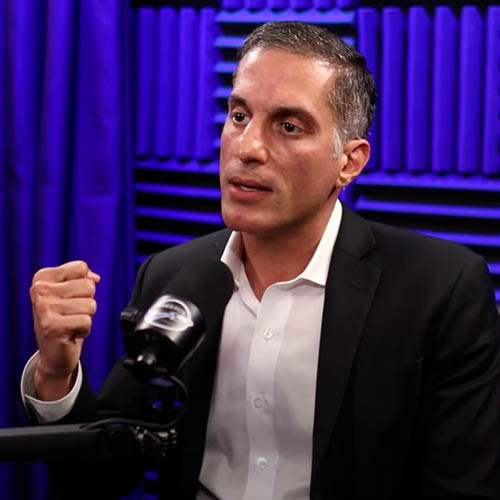
David: [00:00:00] So Sean, let's start with your personal journey. Take us from, I guess, your earlier formative years and up to the point where you felt inspired to launch Empower Pharmacy.
Shaun: Yeah, so you know, I've always been a tinkerer and I. I think I had the knack at a very young age to become an engineer. Uh, growing up in my father's racetrack, he was an entrepreneur as well, and he came from Iran right before the revolution.
And, uh, so, uh, he put me to work at a very young age, working that racetrack, uh, writing go-karts, fixing the go-karts, doing, uh, vending machines, restocking the, the, the pool table and ev everything that goes on inside of entertainment Center. So it was a great experience. Uh, to learn from a fellow entrepreneur, you know, how to do business.
And, uh, of course, growing up on a go-kart track, you know, you fall in love with cars at a very long age, like, like most kids do. And, uh, when I turned, uh, of age to be able to go to college, I, I, I determined I wanted to be an automotive [00:01:00] engineer and. Uh, I was very lucky to go to, uh, UT Austin. They have a great automotive engineering program and, uh, when I graduated in December of oh seven, I couldn't get a job working for any of the car companies as they were going through difficult times.
And, uh, I ended up working for an oil field company, uh, uh, doing hydraulic fracturing as a field engineer. And about nine months in the job when I was reading up with my crew, I, uh, lifted a heavy piece of oil pipe the wrong way and hemorrhaged, uh, several of my lower vertebrae. And so, uh, couldn't work out in the fields anymore.
I was, uh, uh, wind of physical therapy and, you know, it was really the first time I'd seen a doctor since I was a kid. And, uh, that doctor. Looked me up and down and noticed that I was very skinny for my age. Uh, I'm five foot 10 back then, um, um, I weighed 125 pounds, uh, and I was 25 years old, and I never, never really, you know, thought anything about it.
I thought I was just an endomorph, you know, I was just a [00:02:00] long, lanky, skinny kid. There's nothing I could ever do. No matter how much I ate or how much I worked out, I just couldn't gain any weight. What so well that doctor looked at me, looked at me and said, yeah, you're very skinny for your age. Let's find out why.
Took some blood and determined I had the testosterone level of an 80-year-old man. Uh, and kind of explained a lot, you know, explained why I was so tired my entire life, why I had to take a nap at 5:00 PM I, uh, it was very difficult. I didn't get good sleep and I had very little libido, stamina. You know, uh, I was depressed, you know, and these are all the same symptoms of low testosterone.
And so that doctor, he, he sent me to a specialist, uh, in Houston, uh, where I'm, uh, from. It just so happens to be, Houston happens to have the largest medical center of the entire world. I. Which means it has some of the greatest doctors in the entire world. And I was just so lucky to find one of the greatest doctors in the world that deals with situations like this.
And that doctor [00:03:00] was so wise. One of the reasons he was the one of the greatest is because he understood that his patients could be better served by personalizing their medic me medicine and also that his patients would need to be on these therapies for the rest of our lives. And, uh, for my case that would be, you know, at least 50 years, uh, for the rest of his patients up between 20 and 40 years.
And, you know, if he was to send his patients to a traditional, uh, pharmacy. Which utilizes the traditional pharmaceutical supply chain of manufacturer wholesaler pharmacy, PBM insurance carrier, like all the, all these middlemen added so much cost and the cost goes up by about 10% a year. And so he would, he realized his patients, a vast majority of his patient population would become noncompliant with their therapies at some point in their lives.
And, but if he was to send his patients to a compounding pharmacy, those costs actually go down over time and. So his patients would never [00:04:00] lose access, you know, uh, assuming that their, uh, income would be the same throughout their life or increase. And so. He sent me to that compounding pharmacy and that was my first, my real first experience with a pharmacy on my own.
And it was amazing. It was like, wow, you have pharmacists and pharmacy technicians working together to manufacture and create and compound these drugs that are made just for me. Yeah. And are at a fraction of the cost. It would've cost me if I was to use the traditional healthcare system. And of course when I got on that medications, oh my God, it changed completely changed my life.
I became normal for the first time in my entire life. And, uh, I mean, because it turns out I was born with a pituitary disorder. I don't create the chemicals that tell my body to produce testosterone. And when I got those chemicals, my life changed practically overnight. I gained 15 pounds of muscle without even working out.
Really? Like, [00:05:00] so it's like that's, that was the missing link. Yeah. No matter how I took weightlifting one, weightlifting two, weightlifting three in college, nothing. But then I just take this medication and boom, I get all the muscle I could ever wanted before I should have had in the first place. And then I got my libido back, my depression went away.
I got more endurance stamina. Uh, and of course ambition, you know, and my ambition at that point was, you know, to build cars. Now my ambition was to be able to expand access to these medications, to as many patients like myself, so they can be as lucky as I've been by being introduced to these wonderful chemicals.
And ever since then, we've been working to build our pharmacy so that we can serve an exponential growing patient populations becoming aware. Of how important their health is to their performance and their quality of life. And at the same time, creating new concoctions, new formulations that may better serve a patient than what's commercially available out in the market.
All at the same time [00:06:00] utilizing automation and building in. Uh, a a, an efficient system to be able to make dispense and distribute drugs directly to every single pharmaceutical end user in the entire country, at a fraction of the cost, in a much better touch point and service point than the tradit healthcare system is able to offer patients in this country.
You know, the, it's still just the beginning. There's so many patients in this country that are completely unaware. Of compounding as compounding only makes up 3% of the total Russell market for drugs dispensed in this country. The other 97% is big pharma. And big pharma, in my opinion, has failed miserably and to be able to.
Get, expand access to patients affordable access, especially as healthcare costs are the number one cause of bankruptcy in our country. And so something needs to change and hopefully we'll be able to, uh, be a, uh, play a small role in improving access to these life-changing medications. So like if patients like myself and millions other can live [00:07:00] healthier, happier, more productive lives,
David: yeah, well play a big role.
Possibly I, as I understand it, empower Pharmacy is now the, the largest compounding chemist in the, in the states. Right? That's right. From being founded 15 years ago.
Shaun: Yep. That's right. Yeah. And you know, amazing. We're only 3% of our. Uh, that 3% Yeah. Of the total Russell market. So there's a long ways to go.
Yeah. To, uh, give patients access to these, the highest quality medications possible at the lowest cost possible. And so we see this as the beginnings of a new generics market.
David: If we can go all the way back to when you had that first consultation with the doctor you spoke about, my understanding is that doctor was probably a bit of a standout in terms of the approach that he or she took.
Is there something inside you that feels maybe a bit lucky that you. Met that person. Is that feeding that drive? You have to, to deliver.
Shaun: Oh, oh, absolutely. You know, uh, I am very lucky to be in the position that I'm in, you know, for, and when I think about it, like, I wouldn't be able to, if I was [00:08:00] born in my father's country, my mother's country would not have the opportunities I I have today.
And if they hadn't have moved to Houston, which just happens to be, you know, one of the largest cities in the country and have the largest medical center in the world, I. Like that, that's pure luck too. And if I hadn't had, you know, had such a great father and such a great mother, you know, father that taught me entrepreneurship.
And a mother is who's, who's a nurse, you know, teach me how to take care of others. And, you know, at the same time my, my, my spouse, you know, she just happens to be a pharmacist. We met 23 years ago, like before I even thought about pharmacy. You know, that's pure luck too. And, and at the same time, you know, meeting that doctor and meeting such amazing people that also want to make a significant difference in the lives of others.
I mean, I realize how lucky I am, so it's my duty in life now is to spread that luck to as many patients as possible so they can be lucky for themselves and be lucky for others.
David: Amazing. How did you take [00:09:00] empower from this, this idea? You'd seen it work for you and you'd seen the need for this. How did you develop that from an idea into the, the business we we see today?
Shaun: You know, I, I think I was very lucky not to have any experience with the traditional healthcare system. You know, I came at this business with first principles, like, what are we doing? What are we trying to solve? Well, at the end of the day, we're just trying to make medicine and get in the hands of patients with good service, good quality, and good cost.
That's it. Like let's just focus on those primary factors and forever iterate on making each one of those better over time. And so we go from, you know, 150 square foot space where I'm working as a pharmacy technician alongside a pharmacist and trying to figure out like, what do, what does the patient want?
'cause at the end of the day, that's all that matters. It's not about what the middlemen want, it's about what's in the patient's best interest, first and foremost, and then designing a system. Building, [00:10:00] putting in automation and putting in procedures to better serve that patient over time. And so we go, so of course, you know, expanding our formulary, getting other areas of treatment.
So we started with just men's health 'cause those are the drugs that I was interested in. Those are drugs I was introduced to. And from that we realized, oh well you know, there's this other subset of the population called women and, and they need health too. They have their own issues as well. Very similar to what we have.
You know, we both have hormone disorders. We both. Uh, have sexual dysfunction, you know? And so we started expanding our formulary into women's health. And it turns out, you know, men and women also have issues with obesity. So we started expanding into obesity and creating formulas that weren't commercially available that may improve a patient outcome.
Compared to this, the limited amount of drugs that are, uh, have been FDA approved in this country. And then from there, going off into other areas of treatment that are, uh, uh, uh, uh, coincide with health like. IV nutrition, uh, [00:11:00] dermatology, mental health, longevity medicine, and bringing them all together into what we call functional medicine or integrative health, and offering that one-stop shop for that patient or provider to be able to access all the medications they will ever need to improve their quality of life and improve their performance.
David: You talked before about big pharma. Is it fair to say that the way that they sort of tackle the development of drugs is they, they find a problem that affects lots of people and they try to deal with that problem, and then that solution is what's then given to all different individuals, whereas you guys are taking it from a.
Let's look at the individual and then solve, is that fair to say?
Shaun: Yeah. You big pharma there, they're mostly there to produce new drugs. Like that's really what they should be focusing on. But what we see is big pharma using patent games to be able to extend their patents so they can charge as much as possible for as long as possible.
And you know, the way that [00:12:00] that's not really innovation, you know, taking the same molecule that was invented. Decades ago and re rejiggering it. So the strength is a little different or the dosage form is different, and then saying, Hey, this is a whole new drug. And then just so they can charge as much as possible for another 16 years that doesn't really benefit patients.
What compounding pharmacists do is we go, uh, we take drugs that have already been FDA approved, and then we change the dosage for dosage strength or dosage combination to create a new drug. And then we let the pre and work with prescribers to determine what drug is best. In for their patients or patient populations and leave it up to them to then work with us directly.
And, and, and so we see this as a much more nimble way of bringing a product to market, a pharmaceutical product. Whereas the traditional pharmaceutical uh, uh, process take, you have to go through new drug application with the FDA, which takes 10 plus years and hundreds of millions or billions of dollars.
Whereas us it takes tens of thousands of dollars. [00:13:00] Maybe six months to be able to get a new product to market. And so, you know, because comps can, you know, those r and d costs aren't as significant as big pharma. We can take existing molecules that have been FDA approved and uh, uh, customize them for. What the doctor thinks is in the best interest of his or her patients, not what big pharma thinks is in the best interest of their of patients, which of course we know today.
Big Pharma is, does not really work in the best interest of patients, especially when it comes to pricing of their medications. As they use an equation that's different than ours, they try to figure out what's the most profit that they can make off a certain, uh, patient population. Our equation is what's the least profit that we can make?
While still being able to run a business, my, if I using that equation, we can get these medicines in the hands of as many patients as possible. Whereas big pharma only wants to make as much of a small segment of a patient population.
David: Got it. And do, do you face challenges then in terms of, [00:14:00] 'cause you mentioned before the, the patents and big pharma looking to expand those and does that create a challenge for you in terms of accessing certain chemicals to them?
Make drugs. So how, how does that work?
Shaun: It's a great question. Uh, so pharmacy compounding has been around for thousands of years. All drugs before big pharma exist, all drugs were compounded. You can see, you know, uh, old pictures of druggists and apothecaries using mortars and pestos and, you know, erlin Meyer flask and graduate cylinders to make.
These prescriptions one at a time. So the infra, the regulations have been around for hundreds of years and there are, uh, nothing is more regulated than making drugs that are destined to be injected into humans. And so we have hundreds of regulatory agencies overseeing US state boards of pharmacies, D-E-A-F-D-A, state Health and human service organizations, and, you know.
They come in regularly, inspect us and use very strict rules to make sure that patients are getting [00:15:00] access to medications that meet the minimum threshold for safety, uh, in this country, which are very high. Uh, and so for, uh, uh, uh, for big pharma, you know, it's, it's a little different. You know, they, they have, they're, they're mostly there to make mass produced medications for compounders.
We make small, mid-size batches and serve smaller patient populations.
David: When we spoke. Earlier this week, we were obviously, we were talking about the people who are gonna be listening to and watching this podcast. A lot of them are executives running companies. You, uh, used the term, which was very interesting.
You, you described CEOs or high performing people as corporate athletes. What did you mean by that?
Shaun: We were all playing a game. We're playing the game of business and nothing is more important than performance. I mean, that's how we're all judged. At the end of the day, how well did our company perform? How, how quickly did we grow our ebitda, our revenue?
If we, if we don't show up to the [00:16:00] workplace a hundred percent, the business doesn't perform at a hundred percent. You know, I learned this, uh, the hard way. You know, by not being fully optimized to begin with. And as I got access to more and more of these medications optimized the biomarkers within my blood, I performed better, I felt better.
And it's very similar to the way that athletes perform. How do athletes perform at their peak? Many of them take performance enhancing drugs. You know, there's a reason these substances are banned in sports. They work and there's a lot of money at stake. For athletes because if they don't perform well, they'll get kicked off the team million dollar contracts are, are taken away.
So there's a very good incentive for them to take these medications. What's, what's the difference with that and a CEO? We are also, you know, uh, based on our performance and we could lose millions of dollars in bonuses or stock options or, you know, potentially the company failing. If we don't perform to levels, we need to.
And so why are we afraid? Why should we be afraid to [00:17:00] take advantage of these medications? All we're doing is just improving the internal biomarkers, supplementing a chemical that our body doesn't produce in one way or another, because, you know, if our bodies are, if we're missing a certain chemical, we feel off.
Why do we fill off? Because a certain chemical process isn't occurring at the rate that it should, and our bodies or organs aren't performing as well as they should, so then we don't perform as well. And you know, a lot of people think that the, you know, if we just think really, if we work really hard, we're very dedicated.
You know, we can perform, we can control our bodies. It's not true, you know, it's not the mind that controls the body. It's the body that controls the mind. And it does it through torturous means called hormones and other chemicals and, and enzymes. And if we don't have those chemicals, enzymes, and hormones in the right ratios, our bodies are going to not feel well.
And of course, these chemicals, they cross the blood-brain barrier. And so if our body doesn't have the chemicals that it needs, our brain doesn't have the [00:18:00] chemicals that it needs to perform at peak performance. And so, you know, we see a lot of, uh, movie stars, people on Wall Street and, you know, uh, uh, uh, wealthy people of wealth being able to take advantage of these therapies.
But, you know, and. Times have changed now that people are coming more aware and there's a lot more competition out the prescribers that understand how to prescribe these types of medications. We're seeing those costs plummet and so now anybody can access these medications if you have one of the highest stress jobs in the entire world, which is the job.
Of the CEOI think, you know, in order to, uh, be responsible for your stakeholders, your shareholders, we should really be focusing on ourselves, improving our own health. And if we do that, then we can show up a hundred percent. We can be more clear, have more focus, be happier. You know, I mean, I can, I can't tell you what the difference between a, a, a good night's sleep makes to my attitude the very next day.
And, you know, and how much, how having this extra muscle mass helps. Me perform [00:19:00] helps me, you know, I, I can go 12, 16 hour days without getting tired. You know, same way athletes, like, they take same reason they take these medications so they don't get tired. They can, their stamina, uh, continues. Yeah. And that's really, you know, if we are to outcompete.
Our competitors, we should be taking a, a, a page outta the playbook of other athletes.
David: Interesting. And it's, it's a process, right? Like learning your body, everybody's, everybody's different. So you, you described when you got the testosterone and the wonders that that did for you. But people shouldn't necessarily sort of stop exploring that.
Maybe they get one treatment and maybe they don't feel. Much of a difference. That doesn't mean you should stop, right? Like it's a, you are always learning about your body.
Shaun: We have thousands of chemicals. All, all life is, is a chemical process, chemical reaction. If we are missing these chemicals, some of those chemical reactions don't occur and we get disease states.
And so, you know, it's it. And we're very lucky today that we live in a time where we can have access to [00:20:00] labs that can do diagnostics on us. Figure out where our biomarkers are. Hundreds of biomarkers for, for several hundred dollars, or even covered by insurance in many cases. And now. A doctor can now see, look at those results and say, oh my gosh, yeah, we should be putting you on this supplement and this medication and let's start you there, and then let's bring you back in three to six months.
See how your body's responded. See how your symptomology has responded, and let's reassess. And so, yes, it is a forever process. You know, it's not, it's not like we just fix it once and we're done for the rest of our lives. Our bodies degrade over time and based on our environmental factors, our genetic factors.
And oh, what we put, what we, uh, eat, uh, uh, everything is, there's so many variables. Yeah. And so finding a prescriber that is familiarized and is an expert in functional medicine or preventative medicine and working with them for constantly to get us dialed in so that we can, or [00:21:00] operate at peak performance.
David: I'm sure there's thousands of people listening to this thinking, I want, I want some of that. Um, where do they go from from here?
Shaun: It's a great question. You know, most doctors are not trained in medical school how to do preventative health. They're trained to do sick care. And because most, a lot of medical schools are sponsored by big pharma, they're taught how to use big pharma's tools and the insurance space system.
Well, insurance doesn't really cover preventative medicine or quality of life medicine. Uh, the cash pay. The cash pay markets do. So the best doctors. Typically don't accept insurance. They only accept cash, and so it's important to find a good doctor that accepts cash. Uh, and to find one, you know, there, you can go on Google Chat, g pt, find me functional provider in my area, or if they're using telemedicine, find me the best functional medicine provider.
There's also a great website, uh, the Institute for Functional Medicine that [00:22:00] has a provider search where if you want to see a local provider, you just type in your zip code and you'll show you all the providers that we have been certified in functional medicine. And these, like, these certifications, they're, no, they're not done.
Within med school, they're done outside of med school. So it's a certain type of doctor that's decided that, you know, I don't want to be doing inpatient care. I want to be making sure that patients don't even come to the hospital, don't even come, don't really have to get sick in the first place. And those are the doctors that are really on the cutting edge and offering these types of therapies.
David: I find the. The doctor I go to see him or her. What? What should I expect? Is it blood work tests?
Shaun: Yep. Absolutely. So one thing, this doctor's going to spend hours with you, not five minutes. They're gonna sit down and they're gonna ask you dozens or hundreds of questions, really figure out what's exactly going on.
How are you feeling? You know, how did you feel 5, 10, 15, 20 years ago? You know, what are your goals? And then of course, they're gonna do vitals. They're gonna [00:23:00] take your blood and they're gonna take a lot of blood. Like this is not your normal, it's not a normal doctor. They're gonna take saliva samples.
They're gonna take stool samples, they're gonna take every possible sample like so they can get a full picture of what's going on. Inside your body. And now that they have all these data points, they can come back and say, yep, this is where we can optimize you. And everybody, uh, for a lab result has a normal range, you know, and that normal range typically makes a 95% of the population.
Do you wanna be like 95% of the population or do you want to be that top 5%? And so what that doctor then does is they, they customize these treatment programs. They give you the exact amount of chemical that your body. Is needing to bring you up into that top quartile or top 5% of the normal range where you can really be a superhuman.
David: Yeah. Can you give us some examples where you feel that your focus on this and on your own health, can you give us some specific examples where you feel that's really helped you perform in your role?
Shaun: [00:24:00] Oh, absolutely. So, uh, uh, OB obviously starting with testosterone, androgens, you know, anabolic therapies are so important, muscle.
Is the next frontier. It's really what I think is, uh, uh, uh, most important health, and it's backed by a lot of science as well. You know, after we lose about 30% of our muscle, we die. We, we can't walk after we, after we 40 we're dead. That's wasting syndrome. And so the importance of muscle can't be stressed enough in aging and being healthy as it also supports immune function and metabolic function and glucose control.
And so that's, that's the base I would start there. You know, get, get control of your muscle. Then from there, there are others characters. Of course, if you have, you know, another, another, and a great doctor, Dr. Gabrielle Lyon speaks about muscle span, the time in life where we have muscle so we can be mobile and enjoy life and be able to pick up our grandchildren and walk and climb and do everything that makes us happy.
And then I have another great doctor, Dr. Mohi, [00:25:00] Kira out of Baylor that has trademarked the term sex span, the amount of time in life where we can be sexually active because. Humans need to be sexually active to be really happy. And then you have, you know, doctors like Peter Atia that talk about health span, you know, it's the amount in life, amount of time in life where you are healthy.
You know, 'cause those, you don't, you don't wanna be, you know, work your butt off, you know, make millions of dollars. By the time you're 60, you can't even move. Right. So, so, so being able to be as healthy throughout your time to enjoy those golden years is also very important. And, and so there's so many areas of treatment, you know, uh, there's IV nutrition.
I get an IV of, uh, a performance IV with high doses of vitamin C. B complex glutathione, magnesium, lysine, theanine, you know, all these things that support immune function and performance. And then I also, oh, I also found out one time and, uh, several years ago that I had heavy metal poisoning. My lead and mercury [00:26:00] levels were off the charts because doctors don't test.
For Mercury or, or, or lead in your normal primary care provider visit. And so then I got on chelation therapy, I was put on edited DI sodium as well as DMSA, which are chelating agents and can bind metal, these heavy metals and allow your body to excrete them over time. And so that helped my mitochondrial function, which gave me even more energy and uh, helped me think a lot clearer as well.
And then we've got other therapies. So the sexual health, uh. Uh, therapies where, you know, in order to make yourself and your partner happy, you know, those are very important as well, and. For, for many patients getting access to, if they're, if they're weight, as many patients in our country are getting access to affordable GLP one medications that have been customized for those patients, that's another one.
So, so, and then of course, dermatology, dermatological formulations. You know, I have acne. I grew up with acne, and then when I got on testosterone, I got even more acne as, as that's what it [00:27:00] does. And so, you know, formulating acne creams. And beauty creams and anti-wrinkle creams. You know, making ourselves not just feel good, but look good as well.
That's very important for our self-esteem and happiness. And so, so integrating all these different areas of treatment and figuring out where, you know, where I could be optimized and then working with a qualified practitioner to get me access to these customized therapies has just made my life so much different.
And you know, today I'm 41 years old. You know, I feel a hundred times better than I did when I was 18, and everybody can, can do that. The aging process does not have to be cruel. You know, it's actually, you know, the, the day that you get access to these therapies. Like that is one of the luckiest days in our lives because now we can go to the top 5%, we can go to the same blood levels.
We can make ourselves similar to high performance athletes. We can be LeBron James. You know, we can be Kobe Bryant. We can be Michael Jordan. You know what makes them so special? They're genetically lucky. [00:28:00] Like, you know, they had high growth hormone levels to begin with. They had high testosterone levels to begin with.
They had, they had the chemicals in their bodies that were necessary for them to be able to perform that level. And so, you know, we can go from, you know, normal or suboptimal to truly being optimized. And the first step is finding that qualified provider and getting on these therapies.
David: Well, you've been very kind of generous and open with the treatments you've, you've used.
Just talk us through a, a day or a week of what your, how do you take care of your body?
Shaun: It's a great question. You know, so it's a lot. It's a, it's, it's a lot of work, but it's. Easy if you have it built into your routine. And I wasn't always late. I'm always adding new things to my routine. Uh, currently my routine is, uh, it's, it kind of starts at night.
You know, I used to not. Get good sleep throughout my entire life. And, uh, uh, so I have to take sleeping medication. I take pregabalin with Trazodone, magnesium phos serine for cortisol [00:29:00] control, uh, theanine to calm me down, as well as Ashwaganda as well. And so that, uh, that stack. Gets me a good solid eight hours of deep rem deep sleep and REM sleep.
And so I'm able to wake up at five in the morning feeling refreshed. Yeah. And now, now that I'm able to wake up at five in the morning instead of eight or 9:00 AM like I used to, now I have that a good sliver of time to take care of myself. And that's where my morning routine starts. So my morning routine consists of, uh, first.
Making some mushroom tea, getting, getting it ready, so to cool down. Then I hit my red light. So I spend 20 minutes in sandwich between two massive red light panels, which help my mitochondrial function, help with immune function and inflammation. After that, I do strength training three times a week, uh, where I'm trying, I'm building, uh, muscle.
So I work at about 30 to 45 minutes working on a particular muscle group. After that, I do [00:30:00] some yoga for about 15 minutes. And that from there, uh, my steam sauna is ready. Then I spend 20 minutes in my sauna, uh, of course bringing 36 ounces of water. With electrolytes added to it. After 20 minutes in there, I go straight into the coal plunge.
My coal plunge is set at about 45 degrees. Don't start there. I recommend starting at 60 and every week lowering it one degree until your body becomes filler. If you jump in 45 degrees begin, you'll never do cold plunge ever again. And yeah, and so that's, that's how I, by that time, that's, that takes about two and a half hours for that routine.
Now it's seven 30, I have enough time to put on my, my facial creams, my, my acne creams, comb my hair, you know, get, get ready, uh, drink my protein shake after that, and then hit the ground running at 8:00 AM uh, with tons of energy and, uh, uh, and yeah, and that, and, and, and of [00:31:00] course having a, a good, healthy breakfast with.
Good fats, good protein, you know, clean carbohydrates. So I, I typically eat, uh, yogurt, Greek yogurt, mixed with, uh, nuts, granola, blueberries, blackberries, and it's like, it's like a dessert, but the high great source of quality, protein and carbohydrates to start your day.
David: Uh, I'm really glad we covered that because we, we talked about the role that the, the drugs can play, but clearly they're part of a much bigger.
Routine.
Shaun: Oh, absolutely. Yeah. You know, along with supplements as well, you know, uh, every morning I have a, uh, I take about 20 different supplements to be able to, because, you know, I've, I've done, uh, blood testing with my provider to show that, you know, I am deficient in certain types of chemicals that my body, no matter what I eat, I just, there, the enzymatic process won't convert it.
Won't convert those base chemicals into other chemicals. So I have to take, you know, alpha, alpha lipo acid, you know, [00:32:00] magnesium. Everybody should be taking magnesium. I take some, uh, fish oil, omega threes. I take of course a multivitamin, glycine because I'm glycine deficient and, you know, and, and many other supplements.
But, you know, uh. A lot of people just go to the supplement store and they're like, I think I need that. I think I need that. Well, how do you know? Yeah, like the only way to really find out is to get your blood tested and to figure out exactly what's going on. And then that provider can say, listen, you need exactly this much of the supplement.
Not this much. Yeah, but this much. So don't be taking a handful of pills of vitamin C if you don't even need it. So, so it's all about working with getting the data. You know, once you have that data, you know, then you can act.
David: I've seen it when you came into the studio today, you have an incredible attention to detail and I think anyone listening can see that that's kind of a key part of, of what you do.
How do you track, are you kind of at the end of each day looking at, at vitals or like how, how on top of it are you?
Shaun: Oh, you know. [00:33:00] I just, I, I don't really, uh, check my blood pressure as often as I should, but I have pretty good blood pressure. You know, it's really just going, doing that, you know, a meeting with my functional medicine provider every three to six months.
David: Okay.
Shaun: And then doing a litany of tests and of course, comparing those results to last quarter's results. Got it. Very similar to how it's done in a company. Yeah. And seeing, oh, you know, this has gotten better. You know, this area of the, of your body has gotten worse. Let's focus on this one and yeah. Get addressed.
David: Let's talk a bit more about the shape of the company you now run. Um, you mentioned to me when we spoke previously, you work in partnership with over 40,000 prescribers. How does that work in practice? How do you manage that?
Shaun: Oh, it takes, uh, a lot of, uh. Complexity. So every single provider has their own practice that's wants, that's run their own certain way.
And it's not us to tell them how they should run their practice. It's real. As a pharmacy [00:34:00] provider, we should be working around them, uh, from there. So some pay, some providers can fit in, require customized workflows and some providers. Uh, that are prescribing very similar medications, you know, they can fit into other pools and other workflows.
And so it's all about, you know, designing a system that can meet the needs of every single type of provider. And then pulling those providers together to make sure that they get one, uh, consistent. Quality service and good turnaround times. That's as, as patients don't want to wait, uh, more than a day before they can start their treatments.
They're very eager to be able to do a medication. The providers are eager to get their patients these medications because it doesn't, if the provider doesn't, the patient doesn't get medication, then it makes the provider look bad. They don't really think about the pharmacy because the provider's, the one that referred that patient to the pharmacy.
David: I mean, from what we've talked about today, it'd be pretty hard for someone to say healthcare shouldn't be delivered like that. Okay. You know, we've talked about all the huge positives of, on Pam [00:35:00] Pharmacy and getting personalized healthcare plans, but what are, what are the challenges to, I guess, to growth over the next few years?
What are the main challenges you, you face?
Shaun: You know, it's, it's mostly, uh, awareness. You know, as we mentioned earlier. The compounded market only makes up 3% of the total vessel market for drugs in this country. And so, you know, that means about 97% of prescribers aren't utilizing a compounded medication, uh, uh, every single time that a medication's dispensed.
And then, uh, so, so I think once you're on these types of medications, once patients have been, uh, been exposed to. Afford medication that is both affordable and may improve their outcomes because they've been personalized. There's very little going back. And so we see once a provider has converted their patients from a commercial medication to a personalized, customized medication, there's there, there's very little churn after that.
So it's, uh, [00:36:00] so what we're doing, and one of the reasons I'm on this podcast is trying to make others aware that these options are available to us and they're not relegated to the rich and famous anymore. Pretty much anybody can get access to these therapies for about a hundred dollars a month. And that's, you know, that's what I see as, uh, inhibiting patients from growing, uh, getting access to medicine, which inhibits us from growing.
Uh, uh, also, you know, uh, we've grown up in this, uh, country where we think insurance. Is the solution for everything, you know? And if you think about what, what is insurance used for? Insurance, you know, is used for catastrophic risk and you know, you don't, you wouldn't, you know, uh, use your homeowner's insurance to pay the guy that mows your lawn.
You know, you wouldn't use your car insurance to get an oil change or wash your car like these. That's preventative maintenance. And, and what in healthcare, we use insurance for everything. Yeah. Where, [00:37:00] you know, doing something like, you know, hormone replacement therapy or getting, uh, doing, uh, sexual health or.
Or dermatology, like that's maintenance. That's kind of maintenance Medication and maintenance medications are very inexpensive, typically less expensive than a copay would cost. And so we're seeing thanks to Mark Cuban and his cost plus drugs companies that are exposing, creating, giving transparency to the patient of what these medications actually cost and how utilizing cash pay can actually be much more economical than utilizing insurance.
David: Isn't it amazing? I, you know, most people listening to this will be very comfortable investing tens, hundreds of thousands of dollars into stocks, let's say real estate, but they probably wouldn't be so comfortable investing $10,000 into perhaps their own health. Right.
Shaun: Right. Yeah. I mean, nothing is more important than our [00:38:00] health because we could have all the wealth in the world, and if we're not healthy to enjoy it, we are going to be miserable.
Health is wealth and so investing the, the mentality of working yourself to the bone until you retire, and then that's when life. That's when you can start enjoying life typically doesn't work out that way. You know, if we were to invest a little, maintain ourselves, you know, do those oil changes, do those car washes on ourselves, you.
We would be so much healthier and happier, not just, you know, in our sixties once we retire, but today, throughout our entire life. And so that's really what I see as a, a paradigm shift in healthcare today. Patients and providers spending more time on preventative medicine, on taking care of ourselves.
Because once, once we present to an inpatient system, it's typically too late to fix our bodies. You know, once disease states have. Uh, cum in and they're, [00:39:00] uh, the chance of them being reversed. Is much less compared to that disease state, not even happening in the first place. And that's really where health comes in.
So, uh, my advice would be to, you know, uh, and this is a very complicated world, especially if you've never, you know, you've never been in functional medicine, you don't know. You know, really how to take care of yourself. The most important thing is to find that qualified provider, someone that will, is willing to spend time with you, help you understand how your body works, and give you access to all these different therapies that will improve your, not just your lifespan, but your health span as well.
David: Yeah. And in terms of finding, um, going, we, we talked about this before, but I think it's really important finding that. Really good qualified provider. Is it the fact that that person's prepared to sit there and explain the different results to you and kind of bring you on that journey? Is that the sign that this is someone you, you kind of wanna work with, someone you feel comfortable asking questions to and
Shaun: it's definitely, that's definitely one of them.
You know, I would approach [00:40:00] finding a prescriber the same way you approach hiring an employee. You know, you've gotta put them first, you've gotta look at their resume, you've gotta see what their qualifications are. You've gotta see what services. They are an expert in, and then you've gotta interview them, you know, and then you ask, how do you develop the question?
Just go on chat, GPT, I'm trying to get a functional medicine provider, you know, what are the questions that I should ask? And I. Then ask those questions. And of course, I mean, there's so many providers now that are doing functional medicine to find the best one. It's a little bit of you. You gotta do a little bit of research, you gotta go to their websites, gotta talk to them, gotta see how they practice, what their costs are, and then to use that, that cost benefits analysis to determine which is the best possible provider for that particular patient.
Yeah,
David: that's fantastic advice. Thank you. What excites you most about the kind of healthcare landscape?
Shaun: It's competition. You know, that's one thing that's been lacking in. The healthcare space for [00:41:00] generations. You know, when you have three PBMs that control 80% of all drugs in this country and they control all the specialty pharmacies as well, and you know, and now because of the consumerization of healthcare, we now have.
Market insurance that are coming in that are able to offer a different kind of service and much, a much better interaction with the patient and offer better outcomes at a fractions cost. So now, for the first time in our space, and we see, you know, uh, healthcare costs going down for patients that are utilizing health and wellness services and, and, and the awareness.
Now, now that you know, we have podcasters such as yourself, Joe Rogan. Andrew Huber, uh, Huberman, Peter Tia, you know, people listening and to to, to them, and they are very open about them. Us utilizing these types of therapies themselves to improve their life and, and their performance. And the patient's saying, you know what?
I want to do what that person's doing. I wanna be like that person. And why not? There is nothing, and we couldn't be [00:42:00] our heroes. Our heroes, you know, they were just lucky in one way or another. They're in the right place, the right time with the right chemicals going on in their body and the right opportunity.
It's up to us to get, to create those same conditions if we want to get those same results. And now because of the internet and the, uh, the revolution in functional medicine, almost any of us can have, can be lucky enough as they have been.
David: Yeah. Yeah. And you've mentioned a few times just the, the cost of that is just decreasing, which is not really a narrative in today's world.
Obviously everyone's talking about inflations and, you know, and tariffs and, but actually in this space right, it's becoming much more affordable.
Shaun: Right. And you know, with, with, we saw post pandemic, I. Hundreds of telemedicine companies coming into play. And so any kid that could program and partner with a li, a licensed provider, can now get you access.
It doesn't have to be that old, antiquated system. That patients have to go through now, it's a much better, more technologically [00:43:00] advanced system. And as more and more competition comes, it drives price. That's how capitalism works, you know, and, and so, so we're very helpful and we see that things are moving in the right direction.
We're very happy to be able to provide, uh, be a, be a small part in this, this new healthcare system.
David: And we've, we, we've talked about how it's really important that executives take care of themselves. Obviously a lot of companies provide. Healthcare benefits for for employees. Have you seen any companies that are encouraging this, this type of healthcare really well?
Is that something you've seen or what ideas do you have around how executives could perhaps maybe start with encouraging their upper management?
Shaun: We don't see many companies doing this. Uh, most companies just refer to their insurance broker and you know, that's about it. But insurance doesn't cover preventative medicine.
So what we've done as a company. To address the health of our employees and give them access, let them become high performance athletes [00:44:00] themselves is give them access to free IV nutrition every week. They want, we have a nurse come in. We'll hook them up, give them the same IV that I get. Uh, we also give them access to a sponsor's, uh, integrative health functional medicine program where they can partner with a telemedicine prescriber and get all the same tests and results and get them access to the medications.
Then we also give them free medicine. You know, we're very lucky to be a compounding pharmacy, so. If those medicines that that functional medicine provider sends us, we offer them to our employees at no cost. But turns out for most, uh, employers, the cost of a compound medication for preventative health is a lot less expensive than a commercial equivalent maybe.
So these are ways that we see a lot of providers, uh, getting their, uh, uh, their employees access to these types of therapies. And then at the, the, the management level. You know, uh, we offer, you know, a full concierge medical program. I mean, we most, uh, uh, executives are getting paid, you know, several hundred thousand dollars, [00:45:00] but they're getting this.
They're, they're not, you know, they're not getting. The healthcare needs, uh, uh, taken care of. I mean, we found that if we invest $20,000 a year into our executives and give them access to a full blown, high level concierge health and pro wellness program, they perform 10% better. And what's that worth to the
David: company?
Right.
Shaun: Right. And if you know, let's just say, you know, that, that, uh, a person is getting paid $300,000 a year and the, and the program costs $20,000, well now you've just got a 5% return. Like it, it's, it's, it's, it's, it makes sense. It's much better 'cause that when that executive feels better, they can work longer hours.
They can, you know, they can, they can show up better for their, for their staff. They manage better and you know, they're really bought in to the company. 'cause very few companies are willing to invest in their employees like that. And like I said, there's nothing more important than health than that than your employee's health.
And so investing in their health, [00:46:00] I think as an employer is the right thing to do.
David: Fantastic. And finally, what message do you most want executives and leaders to take away from this conversation?
Shaun: You know, it's first, take care of yourselves. So you can take care of others. I mean, we see the, uh, we hear the whole thing in the airplanes every single time.
You know, put the mask on yourself before you put on others, you know? And I think if we were to take care of ourselves, really take care of our health, get good exercise, eat well, sleep well, manage our stress somehow, and u utilize biomarker optimization, we can show up as the best versions of ourselves and then we can help make others into the best versions of [00:47:00] themselves.



 30.6K
30.6K
 1
1


 POPULAR TOPICS
  FEATURED PODCASTS


 Home
Home
 Podcasts
 Covers
 Community
 Sign In