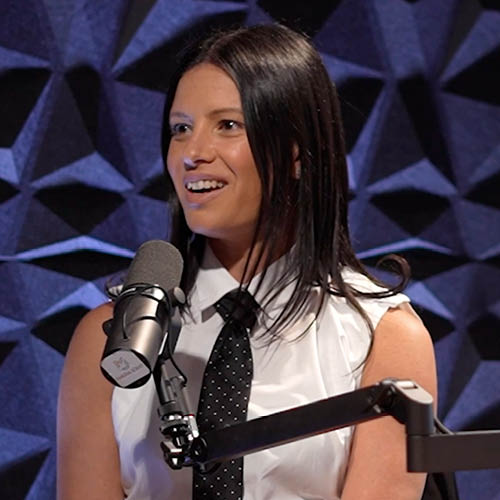
David: [00:00:00] For those listeners who are meeting you for the first time today, just tell us a bit about you and what it is you, you do.
Pamela: Sure. Um, so I started a uniform business 20 years ago, straight outta uni. I studied business marketing, um, and grew up with a dad who was a serial entrepreneur. Uh, and growing up, um, he had many businesses, but the last business was in fashion manufacturing.
Uh, and so learned a lot through him. But growing up knew I always wanted to do my own thing. Uh, also my mom, um, was known for her dress sense. Um, she was the super fashionable mom at school. Pickup. Always got stopped and asked, you know, what are you wearing and where is it from? Uh, and again, that really influenced my appreciation for the power of dressing well.
Uh, so through uni brainstorming around what I wanted to do, um. Came up with an idea of leveraging off what Dad was doing, which was producing business shirts and suits for retail [00:01:00] in Australia. He was one of the first businesses to open an office in China, um, and bridge that gap with manufacturing. Um, so leverage off what he was doing, but not work directly with him and create something of my own in fashion, but not in fashion, um, and bring fashion to uniforms, which 20 years ago certainly was not the case.
Um, and really kind of. Having studied marketing, uh, and being so passionate about brand and the power of brand storytelling, telling that narrative through uniforms, you know, what message does a uniform say about a brand, um, and the people wearing it.
David: What, what did you learn from, um, your mother? You, you, you saw the dressing well, had its, had its benefits.
What, what were those?
Pamela: I think confidence, walking into a room with confidence. I think if you're dressing the part, you also act the part, like it's just this, um, personal reinforcement, uh, to, to armor yourself in what you're wearing. Um, I was a very [00:02:00] timid and shy. Girl, and even through uni and when I started the business, but the minute I powered up, put on my power suit or heels or dressed up, um, I, I channeled a different energy.
Uh, and, and I just saw that, um, in her as well. Yeah.
David: And did you, did you spend much time within your father's business?
Pamela: School holidays were spent with work experience, answering phones, counting stock. Um, I, I had experience across all his businesses. Um, but equally we had family dinner every single night together.
It was one of mom's mandates. And dad would come home with war stories or, you know, success stories about work and, and, um, I've never had to touch fire to know what burnt. And I really feel like I lived his experiences. So I feel super grateful, um, for those stories.
David: And what did he say to you when you said, dad, I'm gonna start my own company.
Pamela: I'm pretty lucky. My dad has, and still is one of my [00:03:00] biggest cheerleaders. Um, and again, it, it kind of lets you walk into a room or in a scenario, open up a business feeling like someone's got your back. So, um, dad was very passionate. Still is very passionate and we had many conversations about what that would look like and, um, what success could be.
And so he, yeah, was my biggest cheerleader.
David: What would you say, so you landed on the idea of doing uniforms and doing them differently. Um, what would you say is the most misunderstood thing about workplace uniforms?
Pamela: I think the, the most misunderstood thing would have to be that they're not important.
They're just something you throw a, a logo on and therefore you can pay nothing for them. Put no thought into design color, style, um, because they are super important and they send pretty powerful messages.
David: So take us back in time, the, the ideas crystallized. You've spoke to your family about it, your dad's very [00:04:00] encouraging.
What was it about you or within you that gave you the, the confidence? That you are gonna be able to do this at such a. I
Pamela: had no confidence to be honest, so that that is not what I, I, I would say I had zero confidence starting, but I am a good student. I was always at the front of the class or the front of the bus on excursions.
Um, and so I, having just finished uni, I wrote the business plan. Like I was not the entrepreneur that thought, no plan, no. I sat down, I wrote the plan. I did a whole lot of market research. Um. I knew I had a lot to learn and I had many, many conversations. And it was through reading books, the conversations, the research that I started to learn and, you know, formulate what would become total image group.
Yeah.
David: For those entrepreneurs listening to this, who are starting their journey, um, what would you say to them about how do you learn we're all gonna make mistakes, right? [00:05:00] Um. How do you learn those lessons kind of quickly and effectively?
Pamela: I think. It, it's a combination of things. I think persistence is super important.
Nothing great happens quick unless you're really lucky. And for some that, that does. But for, for me, it's been a 20 year learning, learning experience. Um, a 20 year process of mistakes wins, highs, lows. Um, and so for me it's persistence, it's discipline. Um, it's slow and steady. I knew that it would be a process and I'm super competitive and I, I think that's a good thing.
So I, I knew I. I could not fail. I refused to fail. Um, and I think that competitiveness in me drove me each day. Every time I fell, made a mistake, um, to just pick myself up. I felt like I had no choice. I needed to make it work.
David: Failure only really occurs when we give up, right?
Pamela: Yes. And, and I, for me personally, the stakes were high.
Um, dad, dad had many businesses. We'd just lost my mom, [00:06:00] um, to cancer and, you know, he had worked really hard for the family and pushed through a really hard chapter and I had this opportunity to start something and I kind of wanted to prove to him that as a family we were fine. We could do it, we would survive.
David: Was there ever a moment where you thought, I can't do this? I think I might give up.
Pamela: Many moments. In fact, I had one yesterday.
David: I hope it wasn't prepping for this.
Pamela: I, I think that's a part of the journey. It's, it's really hard having your own business and there are different challenges and it doesn't. Get easier or it does, the challenges just change.
So the challenges I experienced when I started, um, if I was to experience them, them today, I now have the learnings and, and they may not have as big an impact on me personally, but there's always different challenges. And you're always evolving, learning, adapting, growing, making mistakes.
David: Yeah. And isn't that important as well that, [00:07:00] that it's, I think when people start a business.
Sometimes they think there might be kind of like a finish line where suddenly just everything's easy and everything works and, but it's just not, it's not the case. Like you say, the challenges change, but they're still there each and every day. What was the biggest challenge you think you overcame in it was the most difficult for you personally?
Pamela: Oh, I would have to say when we lost our biggest contract, um, that equated to 40% of our revenue. Um, it was also at the peak of COVID. So as a business, um, you know, we were faced with circumstances around us, you know, in the economy. And then having lost a client worth 40% of revenue that we'd had for. 14 years.
Um, it was this moment around, what do I do? You know, uh, do we reduce staff? Do we, what is it? What, what is my next move? Um, [00:08:00] and it was quite challenging to. Imagine the business without this client, like having had them for 14 years, um, it almost felt like a breakup. And, and, you know, being the leader and showing confidence in our next move, um, making the right decision, um, putting on that persona for, for the team to not lose faith in what we were about, um, was, was a critical moment.
David: Yeah. And, and when, when you reflect back on that, um. Did you lose the client because of kind of something that you, you guys had done or was it kind of an inevitable thing that was always happening? No, it was an
Pamela: inevitable thing. Um, you know, they were looking to manufacture themselves, uh, and have a service partner and we're a manufacturer making the product and then servicing it and putting our brand on it is such a part of who we are.
Um, servicing a product we don't make just doesn't work. So that was something we couldn't avoid.
David: Yeah. And what were. [00:09:00] Usually when like a challenge like that presents itself quite often by solving it, we kind of almost move the business to the next level. Like what were some of the things that you saw recur from challenging it that really drove the business forward?
Pamela: Well, I think like COVID as well. You know, it was just, I've always had a diverse business. Um, it has been a part of my strategy. I've never wanted to operate in one sector specifically. So for uniforms, we, we work across healthcare, hospitality, retail, um, and this was an opportunity for us to revisit the sectors that were doing well, um, through COVID, be it.
Construction, um, was shut down. So be it healthcare supermarkets, you know, schools early learning that needed PPE equipment. So we kind of did a whole rethink on industries that we were. Pushing to service. Um, and then internally, the, the lesson around losing a client that big that I was very mindful of when we first won this client, they were 70% of our revenue.
Um, [00:10:00] and we worked really hard over those 14 years to bring it down. Um, but where I stand today is that no client. We'll ever represent more than 5% of our revenue. Um, and that is the biggest learning because it's not a nice place to be in. Um, you want to be in control. Um, clients come and go that that's okay.
Business changes. They may get acquired or you may no longer be the right partner. Um, but the minute they equal more than 5%, it puts the business and my team and us at risk. And so I don't ever wanna be in that position. Yeah.
David: So if you sign a a, a major client. You kind of go back into the company and say, sorry, we need to sign a load more deals.
'cause
Pamela: no, I'd walk away if, if at this point they were more than 5%, I would walk away.
David: Really? Wow. That's a. Big statement.
Pamela: It is. I've heard, I, and, and it's been a lot of lessons in the making, but I, I have heard some of the most successful businesses say no more than Yes. Um, [00:11:00] and we are really particular about the kind of clients we wanna work with.
Um, and we're a for-profit business and we produce quality product, and we care about the impact our product has on the environment, on the people that wear them. And so. There is a specific market that works well with us. Um, and, and I'm proud of that.
David: Yeah. H how did you, how did you go about identifying that, that customer segment?
What did that process look like?
Pamela: It's been a long journey, but I think, um, and it's always. Easy to chase the shiny objects. Um, and so what I've learned in, and, and it's not always the case, like not all big business is the same. Um, and we are continuing to grow. So what 5% means today will definitely be different tomorrow.
Um, but for me it's about not chasing the shiny objects, it's about creating our own ocean. Um, not swimming where everyone is swimming, [00:12:00] being really true to who we are. And I, and I think. When you create a business model that can do that, that's where success lives. Um, and so that is what my lesson has been over the years, that I don't care what everyone else is doing and what customers they're after and how big that brand is.
As much as it would feel good to my ego to redesign the uniform for a. You know, multimillion dollar business in this country. Um, what does it really serve? And I've been doing this for 20 years. I know we're good at what we do. I don't need the big brand shiny object, um, for recognition. I need it internally.
I need it with our clients and supplier relationships.
David: And just over your left shoulder that we have sort of proudly, uh, showing there is your B Corp certification, tell us. What was, what was the thought process in terms of turning that? Why did you do it?
Pamela: To be honest, I went into it not thinking we'd earn accreditation.
[00:13:00] So, uh, I, it, it, it's a really difficult thing to accomplish. Um, but it was a challenge, um, and I saw it as a learning opportunity for the business. We do do a lot of tendering, um, to win contracts and clients and, um, ESG is a big part of that and, and. Educating myself on what felt like a really daunting subject, um, was what I thought B Corp would do.
And so it's structured really well. There are, you know, a certain number of pillars and, and my approach was to kind of work through those pillars, educate myself as the CEO and founder, educate the team and reshape the business to be better. Um, by following the logic of the pillars and the scoring. And so it was always this approach around review reform, what can we do better?
This will help us with tendering, it's educating us, it'll help us be a better business and if we get certified. Wow, that's amazing. Um, but yeah, it was a bit more than that. Yeah.
David: What, what have been some of the. From going through the [00:14:00] process, what have been some of the kind of realizations or changes you've ended up making in the business?
Pamela: I think the biggest realization was that everything seems daunting at first and overwhelming. Um, and I think it's important to talk about that because I, I can't, the, the language doesn't come naturally to me. I'm no scientist when it comes to sustainability. Um, in fact, I find. The narrative. Difficult to remember when, when you talk about emissions, but I'm super passionate about, um, doing it right, about doing better as a business.
And, and so when you carve it up and, and kind of break it into small chunks, it's not so daunting. Um, and it's no different to the approach we've had in business. Small, slow and steady, small steps, um, every single day. And, and that was the journey and the biggest learning.
David: Yeah. And what, what advice would you give to other executives who are.
Thinking about the BEAT court and undergoing the process.
Pamela: It's great. Go for it. Set us, uh, start. I think the bit, [00:15:00] the, the thing we did first was we just answered, um, the, that they create a quiz and you get a score and obviously to get certified you must meet a certain score. Um, and so when we did the score and we scored poorly, um, that was a great, like, okay, wow, we are not as good as we thought we were in certain areas.
Um, and, and then we kind of created a plan to get to score better.
David: How challenging was it? Because I imagine. When you did that survey, you got the results back and there were, like you say, there were areas you needed to, to improve to work on. How challenging was the thought process? Because I imagine there were some costs that came to, to this process, right?
Yes, definitely. What was that like in terms of thinking, okay, I need to spend the money on this to get it to a standard, but I don't see kind of the direct economic return on that. Was that difficult for you to kind of go through that process or was that.
Pamela: I think it's a balance in every business. Um, and so my, my answer there is no different to when we used [00:16:00] to get asked about charitable donations.
When we were really small. I felt like we, there was no point in us doing anything. We're too small, we're not possibly going to have an impact. Um, and and so it was that mindset in that you don't have to spend so much money to do the right thing. In fact, there is a lot you can do. Just by reshaping your processes, reviewing your workflow, um, that is time, but not necessarily money.
And so we invested a lot of time in reviewing things. Um, but it, it wasn't so much a cost one, one of the costs we incurred was around our recycling program and. Vowing to do better with soft plastic and paying to recycle our own soft plastic. But, um, that works for us and as a business and, and we've changed all our packaging and I think that's just what you do in product.
You have to have, have that kind of eco mindset around the product you're creating and what landfill you as a result of your product. Yeah.
David: And have you seen, you know, when you're speaking to prospective [00:17:00] clients or current clients, speaking to employees. Have you seen a sort of real uptick or respect for the fact that you've got the certification, the accreditation?
Pamela: Yeah, definitely. Um, I think when you, particularly when you tender, uh, that there is just this instant, okay, and the questions stop because you're B Corp certified, um, you've been audited. Uh, so from a client standpoint. Absolutely. And internally I think the team is just super proud and engaged and, and eager to learn.
Um, and, and that's kind of the stance we have even with clients. The education piece. You know, what, what is it to be B Corp? What does that mean? Um, and how can you be a part of that journey by either working with us, um, as an employee or as a client?
David: What's been the biggest challenge kind of over the years currently in terms of you guys are the best at what you do?
Terms of creating these fantastic uniforms that look good, feel good. [00:18:00] Um, what's the challenge in, in selling those?
Pamela: It's a tough economy, uh, inflation, you know, un un uh, it's an unstable economy. There's lots of change going on around the world. So our biggest challenge would be price, um, and the market going through this price war where the value of what product once was is being completely depleted in a competitive landscape because everyone wants the business regardless.
Of the cost. Um, and it's resulting in really cheap product. It's resulting in brands that are okay with cheap product. Um, not realizing that actually it costs them more in the long run. Um, and just questioning where we wanna be, um, in that landscape because it, it's competitive. You want to win. It's hard being told no.
And when you are. Not winning. What decision do you make? Um, and that was that rethink around values and the kind of clients we wanna work with. We will never be the cheapest. Um, we don't wanna make cheap product, but we also don't wanna be the [00:19:00] most expensive. So it's, it's just that, that balance. We've got volume, um, but we wanna sell quality product.
David: And, and what is it if, um, if we have your, your uniforms alongside perhaps some of a competitor who maybe does it? Cheaper or not with perhaps the focus on, it's like, well, how do we, how do we spot a total image? Uniform.
Pamela: That's a good question. I think the devil is in the detail. Um, and for us it's the little, the little detail, the contrast button.
Um, the inverted pocket, the button down collar, um, the subtle flash of branding across the side. Uh. Also just if a uniform is well worn, not a, a quality product looks good all the time. Um, and uniforms need to be designed for kind of wash and wear and daily use. So a, a poor quality product will, will just look different.
Even the way the collar sits is, is a great example.
David: Do you think the people in charge of [00:20:00] buying uniforms for their staff, do you think. You're smiling here. You probably know where I'm gonna go with this. Do you think they fully understand the importance of what they're asking their employees? To, to wear every day.
Pamela: No, I, I think, and understandably so, you know, everyone has different criteria, different KPIs that they're given. From a business standpoint, our role is to educate our clients, um, and those decision makers on the value that a uniform has, but. I expect not many people would understand that. Um, and we're also busy and, and I've seen this firsthand with clients, um, where they may have been acquired by a bigger business and no thought is put into who the existing suppliers are and what that process might look like.
To have a conversation around, you know, we need to save some money. How can we go about that? Can you as a uniform expert advise us on changes we might make to the product or to the offering? Um, it's, it's a stressful. [00:21:00] Time and so businesses may not think through things or understand fully the impact.
David: What are some of the, some of the clients you've worked with that you're kind of most proud of where you'd say like, this is what happens when you, you buy one of our uniforms.
Pamela: Um, that's a really good question. I would say the, the, the most well-known uniform that we rolled out and was Woolworths, um, and that was one of my first big wins.
We no longer do the Woolworths uniform, but that checkered shirt, um, that I think most of Australia knows. In our supermarket, um, the green checkered shirt, kind of taking it back to the farmer, the design, um, that was the first redesign Woolworths had had in such a long time. Um, so that was one I'm super proud of.
Um, but there's been many,
David: it's such an important part of branding surely, but maybe companies don't see it quite that way.
Pamela: Uh, [00:22:00] it depends on the industry. It depends on the marketing strategy, and, and it really depends on where that business is. On in that particular point in time, we work, um, best where a company is in that rebranding or marketing stage of their, of their business strategy.
You know, where rebranding, it's super important. We need to make an impact and uniform plays into that. And what it looks like, um. Where there's no rebrand, it's just BAU. It is easy for these companies to kind of fall into the trap of, okay, price, price, price. It's, it's an obligation. We have to provide it.
How do we get it at the cheapest price possible?
David: Yeah. And when, um, you've, you've probably had this conversation hundreds, thousands of times with prospective clients when they're, when they're pushing back at you and saying, price, price, price. What are you, how do you deal with that? What are you saying back?
Pamela: I, I love when there's an open conversation. Um, so I have [00:23:00] no issue if a client has a price point, share it. Um, we, we, there are many ways we can achieve a price point. Um, what makes it difficult in, in this market is where no one is talking about. There is a price point. This is a price driven exercise where you are being told, no, we want to uniform price it.
Um, only to find out later that actually it was just a spreadsheet with an assessment of the cheapest product. So I, I am very, um, open to conversations around price because there's a lot you can do and I often say there's not a price point we can't hit depending on. What you're trying to achieve. You know, do we produce a t-shirt versus a business shirt?
Um, what kind of fabric are we using? How many trims do we apply? Uh, and we, we recently won a national contract, um, on this kind of conversation, this open dialogue. It was a partnership. They had a price point they had to hit, which commercially I completely understand. And we had this lovely conversation around, okay, well if we do this, the ads 20 cents.
If we take this away, you save 50 [00:24:00] cents. Um. This is, and we, we designed a product that worked from a quality standpoint and their price point. Yeah.
David: And I would expect as well that if companies, I mean, companies know that they need to invest in their, in their people, and they're spending hundreds of th like millions of dollars.
Some companies on employee engagement, retention. All these types of things. And I remember when you and I first spoke, it really struck me that the thing that people wear to work every day that like that, that that's the first engagement they're gonna have with their, their company's brand. They've gotta represent it all day.
Like you said, at the very top of this conversation, if people are dressed well, they feel good, they play the part, they portray confidence. Um. I would imagine the, [00:25:00] the return on investment for this done properly could be, could be huge, right?
Pamela: Absolutely. And when done poorly, it's super costly and really bad for brand and, and actually internally takes a whole lot of time.
So it's not just about the product, but the experience, how the employee orders, how they pick their product, the visualization of that product. Um, it's, it's an entire process. You're right. Every single day someone gets up and gets dressed in their company uniform. It tells them who they work for and what that represents.
Um, and there is power in a quality product, in something that someone is super excited and proud to wear something that makes them feel good. Um, and, and tells the world because you stand differently. You, you, you position yourself differently when, when you feel good in what you are wearing, you, you, you walk differently.
David: Yeah. And that, and that process. You, you just made me think. So, for example, the Woolworths contract, I mean, if you think about [00:26:00] designing a uniform for their employees, that's people of all walks of life, all shapes and sizes. H how, how do you, how do you handle that? Kind of, I think that's what I
Pamela: love about uniforms versus fashion.
Um, it's challenging in that in fashion you design for a particular demographic. Um, it might be an age group, you know, whereas in uniforms you have to work across all shapes, all sizes, um, and it's a challenge. Age care would be one of the challenging industries to design a uniform for.
David: Pamela, talk to us.
What are you most excited about for the future? Social image group, what are the opportunities that you see?
Pamela: Um, I'm, I'm most excited we're, we're on this growth. We're, we're in a kind of different space to where we've ever been. We're, um, we're respected, we are known. Um, we have this reputation as a B Corp, um, brand [00:27:00] in the uniform space.
And I'm just excited to see where we go. We've opened an office in New Zealand recently, so we're expanding there. Um, and so we're. On this big growth, um, journey, but sustainable growth, uh, slow and steady growth. Growth with the right partners and, and there's just something liberating about that. There are only certain kind of clients we will work with.
This is the category and we've designed an ocean that we're swimming in. Um, and the team is really engaged. As a founder, CEO I've probably never been more, um, focused and never been more clear in the direction of the business. Like it's always been a little broader. Um, and this new. Iteration of where we're heading is very specific.
Um, it's a specific ocean we're swimming in. There are specific types of fish that we're chasing and the team are on this journey and super excited and it feels right that, that kind of feeling. Um, so I feel like watch out. We're coming. [00:28:00]
David: Nice. Uh, was there a moment when you, it kind of clicked for you that Yeah, we, we do need to.
We've been broad for a while. That's fine. We've been, you know, finding our feet, defining our brand, all that type of thing. Was there a moment when you're like, okay, actually I really need to do some focused thought on this to,
Pamela: I think it's in, in those moments where everything feels like it's falling apart, where you feel like it's too hard and you lose a big client again, and you are told no many, many, many times.
Um. And it's that kind of moment where you think, oh, I can't do this anymore. I'm done. I'm gonna exit. I may as well sell. I'm gonna call that broker that's been hounding me. Um, and then you realize, I don't know, you kind of, you go through this process and then you realize, no, we've got something good. This is going to redefine us.
We need to prove ourselves, and this is what we've learned through those hardships, and this is how we're going to do it different. So it's through that.
David: Because that, that comes [00:29:00] down a lot to your kind of mentality as the, as the founder. Is there a, is there a, have you kind of built a process you go through when you feel like you're in one of those moments?
Do you have kind of a playbook now where you're like, okay, let's get the team, let's ask these types of questions.
Pamela: Um, there are two things that I live by and that have served me really well that I didn't kind of know so early on, but I've learned over the years and one is count to 10. Um, so I, I have no, I used to feel this, um, urge to react quick and that that's what leadership meant.
That's what a CEO needed to do. You need to communicate and act quick, um, and. It doesn't serve you. So the power of the pause, the power of counting to 10, um, and not feeling obligated to communicate anything until I'm a hundred percent sure of what that communication is, um, has helped. And the other one is to kill it with kindness.
So, um, and that serves me in all different fronts where a client has been unreasonable, where an [00:30:00] employee may be unreasonable, where I am, um, feeling unsure. Uncertain. Um. Nothing bad comes of being kind and you feel good at the end of the day and you can kind of walk away thinking, well, we did the right thing, we did the best.
And I find that things come back differently when you have that energy. Um, whereas if you engage in the negative energy, um, then it continues to be negative for some time. So I would say those are the two things that regardless of what happens in the business I go to, so counting to 10, the power of a pause, um, and kindness.
David: Yeah. And being kind. It's not being, it's not being weak, is it? Is it? No, it's very different. No?
Pamela: Yeah. And I've been told that in that, uh, when we have our very open conversations with team members, that they find me approachable and fair, um, but also. There is enough of a presence that, you know, you, you have to be firm when you [00:31:00] need to be firm.
And even with clients and, and, and it's, but it doesn't, doesn't mean you be unkind.
David: And how has, from a, from being a founder all those years ago to growing this, this business, and like you say, you've had, you've had the ups, the downs, but you've always tried to grow it sustainably. Um, how has. Your approach to what you need to do as the, as the founder and the CEO changed over the years.
Pamela: It evolves based on what the business needs of me. Uh, and so when we lost that biggest client, you know, I started the business in sales hustling and, and you know, this kind of building and pitching and selling is, is my strength. And so when we lost the biggest client, I was absolutely in my sales moment, um, and.
Whilst I was CEOI was driving sales and going to pitches and, um, pushing business growth in that regard. Um, we're in a [00:32:00] far more stable position and, and now I have a really great leadership team and, and my role is to lead, um, and to allow time for me as a leader to think outside the box, to know what our direction needs to be to coach and mentor our leadership team on that journey, to trust them to make decisions.
Um, so it really just changes depending on. What the business needs of me and where we're at in our journey.
David: Yeah. And what does leadership mean to you?
Pamela: Leading by example. Um, always earning. Your stripes. I, I think having started the business when I was so young at 20, um, it, it's something that I did not take lightly.
I, I wanted people to respect me based on my experience, based on how I led. Um, not because I was an owner. Um, and so I've always felt like I have to prove myself. Um, and that hasn't changed.
David: Do, do you ever [00:33:00] suffer from, I don't know if suffer from is the right word, but do you ever feel. Imposter syndrome.
Pamela: Yes, all the time. It's a, it's something I've spoken about many times. I think it's super important to talk about, um, public speaking, putting myself out there. Um, pitching, I, I would break out in hives when I was 20 and I would have to go pitch a big client, um, and. You've, I've gotten better, but that doesn't go away.
I, I've got my first board position. Um, I sit on the board for Family Business Australia, and I felt like an imposter, you know, that first moment, like, am I really on a board? Do I really deserve to be here? Um, and you know, it's, it's that moment of being uncomfortable that pushes you to grow. And, and so I've changed the narrative.
I've gotten better. I've got my toolbox around how I deal with it. Um, I used to. Really channel that nervous energy and make it bigger and worse for myself. Whereas now I see nerves and, um, that feeling [00:34:00] of a little bit of insecurity as humbleness and, um, passion.
David: And what advice would you give to the 95% of people listening to this who also do suffer from, um, imposter syndrome?
How, how do you use it to your benefit?
Pamela: Um, I think it's the power of the reframe. So nervous energy means you are passionate. It means you care. The minute you're no longer nervous, you don't care. Um, I think it's also about celebrating your wins and not just living in this moment of, oh my goodness, oh my goodness.
Um, I don't belong. I, I think taking that pause to actually acknowledge what got you to this point, um, how you got there, it, it helps build that confidence to know that you actually deserve to be there. Um. Talk about it. There are, for the most part, I never spoke about it and it just blew my mind when I did, how many people would say to me, oh my gosh, I've been there.
I've felt that, and these are people that I would look at thinking, oh my God, they've got it together. They, I wish I could not be [00:35:00] nervous like them. And yet, um, they just, they had a good game face.
David: Yeah. They're just good actors. Yeah, I think, I think as well, for me, when I think about it, it's. It drives, drives good preparation.
If you are, if you are perhaps nervous that you perhaps don't have the skills and experience to do whatever it's you're doing. And if you can use that to actually do the preparation beforehand, that's gonna
Pamela: Absolutely. I have no shame in saying I am always over prepared. It helps me sleep better. Um, and I think I deliver better as a result that, you know, I, I don't wanna walk into anything.
I'm prepared.
David: How do you plan for the days that you have coming if, if you are. If you're someone who wants to be, you know, prepared for well everything, how, how do you, how do you kind of manage your time to be able to reach the levels you wanna reach without? Burning yourself out? I guess
Pamela: a good question.
Um, [00:36:00] I've always been really disciplined, um, in, in all facets of life. And so my morning routine is super important to me, um, and disciplined to, to stick to that. Like I see a huge difference in how I navigate uncertain times or challenges or things that pop up if I don't. Um, set myself up the right way at the beginning of the day.
Uh, I have two young children, so my morning routine has been challenged, to say the least, but I still find ways to, to have some time to set myself up to be ready for the day ahead. Um, and for me it's a daily 10 minute meditation. Um, for me it's the ritual of a warm cup of water the minute I wake up with some lemon.
Um, it's that moment. Of sitting down and, and just prepping. And it might mean that I get up super early and try and wake up before the house wakes up. It doesn't always work. Kids can smell when you walk out of your room. I [00:37:00] just noticed the biggest difference when I've set myself up that way and equally weekends, you know, I've had my business 20 years.
Um, I used to have this mentality that, you know, you have to just work hard and seven days and massive hours and, um, it's not sustainable. So I. Try and really carve out as often as I can. Weekends where I'm earthing, I'm, I love the ocean. I love walking on the beach and bush walking and hiking and swimming and all those things.
So again, it sets me up for a better week. I've noticed when I've carved out that time over the weekend.
David: And, and what's it, what's it been like growing a business while growing a, a young, young family? What have you, what have you learned from that, that process? Um, I
Pamela: think for me. Because I love what I do and I, I was probably going a little too, um, hard in, in my work hours in, I was just always on.
Um, I was doing massive hours. Weekends were not weekends. So having a young family and, and kids didn't come [00:38:00] easy either. So when they did finally arrive, um. I, I wanted to make sure that I made the most of every moment and I have my own business, so I should be able to design a life that works around that.
It's really challenging having a business. So if, and so it was this conversation with myself that I've done this for x amount of years, um, and I have my own business. Therefore, I should be able to define what my hours look like, how often I'm in the office, what support I need to be able to. Be the CEO of a business this size and not be ashamed about it because yes, I do need a nanny and, um, I do travel for work, but equally it means that I might do a four day week or a three day week where I need to, um, as part of this chapter in their life.
Um, and it forced me to go at a much more sustainable pace, actually. Um, where, and, and I think I'm better as a result of that, that that lesson of, you know, burnout kids, kids helped me to slow down. [00:39:00]
David: What did that do to the culture of the business when you did kind of slow down a bit and become slightly more balanced?
Pamela: I think it, it really helped the business because the team sees that as much as I value my time, I want them to value their time. Um, and we are such a culture about, you know, where we have to work hard. We, we all work hard as a team, but equally the, if people need to work. In different chapters of their life.
Like I've had someone with me for so long, she's now a grandma and she's down to two days a week, but was five days in sales. And you know, as her journey has changed, she wants more time with her grandkids and we were able to evolve her role to match what her choice in life is. And, and that feels really good.
And I think everyone loves being a part of that where they can see if they wanna move. Um, I've had an employee that was with me 11 years. That wanted a lifestyle change, move out of Sydney, she's moved to, um, port Macquarie. And we were able to accommodate for that. Uh, and, and I think that the business just works better.
[00:40:00] Our culture is better for that,
David: for those, for those who are listening, who, um, who are in a si similar situation to you, working long, long hours within, within the business. Maybe they've, yeah, they've just had a young family or they've kind of realized I want to have a bit more of a balanced life here.
What advice could you share with 'em about how to design that or sort of redesign that relationship you had with the business?
Pamela: I think first off, chasing balance is tricky. Um, and I want to preface this by saying like there are moments where I have zero balance and children bring a whole different juggle and I've had to rework.
Work life looks like with young kids and a young family and adapt to that. Um, and there are moments where you just have to put in the hours and work for seven days, but it's about just knowing yourself and your boundaries and actually putting thought into where you are at and how sustainable that is.
Uh, because if as a leader you need to [00:41:00] be on, you need to be able to make. Good decisions. You are accountable and responsible for a team of people, a family. Um, and so for me, I was never my best self. If I was burnt out, I couldn't problem solve. I couldn't be there for team members that needed me. I also couldn't be there for my family.
Um, and that didn't feel good. And I get into that trap still. Um, but I'm. Big on self-reflection. And I just think that that's a tool we all need and it's, what am I doing? What can I do differently? What can I do better? How can I change this around? What can I invest in? I might need to spend a little bit more, um, but that'll give me some more time.
Uh, and it's just that constant problem solving around what will next week be and how can I make sure it's not a repeat of this week because this was not a good week
David: and, and it's okay right to have. Not, not every week is gonna be good. And there'll be those days where it'll be like, well, perhaps I could have done something a bit differently [00:42:00] there, or I could have offloaded that, but I did it.
That's fine. But it's, yeah, it's a case of learning. And how, how have you, how have you been able to engage your team in that? In that process,
Pamela: I've always led, honestly, um, and transparently. And so, you know, they, they've seen the challenges I've had. If, if something and, and sharing where I think it's relevant, uh, is something I do, you know, and so I might join a huddle and, and say, yesterday was horrific.
I had school pickup at this time because. My son was sick and we didn't plan for that. And then I had a client call me at this time and X, Y, Z. So I just think being honest and open and, and the team see me when I'm having good days, bad days in, in an appropriate sense as a leader, just to make them realize that we're all human and we all have these moments and it's okay.
Um, and that has worked for me.
David: And, uh, if, if you could go back and give [00:43:00] 20-year-old Pamela. Some sort of key advice. What, what would you choose to tell her?
Pamela: I, I would want her to have the tools, some of the tools that she has now around, um, calmness and the power of the pause and. Just that confidence in everybody has moments that aren't great.
And you know, if, if you pause, if you look after yourself, you, you can get through. Um, I think, uh, you know, I lost my mom young and, and suffered with a bit of anxiety as a result of that. And so if. Any tools to alleviate anxiety. I'm forever teaching my kids and talking about anxiety in the workspace and the importance of breathing and moments of just reflection, um, to help navigate that.
I think that would be a tool set. Yeah, that I wish. [00:44:00]
David: She'd be the only 20-year-old to be doing breathing exercises. Probably. Although, I mean, now I, I, I dunno about you, but I'm constantly amazed by the, um, kind of the, the, the new generations. Some of the skill sets they have, how well rounded they are in the way they.
They, they think how mature they are.
Pamela: Yeah. It's, it's, I I think it's great and, and I think this power of education and talking openly about this stuff, it's a very different time. And, um, we need more of it.
David: Yeah. And what do you, when you think now about the future, um, for the business, for you, what are your, what are your hopes and dreams and do you, do you think proactively about legacy?
Pamela: Um, absolutely. I, I have, um, I'm in a family business. I work with my husband and my dad. I have two young boys who are watching us build this business. [00:45:00] Um, and I just think it's smart to, to, to always have an exit or a not exit strategy. What does that look like? So the business has always been built around.
If we need to sell, we can. Um, if we want to sell, we can, but equally, this is a long term. Plan. Um, it's not something we're looking to build and flick. Um, and my 6-year-old has already said that he wants to work at total image and design uniforms. So I feel this pressure to, to ensure we set him up for success as well.
So I think, um. Family business. I, I, I'm a, I sit on a board. I think family business has a special energy and I, I'm super proud of my family business. And so I'd love to see that continue. Um, if my kids wish to be a part of it, um, the opportunity will be theirs.
David: J just as we come towards the end of the episode here, there's a couple of segments.
I just wanna throw some kind of rapid fire questions at you Okay. If I can. So, first thing that comes to mind, and you're, you're not allowed to [00:46:00] breathe for 10 seconds before you answer it. Uh, what's a, what's an app or a software that you can't live without?
Pamela: Calm, daily, calm.
David: In your opinion, what's the best time of the day to be creative?
Pamela: For me, it's mornings or on a plane
David: really. I really struggle on a plane. My, my body just shuts down on a plane. I'm completely Oh, you can't be.
Pamela: I, I was really upset when wifi kicked off on planes 'cause it was my sacred space where, where I could not be contacted. So most of the time I keep it off, um, because it's that, it's that space where no one can interrupt you and you're just high in the sky with your thoughts.
Um, yeah.
David: What's the favorite uniform design you've ever worked on?
Pamela: The Australian Winter Olympic team uniform for Pyeongchang 2018
David: in a scenario where you could no longer, uh, run [00:47:00] total image, what else would you do?
Pamela: I love property and property design, so I'd get into property.
David: And then finally we have, we have two questions we ask to all guests.
Bit of a podcast tradition. Um. What's one thing you've changed your mind about recently?
Pamela: I think, um, it's probably over the last 12 months that, that power of the pause, um, I used to feel like I had to go at a certain pace and success looked like a certain pace. Um, and it was a whole lot of pressure and no. Time for pausing and actually the power of the pause and the clarity that comes with thinking.
I know there's been a bit of a theme today on that, but it really is something that I'm embracing and have done more so of over the last 12 months.
David: Yeah. Such a great tip and so easy to implement and huge [00:48:00] benefits. Yes. Um, finally, what's something you've not changed your mind about? Which is kind of a core belief for you that you'd want to share with others?
Pamela: Um, I would say it's consistency and discipline. I think it's so easy, particularly in today's time, to think things come easy and quickly. Um, and for me, just seeing the real impact, even in my most challenging times of staying consistent, my same morning routine, my same process, um, in problem solving, the consistency of small steps and the discipline to execute things.
Um. All the time. Consistency is not boring. That's kind of where change happens and, and businesses grow.
David: Pamela, thank you so much for joining us today. It's been a real pleasure.
Pamela: Thank you for having me.



 232K
232K
 56
56


 POPULAR TOPICS
  FEATURED PODCASTS


 Home
Home
 Podcasts
 Covers
 Community
 Sign In