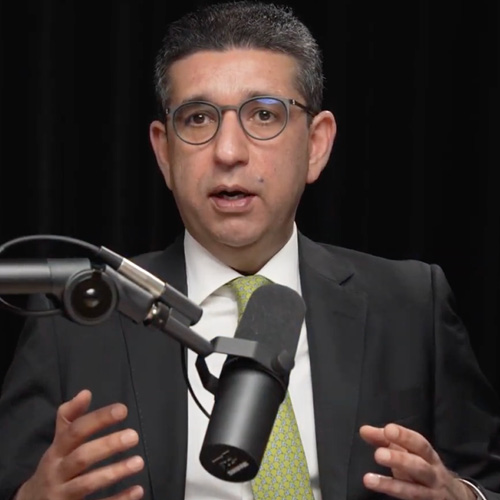
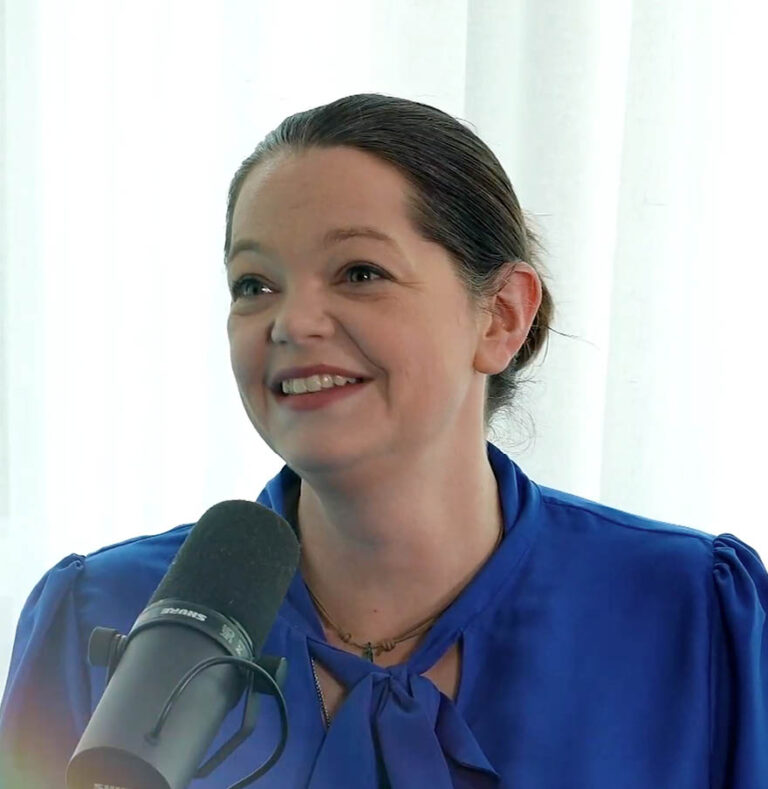
Speaker 1 00:00
So I think leadership, for me is all about listening for families that are working across multiple
markets and institutions. Fragmentation can be quite stressful.
Speaker 2 00:13
I think look, taking the bad news and going to clients is important, because if you try to sugar
coat or hide when things are not going very well. Guess what? When things come back, no
one's going to be standing for you, and that's the reality. You can have all the strategy in the
world. It looks great on paper. Everyone really bites, and everyone thinks it's the best. But the
slip between the cup and the lip is between creating the strategy and executing
Speaker 1 00:41
across the Middle East, wealth is growing fast, but the advisory landscape hasn't always kept
pace with the complexity of modern family needs. More Clients are finding themselves juggling
multiple platforms, institutions and advisors, without anyone truly connecting the dots today,
I'm joined by someone building a firm specifically for that reality. I'm speaking with Kunal
Varma, Chairman and CEO of investgate, private wealth, which was created to bring
international grade advisory together with regional understanding and deliver something closer
to a wealth concierge model for sophisticated families. Kunal, welcome
S
S
S
Speaker 2 01:24
to the show. Hi, Laura. Thank you so much for having me here.
Speaker 1 01:28
Where I really wanted to start is I would love to know from you what personal experiences have
shaped the way that you think about wealth, trust or financial guidance.
Speaker 2 01:42
Look, I've been, you know, working in the financial services industries for a better part of my
life, nearly 25 years, okay, and I've worked through various jurisdictions, which has given me a
lot of insight on what customers want, what they're looking for, and how they've tried to
structure their wealth and their estate planning. What has really come to life is that if you look
at the traditional way where the banks operate, it is extremely hierarchical, and they're not as
nimble. And customers today are looking for services and solutions that actually match their
need and quickly, I think that's one. I think the other angle around the trust piece that you just
spoke about it is products and solutions are extremely commoditized. Everyone is offering
similar asset classes, similar products. But the reality is, if you want to move away from a
commodity driven market, you need to work on the trust element. And the trust element
doesn't come overnight. It comes through being conscientious. It comes through being
thoughtful, and it comes through being structured with a strong execution plan. And I think
those elements have really defined in terms of how and what customers are really looking for. I
usually say this Lara, and, you know, I don't mean it as a joke, but the region is getting very
easy to live in, but the complexity of how to manage the wealth around these clients is getting
extremely, extremely difficult, because you have customers coming in from all over the world,
wanting to come to the UAE, more so, and then the Middle East, you know as the wider region.
And they're coming from different jurisdictions. So there is an element of complication, and I
think decluttering that complication and keeping it simple and easy is the way to really go after
this Absolutely.
Speaker 1 03:40
I'm curious to know, when you speak about these experiences that you've had, how do you
believe it's really shaped the type of leader that you are today?
S
S
S
S
Speaker 2 03:50
Look, I think you know leadership in that sense, if you really think about it, it's about listening.
And if you can listen attentively, there will be a lot that you will uncover. And for me, it's always
been about truly listening and speaking to clients when and what will really matter to them.
Right? It is not about just going in with a solution or going in with a product that would typically
give us incentive, but not really meet the need of the client. So I think leadership for me is all
about listening. Was about resilience. I worked in India, I worked in Dubai, I worked in Bahrain I
worked in the UK, so done a little bit of everything, and been a core financial services guy, and
that calls for resilience. So in addition to listening to people, you got to be have an internal
resilience, and then your compass, your moral compass, needs to be really, really aligned, I
believe, and that's been my mantra, really and very simply, that if it's right for me, it should
ideally be right for the client, and if it can be. Simplified further so that it really resonates. I
think then the job's done, and that's for me, is leadership in very simple terms.
Speaker 1 05:09
And when you're making those difficult decisions today, what principle or lesson do you find
that you come back to the most
Speaker 2 05:19
I think I'll go back to the moral compass here, Laura, I think you know if it's right for you, then
it's right for the client, it should be right or you should do right when nobody is looking. And you
should ideally take on tougher paths and solve for tougher things, because the outcomes will
be much greater and far more rewarding. So I think these couple of lessons, really, you know,
come together. And, you know, talking about customers, I mean, customers are simple. Laura,
customers are simple. Their needs have become complex because of the globalization in the
world that's coming through, right? And I think if you can, very simply, in a decluttered manner,
bring that to life for the customer, and not just talk about one need, which is linked to how they
will place their money in markets or across asset classes, but also give them a holistic, more,
far more integrated view of their liquidity, their risks and their future goals. I think that's the
way to really address that. That would be the way I would really say, you know, going back to
your question, yeah, that's how I would really define it, yes.
Speaker 1 06:35
And for leaders that are listening to this conversation who find it challenging to block out that
noise that you just spoke to. How have you been able to cultivate that focus on what the main
thing is that you're setting out to do despite all that noise and despite that clutter?
S
S
S
S
Speaker 2 06:56
I think it's a good one, right? Because, look, I think everyone wants to keep it simple, but
unfortunately, when you get caught up in bigger institution organizations, you try to do exactly
how and what the roadmap has been drawn. So I think for me, even through my professional
journey, I remember, be direct, be frank, say what's in your mind, you know, and just be very,
very open about it, and be extremely open to getting feedback, because that's where leaders
somewhere get it wrong, because, you know, if they go into a tizzy about I was given this
feedback, and it's not resonated well with me, and I think I need to go back, And I need to, I
don't think it's about that. And the last 25 years have shown me that it is not about that. It is
about the larger good. It is about the true north. You got to keep your focus on and you really
need to go after what really matters. You can't do everything for everyone. And that's the
reality. And you got to pick the wins that you believe and back yourself up and focus on the
true north. And if you can do that objectively, day in day out, and execute to that theme,
people will be in a far better place. I'm nobody to give a lot of. I don't know insight about this,
but I think if you really think about it simply, and I keep using this word simple, because the
world is complex. So if you're going to be in a complex world and try to over complicate things,
you're not going to be able to execute. And if you're not going to be able to execute, you're not
going to be able to get the best piece going up, you know. So keep it simple. Follow the true
north. Keep yourself aligned and do the right thing when people aren't looking. And I think if
you can put some of these things together, make for a good leader, I guess. And it's worked for
me, so I guess it should work for the others as well.
Speaker 1 08:56
Yeah, that's great advice. I would love to shift the focus to investigate. Take us back to the
beginning. What was the problem that you saw in the marketplace that made you stop and say,
We need to build this company?
S
S
Speaker 2 09:14
So Laura, I think, look, you know, 25 years, multiple jurisdictions, and only been doing wealth
management and talking to clients, understanding their problems, and as we spoke to clients,
what I had realized through the journey was clients were getting extremely worried in terms of
how the banks were operating. Is it too bureaucratic? Is it too driven by incentive? Why is the
process not simpler? And on the other side, you would see banks saying, you know, we don't
want this format of a client, or we want a client who would give us more income, and so on so
forth. So I think once I really started seeing this and the. The irony of this was it wasn't an issue
highlighted by customers who were in Dubai. It was in Dubai, in India, in Bahrain, in the UK,
everywhere. The baseline was same, that it is getting too complex. We are using too many
jargons. I have simple needs, and I want to be able to address those needs. And for some
reason, the requirements that were being laid out by the clients, I'm not saying they were not
being matched off by the institutions, but they were not completely and independently being
matched off by the institutions. And that's where the thought of investigate came to us. It's a
gateway to your investment needs. It's not squarely focused on just placing money in markets
and giving you diversification, but it goes beyond. It gives you access to your debt, liquidity,
risk management and your future goals. And I think when we built in Westgate, one thing we're
very clear on Lara, it's not about differentiation. It was about distinction. And there is a
difference between the two and and the word distinction, if you really deep dive into that, it
was about how do you really understand the entire ecosystem and the needs of the client. How
do you really communicate to those needs of that client, which is simple, easy, palatable, and
how do you really execute to the needs of the client? Because the model that investgate is
embarked on is a very established model in the West, the US is extremely bubbling on the
external Asset Management front, and so is Singapore. And Dubai is really gaining momentum.
As you see, a lot of these millionaires come in, right? I was taking stock Lara, and last year,
there are different numbers that are being quoted. It was said 9800 millionaires came into the
UAE. And if you really backward work that math, that's 30 millionaires a day. So the view for
investgate was, it is not differentiation, it's distinction. And there were three gaps that
investigate was looking to really solve. If it was a gap conversation, there was three gaps. It
was wealth versus advice. So wealth is growing at a much, much faster clip, but the advice
penetration and the understanding of what advice needs to be provided was not growing at
that clip. The other one was around complexity. I said the world is getting global. People are
making new homes, and the Middle East is becoming a very easy place to live in, but a very
difficult place for planning. And that was the gap that we wanted to address. And the third one
was the governance gap. You know, there is a lot of movement of wealth that is happening,
which we call the Great transfer, which is happening from the first generation to the second
generation, and the views for Gen X millennials is very, very different to how their parents
really structured wealth and so on, right? So, so I think differentiation was not the issue. It was
distinction. Distinction in how we look, how we communicate, how we advise and advice was
around the three gaps that we really identified, and that's what we're really going after.
S
Speaker 1 13:27
Yes, and one of the things that I wanted to touch on further with you, that you mentioned
around planning and for families that are working across multiple markets and institutions,
fragmentation can be quite stressful. And I'm wondering, how does investgate act as that
human aggregator for clients? How do you bring that simplification that you were talking
about? What does that look like in in practice?
Speaker 2 13:57
Look You know, I think it's a great question, Laura, and we keep talking about globalization. I've
spoken about it during our conversation as well. Now, if you really think about it, cross border
would mean we got to peel this onion a little bit, right? If you really think about it, cross border
is people migrating from different parts of the world and finding a home in the Middle East,
more so the UAE, and then looking at other markets like Saudi and so on so forth, right?
Because that's where there is immense action happening, immense wealth growth, immense
opportunity. Now, when it comes to us, our view is very, very simple, like I said, and the focus
that we are bringing to our clients is around one wealth advisory, which means we help you
connect to different jurisdictions through the partner and custodian banks that we have, and
we can give you access sitting in your home country, which may be the UAE, into Switzerland,
Singapore or Europe. It allows you diversification. Of your asset in different jurisdictions. That's
one way, the other way, which is, you know, if you look at most of the wealth advisory outfits,
they are more or less focused on deploying and creating diversification, which is important, I
believe. But they don't go beyond that. And what we are looking to do beyond that is, if you
think about debt, and you're sitting in Dubai and you want to buy property, sitting in Dubai, in
London, because you believe that's a great opportunity with the where the market is, or you
want to invest in Dubai, per se, or you want to buy asset in Singapore, investgate sits there in
the middle. Through the partners that we have, we can facilitate an end to end transaction for
our clients. On that piece you come in and you have complex needs where there is a transfer of
wealth happening between, you know, the first generation going to the second generation. And
you want to really create the rail guards for your second generation so that the wealth is not
destroyed, but it's protected. We help put trust services. So we create foundations Trust
Services and create trust for our clients. And these trust structures can either be through the
UAE foundations in DIFC, or through Guernsey Jersey BVI, where we help really place all assets
there and structure the wealth division in a very, very apt and concise manner for our clients,
right? I want us to be the outsource CIO office, or, like you just said, Lara a wealth concierge for
our clients. So it's just not about how we will deploy asset and get multi jurisdictional
advantage for clients, but it is how we can simply bring everything under one roof and through
our value proposition, really touch on all those needs and provide the client that experience
and the simplicity that they really require in their life, in their very complex life. Let me put it
that way.
S
S
Speaker 1 17:11
When you think about the future of wealth advisory, it is changing rapidly, and there's new
technology, there's different client expectations, as you've touched on, there's these new
investment opportunities. What do you believe the industry will look like over the next decade?
Speaker 2 17:32
Look, I think it's going through a mark shift, like you just said, it's getting tech enabled. It's
getting AI enabled. And I think, you know, there is major disruption now that technology and AI
disruption is not just in in the wealth management industry, it's across the board. But what is
happening with this tech, in digital investments that happening in this world, a lot of people are
taking on and investing in markets. You hear Laura all the time. There are new millionaires that
have been created investing in crypto asset. There are new millionaires who have been created
by investing in real estate asset, in markets that have really done well or grown over the past.
So I think the landscape is going through a major disruption. I think 10 years out Lara, it's going
to be the first point conversation that we had. How simple is that algorithm or that tech that is
being you know, that the client is consuming so that they understand how and what to do. I
think the second disruption that's going to come through is a lot of consolidation in this world.
Because I think clients are going to get extremely clear in what they want to do because of all
the expertise that they have got through the way, and they'll get into a mode of self execution,
right? And I think the last piece that I would say is markets are going to go up and down. Laura,
now tech can't change that, and neither can tech predict it. But what can tech do is create
ease, ease in process, ease in execution, and ease to get things done. So I think that's going to
be a major disruption as the world goes. You know, 10 years out in this space, more so. But I
think I'll come back to one point as we talk about disruption. Now, I think, like they say, you
know, oil is the new gold, or data is the new gold. I also say time is gold, and what clients don't
have Laura is time because they're spending time running their operating companies, making
money and creating liquid cash flow. So consuming data, understanding data. Are hiring people
to do that. It's not something that they want to spend their time on. They want somebody who
they trust, who they can work with, who can come on. So even with this tech disruption, yes,
there is going to be a lot of nimbleness and straight through processing that will come through.
But in reality, what you're going to also see is clients will have less and less time. We can say
tech will create more time. Clients will fill that time by doing things that will matter most for
them, staying with their family, focusing on health, focusing on things that matter to them.
Money does matter to them, but they would always need somebody independent to tell them
how and what and where they should be placed. So lot of disruption. But I think that element of
time is going to be the critical one for clients more so. And how do you really create that time
and intuitively and simply explain to them what they need to do is going to be the real
differentiator for the future, and when
S
S
Speaker 1 21:02
you're speaking about these evolving client needs, and particularly for these high net worth
individuals, how is investgate positioning itself to really fulfill and exceed those types of
expectations?
Speaker 2 21:18
So Laura, like I said, you know, products are commoditized. Everyone is offering the same
product suite across the board. So I don't think our focus is product, because there is enough
and more to have, and you would see more banks creating different products and very, very
innovative products that are coming through. I think it's beyond products. I think it's more
around solutioning, right? So I think if you really think about it, the investigate, I said to you
that we had three broad gaps that we identified, and we said we are not going in for this
differentiation, but our job is to create distinction in the way we operate. What we've noticed as
well Lara that most banks are not targeting a certain sweet spot of the client pool. These are
clients who are self employed, salaried professionals who've made AUMs of two to $3 million
and anywhere between $20 million so that five to 20 or three to 20 block is not being serviced,
and it's not being serviced because the high street bank is finding it extremely difficult to keep
up either through the solutions that they provide to the customer, the cost part of structuring
that they need to really come up with and plan for, because everything is cookie cut, right, and
the larger banks are saying, you know, Is that worth our while. You know, is that customer large
enough? And we believe that's the sweet spot. We believe these customers need hand holding.
We believe these are the customers for the future, 10 years out, and we believe that's where
we're going to play our part. We're going to be a fully integrated service platform, like I said.
It's going to be a wealth concierge. So it's not exclusively about asset allocation. It's about
debt, it's about risk management. It's about how and what positioning we obtain five years out.
Clients are simple. Clients don't mind bad markets. Clients mind bad timing. Clients mind bad
surprises. So if you can plan, and that's what our ethos is going to be, plan and stick to the
plan, because sticking to the plan gives you a lot more leverage in the future, you know. And
our job is to prevent our clients for doing things that they will repent to regret five years out. So
it's two ways right manage risk and make sure that the decisions, even though the market's not
that good or it's going through a little bit of turmoil and volatility, it's fine, but make sure that
the client's completely aware and hand hold that journey. So I think that's going to be the way
we're going to play it. Laura, after speaking to a lot of clients from different jurisdictions. I
firmly believe that's the play. It is hand holding. It is trust. It is moving away from commoditized
product and coming into a zone of, you know, trying and building that trust and working with
the client through that journey so that things are got right 510, years out?
S
S
Speaker 1 24:23
Yeah, and when you speak about all of these types of disruptions in the market, whether it's AI,
technology, digital assets, regulations, all of the uncertainty that you were just touching on,
what shifts Do you believe that business leaders really need to be paying attention to right
now, you've touched on this human element and this hand holding. Is there anything further
from your perspective, or anything different to what we've touched on so far that you would
advise other leaders that are perhaps wanting to be attuned to these.
Speaker 2 25:00
Ifs I would say there are a couple right in my mind. And I'll really try and point out three to you.
I think the tech and AI shift is already come through using Robo advisory, and I think it's only
going to get it's going to intensify as things move through the cycle. And we spoke about what
does 10 years out look like, and you could typically have robo advisors, in the real sense,
advising clients sitting across the table. So I think that's one place to look out for. How do you
really create an integrated platform, enabled by technology? You have to make the investment.
It hurts when you're starting off, but I think it pays off because the ROI is in the long run. So I
think that's a very important one. I think regulation and the regulatory landscape, I think that's
changing and evolving extremely quickly, like we said, the Middle East more so the UAE is
becoming a hub for clients. People are all coming here. It's cross border. How do you manage
cross border risk? How do you really think about governance, and how do you work closely with
with the regulators, where you want to really operate, right? I think that's a very, very
important one. And I think when we speak about wealth and wealth management, most
conclusively, the view is, how much return did you make? And I think the shift is coming very,
very frankly, it's going to how much risk Have you mitigated? Because it's more about risk
mitigation for the future. And I think that's the third point that I would say if, if the view could
change from primarily just how much return, because return will be made. Markets are good,
returns come markets are bad. You manage risk, and there is a volatile world ahead of us. And
how do you really manage risk, through portfolios so that customers don't get bad surprises, is
another element that I would think will require a lot of focus and a lot of energy by advisors
such as us,
Speaker 1 27:01
and for a leader who's listening to this that perhaps hasn't had as much exposure in leading
through these volatile markets, what advice would you give them to help them navigate that
more confidently?
S
S
S
Speaker 2 27:19
I'm not that old. I've seen little bit of a little bit, and I've seen them quite hard, right? And
through the cycle, I've seen quite a bit of pain, you know, in the markets. You could call it the
global equity markets, you could call it the real estate markets in certain regions, and so on so
forth. So I think couple of things, you know, when you're in it, you're worried and you're
stressed. I think look, taking the bad news and going to clients, it's important, because if you
try to sugar coat or hide when things are not going very well, guess what? When things come
back, no one's going to be standing for you, and that's the reality. So have the courage stand
out there and be able to give that bad news and be able to accept that enough risk mitigation
didn't really come through the portfolio because we were only banking the upside. So to say,
right? I think that's very important. I think stay calm. I think it's a cliche, but I mean, it's
important. You got to stay calm, because if you're not calm, you're not going to be able to relay
the message or really think through opportunities that you will help navigate to land at a better
place. I think being calm is very, very important, calm and resilient. And I think lastly, you
know, things will go up and things will go down, and that's exactly like the market, and that's
exactly like our lives. Don't stress too much about it. It has to go up. What comes up goes
down, and what goes down goes up. Just have the patience and the resilience to ride it, and it
will all be good. And I don't mean it as a cliche, and I don't mean it as a very, very, you know,
motherhood and apple pie statement, but I genuinely have lived through it. And initially I
maybe didn't have that ability, but I built it, and I trained myself in and it's worked. So I would, I
would say that, yeah,
Speaker 1 29:13
I'm curious to know, how did you cultivate that calm and resilience, because this seems to be
quite a big theme. You were touching on resilience. At the earlier piece of our conversation, for
a leader who's listening that wants to cultivate that resilience, wants to be able to be become
amongst the storm, how did you cultivate that, that skill, or that muscle, if you will,
S
S
Speaker 2 29:39
this is going to be a tough one for me to answer, but I'm going to say, going to still answer it
right. It's like asking a golfer, how did you become a scratch golfer? And I think intuitively the
answer is always going to be, I practiced and I stayed at the golf course for 810, 12 hours a
day. I hit 500 balls a day. Day, and I went the gym every day. So I think that element of
discipline really needs to be inculcated. I don't think very few would be able to do it off the cuff.
I think most, including myself, have actually inculcated that discipline where focusing on how to
stay calm. Now, there are a lot of things you can do. Where I come from. I come from India,
Laura, and, you know, breathing in yoga is a very big thing. Now, initially I would think, is it
really going to help? But I think simple stuff like that, just just, you know, spending time with
yourself, and maybe 20 minutes a day just meditating. It brings a lot of calm. Brings a lot of
peace, and I think what it also brings is a lot of clarity. So once you have calm and peace and
clarity, guess what? It's a winning combo, right? You go into weather the storm, right? And then
the other things that people do, go sit with your friends, have a good time, go to the gym. I
mean, those are things that I have done, play some sport, you know. But really, in the in the rut
of life, in the rigor of life, when things like this happen, it's out of discipline that you would get
to the end game, as opposed to in the moment, trying to be able to, you know, hood wing it
and trying to get out of it. I think it's more around discipline and some of this could potentially
help it's helped me, so I guess it could potentially help you.
Speaker 1 31:30
I would love to leave some practical insights for our audience. If listeners were to walk away
with three key takeaways from this conversation, what do you hope that they would be
Speaker 2 31:45
three that the listener should really go out with on this one is solve real problems. Don't think
that there is a problem solve the real ones, and those real problems can only be solved by
talking to people and listening. You know, a lot of us typically think there is a problem, and we
start building to solving something which may not be a problem at all. So solve real problems. I
think that's very, very important. I think the other thing that I believe that listeners would, you
know, work on yourself and back yourself. Because there is going to be a lot of people who are
going to tell you, it's not like this, and it's not like that, and it could go this way and it could go
that way. I think backing yourself is extremely, extremely important, and when the chips are
down, right, more so then. And I think the third thing just have fun. You know, have fun. It's
chaotic. The world's chaotic. Everyone's going through their own stresses. Just have fun. And I
think if you can do these three things, it's a better outcome for yourself, personally, for your
well being. And hopefully, when you're doing that, you'll do good things for people who matter
the most to you, or your clients and so on so forth.
S
S
S
Speaker 1 33:00
Yeah. So the next question I wanted to ask you is, how does your own experience building
teams, guiding clients, managing uncertainty. How does that connect to the broader business
challenges that leaders face today?
Speaker 2 33:16
If you think about it, when you're sitting as a leader, you're typically trying to, you know, create
a team or an ecosystem that can carry the vision and then go on with it. And I think that's the
most important thing. You're as good as your weakest link. For investgate, that's exactly what
we've really focused on, and we've tried to build that so as we go through launch, you would
see the kind of advisory board that we set for ourselves, the kind of people, 100 years plus of
experience, cross jurisdictional, that by itself, brings a lot of gravitas and energy and thought
process of how to really solve so I think that's very, very important. The team, the people, is
very, very important. I think the second thing in these challenges you would notice it's
extremely important to be able with the team that you have right to be able to draw the map,
because a lot of people have the strategy map in order, but the execution map is what is
critical, because you can have all the strategy in The world. It looks great on paper. Everyone
really bites, and everyone thinks it's the best, but the slip between the cup and the lip is
between creating the strategy and executing the strategy. And I think the other piece for
investgate is we have leaders who've run businesses in these jurisdictions, so they've actually
seen these challenges live and dealt with them live and helped customers and so on so forth.
So I think that's a very, very important one, because strategy is all great. And you know, there
is a saying, it's execution eats strategy for breakfast. And that's the real one, because going
from paper into execution. Is critical, and it's the toughest thing to do. So how do you really get
that, that angle going? I think the third angle, which is very, very important as well as you're
building, you get caught up with scale, and you get caught up with revenue, and you get
caught up with how much more can you do for your customers? I think the whole element
around your infrastructure, risk security for clients, I think that's a very, very important
element. It doesn't feature extremely hard when people talk. But I think that risk a risk
management element in terms of how do you risk manage and risk free portfolios in how do
you risk manage your business? How do you make sure you have a right operating rhythm and
governance structure in place that can support growth, aid growth right? Because expansion
without that infrastructure is a recipe for disaster. So I think the team it starts there, and then
everything else will percolate and come into place. But these are the main things that you
really need to be mindful of as you really build and create and and for us at investigate, this
has been our guiding principle. And I keep repeating myself, Laura, it's differentiation is not
something we want to do. We want to be distinct. We're not for everybody. We're not one size
fits all. We have a niche. We have a sweet spot, and that's the client pool we want to play. We
want to bring an integrated solution set with a risk management framework that can help
clients, not just on wealth management, but on debt, debt advisory, corporate structuring,
corporate governance, the whole suite, right? So I think that's how we are trying to build it. I
think there is merit. It's tough, it's tougher, but I think there is a lot of merit in going that way,
because I think for the future, these will be elements that will be extremely, extremely
important.
S
S
Speaker 1 36:59
And lastly, on this theme, when you look at younger leaders or entrepreneurs that are entering
the finance world, what advice do you find yourself repeating most often?
Speaker 2 37:12
This is the conundrum after leaving the institution and the professional world, for me,
personally, I've only been learning from these youngsters because they have such a different
take or how things need to be done. In the last six months, since I have left the professional
world, I have been unlearning what I have learned to learn from these youngsters. How can you
really take things through the finish line? Extremely dynamic, extremely smart. I just feel they
want to take on a lot more than they can really execute to so my word of caution to every
youngster, to every youngster, is stay disciplined, pick a few wins and go after them, because
the minute you start doing 20 things, you're not going to be good at any if you pick three, there
is a great possibility and probability that you'd be good at maybe two out of those three. And
that's a great start. You know,
Speaker 1 38:09
there's such a power to making the main thing the main thing, particularly when there is so
much noise and distraction, as you touched on earlier, we and all of our interviews here at CEO
behind the scenes with the same two signature questions. So the first question I wanted to ask
you is, what is one thing you've changed your mind about recently, and why?
Speaker 2 38:35
One thing I've changed my mind about recently I've changed my mind about what I believed
was right might not have always been right. And I've changed my mind to believe that real and
true problems need to be solved, as opposed to following the herd and trying to do the same
thing that everyone's doing. That's been a great revelation. It's been six, eight months, and
that's what I'm doing, and it's great.
Speaker 1 39:00
That's fantastic. And the second question is, what's one belief you haven't changed your mind
about something that continues to anchor the way you lead and live?
S
S
S
S
S
Speaker 2 39:13
For me, Laura, I touched upon it a little earlier. I think it's the true north. I think it's doing the
right thing and doing it right when nobody's looking taking the tougher road and and I've done
that all my life, and I think that's, that's, that's very key to me, and very, very personal to me.
Speaker 1 39:31
That's fantastic. Thank you for sharing that canal. I've so enjoyed this conversation. Thank you
so much for being here and for sharing your perspective and for really giving us a look inside
the future that you're building at investigate private wealth. Were there any final words or any
final messages that you wanted to leave our audience with before we wrap up today?
Speaker 2 39:55
No, I think firstly. Ra, thank you so much. It's been engaging and lovely. Be talking to you. It's a
complete honor. Thank you so much for having me here. I think the last thing that I'll say is
stay the course and stay the course and execute hard and believe in yourself and go for it.
That's all I would say.
Speaker 1 40:13
Well said. Thank you so much, Kunal, thank you for this conversation and to our audience. If
you enjoyed this episode, please be sure to subscribe, rate and review and share it with
someone that would really benefit from canals insights and wisdom that he has shared with us
today. So thank you so much for joining us, and we'll see you next time on CEO: Behind the
Scenes.



 238.4K
 2
2


 Host
Host
 POPULAR TOPICS
  FEATURED PODCASTS


 Home
Home
 Podcasts
 Covers
 Community
 Sign In