Speaker 1 00:00
You will not get anywhere in life unless you set your vision and know where you want to go.
Speaker 2 00:08
You haven't just been building homes. You've been building these communities lead
Speaker 1 00:14
people in a manner that you would like to be led.
Speaker 2 00:19
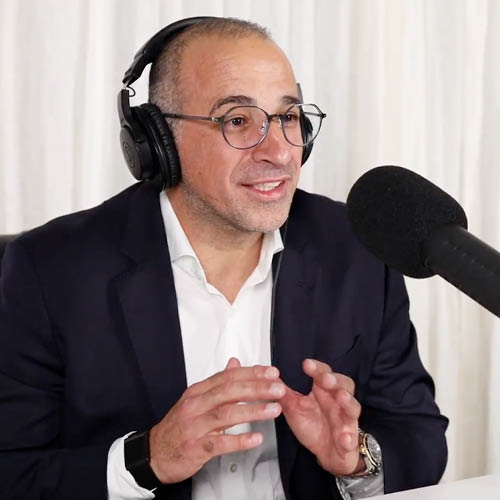
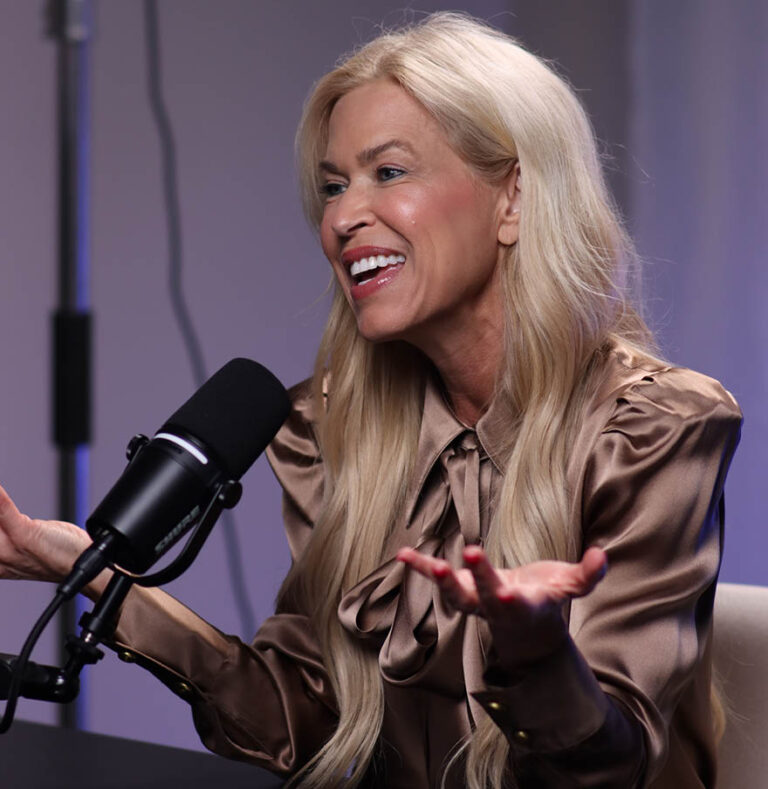
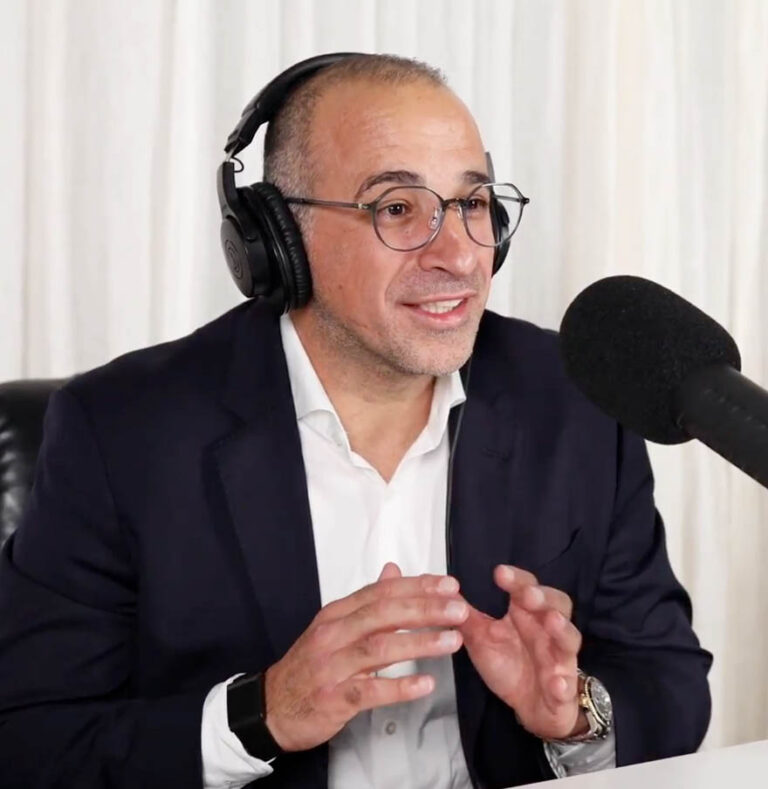
What is the best piece of leadership advice you swear by. Welcome back to CEO behind the scenes. I'm Lara necession, and today I'm joined by Ron bakier, founder and CEO of home Corp, from a single duplex on the Gold Coast to a multi billion dollar property portfolio, Ron has built more than just homes. He's built entire communities. I'm so excited to share this episode with you, because not many leaders are able to speak to what it takes to build a company for longevity and long term success to the degree that Ron has. In this episode, we delve into the values that shaped Ron's leadership, the bold moves behind home Corp's growth and Ron's vision for the future of Australian property. Ron. Welcome to the show.
01:22
Laura, nice to be here. Thank you for having me. I'm
Speaker 2 01:25
so looking forward to having this conversation with you, and there were so many different directions that I felt this conversation could go because of the long term history that you've had in terms of career, but also in terms of what you've built with home Corp, and where I felt like I really wanted to start, was something that your parents had shared with you early on, and they had told you, karma will always catch You, so always do the right thing. That's exactly right. Could you tell me how you believe that that principle and that mindset really shaped who you've become and the leadership journey that you've embarked
Speaker 1 02:13
on? Sure, sure, as you said, from a very early age, both my dad and mum had always instilled in me that always do the right thing along the way. Life's a circle. What goes around, comes around, and karma will catch you, and throughout the journey of life, that's my principle. I won't budge on it unless the situation benefits all. I just don't want to get into it. So it's been a key driver for me, and understanding that along the journey of life, there's going to be many ups and downs, but if you genuinely believe that you're doing the right thing, and you believe in karma, then it sort of sets the path. And my principles have always been, have a clear vision, believe in yourself and do the right thing, because when you know you're doing the right thing, you've got nothing to worry about. And it's really shaped to have become really shaped everything I do.
Speaker 2 03:08
It's so powerful. And I wonder, with these guiding principles that you speak about, in terms of, you know, really having this vision and being really clear on who you want to be whilst you are building everything that you are. How do you believe that this personal value of yours has really shaped home Corp's values, principles and trajectory?
Speaker 1 03:33
I instill it in all my staff. Our purpose is to genuinely add value to people's lives. So when you're passionate about something, you believe it, you believe in what you're doing, and you actually talk to your team about it, and they understand, and they share that understanding they drive from within. For them, and for me, that's sort of been a key drive that I always instill. It
Speaker 2 03:56
seems like people really is at the center of everything that you do, and we are going to talk a little bit about the way that you have led your team and those types of leadership principles a little bit later on. But I'm curious to know, how does this impact the way that you operate from a legacy standpoint as well? Because one thing that is really clear is the fact that you have built with this long term vision in mind and with legacy in mind. I'm wondering, is that something that you always felt was important from the beginning, or is this something that has cultivated and strengthened over time? As
Speaker 1 04:36
you grow in business and in life, you start to sort of shape yourself, and your beliefs sort of get stronger, your purpose, you start to understand a little bit more, and you're trying to understand, well, what's the vision? What are we here to do? But the guiding principle for me has been, whatever you're doing in whatever area you're in, just do the right thing. And that's sort of been my guiding principle. So. So that's something for me that's so critical, and it's definitely shaped me. Because, you know, you set out when you're young, you're 1718, 20, you really don't have a vision. You really don't know what you want to achieve. You just want to be wealthy. We don't even know what that means. Or you want to be rich. You don't really know what that means, right? So you sort of evolve as you go on, but always in the back of my mind is do the right thing along the way, and then as we've sort of grown the journey, then you start thinking about, well, what are you here to actually do? Are you here to just make money? Are you here to just do the right thing, or are you here for more? Do you want to leave something behind. Do you want to create things that last? Do you want to leave a legacy behind? Do you want to create a company for generations to come or not? And that's something, it lets you sort of evolve with as time goes.
Speaker 2 05:52
I want to go back to 2004 what actually ignited this idea, this passion, this inspiration to actually create home Corp. We
Speaker 1 06:07
started with a duplex, and when I finished that duplex with very, very limited money, when I finished that duplex, I stood in front of it and I said, Wow, I love it. I love creating things. This is what I want to do, but I want to do it on a grander scale. This is just the start of something that is going to be very big into the future. And this is just one piece. You know, you start with a duplex, because that's all you could do. And then you grow and you evolve. And as you create more things, and you enter that community, or you enter that project, you say, we're going to do so much better things in the future, and you sort of then evolve your vision, and then you lock into your vision, and then you start evolving towards that vision. And at every project you do, the art of it is to ensure that you're tracking towards the vision that you set out to achieve, and it's time.
Speaker 2 07:02
And so that moment when you actually sold this duplex and then purchased a 66 lot estate, what did that experience really teach you? What it didn't really code into you in your belief system, in terms of really seeing opportunities and trusting your intuition and being open and willing to take that kind of
Speaker 1 07:30
risk. Yeah, look, I'm a type of person that's sort of always gone with my gut feel that's sort of ingrained into me. So when I look at a transaction. I say, How can I add value to this situation? And how does it feel? That's the first step. Establish How do you feel about that? And then everything else comes. So I really go with my gut feeling. I try and trust myself. 90% of the times I get it right. 10% we get it wrong. No one's perfect. It's the journey of life, you're never going to get it 100% right, but it's about what did I do wrong that I could have done better, right? Or what would I do in a different circumstance? And you assess every situation throughout and at the end and and you pick up on whatever you could have done better, and you make sure you do it better in the next round.
Speaker 2 08:21
And I'm curious to know, in your experience, how did you cultivate more of that gut instinct and intuition that you spoke about? Do you feel like it was always there and it was a matter of learning how to tune in and maybe block out the noise and the distractions and perhaps what other people expected you to do to listen to that intuition. How did you really strengthen that over time?
Speaker 1 08:47
I like to get feedback, so I'm happy to listen. As I said, you don't know it all. You ask and you seek and you shall find and you you go and inquire, yeah, and you check things out, but at the end of the day, the buck stops with you. You got to make that call. So I've learned over the years, and I check after I've made the call, was it the right call, or was it the wrong call? And I always the time when I don't go with my gut, which is rare, I always say I should have gone with my gut. So I've learned go with the gut at every time. Yeah, and that, that is the learning point. Because you say, Oh, I don't really know about this and but your gut inside saying to you, do it this way, but you choose for whatever other reason, because 12 people told you it doesn't work this way. You go and you say, I should have gone with my gut, and that's the sort of experience, that's the learning. It's a numbers game, so to speak,
Speaker 2 09:48
absolutely and I really resonate with what you're sharing, and I have a feeling that a lot of leaders that are listening to this episode can also attest to that, that it is very. Easy to get distracted and to look at what the competition is doing and to look at what other people are doing, and then feel like you should be making your decisions based on that. But I think what you've shown through evidence of being able to build what you have over such a long period of time is that when you stay true to that, it actually pays greater rewards, because you are building up that evidence, and you are then doubling down on what is working 100%
Speaker 1 10:32
there are always people that tell you you can't do something. It's not that you shouldn't listen. You should listen and learn, because we're always learning. We won't pick up something every day, but the key point is, believe in yourself. Okay, have a clear vision, and the rest is just noise. You just push it out of the way. I learned a quite a very long time ago, and I live by it. And that is, I only see my outcomes and my obstacles will give way. I only see my outcomes and my obstacles will give way. We're on a journey. This is what we're there to create. All the rest is noise along the way. And the reason I can say that is because I know that I'm always attempting and always do the right thing along the way. And that's sort of it's like a guarantee. You know, it's like a bank guarantee in the back of my mind that I say I know that I'm always going to do the right thing along the way. I'm not going to do the wrong thing. I just go with it, and the rest is noise.
Speaker 2 11:30
I want to bring this back to some of the key developments that you've really led. And you know, a couple that stood out were, you know, Eve residences, Sienna, varsity bridge. When you've brought these types of developments to life, what has really stood out to you, what have been some of the key moments or milestones or lessons that you've really gained from bringing those types of developments to life?
Speaker 1 11:58
What I enjoy most is at the completion of the building, when you stand there and you say, we have created this, and you start to see the interaction of the people in the community, and you start to see that people are actually, genuinely interacting with each other. And you've created spaces where people can go, where people can actually go and mingle, and you can create this sense of belonging. That's the best thing at the end of a project. It really is.
Speaker 2 12:32
And I feel like that really ties in to the community piece. You haven't just been building homes, you've been building these communities, and so in terms of seeing these kinds of communities come to life and creating this sense of belonging, because it's a sense of belonging for people in their homes. And then lay it. On top of that is a sense of belonging to the community that they're a part of as well. How do you feel like that vision, or that value has enabled you to continue to build at such a large scale?
Speaker 1 13:11
It's the key. It is absolutely 100% the key, I say to the team. And this is our purpose. And our purpose is to genuinely add value to people's lives. And that's sort of entangled in my belief of doing the right thing, if your purpose is let's genuinely add value to people's lives. When you see that you have added value, it's just a driving factor. When you donate to charity and you see that somebody has actually, genuinely benefited by your donation, it just motivates you so much because you're actually adding value to somebody. You're actually helping someone. And what we want to do is create these communities that we actually add value to people's lives. There's a lot of people in Australia that can't get into homes. They just can't and it's getting tougher and tougher and tougher. So we want to provide for the masses. We want to be able to provide Australian families to get into homes, and we want to try and make that journey as special as possible for them. I
Speaker 2 14:09
think what you're really doing is it is this sense of community and belonging and and the vision that you're creating for other people as they are on their their home purchasing journeys. They're buying so much more than just a home. And I think it's what you touched on is it's the symbolism of what this community actually represents to them. And one of the things that really stood out in understanding your story and doing some research in advance of this episode was around your people centric approach and your Kaizen philosophy to leadership. I'm curious if you could share a little bit more about how you have really adopted these types of principles and methodologies and how you've used that. Really lead home corpse teams and peoples to drive towards greater levels of success.
Speaker 1 15:07
Look, I always talk about what makes a difference between a great company and an average company, there's got to be something that makes the difference between a great company and an average company, and I always say it's one thing, it's only one and I say it's the people, it's the people that make a difference. The next question that arises is, what makes the difference between the average person and the great person? Because that is directly linked to what happens, whether the company becomes a great or an average company. And I always say, Well, it's the mindset. It's the absolute and utter mindset of the people that are running the day to day company. Do they share the vision? Do they want to learn? Do they want to grow? Do they want to be part of something that's going to be here for generations to come, or not. If the answer is yes to that, you can instill and drive them to achieve the vision. And what we have done is been able to do that, and we do that quite well. Lot of the team members have been there for a very long time because they believe in what we're trying to achieve. They know where they stand all the time. The approach is, we're always learning. So the Kaizen principle, which is a Japanese philosophy, is, let's look at what we've done and make sure we do it better next time, which is called continuous improvement, and it's very similar to what I was saying earlier on, is, how do we continue to get better and better and better at every step, at every project? How we evolve? The same principle applies in everything we do. The intention is for the team and every leader, every manager, to think the same process. And that is, let's assess what we did. Is heading us towards our plan, and let's work out what we could have done better, and how do we continually improve? And that is our value system, or one of our value system within the organization. It's up on the boards everywhere, everywhere we walk through the office, everybody knows what it is. They know what our values are. They now what we're here to do, and we live by those principles. And it's one thing is saying it, the other thing is actually doing it. And the art of it is get your whole team to do it and to do it consistently. That's what we've been very good at so far, touch wood doing.
Speaker 2 17:37
And one of the pieces to that is your belief in having a high degree of visibility and transparency and really being open with your team. So I'm curious. I know you mentioned you have these boards and things like that throughout your office, like, what have you done to really integrate this level of visibility and transparency throughout the culture and the teams in your organization,
Speaker 1 18:03
sure the company know what our 2030 plan is. We break it down into well, what's our 25 plan? What's our 26 plan? What's the immediate plan? What are we here to do next year? And we break it down and explain to them in every single sector of the company, what is the outcome we are seeking? Everybody in the leadership team, everybody in the executive team, and everybody in the whole company is across every sector of what we are trying to achieve. So the complete and utter visibility over what is the company trying to achieve in 2026 and how does that lead to their 2030 plan, their 2040 plan? How does it lead to it? What are we going to do next month? What could we have done better? And that's done on a monthly basis, done on a quarterly basis, and it's done daily through the management team. It's like a pilot taking off and saying to his passengers, good morning, ladies and gentlemen, this is your captain speaking this morning, we're going to leave Sydney International Terminal, and we'll let you know what happens, and the passengers are going to freak out. So where the hell are we going? How long is going to take us? The pilot has no idea where he's going. What will happen eventually is runs out of fuel because he's got no destination. There's no time. No one knows what they're doing. The plan is to establish what you're actually doing. So there's a difference between the pilot saying that and the pilot saying good morning. Ladies and gentlemen, this is your captain speaking. We're leaving Sydney International Terminal. We're heading to Tokyo International Terminal. Nine hours and eight minutes is our flight time, and off he goes. Everybody knows where they're going. Everybody knows how long it's going to take to get there. And that is the journey of business and the journey of life, if you set it. And throughout that journey, there'll be speed bumps, so he'll go up in the air, and he'll find a hailstorm and look. Controlled room will tell him go right and go left and duck this way and slow down because the tail winds and but at the end of the day, he's going to aim back at the destination he's trying to hit because he knows what it is, because he knows what he might not take nine hours and eight minutes. He might take nine hours and 50 but he's going to reset his path to land where the plan has set, and that's the same in business. So that's the purpose of our transparency, so everybody knows what we got to achieve by when
Speaker 2 20:31
this level of visibility and transparency, how has that supported, say, something like driving a culture of accountability and responsibility, because I feel like a lot of businesses perhaps set the expectations with their team members in terms of what they want, but then they may struggle in how to hold that team to account, or how to connect someone's individual role and responsibility towards that greater vision.
Speaker 1 21:04
The first thing is to get buy in from everybody, and everybody is motivated in a different way. You can't talk to one person the same way you can talk to another person. So the art of it is to establish, well, how do you actually talk to this particular person, to get through to them to ensure that they want to be here, for them to do what we have set out to do. Number one, do they believe in the plan? Okay, well, if you believe in the plan, if you believe in it, then you got to act it, because if you don't act it, then this is not the company for you go and work elsewhere, and if you do act it, and you do believe in it, then that's going to be proven in the results. That's going to be proven in what you are doing. And then you got to inspect, because if it's not inspected, it's not expected. It's very simple. What I mean by that is, these are the targets. How do we track what did we do? What are we going to do? Different? The manager has to have that conversation with your team, with the team member, because if your team member is not clear on what he's there to do, crystal clear, as clear as we're going to Tokyo in nine hours and eight minutes, then you will never get there. And the art of it is for him to be clear or heard to be clear, and for you to be clear and give that feedback. And the important part is, if you give that feedback, you can align, because most of the time you see a staff member, you ask them, what's your expectation? What are you here to do? And I'll tell you three things, and your expectations are totally different. He thinks he's got to do one, and you think he's supposed to do too. So you got to align it, and the way you align it is by regular conversation. How
Speaker 2 22:47
do you believe the role of the people, the team, the culture that you have created has really attributed to the success of home Corp, but also set it apart from perhaps other developers, other players in the industry.
Speaker 1 23:05
Again, it comes back to the mindset of the people. It's a collective effort with myself and the whole team to get them believe in our journey, get them to believe that we are here for generations to come. We're not your local company just down the road, just here to look at one project, and off we go in the next we're here for the long haul. And this is the company, if you want to grow, if you want your family and in generations to come, to be part of this company, because it's going to be here long time after I am gone. But you got to start from day one and understand and believe and be prepared to go beyond in everything you do. Don't just accept the status quo. Don't say things can't be done. Have a mindset of, how do we do this? Not how it can't be done. Don't be a deal. Preventions, guy. Work out a way to do things so we can grow and understand that if we have a mindset that we're going to accept the status quo and it can't be done. Electricity would never been created. Planes would have never flown. The mindset is how we actually progress forward, and that's the culture we've been able to instill in our team. And I think that just sort of the driving force behind it, you know? And everybody has up days and down days, right? We all do it. It's not no one comes in and it's rosy every day. So when the leader comes into the room, he brings the weather, if he's shitty, the whole world is shitty. If he brings the right weather, then he uplifts everybody. And the idea is to continue to have because, you know, things go on in people's lives. No one knows what's going on outside. No one knows what's going on outside of the office, what's going on in people's lives. But you got to bring them back to why are we here? What are we here to achieve, and how do we do it? And do you want to be here for the long haul? So it's an education process. It doesn't happen in two minutes. It's a journey, and it evolves when people believe
Speaker 2 25:06
for someone that struggles to perhaps set the tone, or struggles to hold that level of duality between perhaps something that's happening in the market. You know, you've been in business for over two decades now, specifically for for home Corp, and you've seen so many market changes throughout that period. And so things from a circumstantial perspective, things from a market perspective, probably, things from a personal perspective as well. How have you managed to be the calm amongst the storm in those moments.
Speaker 1 25:42
Good question, good question, look, there's there'll be moments in life where people will feel like shit. It's too hard. Yeah, you'd be prepared to give up. You've had enough, right? But you gotta work out. Why are you here? What are you here to do? Are you here to add value to people's lives? Are you here to make money? Are you here for what? No one wants to do anything for free. So be it. Okay, no problem. You're going to work out why you're here, and you're going to work out what makes you tick, because once you establish the purpose and once you establish the vision, you cannot waver. You can absolutely not waver, because there's going to be many cycles and many ups and downs. And that's just the journey of life. It's the journey of business, and you never get it 100% right. But you got to always revert back to what am I here to achieve? And you got to come in with a I only see my outcomes and my obstacles will give way. The rest is noise. I've been in ups and downs of the market. I've seen so many businesses go under. Okay? That doesn't matter. What matters is what your vision is. What are you doing for your company? And that's what you focus on. I'm not suggesting don't understand the market or don't understand the competition. That's okay. That's good market Intel. But that all doesn't matter. What matters is the vision of the company and the purpose. What are you here to do? And how do we do it better? How do we do it the best? The rest is noise. So for me, it always comes back to that. It comes back to my three guiding principles. I believe in myself, I have a clear vision, and I always do the right thing, and that's what centers me all the time. That's what I come back to, despite the ups and downs, and there's been many, I can assure you, it hasn't all been rosy. We didn't wake up one day and go from zero to x. It's been consistent, persistent determination, driving every day to ensure that we're going to be able to achieve the outcome. Just go back to your purpose, and you'll get there. Looking
Speaker 2 28:06
back over this journey and remembering young Ron. You know that first fell in love with building, you know, watching
Speaker 1 28:15
sound like 200 years old, or something, young Ron, now it's old, not at all,
Speaker 2 28:23
but just that younger version of you that where this passion first got ignited, looking back over this, you know, 20 year journey in home, Corp. What are you most proud of over this period of time?
Speaker 1 28:38
I'm genuinely proud of being able to create things and create communities. There is not one thing, but if I go back to the most important thing is the culture, the team that we have created. We have created some exceptional team members, some exceptional people. And it's all about the team. You can create houses, but it's different to create homes. You can create buildings. It's different to create communities. You can work with people. It's different to work with great people and to get them up to a level of greatness. So for me, I'm very proud and I'm very blessed to have been able to work and continue to work with so many great people that actually determined to achieve the outcome for the company. And
Speaker 2 29:23
then, on the flip side, when you're looking forward to the future of home Corp, what excites you the most when you think about, say, you know, 2031 and beyond,
Speaker 1 29:35
so limitless, I don't even know where to start. We have so much potential. We're going to take this company International, and we're going to grow into new markets. We're going to create communities that are very inspiring. We're going to create communities of the future. We're going to work with our Japanese partners to bring AI and mobility. And technology to our communities, it is so much, it is endless, and it really is unbelievable for us.
Speaker 2 30:09
So Ron, we end all of our episodes with a rapid fire round. So the first question I wanted to ask you is, what is one daily habit. You never compromise on
Speaker 1 30:24
one daily habit. I never I go to the gym. I love every day, every every day, when I get up, rain, hail or shine, I will get up and I will go for a run, or I will walk, or I will box or I will go to the gym. That is the first thing I do, and it's a non negotiable. After that, I set the tone for the day, and it's easier to just stay in bed, but I won't allow of just won't allow myself to do it.
Speaker 2 30:55
Discipline, discipline and commitment. Absolutely, what is the best piece of leadership advice you swear by
Speaker 1 31:05
whatever you do along the journey, make sure it's transparent for people to understand and lead people in a manner that you would like to be led. And what I mean by that is you have to instill in the people to do the right thing despite everything else, because people are genuinely good, they want to do good. And if their leader is good and genuinely wants to be good, they will follow you as a leader. So from my perspective, that is the first key thing I want to instill in my team and as a leader, that we are here to add value to people's lives in whatever way, shape or form. You can do that your business does that or your your status? Does that inspire people by doing the right thing and actually walking the walk. Don't Say and don't do. So if you say it, do it. That's what I would say.
Speaker 2 32:10
What is the moment you knew home Corp was going to succeed?
Speaker 1 32:16
I don't think Lara there was a moment. I really don't think there was a moment I never stopped and said, This is the moment that it all turns around. It was just continuous every time, every day, just growing and knowing in my heart that we're going to grow this company into something spectacular.
Speaker 2 32:37
If you weren't leading home Corp, what would you be doing?
Speaker 1 32:43
That's a difficult one, because I love home Corp, but what I love most is helping and inspiring and teaching young people the mistakes that I made that they shouldn't make. And one of the key things that I would like to teach along the journey of life, and it's for the young, younger people, since you called me old, right? It's, it's for the it's for the it's for the younger people, is this, you will not get anywhere in life, unless you set your vision and know where you want to go. So if I wasn't leading home Corp, I would want to lead the younger generation, okay, to teach them that what I have been able to achieve with my team is not something extraordinary at all. It's just something that came from a very clear vision,
Speaker 2 33:44
that message, that purpose, really reigns through everything that you do. So thank you so much for sharing your incredible journey with us. Ron, I'm curious to know before we wrap up, is there anything, any final words, anything that you would like to leave our audience with today,
Speaker 1 34:03
I would like to say, Lara, thank you very much for your time. It's been a pleasure to be on your show. I keep saying the same thing, and I say to everybody who would listen, set your path. Know you're going to do the right thing and do the right thing. The world is just limitless.
Speaker 2 34:22
Ron, thank you so much for joining us today. It has been an absolute pleasure and privilege to have this conversation with you and your story around legacy, longevity, long term success, and the way that you have really led not just your team, but communities of people is really inspiring, and I'm personally very much looking forward to see what continues to unfold and and the future vision of home, Corp and beyond. So thank you so much for joining
Speaker 1 34:54
me. Thank you Lara, for your kind words. Thank you very much, and
Speaker 2 34:57
thank you so much to everyone for listening. If. You enjoyed this episode, then please make sure that you subscribe, rate and review the podcast and also share this with someone who would really benefit from Ron's incredible teachings and lessons from his 20 year long success story. Thank you so much for joining us, and we'll see you next time on CEO: Behind the Scenes.



 149K
149K
 2
2
 2
2
 2
2


 Host
Host
 POPULAR TOPICS
  FEATURED PODCASTS


 Home
Home
 Podcasts
 Covers
 Community
 Sign In