Speaker 1 00:00
It is one thing to articulate complex topics in a simple way, but doing that with a larger group
and many stakeholders is even more complicated. Sometimes you you just have to continue
forward, even if you know some people don't fully
Speaker 2 00:16
understand we often talk about what leaders do, but sometimes what they choose not to do is
equally as important.
Speaker 1 00:27
It's easier for me to block out the things that I can't control, and when you're a public CEO,
there's always going to be a lot that you cannot control.
S
S
S
Speaker 2 00:37
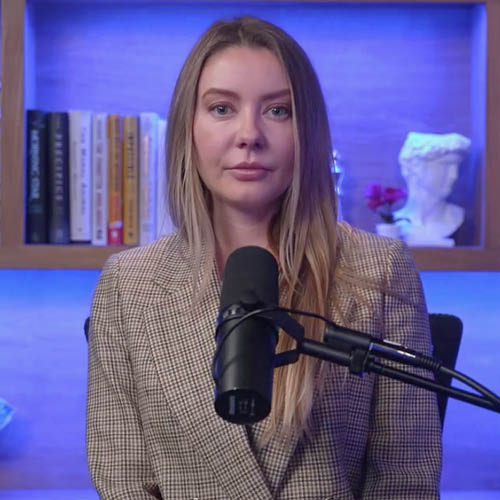
Welcome back to CEO behind the scenes. I'm Laura necessian, and today we're exploring what
it really takes to turn breakthrough science into a commercially successful business. Joining me
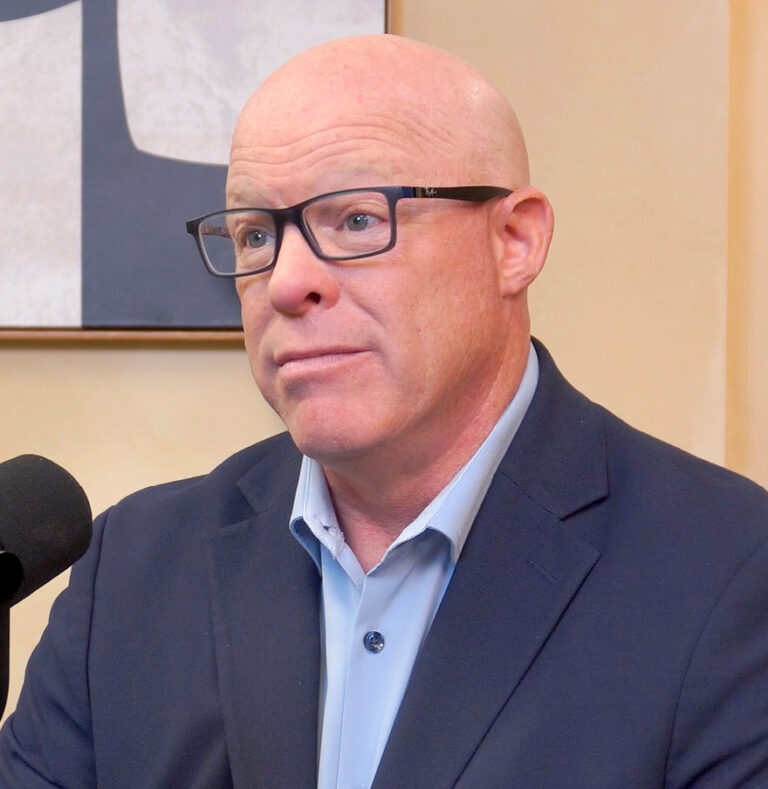
is Kirsten Brewer, CEO of hydrograph, a company advancing graphene innovation with
applications across industries from coatings to advanced manufacturing. In today's episode,
we'll unpack the realities of moving a breakthrough technology from development stage to
commercialization, the leadership decisions required to scale and how disciplined execution
matters more than hype when building disruptive businesses. Kirsten, welcome to the show.
Thank you so much for being here. I'm really looking forward to this conversation with you, and
where I'm really wanting to start off this conversation is when you stepped into the position of
CEO, you finally had the authority to implement the strategy that you had been shaping for a
while. What changed once you had that mandate to be
Speaker 1 01:50
able to act? Yes, that's a good place to start. So I made pretty significant changes to our
business model, to our go to market strategy, and it's hard, because when it's a early stage
company, you know, I'm a young woman, there were certain people that thought, you know,
well, she might not have enough experience to make these choices. So really just going, you
know, from the team to the board to our shareholders, trying to get more support, and then
finally being able to implement those decisions. I would say that once I took over in March of 24
took about six months to really make all of the changes that I wanted to and just roughly a year
after that, we went from being worth about 20 million to roughly a billion dollars. So it's been
quite the experience, quite the trajectory, and it's always necessary to have confidence in
yourself, and, of course, to make decisions based on logic, data and, you know, market
conditions. But it has been, yeah, a very interesting ride.
Speaker 2 02:52
Wow, I'm sure it has been, and I want to touch on a couple of things that you first said. So
firstly, in relation to you stepping into the CEO role as a young woman, this is a traditionally
male dominated industry that you're in. How did that shape your leadership experience, and
how did you cultivate the confidence to be able to own your decisions when perhaps not
everyone would be agreeing with your approach and what you had positioned.
S
S
S
Speaker 1 03:24
So when I started with the company, I was the first employee. I always felt confident that I
knew the company very deeply, and I was very, very much behind the decisions that I was
making. I think the complication is deep tech is hard to understand, and I think that it is one
thing to articulate complex topics in a simple way, but doing that with a larger group and many
stakeholders is even more complicated. So I think it really just started with working through
those changes with the team. But again, it's it's education is just really challenging, and it does
take time, because what we do, I mean, we have a detonation synthesis process, which I know
is quite a mouthful, for the production of graphene, and that, in and of itself, is harder to
understand. And then when you factor in raising capital, scaling, gaining application
development data, it's a lot to cover. So I think that to your first point, sometimes you you just
have to continue forward, even if you know some people don't fully understand. And again,
when decisions are made through science, through the scientific method, it makes it easier to
have confidence in those decisions.
Speaker 2 04:38
Overall, absolutely. And the proof is in the pudding, because what you also touched on was the
fact that hydrograph grew from around a 20 million market cap to a billion dollars, and I
understand that was in around an 18 month period. Looking back, what were the critical moves
that you. Feel made that transformation possible.
S
S
Speaker 1 05:03
So I would say mostly the biggest misunderstanding with this company is really just what
graphene is. So you know, it's one atomic layer of carbon atoms. It is the strongest, most
conductive material discovered. But because, and maybe to take a step back, graphite, you can
imagine is billions and billions of layers of graphene. So most companies are starting with
graphite as a feedstock and trying to exfoliate it down to that one atomic layer. Because of that
relation to graphite, and because it's a dominant feedstock, there is a misperception that it's a
commodity, that it's graphene. Is this mineral, it's not, you know, it's really a technology. And
because it's a technology, it is harder to sell. There's a longer development cycle. You have to
prove anything new. You have to prove to customers, really why it's going to work. So the
biggest thing I wanted to do was generate abundant application development data. So that's
really using our graphene in various other materials, whether it's concrete, carbon fiber,
different plastics, you name it, and then going to the market and really showcasing those
results without that data, it's very hard to land that deal. It's not like we produce gold and it
just has a ready market. So I think that that was something that was a really big educational
hurdle, not only with our shareholders, but just with the market in general, is understanding
graphene, I would say the second big change, apart from some updates to the team, which are
natural as a company grows, was a change to the business model. We previously had a Co
Location model, and because we use very volatile gasses, that never made a lot of sense to
me. So now we have negotiated pipeline access so we can get very high amounts of acetylene
and all of that packaged. You know, having the data and having the ability to scale this
company has really taken off Absolutely.
Speaker 2 06:55
And you identified hydrograph and graphene as a disruptive opportunity. Early on, what made
you see that commercial potential before others fully recognized it? As a
S
S
Speaker 1 07:10
student of science, I think that it made a lot of sense not only, for graphene to have enormous
impact, though it's kind of a disruptive technology, it's not truly disruptive. Graphene works
with other graphenes. It works with other carbon materials. It can positively improve virtually
every industrial material and a lot more, even that are less industrial, for example, like
biosensors and with hydrograph specifically, it is like this unlimited way to produce this new
material. We're not reliant on China for graphite, we can produce unlimited quantities, at least
theoretically, with hydrocarbon gasses. And it made sense that if we have these very high
purity gasses to start with, and a very low capex process, that that could scale much faster
than these other methods. And I think now that we have this application development data, we
have proven that we have the highest purity, the highest consistency, and very likely the only
genuine graphene, at least at industrial scale in the industry. And that's been very, very
exciting to really have that attention and to have known the potential of the patent before I
really saw it in action, because at that stage, I mean, it was just a bench top experiment. We
didn't have a commercial unit when I joined. There wasn't a real company, there was not even
a real team. And to kind of see it all kind of come to life and to put all the pieces together has
been very satisfying. I'm curious to
Speaker 2 08:38
know how you brought the team along for that journey, because you touched on the fact that
there's inevitable changes that need to occur when a business is growing and evolving and
making such significant moves in the industry. What did that look like for you, and how were
you able to really influence and bring the team along for the journey, and perhaps make some
of those difficult decisions when it didn't feel as aligned.
Speaker 1 09:08
You know, with any company, there are certain people that might have some relationship early
days, and they might be critical to take something off the ground, especially with early tech
companies, it's often not the same people that will really grow and scale. So that transition
from the lab to full commercialization is always challenging. And finding, I think, those
leadership roles where people really have that experience, whether it's, you know, capital
raising or scaling, whatever it might be, continuing to make those updates while not losing, you
know, the core of hydrograph, which is really a research focused scientific company, you know,
we will always want to engage in research, but we do have to be much more strategic at this
point. And really what we're focusing
S
S
S
Speaker 2 09:54
on, what I would love to ask you is if the leaders who are evaluating. These emerging
technologies like you have, how do you separate what is a real opportunity from, say, industry
hype?
Speaker 1 10:11
That's a good question, and to go back to my standard answer, it's data. Probably every other
week, I'm approached by groups, whether it's shareholders wanting to understand if a new
company is a threat or it's just someone in my network that wants advice on investing in
another company. There are so many false claims out there. It's just amazing. I think what
people feel confident in saying with really nothing underlying it. So it is really going through
from a first principles perspective. I mean, are there patents underlying it? Do they have the
data that proves especially with you know, this is more specific to our industry, but when you're
looking at an advanced materials company, you of course want to know that it's patented. You
want to know that there are characterization reports that support the actual material that
you're analyzing, you want to know that it works in real world environments, and that it's
consistent and, again, scalable, and if any one of those pieces are missing, it's very likely less
than true. And I think that with these industries, I mean, about 10 years ago, there was a
massive amount of hype. There's, you know, probably been a new graphing company every
other month in the period since then. And I think there's going to be a lot of consolidation
within the industry as well.
Speaker 2 11:29
And from your perspective, then how do you see that you've differentiated yourself from all of
those other companies that perhaps have fizzled out when you've had the longevity and
continue to grow from strength to strength. What do you think are some of those principles?
Does it come back to research, or do you believe that there's other things that you've really
done that have enabled you to have this over a longer period of time?
S
S
S
Speaker 1 11:56
I feel that we have approached the market in confidence, we have really reached out to every
group possible to work with, and a great example of that is the geek the graphene Engineering
Innovation Center in Manchester. We gave them a very large amount of graphene right from
day one, and then, because they had that graphing, they were able to, you know, run a lot of
tests and come back to us with our performance. We were told that no other company had
really done that, and I feel that it's because if you have a sub par material, you're concerned
that poor performance is going to leak out. So I think that, for one, we became very active in
the space, but also we have disclosed a lot. You know, we share more data, I believe, than any
other company in the industry, and that is something that we want to continue to do. It's
always a balancing act as a public company, because we don't want to share so much that
we're going to be losing any trade secrets or, you know, sharing ideas too early. But I do think
that, you know, at this stage, we have a very well defined process around that, and we will, you
know, continue to to push the boundaries. In many technology
Speaker 2 13:03
companies, they struggle to move from that developmental stage into real market adoption. In
your experience, what do you believe are some of those challenges, or maybe some of the
biggest challenges that companies face when they're making that leap?
Speaker 1 13:19
Yeah, I think a lot of that, it does go back to my first comments on just team adjustments. It is
one thing to be very creative. It's another thing to scale. And usually those are not the same
teams. We, I think, have been very lucky that we have been able to keep on many of the early
team members. But it is always kind of a something that you're consistently monitoring. And I
think that, you know, again, we're very lucky actually, that our patents really owe to that
ability. There are lots of amazing breakthroughs in the lab, but just inherent to the process, it
can be very hard to really bring that to full commercialization.
Speaker 2 14:04
And you've said that the commercial model matters just as much as the technology itself. How
did hydrograph refine its approach to make graphene commercially viable?
S
S
S
S
Speaker 1 14:18
So in quite a lot of ways, as mentioned, we're lucky that we have, at least theoretically, a
relatively simple process. I mean, we pump in hydrocarbon gasses into a steel chamber, we
ignite that with a spark from an electrode, and we're able, in that one step, to produce
graphene. So we have been able to replicate that at various stages with growing sizes, but also
understanding, really, what are the biggest bottlenecks, and for us, it was always access to
acetylene. Acetylene, most people would know, is welding gas. It's very volatile. There are a lot
of regulations and restrictions around it. So I knew, for example, that using what's called micro
bulk packs, and that. Would be, you know, nine of these acetylene cylinders kind of roped
together. We would not be able to have as much on site as what any fire marshal would really
approve of. So moving to negotiating pipeline access for the acetylene was really the biggest
differentiator. And again, you know, I feel very lucky to be a part of this technology, because
everything else for us has luckily, really worked out in our favor. And that really comes back to
one of your first questions is, what drew me to the company? I mean, our reactors are simple in
theory. Of course, there's a lot of know how that goes into us creating them, but we really
haven't had any bottlenecks in producing much larger reactors, really producing them at scale,
or really having many issues there.
Speaker 2 15:46
And hydrograph has recently secured multiple milestones, from industrial gas partnerships to
independent performance validation and plans for a Texas production facility. Which of these
developments represents the biggest inflection point for the company right now, I think
Speaker 1 16:08
that the gas partner that we will soon be working with is very exciting for the company. And I
do think to discuss our other milestones, we are now going through a red domicile process to
move to the US market, which will be coinciding with a NASDAQ Listing. And I do believe that
being fully US based not only allows us access to federal funding a much closer relationship
with the DoD or no do W but really allows us to, I think, be in the right ecosystem. And locating
in Austin specifically, I think was an excellent choice. You know, it's a great tech city. There are
a lot of defense adjacent industries, aerospace, automotive and, of course, in Texas, abundant
access to hydrocarbon gasses.
Speaker 2 16:53
As you move into and expand into this US market, how do you balance scaling production
quickly whilst maintaining quality and credibility.
S
S
S
S
Speaker 1 17:06
Most of that is really testing. We always ensure that everything is functioning, you know, as
perfectly as possible before we move anything to commercialization. But part of this is to
belabor the point going back to our patents. You know, I think that our patent really does lend
itself well to scaling, and we have been very lucky that, contrary to basically all of the other
companies in the industry, as we scale, we have really only seen improvements in purity and
consistency of our product.
Speaker 2 17:38
That's a fantastic outcome, because I could imagine getting that balance could be very
challenging in an industry such as yours. I do want to switch gears a little bit, and I do want to
talk about leadership. It's something that we have touched on a little bit throughout this
conversation, but we often talk about what leaders do, but sometimes what they choose not to
do is equally as important. I'm curious to know, what did you intentionally choose not to do?
Have there been some key no decisions and some line in the sand moments, perhaps that
really protected hydrograph's long term future and success.
Speaker 1 18:21
There has been a lot of hype in this industry, and it's very easy to want to get caught up in that.
It is very attractive to, you know, push things a little further than what you know is realistic,
especially when you're a publicly traded company, and you're consistently pressured to do so
and have constant news out. I have seen a lot of companies that have made decisions like that,
and I think really what you do is erode trust. And I would say that same argument is true for the
team, for internal dynamics as they are true for external dynamics. I think, you know, honesty
and consistency are very important to me. And I think leading with principles, even though in
the short term it can be challenging and it can be hard to be as honest as you need to be. In
the long term, you're creating a trusting environment. And I think that that is really always
going to be the best option for a company to to be as large as I think we deserve to be.
Speaker 2 19:18
And how do you find that balance between, say, wanting to go fast and speed and innovation,
versus exercising that restraint that you've just mentioned.
S
S
S
S
Speaker 1 19:30
Well, I'm extremely impatient, as I think most CEOs are, so I'm always wanting to go faster. I
think it's just, it's a balance of if, if you're sure that you have everything in place. If you're
assured that you have the capital, you have the right team members, you have a proper plan.
I'm always in favor of moving very, very fast, but moving very, very fast should never be
disclosing things that you're not completely confident of before they're really in hand. And I
think that's always kind of a struggle. And even to speak more to. You that predicting timelines
is always very, very hard in an early stage company, and I don't think any leader is ever perfect
in their timelines, but that's always kind of a learning lesson. Is really, you know, you you know
certain things internally, and they're very exciting, and it's, it's sometimes easy in an early
stage company to get a little bit ahead of yourself
Speaker 2 20:20
absolutely and Kirsten, I'm curious to know you've achieved so much and accomplished so
much since your time in the position of CEO. What are you really looking forward to next? What
are you excited by and what's the next big vision that you have for the company? Well, we
Speaker 1 20:38
have just brought on a full time CFO. So I'm very excited. In about two weeks, our Austin
headquarters is opening, and I think, on a personal level, you know, we've had a team I started
in Canada. We've had the team in Manhattan, Kansas, and we also have a team in the UK. And
very soon, everyone in the US is going to be in Austin, and then we're of course, going to be
maintaining our research lab in Manchester, and finally, having a consolidated team in the
headquarters. I'm really looking forward to that work environment, creating a very healthy
culture. Of course, extremely excited about our upcoming catalyst, including the NASDAQ. And
I really think that as we, as we scale this coming year and do more and more with the US
military. I am very curious to see what the company is going to look like with all of these
projects that are ongoing, really coming into full commercial form.
Speaker 2 21:28
Kirsten, we have a closing tradition here at CEO behind the scenes, and we always end all of
our interviews with the same two questions. So the first question I wanted to ask you is, what is
one thing that you've changed your mind about recently, and why?
S
S
S
S
Speaker 1 21:45
I guess a fair response is, when I started out, to be honest, I didn't want to be a public CEO. I
really wanted this to be a private company. And I think that you know, you you get the cards
that you're dealt, and I think that I have grown so much from this experience, even though, you
know, young me would not have looked forward to this, it's it's a lot of public scrutiny, it's a lot
of pressure, and I think in all the ways that I can think about it, it's really only made me better
and better. So it's amazing that now I'm really happy that we're public. You know, I think that if
there would be a decision even to go private, I'm not sure if that would even be as attractive as
it once was. So that was a very, very big thing for me to change my mind about. That is huge.
Speaker 2 22:29
And I have to ask you a follow up question on that, which is, how have you learned to cultivate
that pressure of having so much public scrutiny and being in the public eye and taking on this
undertaking that looks very different than what you may have initially thought. How have you
cultivated that resilience and pressure over time? I feel
Speaker 1 22:51
having a competent team around me obviously helps, but I've always felt like a very calm,
more reserved person, so I think it's easier for me to block out the things that I can't control.
And when you're a public CEO, there's always going to be a lot that you cannot control. So just
recognizing and, you know, staying focused on the things that I can immediately change, and
then holding, you know, some of those negative thoughts or frustrations for future possibilities,
it's always a bit of a balancing act, because, of course, you want to do and fix everything at
once, but I think that's really a skill that I'm getting better and better
Speaker 2 23:29
at, absolutely and the second question is, what is one thing that you've not changed your mind
about a belief that you'd want To share to help others lead or live better?
S
S
S
S
Speaker 1 23:42
That's probably an easy one. I really, really strongly believe in a very positive culture. And for
me, I'm a very direct person. We're a very honest company, and I think it is always so much
better to share feedback immediately, share everything that you think immediately. You know,
very much a scientific mindset. I know some people are more comfortable with that than
others, but I do believe it creates a very strong working dynamic with colleagues and also just
with the market in general. Really, really am supportive of, you know, leading with principles,
and especially leading with honesty, even when it's hard.
Speaker 2 24:19
Thank you so much for joining me. I've loved this conversation, and thank you so much to our
audience for listening. If you enjoyed this episode and if this sparked ideas, then please be sure
to share it with someone who's on their own leadership journey, and don't forget to subscribe,
rate and follow the show for more. We'll see you next time on CEO: Behind the Scenes.




 198.8K
 230
230
 4
4
 1
1


 Host
Host
 POPULAR TOPICS
  FEATURED PODCASTS


 Home
Home
 Podcasts
 Covers
 Community
 Sign In