Speaker 1 00:00
We are a boutique software house. We design new features and refine existing functionalities
without the red tape. We meticulously understand the expectations of customers, and we
customize those solutions, so we turn those high expectations into our competitive advantage.
Time to market is critical for the software, so agility is key. We are already on the cloud, and so
the pathway into the future has already been created for us. We just, so to speak, need to put
our skates on and continue on our way. Our customers are highly intelligent people, they're
ophthalmologists, cardiologists. We don't try to match their understanding of medicine, but our
strengths lie in technology and communication. Then, about why are systems better than
competitors in Australia comes through naturally.
Speaker 2 01:09
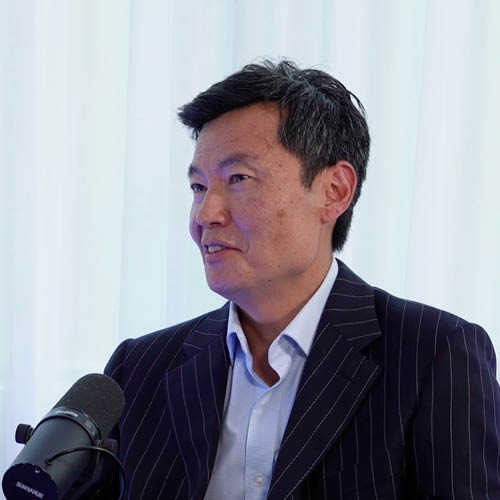
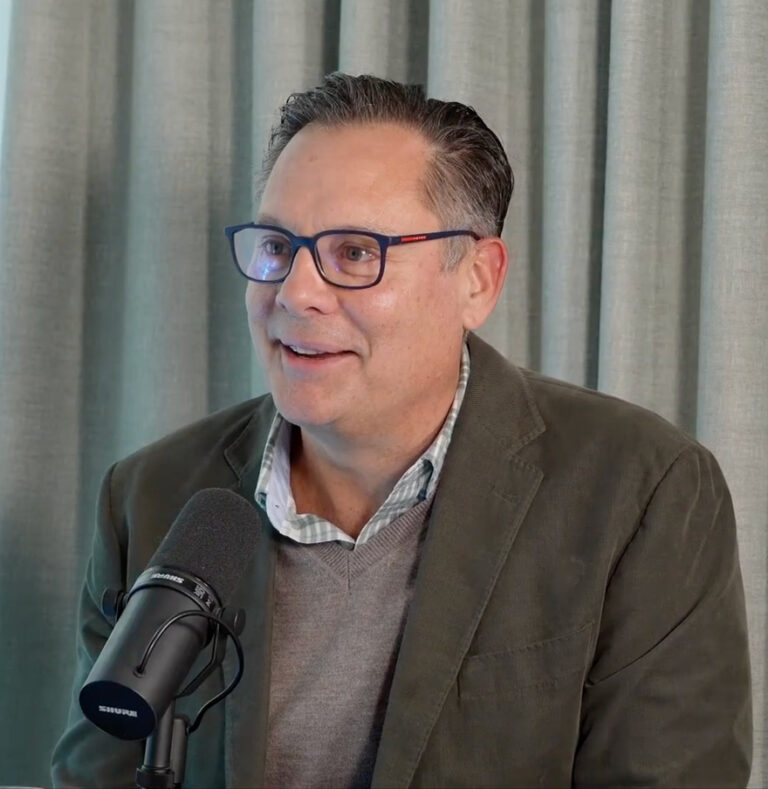
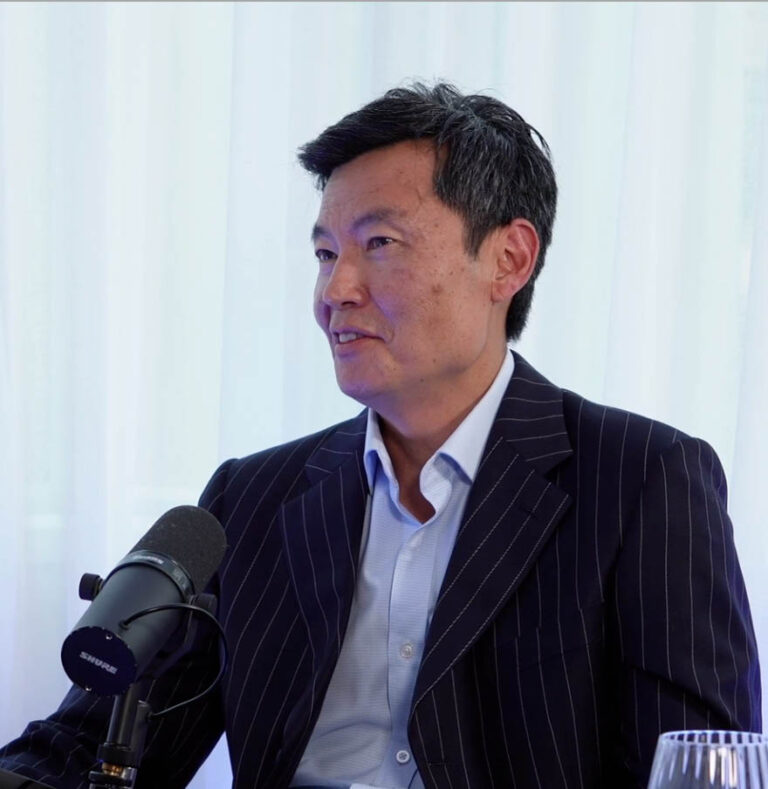
Welcome back to CEO Behind the Scenes. I'm Lara Necession, and today I'm joined by Phon Ha,
Managing Director and Chief Executive Officer of Clinic to Cloud, a secure and scalable medical
practice management platform helping healthcare professionals deliver better patient
experiences operating at the intersection of healthcare technology and regulation. This is a
business where precision is critical and there's very little room for error, from demanding
customers to cybersecurity and compliance, leads in a high-stakes environment with a
leadership style grounded in logic, preparation, and what he calls grace under pressure. Today,
we'll explore leading in a regulated industry, the realities of customer expectations, and how
businesses can stay steady in uncertain conditions. Please enjoy fun. Welcome to the show,
S
S
Speaker 1 02:07
Lara. Thank you. It's a pleasure to be here.
Speaker 2 02:08
It's such a pleasure to have you, and I'm so looking forward to having this conversation with
you.
Speaker 1 02:13
Thank you.
Speaker 2 02:14
And where I really wanted to start is the fact that you are operating in healthcare and
technology, where precision really matters. Could you tell me what it looks like to get it right in
in that high stakes environment from a day to day perspective?
Speaker 1 02:33
Sure, we've got demanding customers, they're surgeons and practice managers, so they'll pose
questions and we need to resolve them quickly, so in that regard they're demanding
customers, and we have a high performing culture, standardized operating procedures, and a
strategic focus. So to deliver that precision to our customers, our staff are highly trained, they
deliver services not just on technical skills, they have to solve problems on the spot, and we've
got a flat structure, and so they access management to solve complex issues fast.
Speaker 2 03:14
And something that you've spoken about in this context is maintaining grace under pressure.
How do you stay logical and composed when things get really stressful?
S
S
S
S
S
S
Speaker 1 03:27
Well, I think pressure clarifies you, and you need to identify the key issues and understand the
business implications, so you can't make decisions based on panic that creates strategic errors,
and you need to analyze the data, so that's grace under pressure.
Speaker 2 03:47
And how did you come about to understand that concept, and really lean into grace under
pressure? Is that something that inherently you always felt, or is that something that you feel
you've cultivated over time,
Speaker 1 04:02
so CEOs are not fearless, you know. We make decisions based on facts, and so you have to stay
calm. And my earliest experience was when I was in Northern Australia, set adrift in a little boat
in crocodile-infested waters, so I had to use my wits to row ashore. Otherwise, if I didn't, I
wouldn't be here. So, you have to think on your feet.
Speaker 2 04:30
Wow, I could imagine that that situation would have been so defining in so many different
ways, like when your actual livelihood is at stake. How did you learn to take that life experience
and transcend that into business?
Speaker 1 04:48
So I think you need to have situational awareness, you have to understand the potential. The
implication under different scenarios, so you're trying to prepare for all eventualities, and if
they don't come off, that's fine, but when you prepare and the situation does evolve, you can
respond accordingly,
Speaker 2 05:19
and so something that you've spoken about, and I do want to talk more about preparing for all
eventualities, because I think that's a really important point, but something that I've heard you
speak about previously is the fact that you rely quite heavily on logic and reasoning when it
comes to making decisions. I'm curious to know, though, when does things like instinct or
intuition come into that decision-making process, if at all
S
S
S
S
S
S
Speaker 1 05:46
a CEO needs to bring enthusiasm, experience, and foresight into the business, so that instinct
and experience complements data analysis and software and AI effectively is mathematical
logic that underpins it, and it's based on large volumes of data and regression analysis, and so
that pattern that evolves out of analyzing large volumes of data needs to have an experienced
pair of eyes over it in order to make an informed decision
Speaker 2 06:33
in high stakes environments like the one that you're operating in. Mistakes can be incredibly
costly. How have you been able to cultivate a culture where decisions and people can be quite
careful, but aren't careful to the point that they're hesitant,
Speaker 1 06:53
so culture comes through leading by example, so you have to work alongside your staff
members and management and executive team leaders and board members to ensure that
you cover all bases in terms of what could go wrong and you move ahead with confidence once
you have analyzed the various payoff profiles of different decisions, so there's a risk reward
trade off, and culture is built on making decisions by yourself, and then obviously reviewing the
result of that decision, so a person will increase in confidence, confidence in himself when he
makes more decisions.
Speaker 2 07:48
And would you say that you've been able to gain more confidence through making more
mistakes and learning from those mistakes, or how have you viewed that in in your industry,
where those mistakes can be quite costly.
Speaker 1 08:02
Well, the old adage is, you know, you need to learn from your mistakes, so we don't try and
make too many mistakes, you know. We do rehearse the potential situations and make sure
that we cover off on anything that could go wrong. That's why we've stood up standardized
operating procedures where decision making across the organization is controlled in a certain
way, and any outliers go to management in terms of issues to be dealt with, and so that
cohesion and culture can be achieved when the priorities are cascaded throughout the
organization,
S
S
S
S
S
Speaker 2 08:45
and something that I want to touch on, and you mentioned this at the very beginning of our
conversation, was demanding customers. I would love to know what your take on demanding
customers is, and do you believe that that has helped to create better business.
Speaker 1 09:03
Well, demanding customers in Australia, in terms of practice management software, require the
product to keep up with increasing clinical standards and to drive productivity improvements.
They need quality service from staff and we need to adhere to regulatory requirements, so in
that regard, our software is updated 24 7365 and the surgeons can be assured that the patient
data and all of their clinical notes and patient diagnosis prescriptions contained in the cloud
and in real time,
Speaker 2 09:49
and how do you discern between who's just been difficult versus who actually has valid
feedback that you can then utilize for those. Various process and system improvements.
Speaker 1 10:02
Look, we don't form judgment on our customers. Our customers are always right. So any
complaints we see as opportunities for improvement, and we turn negative comments into
loyalty. So really we work with the customer to tailor customized solutions. I mean, the practice
manager and surgeon are in high-pressure environments, and what we do is to support them to
make sure they get the patient outcomes that they need,
Speaker 2 10:36
and you've said that small business is well placed to be able to best serve their customers. Why
do you believe that is the case?
S
S
S
S
S
Speaker 1 10:46
So we're a small business in Australia, and we can combine large scale capability with
personalized service, and we mirror our customers. So many surgeries and clinics in Australia
are small and medium sized businesses, they're having to deal with market pressures,
increasing clinical standards, surgeons need to manage clinical risk, and so therefore, in terms
of matching those requirements, we're best placed to do that because we're almost putting
ourselves in their shoes, and cybersecurity is key, and we design the platform for the next
generation of surgeons.
Speaker 2 11:33
Interesting, and customer retention is also something that you've mentioned is a huge focus for
clinic to cloud. What do you find you're doing that's really working?
Speaker 1 11:45
We are a boutique software house. We design new features and refine existing functionalities
without the red tape, so we meticulously understand the expectations of customers, and we
customize those solutions, so we turn those high expectations into our competitive advantage.
Time to market is critical for the software, so agility is key,
Speaker 2 12:16
and something that you just touched on is the obligations and some of the Privacy Corporations
Act, cybersecurity obligations, so on and so forth. These are very strict frameworks that you are
operating within. How does that shape the way that you lead?
Speaker 1 12:37
So, clinics cloud is a regulated asset base, almost healthcare is highly regulated, so that our
partner is the Australian Digital Health Agency and the federal government, so we make sure
that all the healthcare identifiers and the provider identification numbers are contained in our
system that can be tracked by regulatory authorities and that ensures integrity of the data
processing
S
S
S
S
S
Speaker 2 13:10
and in particular cybersecurity is becoming increasingly critical. How has its role evolved in
your business as time continues to go on
Speaker 1 13:21
cyber security is at the forefront of our thinking. We're dealing with millions of patient records
in Australia, and there are strict requirements to have the data centers in Australia and ours is
in Sydney and Melbourne, so the potential for cyber attacks is real, given the geopolitical
instability of the world, and so we work with our technology partners to make sure that we have
the latest in terms of protections against any data loss, so we don't want our surgeons suffering
any leaks or loss of data, and we do our utmost to make sure that we embed the latest
technologies in our system.
Speaker 2 14:13
Something that is a common conversation that we've been having with CEOs is the fact that
cybersecurity risk is so real, it's something that we're no longer just planning for if it happens,
but it's also when it happens. But I'm curious to know, from your perspective, for from leaders
that are operating outside of these regulated industries, what do you think that they sometimes
misunderstand about operating in this kind of environment.
Speaker 1 14:44
Well, I'm a private sector leader, and you know I have to maintain good relations with public
sector leaders. I mean, the reality of it is that there are also criminal organizations that
perpetuate cyber crime and. And I think one key point to illustrate is that there are manuals on
how to hack the federal government system on the dark web that you can actually get your
hands on and you can set up entities with multiple servers around the world to transmit the
signal so that it's not traceable, so that criminal element is real, and whilst in the private sector,
as an unlisted public company that's audited, we have strong relationships with customers and
regulators, there is that element of understanding what criminals do
Speaker 2 15:42
it really is quite fascinating. And when it comes to regulation, do you believe that it slows down
innovation or do you feel like it actually sharpens it? What's your perspective on that?
S
S
S
S
S
Speaker 1 15:56
Well, there's always the trade off between allocating capital, between growth initiatives and
regulatory compliance, I would say that healthcare is a unique industry where patient data
needs to be protected, so Clinics Cloud is very supportive of more regulation. I think what that
means is that our system is deeply embedded in the healthcare supply chain, where a packet
of data in relation to an individual moving from system to system gets verified, and that
confirmation is good before it gets processed in a system, and what that does, it reduces the
chances of corrupt data being being processed and fraud. So, cyber security legislation that's
been enacted in Australia is very beneficial for all Australians, and we are strong supporters of
the federal government.
Speaker 2 16:58
Thank you for sharing your perspective on that, I do want to talk a little bit about performance,
because earnings performance is clearly a priority. What is really driving results in your
business right now?
Speaker 1 17:11
Results are driven by an increase in free operating cash flow, like any other business, that's the
classic corporate finance model, so paying attention to our customers servicing their needs has
resulted in year on year growth in top line and so profitability is a result of good customer
service levels, it's a byproduct, and so we've got a strategic focus. We're meticulous in
managing expectations, and we make sure that we resolve issues quickly, and as I said before,
our software is fit for purpose each quarter that we move through,
Speaker 2 18:03
and something that you mentioned earlier is scenario analysis planning for all different
eventualities. What does that look like in practice?
Speaker 1 18:13
It's corporate strategy development, and as a public company, I can't disclose too much of that,
other than the fact that scenario analysis is analyzing all the major drivers that can topple the
company, so your competitive strategy needs to prevail over the long term. It's how you
survive, and so you need to understand the operating environment, the industry dynamics,
regulatory developments factor all that into your business to make sure that you're strong
enough to serve your customers.
S
S
S
S
S
Speaker 2 18:52
And how far ahead are you actually planning for, and how do you avoid over correcting risks
that may not actually eventuate,
Speaker 1 19:03
so the financiers of the world, the technology leaders of the world are saying that AI is
transformational, the cloud infrastructure is key, and it almost is likened to the construction of
traditional infrastructure like air road rails and port, so we're a cloud-based business, so we are
already on the cloud, and so the pathway into the future has already been created for us. We
just, so to speak, need to put our skates on and continue on our way. Now, the risks that will,
that may occur, that may derail us, is cyber security. That's why we're a closed system, and
we're so strong about, you know, our. Security posture is so robust and solid in that regard, so
we don't integrate with any startup companies flavor of the month that has not proven
themselves in that regard,
Speaker 2 20:14
and in your opinion, what separates businesses that really stay solid and consistent through
those periods versus those that may struggle when conditions change, is it? Does it come down
to cyber security, or are there other factors at play?
S
S
S
Speaker 1 20:32
Well, I think a company is a legal entity, it's a piece of paper, you know, of incorporation, so
ultimately a company is a group of people, and excuse the adage, they need to point in the
right direction. So, you need a cohesive culture, but more importantly, the org structure needs
to be flat, where people are empowered to be autonomous to make their own decisions to step
up the learning curve, if you will, to be more competent in their jobs, and once you have job
competency, you're building corporate capability, and the other point is to be a profit and loss
manager to live within the profit and loss, and so what that means is to understand that the
revenue you generate as a team pays for payroll, right, and technology platforms that support
your product, and what often happens is that in larger organizations there are a lot of
executives that live outside of the profit and loss. Their salaries are paid by support services,
and they direct business units on what they think the right strategy is. And so, what often
happens is a destruction that's not perceptible to the executives, so that's a distorted reality.
So, you have to live within your P and L, understand what pays your salaries and your bonuses
and your incentive structures, and in that way you're sensitive to any kind of initiatives that you
launch into the market that doesn't work, so you've got to cut your losses, and that's very
important, if you're externally funded, you'll never know how the company makes money, and
how your personal fortune is going to be linked to that. So, step up and personal fortune
requires an understanding on how to grow enterprise value, and if you're not living in the P and
L, you won't know that
Speaker 2 22:41
it's such an interesting perspective, and I'm curious to know, how have you been able to
cultivate that in terms of culture and empower your people to actually understand and take
responsibility for those types of decisions?
Speaker 1 22:58
Well, Clay's Cloud has decades of experience, if you add up all of the, you know, the job
experiences of job experiences of our computer scientists or software engineers. So, about 90%
of our staff have a Bachelor of Information Technology or Computer Science, and they are
seeing how the financial services and insurance industries are swapping out traditional roles for
AI specialists, and so on, so we take a view, individual and collective, on the changes that are
happening in the world today as, as caused by artificial intelligence, and we're guided by any
kind of evidence or tangible results from these sectors, and there aren't that many productivity
improvements right now that we're seeing, so we're sticking to our guns to make sure that
customers are happy based on our technical skills
S
S
S
Speaker 2 24:12
and beyond the technical skills and that sort of commercial acumen. What's the role of
communication from an internal perspective to ensure that all of the team is on the same page,
that people understand the strategy, the vision, the direction, and the way that you are
choosing to continue to lead.
Speaker 1 24:33
Yes, Lara, look, I think communication comes from being interested and fascinated in your
profession, and all of our team members and board directors, board of directors are ultra keen
on our cloud business, and so they can communicate well, because they're passionate about
the business. So, what I'm talking about is 100% employee engagement. It's very difficult to
find that in large corporates and some of our competitors, because they're not engaged. So,
going back to my point, where we're monitoring AI developments and cybersecurity risks, our
people can actually talk to a healthcare professional, they've got the background of technology,
but also they're straddling healthcare, so that is key to communication. So our business
actually straddles different industry sectors. We've got technology, as you know, we've got
insurance, which is claims management from Medicare, the government insurer, and private
health insurance funds, we've got prescriptions and a range of other segments that we cover
across our supply chain. So, if your team members aren't curious about how insurance works,
how healthcare works, what are the breakthroughs and medical discoveries? Then you're not
going to be able to talk to that surgeon or the practice manager. Our customers are highly
intelligent people, they're ophthalmologists, cardiologists, and so we don't try to match their
understanding of medicine, but our strengths lie in technology and communication. Then, about
their inquiries about how to use our system better, about why are systems better than
competitors in Australia comes through naturally.
Speaker 2 26:39
I really love that approach, because something that I often contemplate is a concept around
equal value, but different, and what I'm really hearing from the way that you're describing this
is you really respect the value that your customers actually bring in terms of the industry,
healthcare, how they're leading from the front, but then also there's an immense amount of
value that your people are also bringing, and I think when you can each see the value and not
try and overcompensate or pretend that we're a professional in a certain area, but actually
utilize that feedback and listen to what your customers are saying and take those real insights.
It feels like it's more of a partnership, because you're really understanding what their nuanced
problems are, what their requests are, what's happening from an industry standpoint, and
you're able to provide tailored solutions in relation to that. So, was that like an intuitive type of
approach, or is that being quite a strategic approach in terms of seeing your customers as is
almost like a partner in terms of the types of solutions that you're creating?
S
S
S
Speaker 1 27:54
That's a good question, Lara. So our company, while sits at the forefront of technology rests on
traditional values, so we respect the customer supply relationship, and so we're a supplier to
our customers, and the customer is always right. We don't pretend to be partners, you know,
we try our best to drive productivity improvements for our customer base. We're not arrogant
enough to say that, you know, we've struck a partnership. So, the best we can do is to be a
supplier that can be trusted with a credible market position for our customers, and you talk
about values, so we learn from our customers, it's a virtual feedback loop, and there are new
medicines coming through, new clinical procedures being approved by the government, people
are living longer, and so our thirst for knowledge means that that is the fuel that drives us to
build a better product for our customers, and so as a byproduct of that, if we're more valuable
as a tool for our customers, then we're happy with that, but we don't rest on our complacency,
Speaker 2 29:22
and I think that that's what keeps you sharp in business, is not resting on complacency, being
open to continuous improvement, refinement, evolution, and that feedback loop that you spoke
about. What are some of the things that you have in place? You mentioned you've got an
engagement survey that has 100% score, which is unheard of, absolutely incredible result, but
what are the ways that you're proactively seeking that feedback? Do you have certain
processes or systems in place to be able to ensure that that's a constant loop?
Speaker 1 30:00
Every person in our team has a say at the table, so we understand what drives them, what
motivates them, our employees, our staff, management, and board of directors, so we capture
and we harness that enthusiasm. so if a person wants to develop herself in terms of AI, we'll do
that. In terms of presentation skills, we'll do that. We'll basically enlist them in courses, we'll
put them in difficult situations, so that they can sink or swim, and I think there's real value
there in a very basic notion of human relationships with us, which is respect. So I think as a
CEO you have to bring yourself to work, right? You have to be genuine. You can't adopt 10
different personas from management theory. So, the way you behave to a third party, such as
a regulator or shareholder, should be measurable. So, a third party should be able to assess
you based on objective benchmarks, and if you can't measure up, you shouldn't be a CEO. So, a
CEO is a leader of people, and that means respect. Now, that's very hard to achieve in large
organizations, it's not a vision, it's not how sharp your strategy is, it's not, it's not your skills in
making sure that you never run out of money, that you've got access to debt and capital
markets all the time, it's just respect, mutual respect.
S
S
S
Speaker 2 32:03
And how did you uncover your own unique leadership style? Because you touched on the fact
that there are a lot of theories, there's a lot of different books in terms of there's different
styles of leadership. Is that something that you had role modeled to you is that something that
you've observed in different practices, or is that something that you feel like you just naturally
evolved and stepped into over time?
Speaker 1 32:32
I see myself as just an ordinary person trying to build a good product, and if you recognize that,
then you're going to have better conversations with customers, and you're going to adapt your
business to serve them better. So I'm nothing more than an ordinary person
Speaker 2 33:00
who's in a CEO position and really helping to steer that ship, but I think what I'm hearing you
say is you don't put yourself on a pedestal, you've created a flat organizational structure where
you value and respect and people's opinions are being heard, and so it's it's a leadership style
that feels more collaborative, is that kind of what you're saying?
Speaker 1 33:28
Yes, I think a CEO is a title, I'm accountable to the board of directors, the chair, and our
shareholders, and our debt holders, and regulators, so we are an integrated part of the trading
ecosystem. We don't try to stand out. We're very humble, and as long as our behaviors as a
private sector player can be scrutinized by our peers, the public sector, the patients, our
surgeons. Then we are matching expectations of society and industry, so we understand our
power base, so power is something that we understand deeply, and the mind will be able to
detect any CEO or anyone else that abuses that power, so we don't abuse our power. We
basically get on with our work.
Speaker 2 34:47
Yes, and something that you touched on earlier that I wanted to circle back on is the fact that
you pointed to geopolitical risk as something that leaders should be watching quite closely.
Mostly, how is that already impacting businesses?
S
S
S
S
S
Speaker 1 35:06
Well, I think mainstream thinking is that geopolitical risks are factored into the risk register of
all listed and unlisted companies, but, like I said, these criminal organizations have existed a
long time ago and are targeting Western democracies, and we need to be at the forefront of
defensive postures to prevent any attack on our electronic health system, so geopolitical
developments are part and parcel of life, part of part and parcel of our cyber security posture,
and that is essential to drive maintainable free cash flows,
Speaker 2 36:06
and are you seeing a shift in customer spending as a result?
Speaker 1 36:14
So it's a narrow market in Australia. The total addressable market for surgeons is small, and do
we try and increase share of wallet with customer, and that's a jargon for large corporates to
get customers to spend more. No, look, we leave our customers alone to focus on surgical
procedures to drive patient outcomes, we make sure that we earn a commercial rate of return,
given that we're almost a regulated asset base, so we have price increases, obviously
geopolitical risks has driven up input costs for cloud hosting environments and cloud compute,
but in the main we work with our customers to make sure that they don't make errors when the
surgeon is on the operating table,
Speaker 2 37:18
and what broader industry changes do you believe, will help define or shape the next few
years?
Speaker 1 37:31
I don't know, but I'm sure everyone else that espouses how AI is going to change our lives will. I
just caution that you know the world's largest finances are saying it's a once in a lifetime
opportunity AI and I would just say that just be careful not to treat them as oracles or that they
undertook studies in computer science because there's a lot of developments in the world, and
you know, right now you're hearing about AI,
S
S
S
S
S
Speaker 2 38:09
and how should leaders prepare and not just react to those kinds of shifts,
Speaker 1 38:20
you need to rely on your experience and your gut instincts, and obviously do the numerical
analysis and the strategic analysis, but you really need to live day by day, and your tactics
need to position your company and for the worst,
Speaker 2 38:46
and I'm curious to know, in a world that prioritizes scale and speed, what do you believe is at
risk if we sort of overlook some of the important factors along the way of scaling,
Speaker 1 39:07
so if you take AI, it's reliant on external funding and hasn't generated substantial free cash
flows as yet, so it's scaling very fast, right? It's borrowing into local markets like pathogen, so
scale for the sake of global growth really serves one purpose, which is to earn a return on
invested capital for the investor. We can't scale because we're a domestic business that
complies with regulations. We want to make sure Australian citizens are safe, their records are
here, are processed here, and so if we expand into overseas. Markets, we just need to adapt to
the healthcare regulations there, and that requires investment capital and traction in local
markets where incumbents already exist. So, B2C businesses scale better. B2B businesses like
ours really focus on making sure the complex surgical procedures performed by our surgeons
are supported, and so healthcare is traditionally a segment that isn't so well understood by
financiers, and so we are self-funding, we generate stable cash flows and we work more with
our surgeons to make sure that we're fit for purpose
Speaker 2 40:52
and how do you really maintain the essence and truth and purpose of what you and your
organization is here to do, because I think it's so tempting to want to go into lots of different
directions, and you touched on AI and all of these other factors, which can seem very tempting
in the moment, but How do you practice that restraint in focusing on who you are, what you do,
who it is that you're really here to serve.
S
S
S
S
S
Speaker 1 41:25
So, if I borrow from sporting the feel of sporting or sailing, then obviously you know if you're
yacht racing, then it's based on the conditions, right, the wind conditions, and by analogy it's
really the market conditions, you know, that enables the company to survive into the future, to
be durable, to be a durable business, and so many of our staff members are almost like crew
on a, on a, on a yacht, right, and so if it's rough seas, you need to brace yourself for it, and so
therefore that instinct is built in to our staff, and it's less dependent on the character, you
know, the characteristics or personality of a CEO, and what you have there is you have
competent people, you know this capability on the, on the, on the yacht to be able to read the
conditions and respond accordingly. So that's key to longevity of a company,
Speaker 2 42:37
and if you had to distill your leadership philosophy into one principle. What would that be?
Speaker 1 42:48
Respect for other people, clients, regulators, suppliers,
Speaker 2 42:56
mutual respect.
Speaker 1 42:58
That's right.
Speaker 2 42:58
Yeah, absolutely. Now fun here at CEO. Behind the scenes, we do have a closing tradition
where we do love to wrap up all of our interviews with the same two questions. So, the first
question I wanted to ask you is, what is one thing that you've changed your mind about
recently, and why
S
S
S
S
S
S
Speaker 1 43:21
I think social media has resulted in everyone engaging in world politics, which is great. It does
drive business as we know now. The policies of a ruling power overseas does have effect on the
local economy and the cost of living, so the scenario analysis needs to expand, and nothing's
out of the question on what could topple a company, and we do our utmost to protect
shareholder wealth and I think it's a new world order that we're entering
Speaker 2 44:11
and how do you feel like that has this is a follow on question but how do you feel like that has
really changed the way that you live and lead
Speaker 1 44:25
well. I think for a CEO one needs to travel more, talk to different stakeholders in different
industries across the world to see how they're coping, and once you get those coping
mechanisms in your book of learning, so to speak, you'll be wiser. So, the ultimate aim is to
increase shareholder wealth, make sure customers are happy, and I need to position myself. To
learn as much as I can.
Speaker 2 45:01
Well said. And question two is, what is one thing that you've not changed your mind about a
belief that you continue to hold firm in?
Speaker 1 45:13
Well, I think one should always be presentable from a fashion point of view and turn up to
interviews like this in a suit. I think in technology everyone wears t-shirts and jeans, and so I
think the standard of dress code is essential for an executive serving customers, such as
surgeons. On a lighter note,
Speaker 2 45:38
yes, I like that response. I've heard a lot of different responses to that question, and I have to
say that's the first time I've heard that shared, but I really like that perspective. Thank you,
S
S
S
S
S
S
Speaker 1 45:49
Laura.
Speaker 2 45:49
Fun, we've covered a lot of ground today, but I want to ask you a couple of final wrap-up
questions. The first one is out of everything that you do, the way that you're leading, what is
the real impact that you're hoping to make?
Speaker 1 46:09
Well, we will pass through this world. So I hope to build a durable company and clean to cloud
and take on any sort of potential risks that might lie around the corner in a, in a way that
ensures that our customers and the patient data is protected.
Speaker 2 46:33
Well said. And was there anything that we haven't covered today? Any final words that you
wanted to share with our audience, and for those that are listening.
Speaker 1 46:46
Well, I'll say that, you know, ladies and gentlemen of the audience, thank you for listening.
Speaker 2 46:50
Thank you for your time. Well said. Well, fun. Thank you so much for sharing your grounded
and thoughtful perspective on all things to do with leadership performing under pressure, and
what it takes to really lead in a regulated environment. You've shared such incredible insights
with our audience today. So, thank you so much for joining me for this conversation.
Speaker 1 47:13
Lara, once again, it's a pleasure.
S
S
S
S
S
S
S
Speaker 2 47:14
It's been a pleasure to have you, and to our listeners, if this episode resonated with you, if you
enjoyed and were inspired with with funds insights that he shared, please be sure to subscribe,
rate, and review the show, and also share this with someone in your network who you know
would really enjoy this episode. Thank you so much for listening, and we'll see you next time on
CEO: Behind the Scenes.
47:40
Bye.



 21K
21K
 15
15
 6
6


 Host
Host
 POPULAR TOPICS
  FEATURED PODCASTS


 Home
Home
 Podcasts
 Covers
 Community
 Sign In