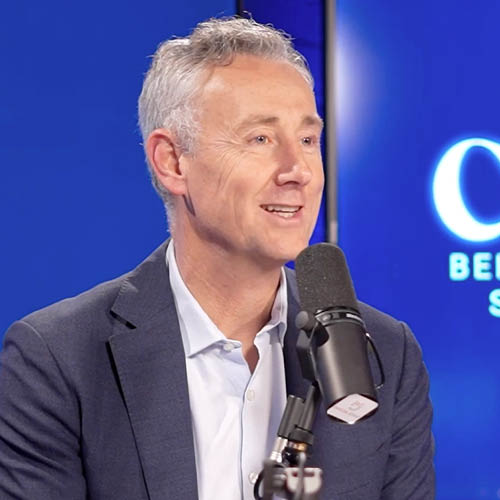
David (Host): [00:00:00] Dave, welcome. Thanks for joining us.
David (Guest): A pleasure to be here.
David (Host): Been really looking forward to this conversation Today. We're gonna be actually talking about the hot topic of the moment. We're gonna be talking about ai, uh, how to think about it, how to implement it, what can happen within companies as they, as they go on that journey.
Um, obviously to have you as a, you know, absolute market leading expert, um, on this, on the topic. Really, really looking forward to it.
David (Guest): Well, I'm thrilled to be here. I really appreciate the invitation.
David (Host): Fantastic. So before we, before we get stuck into the, the good stuff, I'd just like to ask you a few questions about IBM obviously one of the most iconic businesses, brands, um, in the world.
So let's start there. What, what's just, what's the legacy of of IBM? In Australia,
David (Guest): so, well, we've been in Australia for about 93 years. I mean, IBM itself is about 114 years old. And so Australia was one of the [00:01:00] early countries. In fact, it was interesting, I was with a, with a client yesterday and we've, the client was Westpac and we've been serving that particular client for 90 years.
It's just extraordinary that we're, uh, that, that we've been going strong for, for so long. And, and I suppose in that context, you know, such a venerable institution, I suppose is, is kind of an unlikely hero for something that's cutting edge as ai. And I think that's one of the really interesting, maybe quirky things about the IBM story at the moment.
David (Host): Absolutely. And, um, IBM itself, I think it, it sets quite a nice tone for this conversation as well. Just globally, the business has also been sort of undergoing a transformation, hasn't it? Can you just walk us through. What's been happening at the global level with IBM and then we'll start to zero in on, on Australia.
David (Guest): I mean, again, IBM is one of those companies that I think most people think they know, but probably very few do. I mean, I, I was trying to think of an analogy for this. I, you know, maybe a good one will be Coca-Cola, right? We all know Coca-Cola, right? We all [00:02:00] have consumed their products. We've all got a very clear idea of what that brand is and what it stands for.
But Coca-Cola isn't just about, you know. The Coke brand. You know, they do protein drinks, they do energy drinks. They do, they own Costa Coffee. They make tea. They're one of the largest water companies in the world, you know, but we think we know them because they've just been around for such a long time.
Well, IBM's a bit like that, you know, uh, IBM is something that many of us would've come across. Maybe, you know, if you're as old as me, maybe you've seen a typewriter or a laptop computer branded as IBM. And so you might have seen, you know, IBM logos in movies with mainframes, war games and things. And so it's, it's a, it's a brand that you could easily, you know, con consider as something of, of the past and not actually have a, a current view around what the business is really, what, what it really is doing and what it stands for.
In the modern age. And, and so, you know, I've been with this business [00:03:00] about 18 months. It's been a learning journey for me to, to get, to get my head around what this business really is in, in 2025. But really the big change for us happened 20 20 20, 20 21, when IBM reinvented itself, and it termed itself as, as a, a hybrid cloud and AI business.
And, and I, I think that's kind of a brave call. If you think back to kind of 20 21, 20 20, you know, hybrid cloud, well, you've said, well, look, boys and girls, look, the answer's really public cloud, you know, we see the growth of Azure. We see the growth of, of AWS, the future's public cloud and, and ai. Come on, IBM, you've been banging the drum about AI for seven decades.
Who's gonna make a buck out of ai? You know, and, and I think, you know, a lot of people could have looked at that sort of statement and just thought it was kind of blah, blah, and not very, not very sincere. But, but the business followed through, you know, they exited, they, they'd exited, you know, the infrastructure part of the business, which [00:04:00] became ndl.
They bought Red Hat, you know, fully embrace the open ecosystems of partnerships, massive contributors into o open source, more AI and generative AI patents than anybody else in the world, more than say, Microsoft plus open AI combined. And so, uh, so it's really kind of gone full bore on this strategy, and it, and it's really been paying off.
So if you look at, at the share price performance, IBM's doubled in share price, in share value over the last couple of years or so. Uh, there's been, you know, a, a, a bit of movement within the last few days, but, uh, last time I looked, you know, if you'd have compared the. You know, the major tech businesses in terms of share price performance over the last year or so, you'd have seen in, uh, Nvidia, you'd have seen IBM and then you'd have seen, you know, other, you know, more famous names, you know, somewhat in our wake.
So I think now there is a, there's a bit of an awakening, uh, a bit of a [00:05:00] realization that, that IBM is, is, is a real player, a very serious player in the AI game. And, uh, and that's, that's, that's super exciting. But it, it does come, as you were saying, David, it, it comes from also the way that we've been applying these same technologies in our own business.
So we've been embarking on this. There was the shift in strategy that I mentioned, but also the way that we, we implementing AI in our own business, drinking our own champagne, if you will, is, is a profound enabler of our transformation.
David (Host): Just a little bit about yourself. Obviously your, your, your background has primarily been in consulting, management consulting.
Now you've kind of jumped over the fence, let's say, to, to now becoming, becoming the CEO. So talk to us, what's that, what's that transition been like moving from the sort of consultancy side into the side of being the CEO?
David (Guest): Yeah. Um, I mean, look, to be [00:06:00] clear, I, and Krishna is the CEO of IBM, you know, I, relatively speaking, I run a pretty, pretty small, small part of the family here.
Uh, I lead the consulting business here in, in Australia. But, but what you say is true, you know, it's, it's, it's been a shift. So I started in, in consulting, I did a couple of turnarounds. So I, I held management positions in a couple of turnarounds in the middle part of my career, and then went back into consulting and, and actually a lot of my clients were IT services businesses.
So I've been working with clients that are somewhat similar to the business that I now lead, you know, through change, through turnaround. And, uh, and I, I think to a certain extent, I was getting a little bit frustrated in the sense that I felt that I knew what the answers were. I, I think it felt, I knew how I want, how I would lead those businesses.
But of course, as a consultant, as a, as someone that, that advises, you have to respect the authority of the [00:07:00] executives. You know, you can provide advice and you can provide, you know, the evidence to underpin that advice. But ultimately, the executives have to make the call. So when I got tapped on the shoulder about, you know, coming across to IBM and leading this business, uh, it's something that I jumped at.
I knew instinctively it was the right thing to do. And, you know, as I've got further and further into this, I've, I've enjoyed it more. But it's, you know, it's, it's, it's definitely harder doing than advising. I will, will concede that. Um, you know, the, I've got a, a lot of, a lot, a lot of patience for, for my clients, right?
I, I sit, I, I, I have a foot in both camps here that are juggling the day-to-day pressures of leading a business, you know, quarterly earnings and another near term considerations with the stewardship of the business, how you're guiding the organization through a time of tremendous change. So it's, it's, it, it's tremendous fun.
I I wouldn't wanna be doing anything [00:08:00] else at the moment. You know, there are very many plates spinning. I, I often comment that there are more fires than hoses and, you know, choosing where it is that you. Uh, devote your time, energy, and effort is probably one of the most difficult things that, that any business leader needs to consider.
David (Host): And you, you, you said before, um, IBM has essentially embraced, um, AI in its own operations and business since, since 2018. Um, which in today's world feels like a long, long time ago. Yeah, a long
David (Guest): time in dog years, isn't it?
David (Host): Um, what, obviously you, you've not been in, um, in your position all that time, so you, you know, you didn't necessarily have the sort of, uh, view on it from a day-to-day basis, but what do you think's been perhaps the most meaningful transformation that's happened within your part of the business because of that early adoption of, of ai?[00:09:00]
David (Guest): I, I think there's a couple actually. So, I mean. If you think about the way that AI gets applied in, in, say, business like ours, but I think it's analogous for many of our clients and businesses as well. There's probably three, three, um, three fronts that you can, that you can think about applying AI within.
So the first and probably the easiest to address is the back office, and that's where we started. So back in 2018, we started in hr, but I, um, but we've, we've applied that across all of the different back office areas. So hr, finance, procurement, these are places that a lot of organizations start. The savings are very, very real.
And also while there are risks, particularly when you're dealing with hr, you're dealing with people, issues, policies, et cetera. Um, you know, these are known. These are, these are manageable risks. So that's kind of front one, front two becomes then with the customer, or perhaps one level behind the customer.
So supporting people that are facing into them. So [00:10:00] agents perhaps giving them the, the tools, the understanding next best action, those sorts of things. So building on some technologies that have existed for some time, but, but with ai, obviously you can do that in a way that is much, much more sophisticated.
And then, you know, the natural extension of that would be to, to automate the self-service with ai, which, which has got, you know, slightly higher levels of risk for really obvious reasons. The third, which is probably having the biggest profound, so the most profound impact on IBM consulting is how we enable our people, however.
And so if you think about the role of a, of a consultant, the kind of things that we might do, and, and when I say consultant, by the way, we do advisory work, but we do IT services, we do outsourcing. It's quite a broad portfolio of professional services, technology, professional services that we undertake.
Uh, these are the kind of roles that can be enormously accelerated, enormously benefit from ai. And so in different parts of our business, we're seeing 50 to [00:11:00] 80% productivity improvement with the tools that we're giving people. So what started in life within IBM is a little bit of a skunkworks project to provide AI tools to our people has accelerated to be, um, you know, a massive investment, hundreds of millions of dollars in something called IBM Consulting Advantage.
And so all of our, all of our people are provided with an array of, of. Of AI tools. These are safe AI tools that we can use with our clients. Uh, this is where we keep essentially all of our IP so that it's readily available to all of our people. And there's a, a range of different models, agents that people can call upon in order to undertake their work in a way that.
You know, much, much more efficient than would've been, than would've been possible. And so if you think about, you know, applying AI in, in all of those areas, you know, in, in combination, that's had a massive impact on our business. So over the last two [00:12:00] years, um, we've had, um, an impact of about three and a half billion dollars in terms of the, the impact in IBM.
And in terms of the work that we've been doing with clients, we've signed now, I think it's about seven and a half billion dollars worth of, of, of generative AI related work with clients. So this is really impacting our business in terms of the way that we operate. But obviously, you know, the learnings that we've, that we've garnered through doing this, we're obviously now translating at scale to an array of different clients.
David (Host): Yeah. Very impressive figures there. And when, when you say, um, you've seen productivity gains from your own staff, I think you said 50 to to 80% what? What has that meant for those, for those staff members in terms of how they can now operate? Does that mean they have 50 to 80% more time? Does it mean the work they do is more valuable?
How do we understand that?
David (Guest): Yeah, so, uh, the way that [00:13:00] AI impacts the workforce, I think, varies quite a lot on the, on the basis of the context. So for our people that are doing, you know, consulting work or IT services work for clients, there's just huge upside. So if we think, why, why would a client not invest in a particular technology?
Say, um, uh, usually if you are, you know, you're looking for productivity gains, you're looking for growth, you're looking for, uh, for, for cost out within an organization, you, you may need to invest. Obviously you need to get the business case to fly. Now what we are finding is, obviously, as we can do so much more with the, the people that we've got, that means that the, the, that that helps to deliver a much better business case for our clients.
So what that means is that they can actually afford to do more with technology. The more of the projects that, that they might want to undertake are gonna be able to deliver, be delivered within the [00:14:00] timeframes available. Or within the cost envelopes that are available and can, can deliver better outcomes for their, uh, for, for their businesses.
So I think on that side of the business, it's very elastic. The fact that we can do more, uh, with essentially, you know, less time, energy and, and effort input just, uh, the, the dividends on that, uh, you know, are very, very clear. I think that the harder side of the equation is when we're looking at, at, at work that needs to be done and, and it can be delivered much more effectively with AI and, and where we are creating capacity that is not necessarily fully consumed.
And so. Where we've applied AI in, say, some of the back office functions. Absolutely. It's freed up a lot of capacity to be doing higher value activities. So you know, no more having to, to spend lots of time doing, you know, HR process type activities because those are actually executed by agents. But actually there's a whole bunch of strategic questions that we have [00:15:00] in HR around how we evolve our workforce for the A IH that we need to do.
At the same time though, we are freeing up capacity there and, and the mix is shifting between what's the, the, the, the capacity that we need in the back office versus the front office. So we are having to think about how we retrain people and give people opportunities to move from say, what they're doing today, to being, to being able to be, you know, serving clients and, and, and have relevant skills going forward.
And that, I think, is a challenge that we are facing into, but I think that's one of the big, big challenges around AI that, that all of us should be thinking about.
David (Host): Yeah. The, the, the retraining part's pretty key, isn't it? Because I, I feel like a lot of focus gets put on, you know, what we can save and how much time we can save, but then if you're not gonna reuse or reinvest that time wisely, then the whole exercise is not gonna be as valuable as it as it could have been.
David (Guest): Yeah. Well, I, I think that's right, but I, it, I don't think it's just a question of value here. I think there's a question here of responsibility. [00:16:00] So, you know, one of the things that, that I'm personally very passionate about is making sure that, that as we, as we drive this wave of AI through our businesses, that we do so as leaders in a way that is, you know, genuinely responsible.
And, and there's a bunch of things that we focus on, obviously when we talk about, you know, responsible ai. Uh, but I, I think the one that, that is. Most pressing is around how people are treated and, and how we, we think about, um, we invest obviously in, in giving people the skills and the capabilities to do, to be as productive as they possibly can with all of these AI tools.
But for those people whose, uh, you know, roles are being disrupted, and, and, and let's be honest, you know, you know, there are roles that are clearly being lost because of ai, they're being substituted. Um, how do we then ensure that they've got the learning pathways, um, in order to, [00:17:00] to, to retrain, to be able to, you know, reapply their talents in different areas?
So, I mean, I was chatting actually the other morning with one, one of our colleagues who started, or when I joined the business was, was working in hr. Her role has gone away, um, but actually through the, the experiences that she's had in, in. In applying AI in her area. She's, and she's invested very considerably in her skills and capabilities.
She's now a consultant in our business and she's helping other organizations to apply ar sorry, apply AI in their businesses. I think that's a great example of someone that's, that's understood the potential of technology, understood how this might be now have negative consequences for them if they're not really proactive, taking control of their careers.
And obviously on our side, we, we've needed to, you know, make sure that she's got the understanding, the guidance has got the training available and that we can help to transition into, into a [00:18:00] very different role. So I think these are the sorts of interventions that we're always gonna make. And, and I, I will concede that that's, you know, that's, that's probably one of the better examples that we've got.
But I think that's the kind of thing that we need to promote to, to champion and see if we can replicate as much as possible.
David (Host): The, the HR examples are. An interesting one. We, we actually had, um, a guest on the show not so long ago, um, kinda leading HR expert. Um, one thing he was saying, which really sort of stuck with me was, um, AI will give people more time to spend thinking about other people and working with, doing people related activities.
And the example you gave is exactly right. So those HR processes perhaps disappear, but then those hr, those same HR staff can now actually focus on doing the people to people activities instead.
David (Guest): Yeah. Look, I you couldn't be more, right? So I mean, our business now, 94% of [00:19:00] interactions with HR are via essentially a chat interface.
And, and, and the, the number of transactions that takes place, I think it's about 2 million interactions and then about 1.1 million of those. Transactions in the sense that this isn't just, you know, tell me something. It's not just a query, it's actually I need you to do something and it actually does the thing.
So, so what that means for me, for example, if I need to change someone's reporting line, I go into a chat bot and I say that I need to change, you know, Bill's reporting line and, and Bill now needs to report into, to Janet and it will do that. I no longer have to go into, you know, the actual application success factors in our, in our business to go and do that.
An agent will do that for me and it will just tell me that it's done. And, and so, you know, somebody in my role, perhaps in, in, in days gone by, wouldn't have gone into the system themselves. They'd probably had their HR manager go and do that for them. And so, so I think that that [00:20:00] the way that we kind of enable people to do that and take away those, um.
Lower level activities because, you know, the machines can do that, I think is a great, great opportunity. And so, uh, so I, I think, yeah, that is, that is definitely something to be celebrated and that's something that we need to take advantage of.
David (Host): And, and how has, how has your, your role in particular and the role of A CEO, how, how has that changed for you now that you have access to these sort of real state of the art AI tools?
I'm just trying to give those execs kind of listening at the moment, who are obviously not as far along on the journey as, as you would be. What does your, what's been the impact on the way you go about your day to day?
David (Guest): So, in terms of my day to day, I, I think like a lot of other leaders, I, I try and use as many of these tools as I possibly can.
Um, [00:21:00] so, uh. You know, like everybody else in our business, I've got access to, you know, IBM consulting Advantage. You know, if, if I need to structure a presentation, if I need to, to, um, to, to, to do any kind of, any level of kind of, you know, problem solving, then there's this, there's stuff there that, that I can, that, that I can obviously use.
Um, we obviously use lots of other applications as well. You know, we use, you know, we use SAP, we use Salesforce, you know, there's AI capabilities embedded into all of those things. And, and we're not precious about, say only using IBM stuff. Uh, I also try and make a point of using as many of the other public domain, um, tools.
I mean, I will obviously not use it for kind of sensitive information, but, you know, just being familiar as possible and, and trying things out, you know, claw or perplexity or whatever it happens to be. You know, can, can you help me with the, with this particular task, this research, this, this understanding building a very quick.
[00:22:00] Uh, you know, body of knowledge that, that I can start to work through and, and apply. I, I think, you know, we need to push ourselves to, to, to, to take advantage of all of these, all of these tools that are at our, at our disposal. I think the way that it infects me though, most, most broadly is just trying to peer around corners.
So there's a day-to-day aspect, but, you know, this is a period of profound change. And so thinking about how this is going to impact, what are the opportunities for our clients? What are the opportunities for our own people around this? And, and how do we start to, to equip people? Um, it's, I I think that's one of the, the really important responsibilities of people in roles like these.
Um, and if I reflect, if I may reflect, you know, I, I, I'm, I, I feel very lucky to have been through what are essentially two major. Revolutions in my career. So when I started my career, that was the, the, the, [00:23:00] you know, the internet was just becoming mainstream. I sent my first email when I was, when I was at university.
I had my first mobile phone in my first first year of my job. And, and now we're obviously going through this profound impact around ai and, and, and I think the, you know, it, it, it's, it's wonderful to, to lived through these two, two massive changes. But I, I think the change here in this transition around AI is more profound.
So when we think about what happened with the internet, okay, there were, you know, there were bricks and mortars businesses that were definitely disrupted, you know, your local bookstore for example. But the level of disruption, I would say was, was massively, massively overshadowed by the growth and the opportunities that were created.
Now I fundamentally believe that that'll also be the case with ai. But the rate of change, the pace of change, and the breadth of the storm front, the breadth of the [00:24:00] impact that it potentially has is, is, is extremely wide. And so I think we need to give care to ensuring that the, the impacts of ai, uh, on our society, on our businesses are, are, are really, are really thought through.
I, I, I'm a, a massive, massive, massive proponent of, of, of, of AI and, and, and enabling businesses to use this at scale. But I do think we need to be thoughtful, you know, particularly in businesses like mine, largely a people based business around how we, uh, how we manage the people that, uh, the, the, the, the people impacts.
David (Host): Yeah. It's, it's challenging, isn't it? Because as execs we, we have so much responsibility actually in the way that AI. Is gonna be implemented and the impact that it's gonna have on people, individually, businesses, communities, and it doesn't feel like kind of government and regulators are [00:25:00] gonna sort of keep up in terms of policing and a lot of decisions are gonna get made now and have to be made by those execs.
And ultimately it's how do you make those in the interest of business, but also responsibly, like you've said.
David (Guest): Yeah, I mean, it's, it's interesting the, I'm obviously coming to you from Australia. Uh, there's a very live debate in, in Australia at the moment around productivity. So productivity within the Australian economy has, has really flatlined over many years.
And the government is, is embarking on a consultation process essentially to try and draw in. The contest of ideas, you know, how can Australia be more productive? And of course, AI is a massive topic within this. And how do we encourage the growth of ai? And we've seen some really great investments from the likes of Amazon.
You know, there's, there's, there's various, various others that are, you know, looking for opportunities to make investments here in Australia, which is fantastic. Absolutely welcome that. [00:26:00] Um, but one of the topics of course is, well, how are you going to, how are you gonna govern, how are you gonna regulate a ai?
And obviously there's been a similar debate in the US and we've seen obviously the, the, the, this, the winds of change in US regulation on this, on this very topic. I think the way that we would see it within, within IBM is that we're not gonna wait for regulation. I mean, you know, we will abide by whatever regulatory regimes are, uh, instantiated in, in the jurisdictions in which we operate.
But I would say that, you know, for, for us, you know, we have four core beliefs around, around ai. It needs to be open. Which is, you know, available to, to all with real big contributors to the open ecosystem. Um, you know, we believe that it should be, you know, very democratized. It's gotta be trusted. Um, so, you know, ensuring that, that we, again, we've all seen the, the, you know, hallucinations, uh, we, we've all seen, you know, you know, potential negative [00:27:00] impacts.
It needs to be targeted. We need to know exactly where it is that we we're driving the value from when we apply ai, and it needs to be what we would say empowering. So it's not just about empowering the end users, but it's also the people that are actually working with, working, you know, with AI tools, giving them the, the, the capabilities to, to, to build and to, and to, and to innovate and.
And so if, if those are our overall principles that, uh, core beliefs in terms of ai, uh, particularly around this aspect of trusted, this is one where we've leaned into very, very strongly. So for probably about five years or so, we've had an ai, global AI governance board, which is, has got decision making authority and, and has actually made some tough calls in the past around, you know, things that we, we can and can't do, you know, markets that we would potentially exit even, uh, within the AI domain on the basis of, of what we think is the societal impact.
So I, I think that organizations like ours, you know, need to have, [00:28:00] you know, very clear firm beliefs, but need to put guardrails in place. And, and I, I think, you know, again, when I speak to many of our clients that are looking at scaling ai, I think there's reasonably wide awareness of this. And so, you know, many of our clients are, you know, rightly.
Thoughtful, cautious, putting in the right sort of, you know, guardrails themselves in their own organizations. Because if they're going to scale ai, yes, they need the individual use cases, they need to have the proof points of value, but they need to have all of the mechanisms in place that allow them to scale.
And that's not just having a bunch of developers that's actually having the, the sorts of, you know, management systems in place that can steer the innovation in a way that is both value adding and safe.
David (Host): And you need to, to properly implement these systems, you need your people to buy in. [00:29:00] So if you are, if you are sort of implementing AI in a way that's, you know, not particularly.
Kind and you're, you're looking at it from a point of view of how many costs can we cut and how many people can we cut? Kind of the remainder of the team are probably not gonna be big supporters of, of bringing in, bringing in. And ultimately then it's not, it, it isn't gonna work. At some stage, you're gonna need some people there who really buy into it.
David (Guest): Yeah, look, I think that's, I think that's right. I mean, again, there's lots of different ways of, of, of cracking that nut. I'm sure. One of the things that we do, uh, every year is we have an internal challenge around ai. So I don't, we've just done it actually, or we're in the process of doing it. So I dunno how many people we're gonna have participating this year, but last year I think it was just shy of 150,000 people in our business took part and we call it the what's Next challenge.
So what's next is one of our, essentially our platform for ai, which includes all of our technology, but also technology from lots of other o other, other partner organizations or from open source ecosystems [00:30:00] so that you can build AI capabilities in an enterprise setting. I for four businesses. And so, so we set this challenge out there, you know, go create, and it could be creating, uh, capabilities for our own business.
It could be for specific client situations, it could be for non-for-profits. But, but what we've tried to do is get everybody on the tools and thinking about the application of this in Australia. Everybody in our business top to bottom have has done AI training. And that's something that we're gonna continue to do on a, on a year to year basis.
Because I think it's non-discretionary that we familiarize ourselves, that we look for ways that we can, that the, the ways that we can, can apply these technologies, you know, for a wide array of benefits. Yes, there are clearly going to be cost productivity, you know, benefits on, on one side, but I think that's extraordinarily narrow if that's what, where we limit our thinking towards.
David (Host): What are some of the big mistakes you've seen [00:31:00] from execs and management teams that are sort of doing the AI. Strategies and implementation plans?
David (Guest): Well, look, I, I think I'm not gonna point the finger at anybody else. I'm going to actually refer to one of IBM's mistakes on this. And so I mentioned that we started our journey in 2018.
So one of the ways that you can measure, one of the ways you can measure the impact, sorry. One of the ways that you can measure the, uh, the performance of an HR team is through NPS Net Promoter score. And I might get the numbers slightly wrong here, but when we started down the, the journey of applying AI at scale Ask HR is the, is the, is the, is the, the brand that we used internally back in 2018, our NPS dropped and it went from, I, I might get the number slightly wrong, but maybe it was 20 or 30 and it dropped to, you know, about minus 20, minus 17, something like that.
[00:32:00] And, and of course, you know. That is something that we learned from, well, well what, what happened? Well, we rolled out a whole bunch of tools. Here it is. And we took away a whole bunch of capability and we didn't really give the full consideration to the change management. And this is a fundamental change in behavior.
And so obviously we learned from that and we improved the efficacy of the tools, we improved the training, we improved the, the, the, the, the change management. And actually people could see that it was, it was a lot easier, a lot easier to get the work done through, uh, uh, through an agent, through a chat interface than, you know, waiting on a, on, on the phone, waiting for somebody to email me back.
And, and, and, and, and as a consequence, you know, we, we've turned the corner and I think the NPS within our HR organization at the moment would be probably about 74, 75, something like that. And so, so that's, that's the kind of. [00:33:00] Uh, mistake that, that, that we made. Now, obviously, what we try and do when we help our clients is we try and avoid those kind of mistakes.
And it's one of the reasons why we've, you know, across the range of fronts, we've tried to, as I said before, drink our own champagne. We call it client zero. So all of the things that we work, we're applying to our clients. We've tried to apply to ourselves first. And so, yes, the things that we're going out to the market with, we talk about the three and a half billion dollars of benefits that we've driven within our own organization.
But, you know, peel under the cover, we're also identifying the, the, the stumbling blocks, the things that we tried that didn't quite work. You know, particularly human factors such as, such as change management, in fact, much more than the technology side of things.
David (Host): Isn't that interesting that there's so much focus and there will be so much focus on the technology, but probably in most cases, like you've said, the thing that may let people down is the, is the, uh, the standard change management piece.
David (Guest): Well look exactly. [00:34:00] And look, I think the change management piece is, is, is a really important one. I think the other one has just been around, you know, following the value, right? So where can you actually apply these sorts of, you know, tools, techniques, um, in, in our business, the way that we've thought about this, and I think there's a lot of, I think this, this translates really well, is, is we thought about this not just in terms of we're gonna apply some ai, but we thought about it in terms of firstly, what can we eliminate?
You know, what are we actually doing today that, that we don't need to do? And you can imagine 113, 114 year old business. Yeah, there's a few things that we, you know, probably should have left behind. And so how can we just stop doing stuff? So thousands and thousands of reports that were created, no need.
Um. You know, how many approvals, how many people need to approve in order to undertake a certain task. Again, I would say that we were probably way, way too bureaucratic in the past and we've really sought to, to eliminate some of [00:35:00] that. The second is then simplification. So actually as you look at your end-to-end workflows, what's the happy path here?
How can we make this just a better experience, which is generally a better experience for performers, people in our organization, it's a better, uh, experience for, for clients or for end customers. And so, so those are the two foundations. And then obviously you can bring in the automation. And I think that as we think about how we apply ai, it's very easy to get attracted to the flashing, blinking lights of the technology.
And, okay, well here's something and we'll, we'll just try this and roll this out. But I think if we forget about the elimination, the simplification first, and we just try and try and deploy technology, I think we're gonna be disappointed with some of the results.
David (Host): I don't think that there's probably not many execs out there now who don't get the importance of technology, um, of ai, and, and they fully understand that they need to be thinking about it.
[00:36:00] Um, let's say I'm a, I'm a, I'm a client. I, I give you a call and I say, Dave, we, we are ready to start our AI journey. We know we need to do this. What's the, what's the first question you are gonna ask me?
David (Guest): I I, I think the first question I'm gonna ask is, is probably, where are you up to? Because I, I think, you know, the, in, in this sort of, in this sort of journey.
You, you've gotta meet a client where they are. Uh, I mean, we've got some organizations that we work with that are incredibly sophisticated, you know, that have been applying this technology, you know, nearly as long as we have. And then we've got others that are brand new on the journey and, and recognize the potential.
But, but maybe they're under pressure from the board. Maybe there's some other external factors that mean now is the time to, to begin to act. So I think, you know, we've, we've gotta really understand, you know, where they are. We're gonna meet the clients where, where they are. I think in terms of, you know, as we think about getting [00:37:00] on embarking on this road, there really is a question in my mind around how it is that we can drive, you know, a level of maturity before scale.
So how can we start to get some quick wins? How can we start to build a little bit of belief, a little bit of momentum, and actually learn? I mean, these are new skills for a lot of people, and so getting familiar with that, getting some, some, you know, positive feedback, a bit of affirmation, this is actually working.
We're seeing how we could do that. But then as essentially also at the same time, starting to think about how do we make, how do we put some of the foundational enablers in place for us to be able to scale? So I talked about governance before. A big one, of course is data, right? The, the data is, you know, the fuel of ai.
So how do we get our data in order so that we can actually apply that? In our various AI use cases. So these are some of the things that, that we would tend to tend to, to, to, to begin to discuss with our, with our, with our clients.
David (Host): I, I, I worry sometimes [00:38:00] the, um, executives, founders, management teams panicking a little bit in terms of they're worried that if they don't adopt the next big thing in, in ai, they're gonna, they're gonna come to work tomorrow and their competitors just, you know, left them, left them in the dust.
And perhaps people are trying to do move perhaps too, too quickly, almost before, like you said, just stab establishing those foundations.
David (Guest): Yeah, look, I mean, it's, it's interesting, right? With, with any technology, with, with any new innovation actually, um, we tend to overestimate the short term impact. Uh, you know, we imagine that, that suddenly, you know, we're gonna wake up and the world is gonna be fundamentally different, but I think we consistently underestimate the long-term impact.
And so, you know, if we cast our minds back to the early days of the internet and, and, well, maybe you're too young for this, but, but, you [00:39:00] know, I, I got caught up in the kinda the.com boom in the ear, and, and, and, you know, we imagined that the world was gonna suddenly be com completely different. And, and obviously we kind of went through, you know, some, you know, major resetting of expectations through the two thousands.
But you, you look, you look at the, the impact that these sorts of technologies have had on the world, it's absolutely profound. We could not possibly envi envisaged all of the ways that the, that, you know, being hyper connected has changed our world. I'm sure the case is, is the same with ai. So I think there's a, there's, you know, there is time, there is time for, for businesses to get their, get their arms around this and to, and to react.
I mean, one stat that I think is, is, is kind of interesting actually that I, that I heard quite recently is when we think about, uh, when we think about the, the large language models, you know, the, the famous ones, like the consumer grade ones that, um, that, that we all use at home. Uh, these have been trained with pretty [00:40:00] much everything that is in the public domain.
And so the information that's in the public domain, almost all of it has been used in some way, shape, or form to train large language models. The same is not true for enterprise data. So less than a lot less than 1% of enterprise data has been TR trained, used to train models. Now, obviously we don't want to be training, you know, public domain models with your business proprietary data, but you can train your own models and.
And so we are really only beginning to, to, to get our arms around this and to think about how we use AI in an enterprise way, in a way that's enterprise grade, that is secure, that is safe, that is, that is built for your business. I mean, I, I, we used, at the HR example, we used nine different LLMs in, in hr, and each of those are obviously trained specifically with our, with our data.
They're based on open source. Uh, they're based on open source models that [00:41:00] have been infused, instructed with, with our IBM data. And, uh. That, that's an outlier, right? There's there's not a lot of that yet. So, so I think we're really at the beginning of the journey when 1% becomes 50%, well, maybe we'll have a very, very different view, but I think there's still opportunities, there's still time for businesses to get their arms around AI and to, to be, to, to, to, to apply this at scale.
But, you know, the, you know, the, the clock's ticking, you know, and, and there's a learning curve. We've seen this in our own business. You, you've gotta get on that learning curve and, and you've gotta get, as I say, to a level of maturity before you can get to a level of scale.
David (Host): Yeah. Well said. Um, one thing you, you mentioned to me when we spoke previously that you were sort of quite passionate about and felt that discussion needed to be had was, um, kind of the, the career paths and the future of, of those young people, those, those people joining, [00:42:00] joining the workforce and what this, what this revolution, um.
May or may not do to sort of their career prospects. Um, just talk to us a little bit about what you see there in terms of the future of work, particularly for those people sort of joining the work, the workforce.
David (Guest): Yeah, so look, I think this is a really healthy debate for us to have. And you know, I credit Dario Modi from, from, um, CEO of philanthropic for kind of really pushing this into the public consciousness a a few months back.
He very famously said that he thought that 50% of entry level jobs were, were gonna be displaced by ai. And, and of course if you look across, again, if you reflect on, again, we're, we're slightly different vintages here, David, but you know, if I think about the kind of work that I used to do as, as a entry level consultant, you know, I might be, you know.
Restructuring a document, I might be doing some primary research. Um, you know, I, I might be doing a bunch of, of relatively low level tasks. If I'd entered into law, I might [00:43:00] have been, you know, dealing with a, you know, making changes on a red line document. I might have been doing some pretty low level activities.
If I'd gone into accounting, I might have been de debugging code if I'd gone down that path. All of those activities can be performed extraordinarily well with an array of AI models today. And so I think that Dario's comment, um, you know, needs to be taken, needs to be taken seriously. But I would venture that there's two schools of thought.
You know, either you can ascribe, subscribe to the view that, that, well, we simply don't need those roles. And, and what we'll do is we'll just train people that are maybe 3, 5, 7 years into their career, 10 years, who knows? And, and they'll just have, you know, their various AI agents, they'll have their various, um.
You know, go-to models that will perform all of the tasks that used to be performed by a pyramid of people under them. You know, there's another school of thought which says actually we are, have people [00:44:00] entering the workforce that have, you know, perhaps been using AI longer than many others. Maybe they've been using it through their studies.
Maybe they've just got a deeper affinity to it, you know, as, as often happens with technology changes. Um, but we can skill them, we can equip them, we can give them the confidence to be much more effective than you or I might have been at the beginning of our careers, and actually achieve much more than will be possible for someone that's five or seven years into their career because of this enablement, because of all of these tools and capabilities that are at their fingertips.
And, and of course, you know, I've painted two extreme pictures and the, the truth will probably be somewhere in, in the middle. But I think that as, as leaders. We can't afford to leave a generation behind. We can't afford the former to be the full picture. And look, I, I, I will declare a bias here. Um, you know, two of my daughters are 17 and 18 years old, right?
So they are, you know, one of 'em has [00:45:00] just started university. One of them is about to finish high school. So this is, this, this feels very real for me in my family life as well as my work life. But I think that we've got an obligation to make sure that, that not only for, uh, we, we feel an obligation to make sure that we are creating the opportunities for our younger people entering the, the workforce now in order to be successful, to be able to enjoy the careers that we enjoyed.
And I actually think that there's a question, you know, even if, you know, even if you, you're not altruistically minded, you know, there, there is a question of stewardship here. We need to be building these, these businesses for. You know, generations to come. As I said, IBM's more than a hundred years old.
I've got very great confidence that this business will outlive me. And so, you know, on that assumption, we need to be bringing in this talent. We need to be giving them, you know, great [00:46:00] experiences, learning, having the opportunity to, to drive impact. And I think that needs to be done very intentionally. So, for example, we are increasing, not decreasing the number of graduate hires that we're making here in Australia.
Uh, we are leaning into the training and development. So yes, we're investing very heavily in ai, but we're very in, we're investing very heavily in, in our learning and development. Uh, you know, I personally am leading some of the training courses. That's the case with some of our other senior leaders as well, because we, we wanna make sure that this is seen as being a real priority and that we're actually going to give all of our people that are.
At every level within our organization, the opportunity to to, to flourish and, and, and shine in this incredibly exciting era. Right. Again, I've, I think in this conversation we maybe dwelled a little bit on the, on the negatives here. I mean, this is, this is extraordinary. I mean, it, you know, what a time to be alive, the things that we will be able to do here, but we just need to make sure that we're doing that [00:47:00] in a way that really takes our people with, with us, or, um, you know, I, I think we're gonna look back and, and reflect that we, we weren't good enough stewards of these sorts of businesses.
David (Host): Mm. It's interesting. I, we were recording an episode just yesterday with the CEO of a, a very well known health and wellness brand. Um. They're in Australia and he, he, he was talking about the importance of interns to his business, about bringing them in and like using their creativity and their ways of thinking to kind of challenge what they were doing.
And I said to him at the time, I was like, I, you are probably the first CEO of a company of this size that's mentioned the importance of interns before. Um, it was really interesting. I, I think of it as well a bit like, uh, when you look at great sports teams, of course they had their star players, they had their experience players, the people who've been there and done [00:48:00] it, but usually there's just that like smattering of those one or two very young players who come in and they just bring that slightly different mentality that sometimes that naivety, that willingness to do things that others wouldn't do is actually what, what can make the difference.
David (Guest): Look, I think that's, I think that's really insightful. I mean, we're very heavily involved in those sorts of programs as well. So we've got partnerships with a number of universities here in Australia. In fact, I was with one of them, um, over in Western Australia, uh, earlier on this, earlier on this week. We had a, you know, joint strategic planning session together to, to, to determine how we gonna develop, this is Edith Cowan University.
How are we going to, you know, together, you know, develop the, the talents and the capabilities, um, in, in that part of the world in Western Australia. And for the, the past few years, we've had what's called IBM Future Lab, which is actually based on the university campus. Um, we've give opportunities for people to earn and learn.
So about more than 40% of the people at that [00:49:00] university are first in family to go to their university, and many of them are drawn from across regional Australia, and so they're living on campus and that's expensive. So, you know, you need to, you need to have a job. And so we've created a delivery center on the campus so people can be, you know, studying.
And also spend a few hours with us at IBM working on our business, we're working on our client's problems. And that's obviously a path for to, to then enter, enter, enter into the business. And, and this is something that we've, that we've, that we've, that we do in a few parts in the, a few different centers in the, in the country.
I, I think it's of tremendous, tremendous value. And I have to say, some of my best days in the office are, when I'm in, in either, you know, Ballarat or, or in June Loop, uh, you know, in these delivery centers, speaking with, with people, many of them interns, just the, the energy, the ideas, the creativity, and hey, look, you know, some of the things that, that, you know, that I recognize some of the mistakes that they might make as being [00:50:00] similar to those that, that, that I would, uh, I would've made.
But again, if, if you are in an environment where there's the coaching, there's the apprenticeship, there's the constant learning, there's the curiosity. You know, iterate so quickly and, and obviously again, you know, with the tools and the capabilities that are available to people now, you know, I'm amazed at the quality of the work that they're able to deliver.
It's, it's, it's, it's absolutely phenomenal. So I'm a absolute believer in, in, in, in young professionals. Um, and as I say, you know, I don't, I don't subscribe to the darrio view of the world. Uh, I think that we can do better than that. Uh, but I think it needs to be very intentional.
David (Host): A a and also just, just as, as leaders, one of the greatest pleasures is passing on knowledge, right?
And coaching. Um, so I, I think it's always something people should do, even if it's just something that kind of fills.
David (Guest): Back up. Look, I couldn't agree more. In fact, yesterday happened to [00:51:00] be just coincidentally a very, very proud day for me personally. So, somebody that I worked with for, you know, many years, um, he was, you know, on my teams, across two different organizations, three different countries, and then he's, you know, gone on, had a stellar career.
He was just appointed as the CEO of a New Zealand yesterday, a guy called Nickel Shanka, total Superstar. And, and it's just wonderful to, you know, to, to have, you know, played a part in, you know, journey of somebody that's, uh, that has just got huge, huge potential. And, and to, to, to be able to celebrate somebody else's victory as, uh, you know.
As, as loudly and proudly as I would anything that I would achieve. You know, I, I think those are, those are wonderful moments when we, when we can, you know, think well, okay, you know, we, we've, we've given something back and we, we've helped somebody on there. Helped somebody on their journey. Again, I'm sure you've got many examples personally that you can, you can think of, but I think that's one of the, the, the real [00:52:00] joys of, of any kind of leadership position is to be able to, to identify, to nurture talent and to be able to, to, you know, to, to, to, to provide a little bit of the tailwinds that, uh, that is sometimes needed.
I think Nicole would've achieved everything he's achieved without me, by the way, but, but you know, if there's a, if there's a fraction of 1% that I've contributed there, well, well, you know, I'll sleep easy at night.
David (Host): Yeah. And going back to, like you said, making sure that the conversation around AI is positive as it.
As it should be if you apply what we're talking about here in terms of coaching people and giving them the best opportunity to succeed. I mean, AI just, I mean, what that means we can do for people and what they can achieve is just crazy.
David (Guest): Look, again, I, I, I couldn't agree more, right? So I, I think, and again, I think we're really only scratching the, scratching the surface here.
And so, you know, we'll look back, we'll look back on this era in the way that [00:53:00] we might look back on the era of dial up internet. I have no doubt about that whatsoever. And I think that, you know, when, when we, you know, properly unleash all of the creative elements that are, that are available to us. So, you know, we, again, we talk a lot about agentic ai.
Uh, agents are obviously, you know, uh, you know, powerful things. You can get a an, an AI to do a thing obviously. Many of the tasks that we perform today are complex. You do many things. And so you need to orchestrate a number of different agents to to, to perform tasks. I mean, what we are doing in our business, of course, is, is we're, we're doing all of this work, but we're harvesting all of that, this ip and we're making it available to all of our people.
So now there's a library of agents. I don't need to necessarily need to create them in the same way as I might be able to draw down on, you know, you know, code modules I might be able to download if I'm a, if I'm a coder. Um, and so now I, you know, the, what, what I'm, what I'm thinking about is, well, here's [00:54:00] this business problem.
I can now break it down. There's these different tasks. There's all of these different, different AI agents that I might have at my disposal. My ability to, to develop new ones to, to build new ones is obviously itself massively enabled by ai. So there's a, there's a, there's a flywheel, there's a positive feedback aspect to this, and so.
You know, we are, we're still in the relatively early days of ag, ag, agentic ai, but I think that this is, this is the, the, the a key thing that, that we need to, you know, to, to unleash in our businesses in the, in the years ahead. I think that's, I think that's just super, super, super exciting. And I think about all the things that I do in my day-to-day job that frankly I don't want to do.
And the first thing that occurs to me when I, when I'm, you know, performing some, you know, process related tasks and I still do, is there's gotta be an agent that can do this. There's gotta be a better way. And I think if we're all asking that question, we're all kind of leaning into that. Okay, so how can we create that?
How can we make that true? [00:55:00] And then what do we learn from that that we can then apply to different situations? You know, I think it's just, I think, I think it's enormous, enormous privilege to be in business, you know, at a time when we can actually. Lean into these things and, and, and actually, you know, drive value in, in, uh, in, in, in this way.
And, and look, I, I will concede, you know, I'm an engineer by training. You know, I'm, I'm a a bit of a geek, you know, I love this stuff, right? It's just so great to be able to solve problems and to be able to solve problems in really smart, innovative ways that, that then equip you to solve even more complex problems.
I mean, that's just, that's just terrific fun. I mean, it's great business, but it's just terrific fun.
David (Host): Dave, you've been extremely generous with your time today. So I'm gonna just pull us through now into just a closing section here. Um, there's a couple of questions we like to ask as a bit of a tradition on, on, on the podcast.
Yeah, go
David (Guest): for it.
David (Host): Um, [00:56:00] what's one thing you've changed your mind about recently? And why,
David (Guest): um, you, you know, I mentioned, I mentioned at the beginning of this conversation that the heritage of IBM and, uh, you know, where we've come from in technology, uh, I, I like a lot of people, I would've thought, Hey, the mainframe.
Surely that's, you know, that's, that's something again, I mentioned the war games movie. That's surely something from kind of the 1980s. Um, uh, if you've paid for something today, other than just like handing over cash, if you've used your mobile phone, if you've, you know, had any kind of transaction with, with, with government, you've probably used a mainframe today.
And actually the mainframes now have kind of got AI infused into them. And so, you know, one of the things that we're all worried about is fraud. And how you limit, how do you, you reduce fraud? Well, that is an [00:57:00] AI problem, right? Spotting the outliers. And so actually, um, so we've just released, or our technology friends in IBM have just released a new mainframe.
And, and, and it's, uh, and the, the market for this, and the demand for this is, is, is, is off the charts. 'cause people need to be able to, to provide, you know, AI in the context of, you know, absolutely mission critical stuff like, you know, banking payments. So I thought that this was just a completely dead technology.
I arrived, I mean we helped clients move off mainframes as well, by the way. 'cause you know, not everybody, you know, needs this sort of technology all the time. But I came into IBM just thinking that was a complete dinosaur thought that was like a dying business. And, uh, and I've been completely reeducated that, that, uh, that, that.
You know, this is a, this is a technology that is, this is, that is gonna be with us for, for, for quite some time. And, and so, uh, you know, I've, that for me [00:58:00] was a complete, complete surprise in joining IBM
David (Host): What's one thing you've not changed your mind about and a belief that you'd like to share to help others lead better lives?
David (Guest): Yeah. Look, I, I, I think that there are, while, while we talk about AI and the benefits of ai, I think there are some fundamental skills and fundamental behaviors that are gonna be persistent. So I think one of the most important things is resilience and, you know, ensuring that we are, you know, resilient.
That we're, we, we are, uh, you know, you know, instilling that in our, in our colleagues, in our families. I think that is, is the most important thing. We're at a time of profound change and, and, and it's, the change isn't gonna be completely linear. And so we're gonna need to roll with the punches. And again, if I think about some of the people that I've seen that have been most successful in their careers, most successful in their lives, you know, many of them have had [00:59:00] enormous knock backs and it bounced back.
So I think resilience is one of the most important human traits. And I think that that, that is probably something that is gonna become even more important in the years ahead.
David (Host): Seems kind of ridiculous to ask you this question 'cause you've given so much during the interview. But, um, one piece of advice you'd like to leave the executives listening with when it comes to tackling this fast changing world of, of ai,
David (Guest): I think go play, right?
You know, get, get your hands on the tools, you know, get familiar with, with the kind of, uh, technology, the kind of tools, the enablement that exists, you know, for your customers, for your colleagues, for your partners. And. And spend time then, you know, with people that, that, that are, you know, immersed in this, to envisage the possibilities.
But yeah. Go, go play.
David (Host): Dave, [01:00:00] thank you so much. Really enjoyed this conversation.
David (Guest): Yeah, me too. Uh, really, uh, I wish you the, you know, continued success with, uh, with the, with the channel and the business more broadly. I think it's, uh, I think what you do is really important and, um, and I, I look forward to, uh, continuing to be, uh, a, a listener and consumer of your content.
So, uh, so thanks for this.
David (Host): Have a great day. Thank you very much. Thank you. You
David (Guest): too. Take care. Bye-bye.




 99K
99K
 230
230
 1
1


 POPULAR TOPICS
  FEATURED PODCASTS


 Home
Home
 Podcasts
 Covers
 Community
 Sign In