00:00
Sustainability can actually be very profitable from from day one, I fight against the it's not
possible. I simply do not accept, personally, that something is not possible. What do you see as
being a missed opportunity for leaders who are only seeing sustainability as an expense? You
know that's what drives you every day.
00:23
Getting up early, working 12 hours a day is making a difference at the end.
00:32
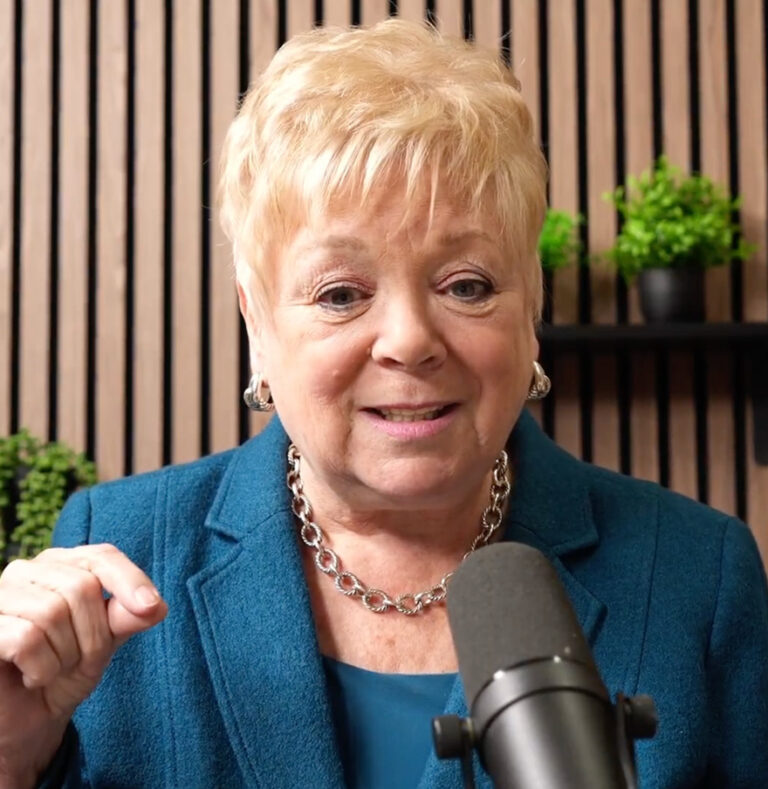
Welcome back to CEO behind the scenes. I'm Lara necession, and today we're exploring how
Europe's energy grid challenges, often seen as roadblocks, can actually drive smarter strategy.
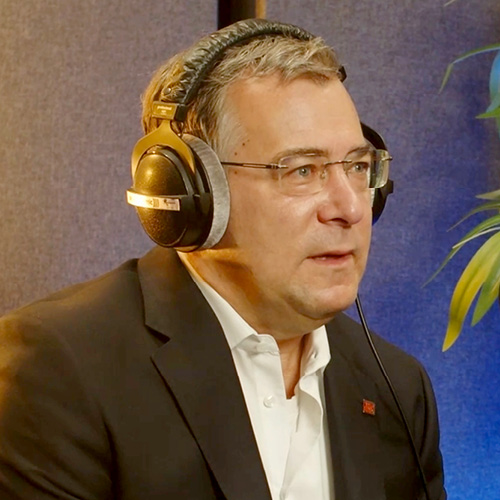
Joining me is Alexander Hauser, CEO of ttsp, HWP. In this episode, we hear Alexander's unique
perspective on how grid constraints can actually drive innovation, what it really takes to lead
with resilience and how to embed sustainability in strategy. Please enjoy this episode.
Alexander, welcome to the show. Thank you very much. Laura. Alexander, for those who are
listening who may not know the full extent of your company and what you do? Could you shed
some light on what you're focusing on and what is keeping you busiest right now? Well, the
company, ttsp, HWP, was founded 35 years ago as an architectural practice that was largely
focusing on commercial architecture, and about 20 years ago, we started to design our first
data center. And ever since, we have specialized in data centers and we start developing
projects really very early, from identifying a site, doing the master planning, getting the zoning,
as we call it in Germany, that enables construction, convincing politicians that a data center is
a good idea, through master planning, permitting and handover. So really covering the whole
value chain of the project, of a data center project, and we've grown quite strongly with it.
We're now 160 staff in three offices in Germany, focusing mostly on the German market. And
one of the things that you touched on was, you know, this concept of data centers and energy
and energy grid stress. I really want to dive into this, because it's often painted as a crisis, but
you have said that it can actually really push companies to innovate. Can you speak more to
that? Yeah, I mean, a data center site or a plot for a data center is only a plot for a data center
if there's a lot of power, and we're speaking about tremendous power consumption figures, a
medium sized data center consumes as much power as a city of 50 to 100,000
03:04
people. And of course, the industry is concentrating quite a bit in large European markets. It's
called the flap markets, Frankfurt, London, Amsterdam and Paris, which is largely where the big
internet nodes are. And the growth has been so substantial that over the last probably decade,
let's say the build up of the grids has lagged behind the power demand. So in most of these
locations, simply, there is no power anymore, which leads to
03:36
different ways, different strategies to deal with it. One is definitely to look how we can save
energy. And this is, of course, leads us on the direct way to sustainability, to using systems that
are using less energy, less electrical energy. It's about integrating potentially renewable energy
sources like solar or even wind, which, given the size of the energy consumption, can make a
small piece only, but it's something that helps. And what we're seeing and what we're advising
our clients, is to look at new locations for data centers, maybe outside the big metropolitan
areas, to areas where there is power, because it's not that there wouldn't be the energy. The
energy is there. The energy is being produced on a large scale. It's just a transmission network
that cannot bring the energy from where it is produced to the locations where data center
clients would like to consume it. And so when you are faced with those limits and those
challenges. How do you keep that momentum going instead of stalling? What are some of the
practical aspects of that most of our clients are, or the end users are, Americans, and the good
thing, let's say, about Americans, is that there are.
05:00
Used to much larger geographies. So when they speak about Berlin or they speak about
Frankfurt, for them, it might well be the city plus 30 kilometer or 30 mile radius. And this is
where we, early on, try to identify locations. So we speak with mayors, with speak with local
politicians. We speak with economic development agencies to be able to offer sites to our
clients that have access to power. So we're not just waiting for our clients to say we're looking
in this and that region. We're actively bringing these plots, these locations, to the market and
then being able to offer a solution to our clients, and what does that look like from a real,
practical perspective? Because I imagine there would be a lot of influencing to take that level of
pro activity. How do you actually communicate those grid challenges and the solutions that you
are providing in order to get these other stakeholders on board and to understand and to be
able to serve your clients at the level that is required. I think the first thing we typically have to
do is educate politicians about what a data center is. If you're in a small village of 10 to 15,000
people, the mayor or the council who are, at the end, the key decision makers. They haven't
really heard about a data center. What it is, there is a lot of unfortunately, also bad press in the
last years. And so we try to create a concept, what such a data center development could
mean for the local community, community engagement. It could be synergies to other
economic activities. And then we speak to them and say, you know, you're in a unique position,
because there is a substation, for example, where different grids meet. And then we work with
them, identifying plots to see what maybe the city or the village has some plots there, finding
ways with them to achieve a zoning which in Germany is necessary if you have a field, you
can't just build anything on it, not a data center, but you have such a zoning process, which is a
political process, so you have to convince the politicians that it's a good thing and establish
that process. And this takes a long time. So we from the idea of a site to be able that we can
communicate our clients, that we are have a certain level of maturity, it's can easily be a year
and a half to two years. Yeah, I could imagine it would take a lot of work to really be able to
persuade and share what the benefits are. Because, to your point, there are some different
perceptions around what data centers actually do for cities, but what I've heard you speak
about is the fact that these challenges can actually really help drive innovation forward. And do
you have any practical examples or any success stories of where you've seen some of these.
Say grid challenges really help to drive innovation forward in a positive way. Yeah, I think there
are a number of aspects looking at the energy side, because that's the main topic, right? So
we've been working together with a with cities really creating locations. So we're mainly
focusing on data center development, but working together with a city with solar panel or solar
park developers, so there is a joint area that will be developed. One part is going to be a data
center. There is going to be solar parks there. We will have large scale battery storage. There
are wind parks in the nearby area. So what we're designing to make all this come together,
we're looking at designing a micro grid that brings together different sources of energy. The the
grid, there is a little bit of grid power, but of course, also integrating the power from the solar
park, from the wind park, and depending on the production rate, the battery storage. So this is
something really new, where I coined in one of the conferences that we're actually not speaking
about data centers anymore. We're speaking about energy centers. And I think that is what we
see increasingly, especially if we talk about AI, those really, really big campuses with multi 100
megawatts, the main topic there is to manage the energy. It's not security, it's not the cooling
and the power supply in the building. It is really managing the energy to get to the campus. I
really like that concept of energy centers, and I think that that really does help change the
perception of what you're doing, because you've actually shown that sustainability doesn't just
protect the planet, it can also strengthen a business. And I'm wondering if you could speak to.
10:00
So your experience of that and how you believe that it can really help drive a business forward.
I mean, I give you one really practical example. We were speaking with a solar park operator
who said, you know, for us, in the summertime, when the sun shines most, when it's really
warm, we actually have to pay to get rid of our electrons. So for each kilowatt hour, because
you can't shut the panels down, we need to put them into the grid the energy, and we have to
pay for it. So it's not that we don't get revenue. We actually have to pay. And the interesting
thing is, when does a data center use most energy? It's on the hot summer days in the
afternoon, because that's when cooling really kicks in. So this is an immediate synergy. You
have an energy producer who has to pay to get rid of the energy, and you have a data center
who consumes most energy in exactly the same period of time to match these in physical
proximity. So to make a connection that the solar park operator can actually even give the
energy for free to the data center. The data center then saves a lot of energy. The Solar Park
operator doesn't have to pay the penalties. So this is a very practical example on how
sustainability can actually be very profitable from from day one and so from your perspective,
what do you see as being a missed opportunity for leaders who are only seeing sustainability as
an expense? Sustainability does, in certain aspects mean an additional cost. If you look at
construction costs, for example, green facades or construction with low carbon concrete or
recycling materials, that adds to construction costs, that that's right. But if you look at the total
cost of ownership, for example, for a data center, two thirds, at least, is the operational cost. So
energy efficiency using components that are highly energy efficient, using AI to manage the
cooling systems, the power supply systems, that saves a lot of energy, that saves a lot of
operational costs. So I think it's a trade off, but at the end, I think we do sustainability, not just
because we want to save costs, but I think we do it out of responsibility. We see that what
we're doing, what we're working on, whether it's cloud services, it's AI, it's it that, let's say,
powers social media, everything is relying on, or increasingly on it. So the infrastructure we're
creating to power all these computers, that needs to be sustainable, and it needs to be on the
forefront of sustainability, not lagging behind other industries. And I think this is something we
sometimes have to preach our clients, that this is a good in itself, right? It's not just a means to
be more efficient, but it's a good in itself. But we see the industry is shifting, and we see that a
lot of the clients are listening to what we're suggesting right now, which makes us, of course,
very proud. Absolutely. I'm sure it's very rewarding to see the impact that the work that you're
doing and the education that you are providing is having, and I'm curious to know, on that
piece of profitability, do you have an example, perhaps, or of where you've seen smart design
make a particular project profitable, and, you know, have a greater impact on the planet as
well. Yeah, I think talk about, let's say, profitability on on a total cost of ownership base for a
data center. So the key metrics is the so called PUE power usage effectiveness, that puts a
relationship on the total power consumption of a data center in relation to the it, and the higher
the figure is, the more is being lost, because it's something that just increases cost and does
not generate revenue for the data center user. And we've been working on technologies that do
it without completely, without mechanical cooling, which means that this energy efficiency
factor is much, much higher. So the operational cost of the data center, we were able to reduce
it by 15, 20% which is a lot. Think about that, 100 megawatt data center, which is a medium
sized data center in for Germany does have an annual power cost of about 150 million euros.
So if you are able to bring these costs down by even 10% it does have a very, very high impact
on the overall profitability of the project. I can see how you've really brought the balance of the
two. There's such a.
15:00
Commercial element to the work that you're doing, but then there's a real, tangible impact
from a sustainability perspective as well. I'm curious to know what was it that made your work
with an Impact Fund possible to begin with, I would say, as well, educating first our investor,
which is now fully on board what actually what a data center is, what it its role is, in the
economy, in the society. And then I think we relatively quickly came to the point that data
centers are about energy. They're about mostly electric energy. Then we went through some of
the designs we did which were rewarded. So we won several awards for green data centers. In
the past, we talked about this integration of renewables, and I think then the fund immediately
understood the potential we have. I think data centers will probably become the largest energy
consumers on the planet relatively soon, especially if AI kicks off. So the levers we have
through our work, through our ideas, also through our, I would say, leadership, you know, trying
to also convince clients that sustainability is really important, even if they haven't fully
understood it yet. That really convinced the fund that enabling us to grow with their investment
into future growth, of course, that will have a larger impact on the industry as a whole, because
the levers are, as I said, they're they're really large. So you've mentioned AI a number of times
throughout this conversation, and I'm wondering, how are you and your company really
thinking about integrating AI into your business for the future? Yeah, I always say when we talk
about it, we're basically agnostic, so we don't as data center designers, we don't really know
what's on a specific server, if it's a cloud or AI, but we define a data center in terms of energy
density, because that's what we have to design. We have to deliver power, and we have to
deliver cooling to the servers on in the data halls. And what we're seeing now with AI is that the
energy density is dramatically increasing. So before we might have had power densities of five
to six kilowatts per square meter in the data hall, we're now going up to 100 150 kilowatts. So
that means, from a technical perspective, the design of the cooling system of the building is is
going to change completely, reducing the footprint. On the other hand, what we see is that the
overall size in terms of energy need for a data center is increasing dramatically. So we do see
these multi 100 megawatt facilities that are designed for AI, which have completely new
challenges, challenges, and are really creating what I said before, the energy center piece
that's going to be AI, in my view, and I would love to bring this conversation back to leadership,
because constraints aren't just technical. They also test leaders themselves. And so if an
executive or a leader were to say, we can't do X
18:25
because of a certain constraint in a system, how would you challenge that thinking and that
mindset? Well, interesting. We had a workshop last week on a kind of rebranding with now with
the the
18:42
fund, we have on board sustainability, and we discussed on the in the leadership, in the
management team, on on our core values. And one question was, what do you fight against?
And I said, I fight against the it's not possible. I simply do not accept, personally, that
something is not possible. We might not get everything. We might not reach 100% of what we
wanted to reach, or what maybe the client calls for, but there is always a way, and there are
always different ways to achieve near that, or sometimes going new ways we can even over
achieve the initial goals. So it's just, I always say, looking 360 degrees, there is examples out
on the market. There are people who have done things, maybe on an academic realm. We're
getting them on board, saying, now let's do this on a commercial realm. Do this bigger. We're
looking at different sectors, and the energy sector has a lot of innovations we can learn from in
the data center industries. So it's really collecting knowledge. It's collecting people, getting
them into a team, maybe a completely new team, with different components that we've never
looked at in the in the last five years, waste.
20:00
There's another topic that's complicated, but it works. You know, we've made these brought
people together around the table, and we've made these projects work. And that's, you know,
that's what drives you every day.
20:12
Getting up early, working 12 hours a day is making a difference at the end. And I'm wondering,
what is your advice for leaders who are striving to build long term value and long term success,
even when those systems around them may not be perfect. Well, every imperfection has an
opportunity, right? And I think that's something even my reputation is not to be the most
patient person, but of course, long term needs patience. Long term needs strategy, right? And
so it takes a while to develop that strategy, to find the knowledge, find the people who can
really advise how to overcome the weaknesses in the system, or how to create an opportunity
out of threat, but it's really rewarding. And then, of course, you have to really be behind it. You
have to keep preaching. Sometimes I feel like an evangelist going out to Congress is preaching
about sustainability, preaching about new approaches to get people on board. So I think it's a
lot of patience and persistence to get there and speaking about strategy and long term vision,
what is your strategy for the future for your organization, where? What are you excited for and
what are you looking forward towards? Yeah, when we had the conversation with the investor,
the fund, who is now on board, of course, we discussed on the business model, and our vision is
to become a European player. We're now very much focused on the German market and
becoming European with all the different languages jurisdictions. It's not just that you go over,
set up an office and you're fully operational. So for us, becoming a European player means
acquiring other companies doing an organic growth moves, and we're very happy that we were
able, with the fund, to acquire a very good, very well established company, MCA architects in
Dublin, with whom we've worked in the past, who have concentrated on data centers as well.
So this is the first step that gives us footprint in the UK, in Ireland, of course, in the Nordics. And
we're looking at other companies that will give us a footprint in France and other markets. So
we can deliver the same innovative ideas, the same sustainability or impact driven designs to
our clients, not only in Germany, but on a European scale.
22:53
Absolutely, that sounds very exciting indeed. And Alexander, we wrap up every episode here at
CEO behind the scenes with the same two questions. And the first question I wanted to ask you
is, what is one thing that you've changed your mind about recently? What I mentioned before, I
I have the reputation to be very impatient person who wants to see results relatively or really
quickly, and with all the changes we're undergoing, with all the in the market, I think I had to
learn, and I hope I did learn, to have a much more longer term orientation and looking at
smaller steps that bring you to the to The goal, rather than being very fast and with one big
step. So it's really overcoming the impatience and learning that things might not move as
quickly as I
23:52
as I want. And what is one thing that a belief, perhaps, that you haven't changed, something
that you hold on to, that helps you to live and lead better. I mean, I've been working in the data
center field for 15 years, and I haven't basically done anything else than data centers. And I say
I still love them in a certain way, because they're constantly changing. They're constantly
putting new challenges, is what we talked before, technically, politically, also to get the people
together. So this is really an amazingly interesting topic, and I see with all the AI coming up,
the relevance of what we're doing as data center designers and advisors, is becoming a lot
larger, because data centers will occupy a larger role in the economy, in the society, and that
makes me very, very happy. You know that we can shape such an important piece of
infrastructure in an important and positive way? Yeah.
25:00
Alexander, thank you so much for joining us today. Your perspective on turning constraints into
innovation, leading with resilience and also embedding sustainability into strategy, has been so
insightful. So thank you so much for joining us today. Thank you very much. Was my pleasure.
Thank you, and thank you so much to our audience for listening. If you enjoyed this episode,
then please be sure to subscribe, rate and review the show, and also share this episode with
someone in your network who you know would really benefit from listening to Alexander's
insights. Thank you so much for joining us, and we'll see you next time on CEO: Behind the
Scenes.



 162.2K
 2
2
 1
1


 Host
Host
 POPULAR TOPICS
  FEATURED PODCASTS


 Home
Home
 Podcasts
 Covers
 Community
 Sign In