Language
You can read the magazine in one of the following languages

6-min read

 Bookmark now

 Copy Link
Fate’s a funny thing. One moment you can be comfortably enjoying retirement, the next you’re back in the game.
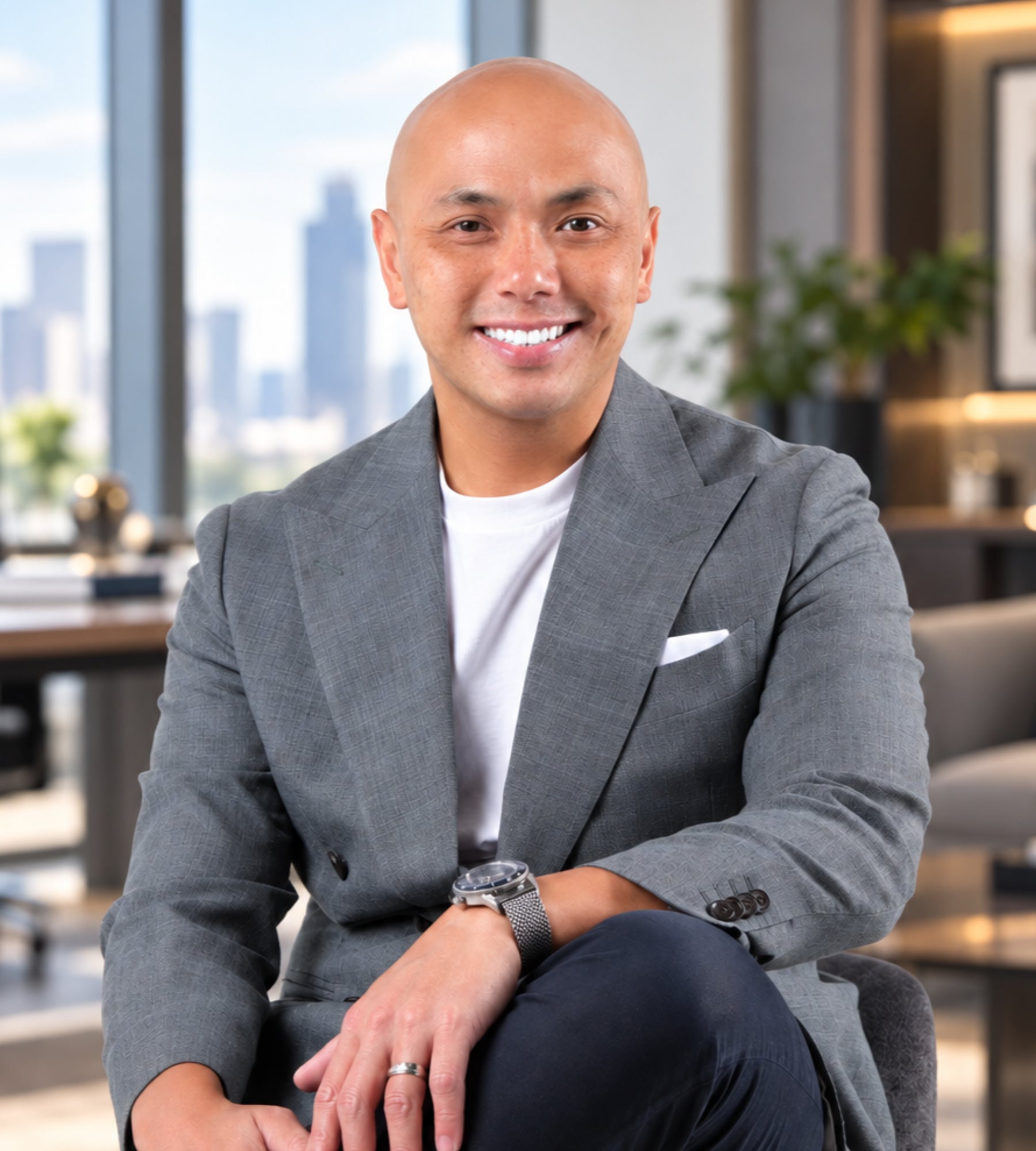
The whiplash would rock most people, but Kismet Founder Mark Woodland has taken it in his stride, almost as if it were meant to be – and given the success of transformational healthcare company Kismet, perhaps it is.
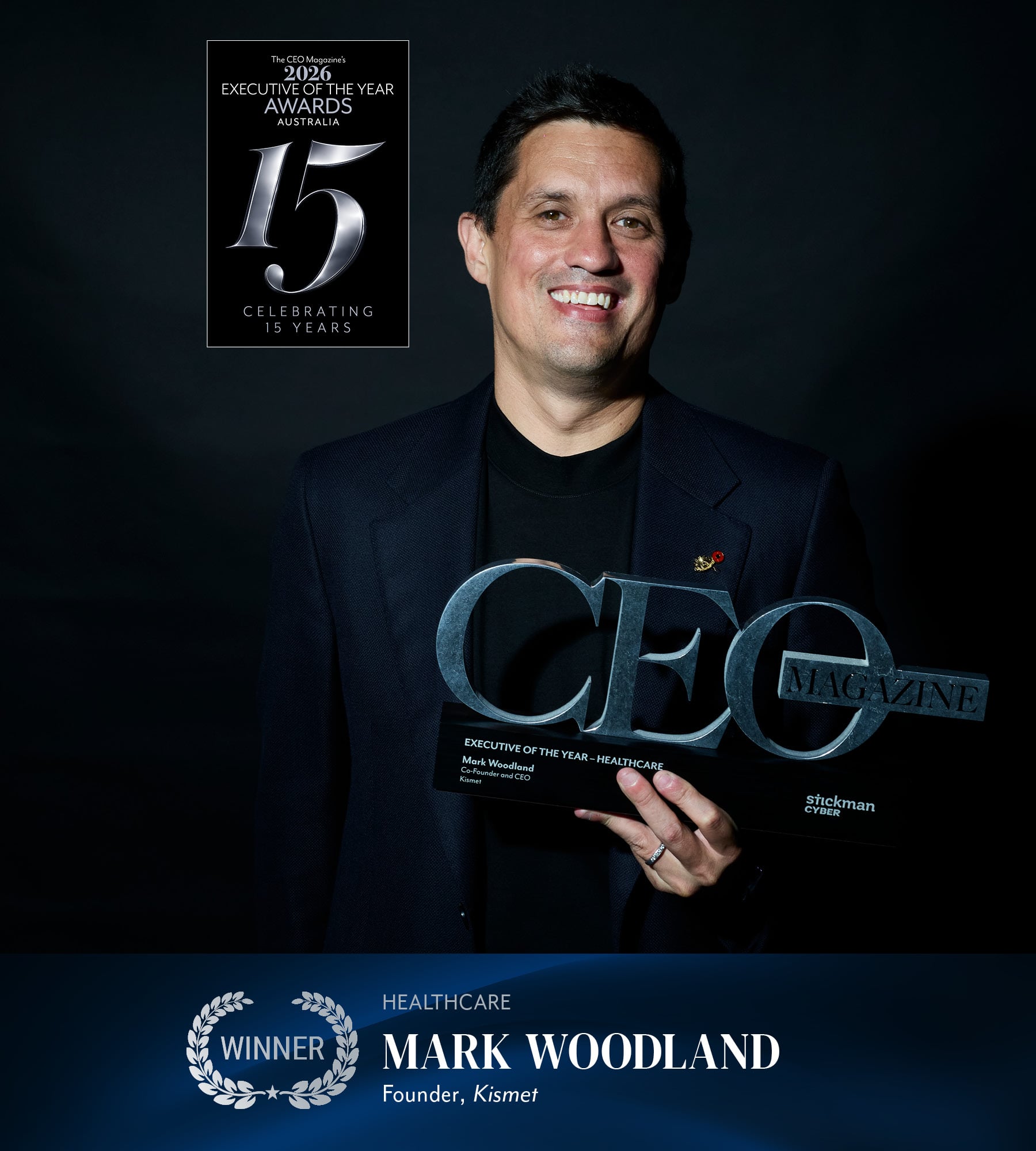
His work is being recognized, too. Woodland is the Healthcare Executive of the Year winner at The CEO Magazine’s 2026 Executive of the Year Awards – Australia.
“The first time I ever heard the word ‘kismet’ was on the American version of The Office,” Woodland tells The CEO Magazine. “Jim has a moment where things have fallen into place, and he says, ‘Huh, everything aligned. It’s kismet. I am kismet.’”
While Woodland doesn’t go that far, he says kismet effectively describes his journey in the business world. University, the army and McDonald’s were all among his possible future paths until he decided to devote his energy to helping his mother’s childcare center stay above water.
In the process, he developed a platform that could digitize paper records, a development that reversed the center’s flagging fortunes. His next step was establishing Xplor, an educational software company. Its sale in 2020 for US$100 million put him on the Young Rich List and sent him into an early retirement. But kismet (the concept, not the company) being what it is, retirement wouldn’t last.
Woodland founded Kismet in 2023 as a way of reducing the time it takes to find and access quality healthcare services. For Woodland, it was a way to continue positively affecting the lives of others the way he had done with the childcare centers. But even for a proven winner, the journey hasn’t been easy.
“Everyone hears about a company getting funded, and it sounds awesome when that company is suddenly worth 10 or 20 times as much, but what people don’t usually see is that there’s an expectation for the people behind that company to scale up personally,” he says.
“If you’re the leader of a company that’s just multiplied by 10, you’re expected to have done the same. Otherwise, you’ll be outscaled by the business.”

“If anyone deserves this nomination, it’s the Kismet team.”
In Kismet’s case, Woodland has watched as his team has grown comfortably with the business.
“I’m super proud of how much the team has grown in the last 12 months,” he says. “I’m very proud of everything the company has done for healthcare and government and patients and participants.
“But I also think that we sometimes celebrate the company more than the people behind it. It’s scary because you’ve now got to grow again and again, and the sad part is some people won’t. There’ll be a day when I can’t, but that’s the journey.”
Such humility is refreshing in a leader of a success story like Kismet, even to the rest of his team.
“Mark’s very humble and won’t say this, but we’ve done exec reviews among the team and they all believe he’s an incredible leader, a true visionary,” says Kismet’s COO Nat Kramersh.
“Everyone here believes in the vision and the mission, and they’re all willing to go above and beyond. I’ve never been anywhere where I’ve seen that to this extent, and I think that’s down to Mark.”
But Woodland says he couldn’t shake the feeling that his early success was the best he’d ever do.
“This is my second company and I was always concerned the first was a fluke,” he says. “So for me it was just nice to bring a bunch of people together a second time. If anyone deserves this nomination, it’s the Kismet team.”
“Be humble enough to take ownership when things go wrong.”
But being humble goes both ways.
“One of Kismet’s company values is, ‘be humble’,” he says. “Be humble enough to realize you don’t know everything and that’s OK. Be humble enough to take ownership when things go wrong. That’s genuinely the culture across the board. People with big egos have struggled at Kismet.”
For Woodland, it’s not just the team at the office that’s responsible for the company’s success.
“My wife is doing a thousand things to allow me to be able to do what I do,” he says. “If it wasn’t for her, none of it would be possible.”
And given what Kismet makes possible, that’s a lot to take in. In a very short amount of time, the firm has become one of Australia’s leading healthcare service and product delivery companies.
More than 140,000 Australians rely on Kismet’s care management capabilities, while more than 120,000 healthcare service providers use Kismet’s systems for payment. The growth that has come from its success means that Kismet has become a hungry beast.
“We’re doing a very big acquisition at the moment, which means raising a significant amount of money,” Woodland says. “I respect money deeply because we didn’t have much growing up. It was a different world. But now, we’re at a point in time where everything’s going according to plan, touch wood, and we’re very close to reaching the next level.”
It’s a high stress environment on such a precipice, but Woodland believes that’s where true leadership makes itself known.
“When the stress ends, you can look back and wonder if you could have done better. You can work to improve yourself because it may be a long time before such a high stress situation arises again. When it does, you’ll be able to make a decision knowing whether it’s right for the business, or done out of ego.”
Such moments take Woodland back to his time in the army, where situations could be intense and lacking anything close to an exit door.
“When you’re in the jungle, crawling through mud and trying to keep up with your sergeant, you can’t stand up and leave because you think it’s ridiculous. You just push on. When huge leadership moments happen, you’re not overthinking it. You’re just trying to figure out how to survive.”
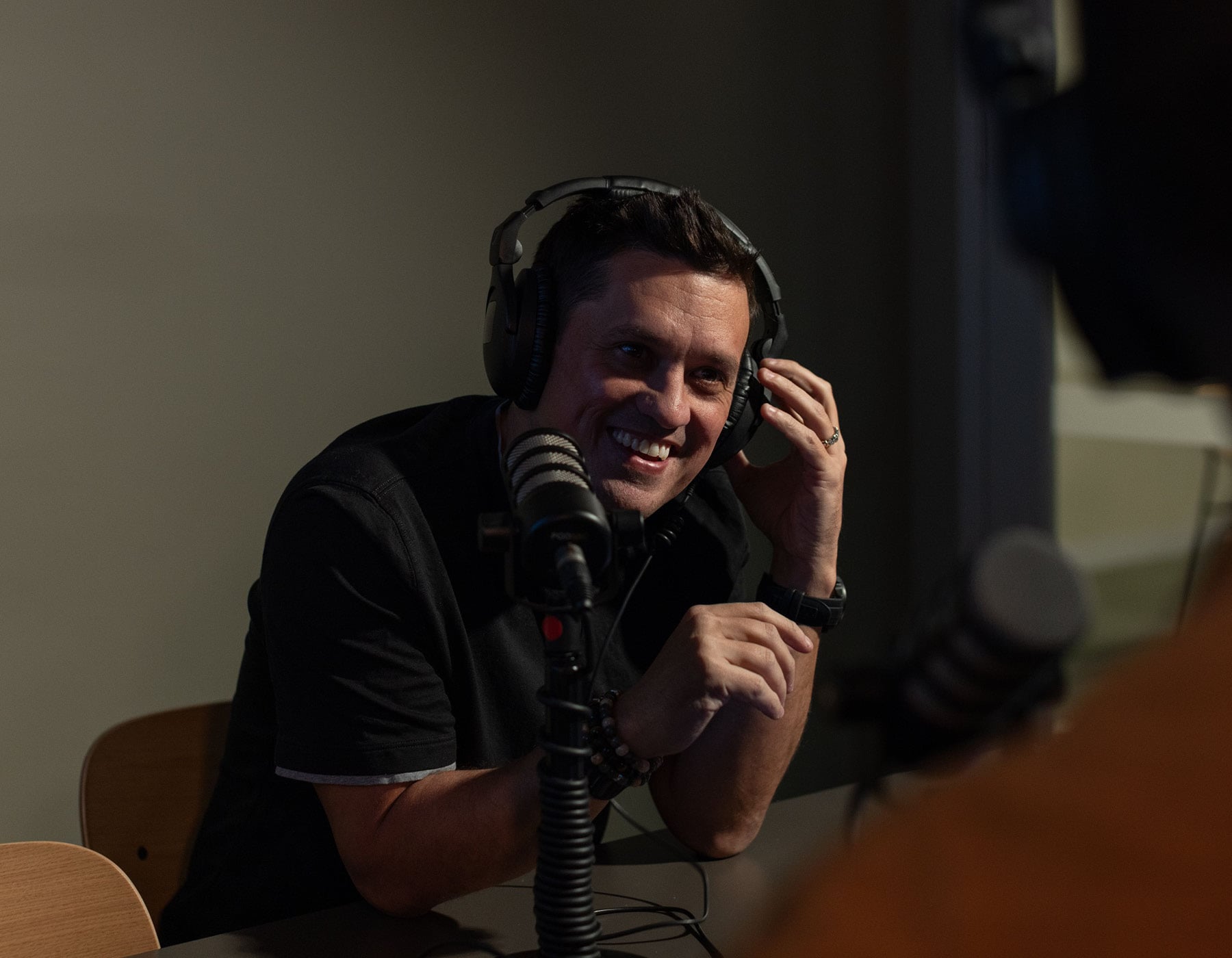
“We think we could be the Uber of healthcare.”
Kismet’s survival, however, seems like a sure bet. Woodland says he’s hard at work on the future of Kismet.
“We think we could be the Uber of healthcare,” he says. “You would use Kismet to get the healthcare you need on demand, when you need it, matched by availability and affordability.”
Although Woodland believes healthcare, education and housing should be inalienable rights for all, he understands they aren’t.
“That puts everyone in survival mode,” he says. “So how do you make people not worry about the cost of healthcare when it’s midnight and their child is screaming and they don’t know what to do?
“How do you deliver on that demand when you need it? That’s the path we’re going down, and it’s been amazing to see what we’ve been able to achieve for those people so far.”
Kismet’s achievements are paying off in other ways too, such as Woodland’s Healthcare Executive of the Year win.
“It’s embarrassing in the very nicest way,” he says. “When I first started a business, all I wanted was for people to recognize me or talk to me or want an interview. I thought that’s what I deserved. But now that I’m here, with a company focused on stuff that isn’t sexy like AI and the like, I genuinely don’t think the recognition is warranted, so it’s humbling.”
 RELATED ARTICLES
 SPOTLIGHTS ON LEADERS


 Home

 Podcasts

 Covers
 Be Featured

 Community