Language
You can read the magazine in one of the following languages

5-min read

 Bookmark now

 Copy Link
For all the money pouring into AI, the most consequential decisions being made about it may have surprisingly little to do with the technology itself.
Companies are under pressure to move quickly as new models, platforms and capabilities arrive at a pace few leadership teams have encountered before.
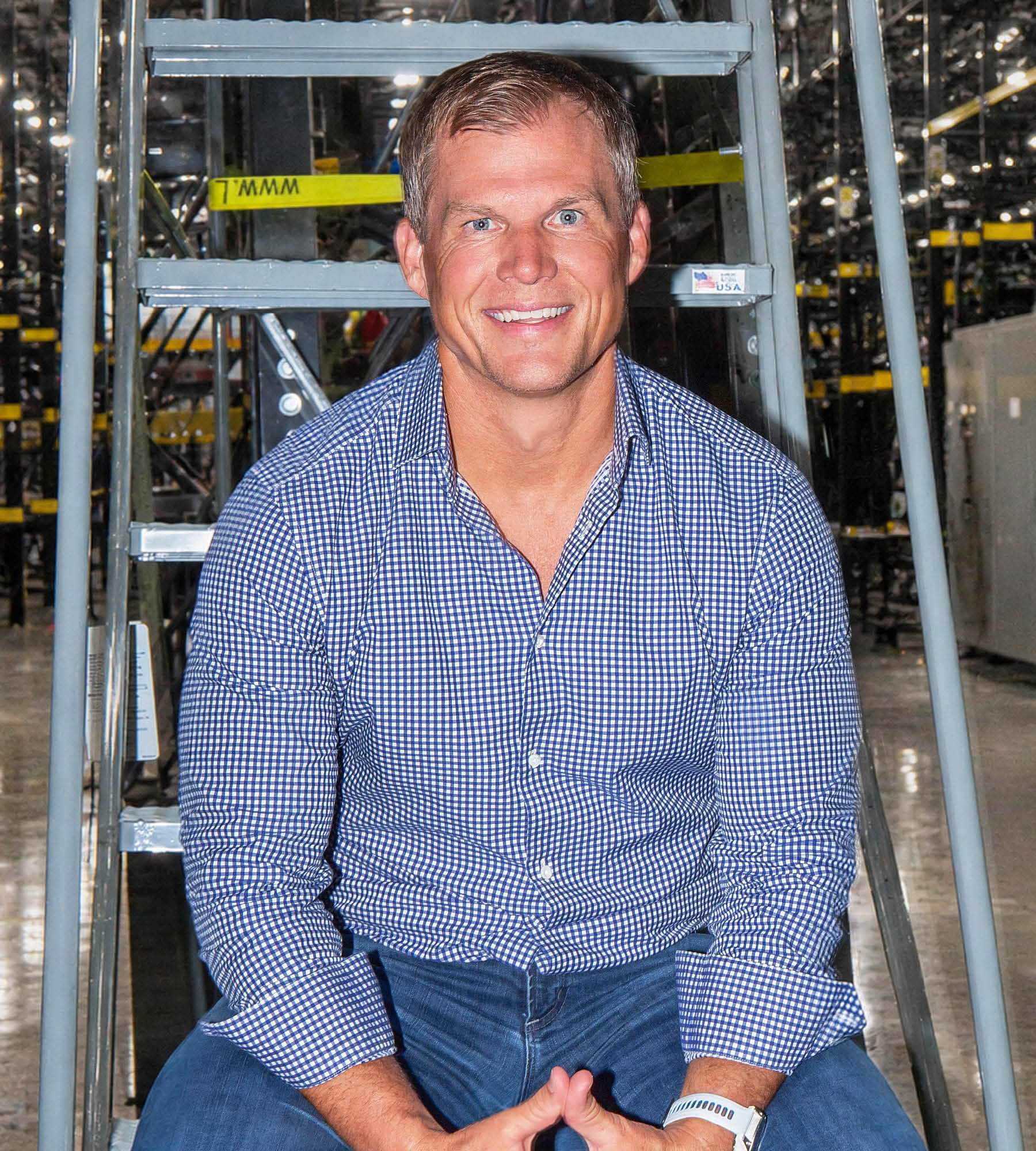
But in the rush to keep up, Jamal Khan, Chief Growth and Innovation Officer and Head of CNXN Helix Center for Applied AI and Robotics at IT solutions provider Connection, sees a more fundamental challenge being overlooked: introducing AI can change how an organization works long before it transforms what that organization produces.
“AI implementation is a change management problem that happens to involve technology,” he tells The CEO Magazine.
“Almost everyone gets that backwards. They treat it as a procurement decision, pick a model, sign an agreement and then wait for the transformation to show up.”

“AI implementation is a change management problem that happens to involve technology.”
That approach can make an AI strategy look decisive on paper while leaving the harder questions unresolved – where the technology creates genuine value, how work should change around it and what organizations want people to remain responsible for.
“The organizations that succeed open with ‘what are we actually trying to solve?’” Khan says.
“The ones that struggle open with, ‘Which platform should we buy?’ and work backwards to a use case. That almost never works.”
However, Khan’s larger concern isn’t that AI has been oversold. It’s that it has been filed under the wrong heading. Read as a productivity story, it becomes a conversation about efficiency. Read more broadly, he says, it’s a story about structure.
“The capabilities being built and deployed right now aren’t just reshaping markets; they’re reshaping the architecture of power,” he points out.
“And that’s through the ability to observe at scale, to make consequential decisions about individual people at algorithmic speed, to decouple economic output from human labor, to build systems that governments and enterprises depend on but do not understand and cannot fully audit.”
Those choices aren’t theoretical.
“They’re procurement decisions being signed this quarter,” Khan explains.

“The capabilities being built and deployed right now aren’t just reshaping markets; they’re reshaping the architecture of power.”
He says he’s watched the pattern play out before.
“I’ve written about that pattern in the federal government, where transformation gets driven by constraint rather than by vision, and urgency produces fragmentation and a quiet acceptance of risk,” he says.
“That same pattern is running through the private sector right now.”
For Khan, the question isn’t whether organizations should move forward with AI; it’s where those individual decisions ultimately lead.
“Two futures are genuinely available,” he insists. “In one, AI amplifies human capability, accelerates science and medicine and people direct intelligent systems.
“In the other, capability concentrates, decisions become opaque, labor loses its bargaining power and systems increasingly direct people.
“The technology is the same in both. The difference is architectural and architecture is chosen.”
If architecture is chosen, that choice also reflects the value organizations place on the human element.
“A doctor’s value shifts from diagnosis, which AI does very well, to being the person you trust with hard news,” Khan explains.
“A teacher’s value shifts from delivering content, which AI does cheaply, to being the adult who notices what a child actually needs.”
Therefore, the answer isn’t to protect every task from automation. Rather, it’s to deliberately decide which human moments matter most and use technology to create more capacity for them.
“If the machine takes the documentation, the scheduling, the reporting and the follow up, you’ve bought back the hours that the human moments actually require,” Khan says.
This distinction, he believes, gets to the heart of the AI decision. The technology may be the same, but organizations still choose what role it will play in the relationship between people and work.
He’s quick to note that making that choice is one thing. Getting an organization to move toward it is entirely another.
“Every large organization has what I call an immune system, and that immune system will push back against change,” Khan says.
“As a chief growth and innovation officer, you have to understand those mechanics rather than resent them.”
This reality has shaped how Khan thinks about innovation itself.
“In many organizations, thinking outside the box isn’t what gets you the result, especially in efficient, well-run organizations,” he says.
“Instead, it’s thinking inside the box and driving impact from there that actually matters.”

“Being right is worth very little if it costs you the ability to be effective with the people you still have to lead alongside.”
Working within those constraints means recognizing that resistance and disagreement are part of leading change. The goal isn’t simply to prove one approach right or another wrong, but to find a way to keep the organization moving forward.
Doing this, he believes, comes down to a leader’s ability to remain effective with the people around them.
“Being right is worth very little if it costs you the ability to be effective with the people you still have to lead alongside,” Khan says.
The same lesson about agency and constraint extends to the choices leaders are making about AI.
“You have more agency here than the discourse suggests,” Khan insists.
“You are not a passenger. Every deployment decision you make is a vote for one of those futures, and the aggregate of those votes is the world your children work in.”
The models will change and the capabilities will grow. But leaders still decide what those capabilities are ultimately built to serve.
“The question I’d want every leader to sit with is this: What are we building, one rational step at a time, and would we choose it if we could see it whole?” he concludes.

 RELATED ARTICLES
  SPOTLIGHTS ON LEADERS


 Home
Home
 Podcasts
 Covers
 Be Featured
 Community