Language
You can read the magazine in one of the following languages
7-min read

 Bookmark now

 Copy Link
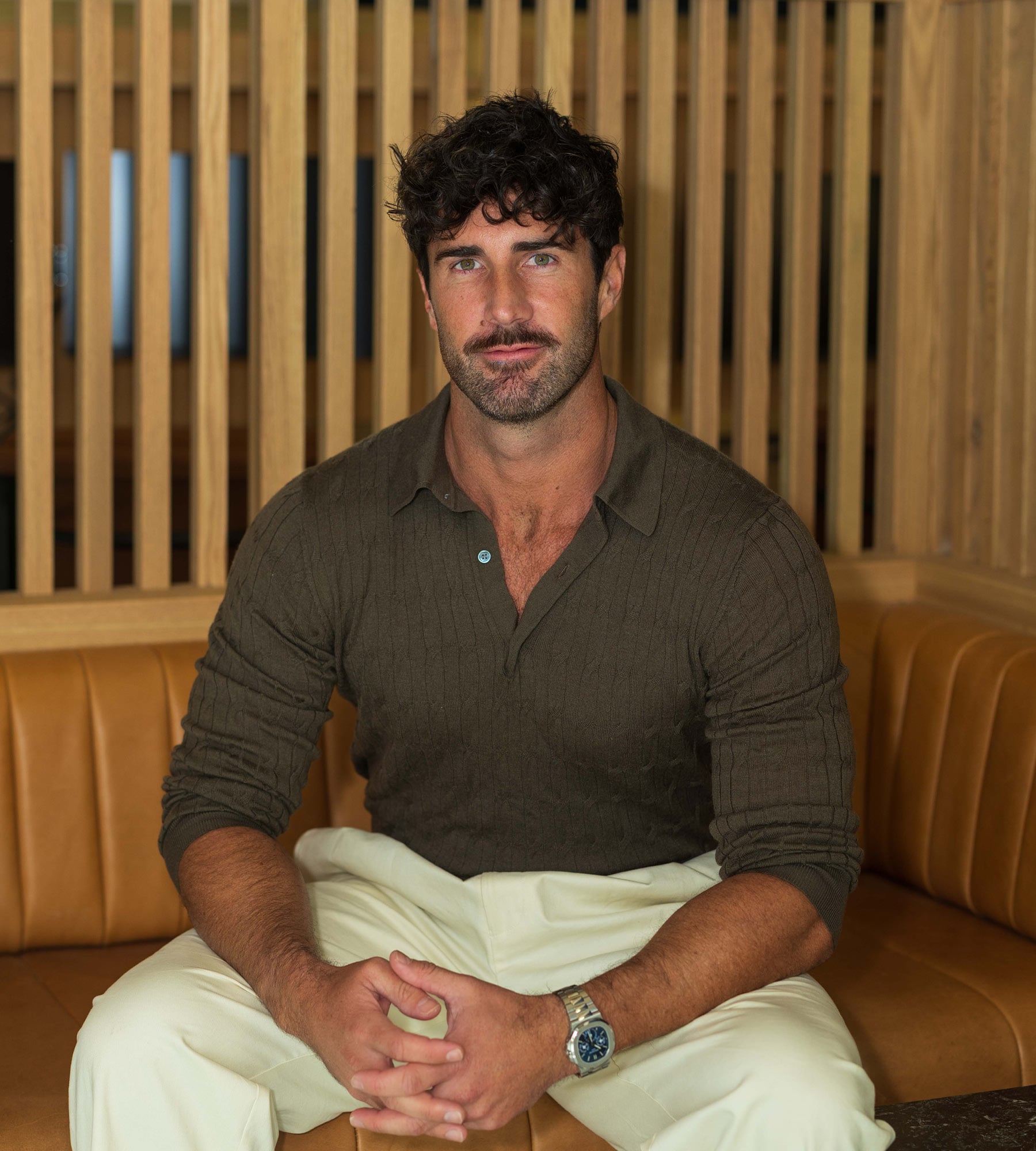
When Ben Lamm joins the interview, he’s at his home in Texas; but the conversation quickly stretches far beyond anything remotely ordinary. This is, after all, the Founder and CEO attempting to bring back the woolly mammoth.
For most people, the idea of reviving vanished species feels like science fiction. For Lamm – and the global team of more than 250 scientists, engineers, conservationists, ethicists, Indigenous advisors and computational biologists at Colossal Biosciences – it’s another day at the office.
It’s also something else: catnip for the next generation.
“Kids are our number one endorser,” Lamm tells The CEO Magazine, holding up colorful artwork sent by young fans. “Every single week, we get pictures of dodos and mammoths – all kinds of stuff gets sent to us in letters.”
The image is quite wholesome: Lamm, a father of two, just days into welcoming his new daughter, opening envelopes of hand-drawn woolly giants while simultaneously building one of the most disruptive science companies on the planet.
But the juxtaposition works. He’s engineering a future he fully expects his children to inherit – one that’s shaped not by inevitable ecological decline, but by courageously imaginative science.
From the outside, Colossal looks like the ultimate moonshot – a fusion of synthetic biology, conservation, reproductive technology, de-extinction science and frontier innovation. Yet Lamm’s journey here didn’t begin in a lab or follow the path of a traditional biotech founder.
“I built a handful of technology companies, mostly in software, some space hardware, but they were mostly systems,” he says. “I never built satellite software or gaming personally. I’m just really good at hiring people much smarter than me.”

“I think we play God every day.”
Those companies succeeded. Lamm built and sold multiple ventures across AI, gaming, space and conversational technologies. Yet he knew there had to be more.
“After I built my companies, I wanted something different – something more challenging.”
That ‘something’ arrived in the form of a cold outreach to legendary Harvard geneticist George Church. Lamm asked him one question: If he could focus on only one project for the rest of his life, what would it be?
Church didn’t hesitate. He said he would “work to bring back the mammoth and build technologies for conservation and de-extinction”. And Lamm was instantly hooked.
“I was just massively excited by that,” he enthuses.
Their conversation ignited a partnership and the creation of Colossal. Even now, Lamm says they spend hours every week together, often spiraling into sweeping discussions about the future of biology, software, synthetic engineering and everything in between.
“Now we schedule our calls at the end of the day because they never stick to schedule – we always go off topic,” he admits with a grin.
Trying to define Colossal has become an intellectual exercise in its own right, no doubt prompting further long discussions and new tangents to explore.
“People try to put us in the biotech category because we create biotech,” Lamm explains. “But I think we’re a new category.
“Long-term, I think we’ll be an insurance company, backing species for global populations. I think we’ll be an ecotourism and climate company as we put animals back into their environments, helping those environments. And I think we’ll be an educational company.
“We’re an amorphous entity, and I don’t think that will change. Hopefully, we’ll be best in class at all of those over time.”

“After I built my companies, I wanted something different – something more challenging.”
But the common thread, he shares, is engineering biology at scale. Lamm sees a world where biology transitions from discovery-led to engineering-led, with a roughly 90/10 split. He says AI and eventually quantum technology will make that inevitable.
“We’re going to be in a world where it’s more about scientific engineering and less so about discovery,” he says. “So the idea of taking a software or product approach to biology is something that really excites me.”
With such a bold vision, pushback is inevitable. Some argue de-extinction distracts from saving living species. Others claim the work is akin to ‘playing God’. And Lamm welcomes all of it.
“We have a history of running toward critics,” he says – and he means it. Several top critics now work for Colossal, including its Chief Science Officer, while others advise the company closely.
Lamm appreciates that everyone has an opinion, but he always returns to the data.
“We are in the sixth mass extinction, and facing significant biodiversity loss in the next 25 years. So we need new tools and technologies,” he explains.

Lamm is collaborating with filmmaker Peter Jackson to resurrect New Zealand’s extinct giant moa
“If you take away the emotion, the data shows a very different story. Conservation – the way we’ve always done it – works, but not at the speed in which we’re changing the planet. The data shows that, in our current efforts, we are failing to save other species.
“It also shows the excitement around de-extinction and the use of technology for conservation to bring more awareness to these issues – not less.”
He also challenges the idea that humans haven’t already disrupted the planet.
“I think we play God every day,” Lamm insists. “If you take cholesterol-lowering medication, that’s playing God. I also think it’s playing God when we burn down the rainforest or overfish the ocean.
“We’ve been changing the natural course of history for thousands of years as a species. This is just another way, except now, we’re developing tools to actually save species.”
While Colossal may be famous for mammoths, its commercial engine rests on platforms, tools and breakthroughs spun out along the way. And Lamm is already two-for-two.
“We’ve announced Form Bio, our computational biology platform. We’ve also announced Breaking, our plastic degradation company. Both of those companies are valued at over a hundred million dollars,” he says.
A third stealth spinout is also valued at more than US$100 million.
“We’ve already created a lot of option and distributed value for our investors in a very short period of time,” Lamm says.

“If you had asked me if I ever thought I’d be running a Jurassic Park-like scientific business, the answer would’ve been no.”
But he insists the financial returns are only one measure of success.
“I loved seeing the birth of the first dire wolves,” he says of Colossal’s successful work on reviving DNA from the ancient dire wolf lineage. “Having people understand that we took a 73,000-year-old skull and made puppies isn’t magic – it’s science.”
In a few years, Lamm has his sights on the biggest goal of all.
“In five years, we’d love to get a handful of species, including the mammoth, back on this Earth and start to look at how we rewild them back into their natural habitats.”
This work isn’t done in isolation. It includes long-term global collaboration to ensure every rewilding effort aligns with animal welfare, ethics and ecological integrity.
Fortunately, attracting that talent has become second nature – and practically effortless.
“My competition is yeast,” Lamm jokes. “Do you want to work on single-cell organisms or do you want to work on woolly mammoths and dire wolves?”
For geneticists and computational biologists at the top of their field, the answer is obvious.
“This is some of the hardest science that’s ever been done. We’re creating technologies that are step functions ahead of whatever has been created,” he points out.
That intellectual gravity and the mission itself pull people in.
“I spend a lot of time on recruiting,” Lamm says. “We have some of the most brilliant women and men here.”
More than 170 scientists work in Dallas, Texas. Another 60 are in Melbourne, Australia. On top of that, Lamm proudly reveals that the company also has 17 academic partners, 40 postdocs and a 95-strong advisor consortium across conservation, youth, ethics and Indigenous leadership.
This is the team that’s hard at work making sure a woolly mammoth walks the Earth by 2028.
“We’re on track for that,” he confirms, saying the team is deep into gene editing, reproductive technology, in vitro fertilization innovations and elephant gestational research.
These steps won’t just impact mammoths, however – they’ll help endangered species’ survival worldwide.
“We want to ensure that we do everything right from an animal welfare perspective,” Lamm insists. “We don’t want to cut any corners. So by 2028, it’s 22 months of gestation, that’s still our goal. That’s what our team is marching toward every single week.”

“Having people understand that we took a 73,000-year-old skull and made puppies isn’t magic – it’s science.”
While Lamm could never have predicted this journey, his curiosity, love of technology and appetite for problems that matter have all led him here.
“If you had asked me if I ever thought I’d be running a Jurassic Park-like scientific business, the answer would’ve been no,” he says with a laugh.
“I always pictured myself hopefully being successful. And I achieved that by building and selling a bunch of different companies. But this is cool. We’ve had such a great response from the market too – it’s been better received than we ever hoped.”
Not bad for a software entrepreneur who simply wanted to try something harder.



 Home
Home
 Podcasts
 Covers
 Be Featured
 Community