Language
You can read the magazine in one of the following languages
4-min read

 Bookmark now

 Copy Link
Think about all the big shifts you’re noticing in society right now. I’m talking about AI and agentic AI, war, an aging population, cost of living increases. These are the big inflection points of our time – geopolitical, technological, demographic, socio-economic shifts that are impacting businesses and prompting leaders to make some big decisions about what they focus on.
For some, these inflection points present a problem to be solved, others see them as challenging but ultimately an opportunity to be maximized. What most leaders have in common is that they are treating each inflection separately rather than taking an integrated, holistic approach.

Change and opportunity is everywhere and leaders need time and space to understand the interconnectedness.
Let’s take technology and AI, for example. AI presents an enormous opportunity and a competitive threat. It’s becoming the number one business priority and whole business functions are being established to implement AI solutions. The top five challenges for leaders in 2026 as reported by KPMG Australia’s ‘Keeping us up all night’ survey, all relate to AI.
And while industry leaders surveyed for the Australian Industry Group’s ‘Australian Industry Outlook for 2026’ cited rising cost pressures as the major challenge, their proposed solution is to prioritize the increase of AI and technology investment. That would be fine if AI were the only game in town – but it isn’t.
A significant decrease in discretionary spend, rising interest rates, the aging population, a generation connected more to purpose and a housing affordability crisis presents every business I work with challenges and opportunities, yet they are being addressed separately.
When budgets prioritize AI and flatline or reduce investment in staff training, leadership development, capital investment and R&D, we know that one challenge or opportunity is being focused on at the expense of others.

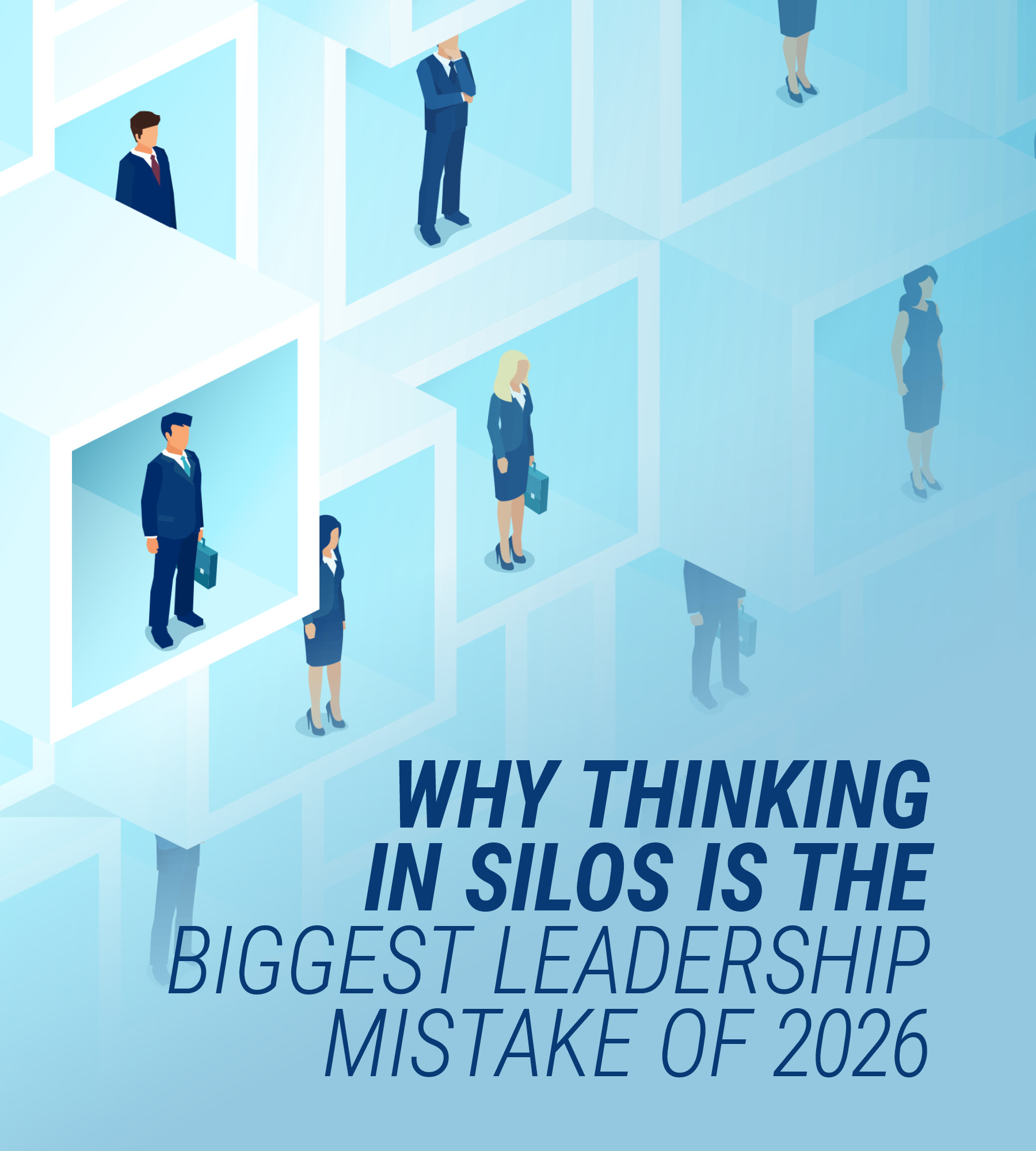
The systems and processes that keep leaders locked in silos, competing for resources, need to shift.
The ramifications of multiple inflections are being felt simultaneously. The moment you explore one, another emerges. Treating them separately is a folly and may mean you miss the opportunity the next inflection presents. It can be overwhelming. Change and opportunity is everywhere, and leaders need time and space to understand the interconnectedness.
Supply chains that can’t deliver, construction and agriculture cost blow outs, marketing products that consumers can’t afford, acquisitions that go unnoticed and tax laws that punish redundancies over retraining or call for a contribution to a universal basic income are here or on the horizon.
At Anthropic Futures Forum at Parliament House in Canberra earlier this year, Anthropic CEO Dario Amodei revealed we need to pay attention to the multiple inflection points, saying, “The technology is moving faster than we’d like… We have to act but we’re not sure how to act.”
“The labor displacement effects are serious,” he added.
While CEOs may be clear on the ultimate goal of business growth, their challenge is not implementing AI as such. In all the complexity of the world in which we’re living, the most pressing challenge is uniting and aligning their leaders around a collective deliverable in the context of converging inflection points.
The systems and processes that keep leaders locked in silos, competing for resources, need to shift. The role of the senior leadership team in this moment is to view the whole system in which they operate. To gather the data and create space for in-depth discussion individually and as a team.
Navigating this complexity requires leaders to refocus their role to lead in the whole context. To view the impacts of their decisions across the entire business and society as a whole.
In the AI context, this approach sees creative workforce plans that rely on investment in current employees ensuring organization culture, product and customer knowledge are retained and redundancies minimized. Teams are reimagined, ongoing investment in leadership and team development designed to support flexible approaches to structure and the creation of an agile workforce.

When multiple inflection points converge, a different way of leading is required.
When multiple inflection points converge, a different way of leading is required. The leaders who are getting this right are the ones who are approaching the challenge holistically.
If you’re having multiple conversations about your business that never quite connect or you’re finding yourself being pulled into solving disjointed yet equally significant issues with individual business functions, then that’s your signal to bring your leadership team together. Refocusing their roles and realigning how they will work together to solve the big challenges and maximize the opportunities that exist across the business is critical.
The businesses that emerge from this period stronger won’t be the ones who managed each inflection point most efficiently. They’ll be the ones led by people who held the whole picture and galvanized their teams to reshape the business ahead of the next inflection.

Chris Power
Contributor Collective Member
Chris Power is a leadership coach, consultant and facilitator who works with senior leaders and executive teams navigating critical inflection points. With over 26 years’ experience, she helps leaders cut through noise, rethink how they lead and align their teams to deliver now and into the future. Chris is also the author of the new whitepaper, ‘Inflection Leadership’. For more information, go to https://www.powerprojects.com.au/white-paper/
 RELATED ARTICLES
  SPOTLIGHTS ON LEADERS


 Home
Home
 Podcasts
 Covers
 Be Featured
 Community