Language
You can read the magazine in one of the following languages

4-min read

 Bookmark now

 Copy Link
As the old adage goes, from little things, big things grow. That’s certainly the case for Talkdesk, a leading customer experience automation (CXA) service provider whose story began with a small win.
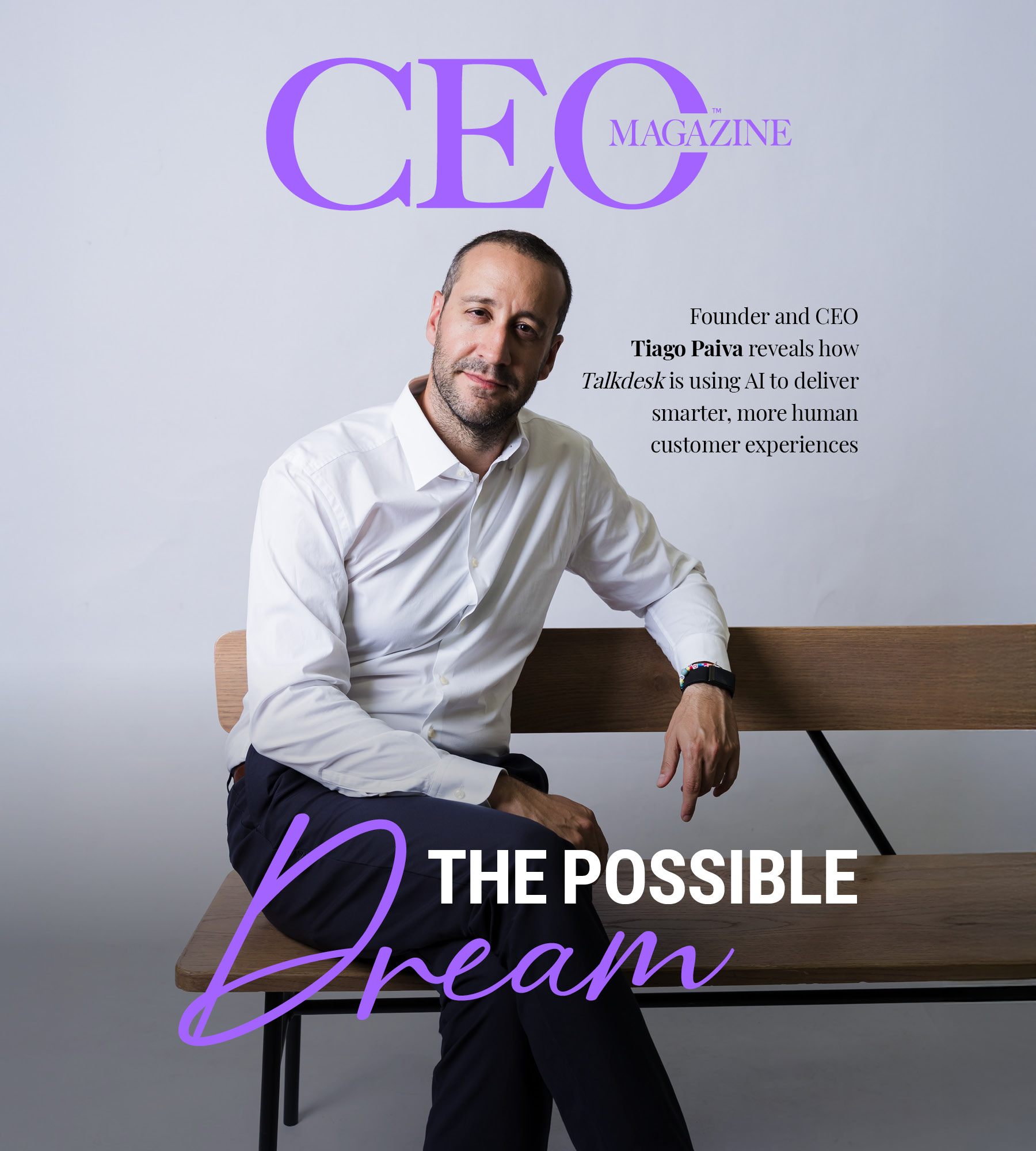
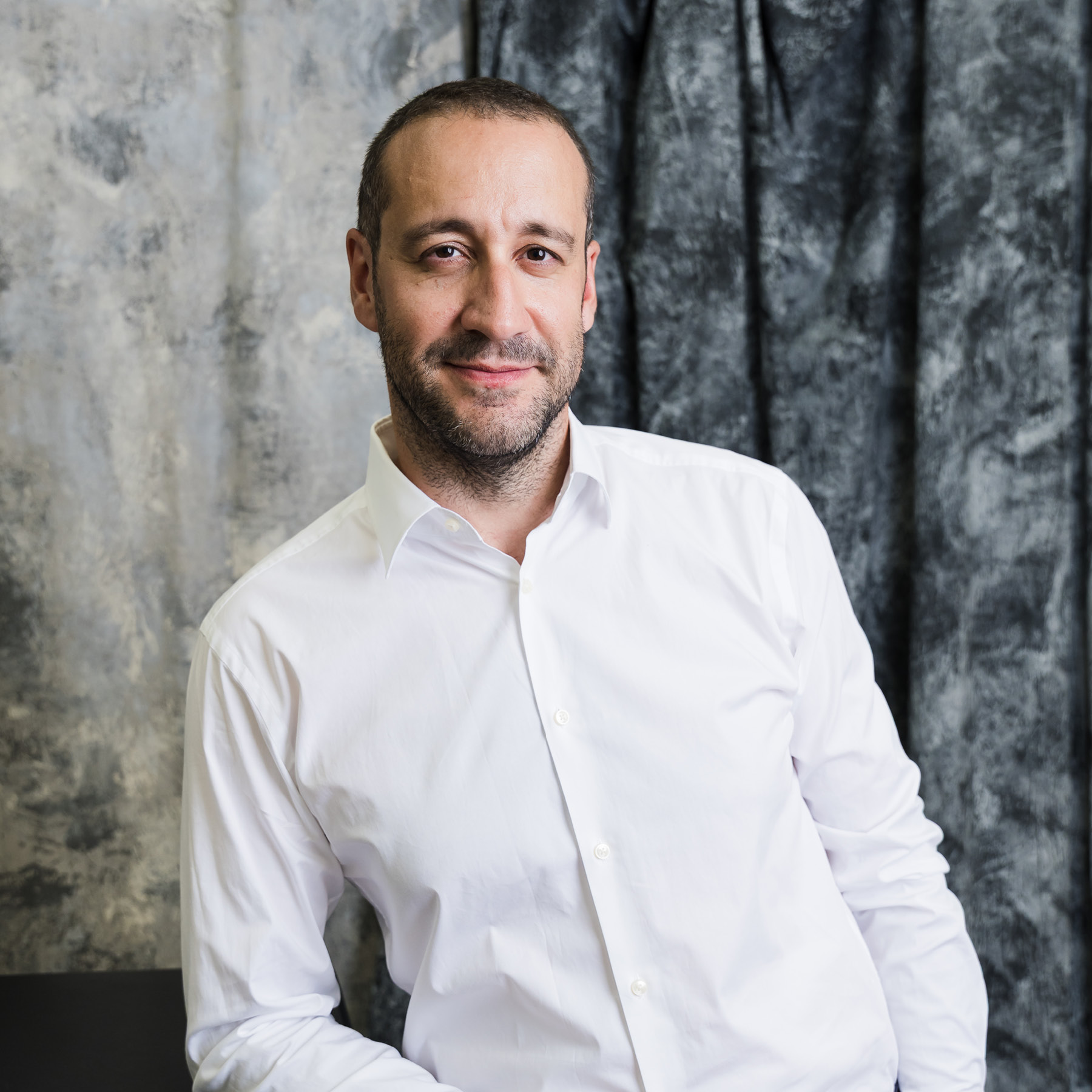
Talkdesk Founder and CEO Tiago Paiva was a high school student in Portugal with dreams of creating a startup that would change the world. His breakthrough was a contest that changed his.
“After graduating with a master’s degree in engineering, I was lucky enough to win a MacBook Air as a prize in a hackathon,” he tells The CEO Magazine. “I’d wanted to build a company and move to America, and the easiest way to do both was to create something meaningful. The hackathon win allowed me to raise some money to build the company and figure things out.”
The company was Talkdesk, created to tackle an age-old problem: how to create a customer experience that actually delivers value to clients.
“We wanted to solve that, and I think when you’re young, you see things through a lens of simplicity,” Paiva says. “Even 15 years later, the core of Talkdesk remains turning the complex simple.”
Customer experience has always carried a level of complexity that seemed inherent and non-negotiable. Through its specialized AI agents that take on customer service, sales and support duties, Talkdesk has simplified the process, but not at the expense of humanity.
“We build software that sells to humans. There’s a human behind every computer using Talkdesk and supporting the customers,” Paiva explains. “AI comes in many shapes and forms in our space, and ours is building software that helps humans do a better job.”
During Talkdesk’s baby steps era, the company tagline was ‘Create a call center in five minutes’. Now, Paiva admits it’s a bit more involved.
“In the last two-and-a-half years we’ve had a dramatic change in the way we do things at Talkdesk,” he says. “We don’t talk about contact centers like we used to. We talk about how AI and automation are changing the space.”
Change is hard and it’s seldom harder than when AI is a part of the mix. There remains an air of fear around the booming technology – fear of replacement and redundancy. On the contrary, according to Paiva, it’s a matter of enhancement.
“We’re in the same industry, but we’ve changed pretty much every single area in the company,” he reveals. “Many old ideas were no longer the way to go. We had to go through the pain of figuring out what customers want and how to build products that deliver all over again.”


That was made easier by Talkdesk’s united front.
“Every single person in the company believes in the mission,” Paiva says. “They believe in what we’re doing, and we still have a great product that our customers love. We’re adding a new product on top of it and that product means we have to have different conversations.”
The ever-changing nature of AI means it’s hard to stay on top of the sector. Paiva says his team are all behind the company vision of AI as a revolutionary tool that can impact businesses end to end like no other.
“We’re no longer in a world where problems are solved by hiring more people,” he points out. “You need to figure out how AI actually solves the problems in front of us. How does AI optimize the business? For us, the impact was drastic.”
And for Talkdesk customers, Paiva says the results are impressive – and human at the core.
“We’re seeing AI working with our customers’ service agents versus replacing them completely,” he explains. “There was a time when we all thought the technology was getting so good it would replace a lot of jobs, but what we’re seeing is that they complement one another.
“Humans are still providing customer service with 20 or 30 percent AI support, some more, some less.”

Ultimately, Paiva says the company’s customers are looking to provide better service.
“It’s not about cutting costs or removing people, it’s about supporting their customers and being able to do more for them,” he explains.
“But it’s a never-ending conversation. I can speak to this now, but next week there’ll be new data points because it never stops.”
Talkdesk CXA is able to stay in this conversation through its impressive range and versatility, he adds.
“When you deploy CXA, you might be trying to solve one use case, but before long you’ll have hundreds of different things you want to apply it to,” he says.
“Even we don’t know what’s possible. We’re all learning and this is what we tell our customers. Together we’ll try to solve their biggest problems with one solution.”
 RELATED ARTICLES
  SPOTLIGHTS ON LEADERS


 Home
Home
 Podcasts
 Covers
 Be Featured
 Community