Language
You can read the magazine in one of the following languages
6-min read

 Bookmark now

 Copy Link
Most organizations today are built for a world that no longer exists. They still operate like industrial-era machines: rigid hierarchies, predictable planning cycles, layers of approval and leadership models that prize certainty over curiosity.
That might have worked when markets moved slowly and leaders could rely on long-range planning. But today, markets, technology and human behavior move at a speed that overwhelms mechanical systems.
For years, I’ve argued that organizations must become adaptive ecosystems rather than factories. They must be nimble, responsive and deeply human. People are not gears, and organizations that treat them as such break down the moment volatility hits.
Phil Le-Brun and Jana Werner’s new book, The Octopus Organization, pushes this conversation forward. They argue that companies must behave like living organisms – sensing, responding, learning and evolving continuously.
They’re right, but there’s a more difficult truth beneath their argument: You can’t build an adaptive organization with machine-era leadership. If you want your company to function like a living system, you have to lead like one.
The pace of external change has outstripped the pace of internal decision-making. Strategy cycles are too slow. Bureaucracy absorbs too much time and energy. Leadership reflexes – command direction, rigid planning, certainty theater – are outdated.
The result? Organizations fall behind reality. They treat complexity as a threat instead of a signal. And instead of learning their way forward, they freeze, defend and protect the very systems that keep them stuck.

An organization built on autonomy, awareness and distributed intelligence adapts faster than one built on hierarchy and control.
The octopus is the opposite. It’s decentralized and it’s intelligent at the edges. It continuously scans the environment, adjusts instantly and coordinates without relying on a single point of failure. Each arm has agency, yet the whole organism stays coherent.
The lesson is clear: An organization built on autonomy, awareness and distributed intelligence adapts faster than one built on hierarchy and control.
But making that leap requires eliminating a core antipattern: tolerating poor leadership.
Every executive has seen it. Many have tolerated it. Some have justified it.
A leader who delivers numbers but destroys trust. A manager with tenure who stifles innovation. A rising star who leads through fear instead of clarity.
Organizations tolerate poor leadership because they want stability, but poor leadership is destabilizing. It creates psychological debt – unresolved tension that accumulates until something breaks.
When outdated, ego-driven or fear-based leaders are protected, the system pays the price:
• Trust erodes
• Innovation slows
• Ownership declines
• Teams shift to self-preservation
• High performers exit quietly
• Culture becomes reactive instead of adaptive
You can’t build a living organization on a foundation of rigid leadership.
Real transformation starts at the behavioral level. Below are the leadership shifts required to move from a mechanical organization to a biological one.
Most leaders speak too soon. They believe they’re setting direction, but they’re actually compressing the cognitive range of the team. Speaking early anchors the conversation around the leader’s view, shutting down divergent thinking.
Great leaders speak last. They ask questions, they invite dissent and they let the room explore before they define the path.
This is scientific leadership – looking at evidence before forming conclusions. It’s also respectful leadership – giving space for intelligence to emerge from the team.
In a world where information moves faster than hierarchy, leaders who speak last learn more, decide better and create cultures where people feel ownership.
The higher you rise, the further you drift from daily reality. People stop bringing you problems. They filter information and try to protect your perception.
In adaptive organizations, that is lethal.

Leadership today isn’t about having all the answers. It’s about creating an environment where the real answers can reach you.
Every leader needs a ‘shadow cabinet’ – a diverse set of people outside the direct reporting structure who challenge assumptions, surface blind spots and provide unfiltered ground truth. These aren’t loyalists, they’re truth tellers.
Leadership today isn’t about having all the answers. It’s about creating an environment where the real answers can reach you.
Leadership distance is a silent killer of adaptability. When executives drift too far from the work, they mistake dashboards for reality and PowerPoints for progress.
Living organizations keep leaders close to the work. Not to micromanage – that’s mechanical – but to understand.
Immersive leadership builds empathy, trust and judgment. When leaders work alongside teams, even occasionally, they relearn what decisions actually cost. They see friction firsthand. They experience what their people experience.
You can’t empathize with challenges you’ve never touched.
Most companies have feedback rituals. Few have feedback cultures.
An organism can’t adapt if it can’t sense. Feedback is the sensing mechanism of an organization – the way it reads its own internal state and external environment. Without honest feedback, leaders operate on assumptions rather than facts.
Effective feedback systems include:
• 360-degree reviews
• Skip-level conversations
• Anonymous input channels
• Retrospectives
• Real-time behavioral feedback
• Frequent dialogue, not annual events
Amy Edmondson’s research at Harvard has shown that psychological safety – the belief that one can speak up without risk – is the defining factor in team learning, innovation and adaptability. Without it, organizations stagnate.
If you’re not hearing uncomfortable truths, it means people don’t feel safe telling you.
Most leaders attempt too much change at once. They create long lists of behaviors to improve and then improve none of them.
Adaptive leadership is iterative. It evolves and it compounds.
Pick one behavior that undermines your leadership – interrupting, defensiveness, dismissiveness, multitasking in meetings, impatience – and commit to eliminating it publicly.

When leaders visibly change even one high-impact behavior, it signals credibility.
When leaders visibly change even one high-impact behavior, it signals credibility. It shows growth is real and it builds trust faster than a dozen speeches.
Leaders who can’t change themselves can’t change their organizations.
Leaders rarely fail because they lack intelligence. They fail because they lack self-awareness.
Triggers – stressors, insecurities, repeated emotional patterns – shape leadership impact more than skill sets. The most damaging leadership behaviors are rarely intentional. They are reactive.
The best leaders journal their triggers. They look for patterns, examine their reactions and they ask why. They replace automatic responses with conscious choices.
Self-awareness isn’t soft; it’s a strategic discipline. Leaders who understand themselves lead with clarity instead of reactivity.
Command-and-control leadership has reached the end of its shelf life. It creates compliance, not commitment. It produces silence, not truth. It stifles innovation and reduces adaptability. Modern organizations require leaders who are human.
Empathy isn’t about being nice. It’s about understanding the emotional and cognitive reality of your people so you can lead them effectively. Vulnerability isn’t weakness. It’s a signal of psychological safety – when leaders admit they don’t have all the answers, team members stop trying to guess the ‘right’ answer and start solving real problems.
Teams move faster when they trust the human being leading them, not the title printed on their business card.
The message of The Octopus Organization isn’t about being softer or friendlier. It’s about building the primary competitive advantage of the next decade: adaptability.
And adaptability isn’t built on org charts or AI tools; it’s built on leadership behaviors. You can’t build an octopus with anchors attached and you can’t build a living system on dead leadership principles.
Organizations that thrive will be those led by people who:
• Distribute authority
• Cultivate psychological safety
• Listen deeply
• Evolve constantly
• Learn publicly
• Empower the edges
• Build trust quickly
• Act with clarity instead of rigidity
The future belongs to leaders who operate like living systems: fast, fluid, responsive and relentlessly adaptive.
Start leading like an organism – the machine is broken anyway.

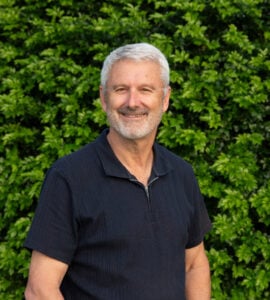
Mark Lukens
Contributor Collective Member
From paramedic to the C-suite, Mark Lukens has built a career centered on leading organizations through complexity, growth and consequence. A strategy executive, entrepreneur, professor, writer and board leader, he has spent more than three decades working across healthcare, technology, consumer and nonprofit sectors. Alongside his executive work, Mark teaches at the State University of New York and has published more than 100 articles on leadership, organizational change and culture. Discover more at https://www.fastcompany.com/user/mark-lukens



 Home
Home
 Podcasts
 Covers
 Be Featured
 Community