Language
You can read the magazine in one of the following languages

5-min read

 Bookmark now

 Copy Link
Two decades of pure dedication to scientific achievement would be hard to walk away from. Betting on yourself in a completely different arena, even harder.
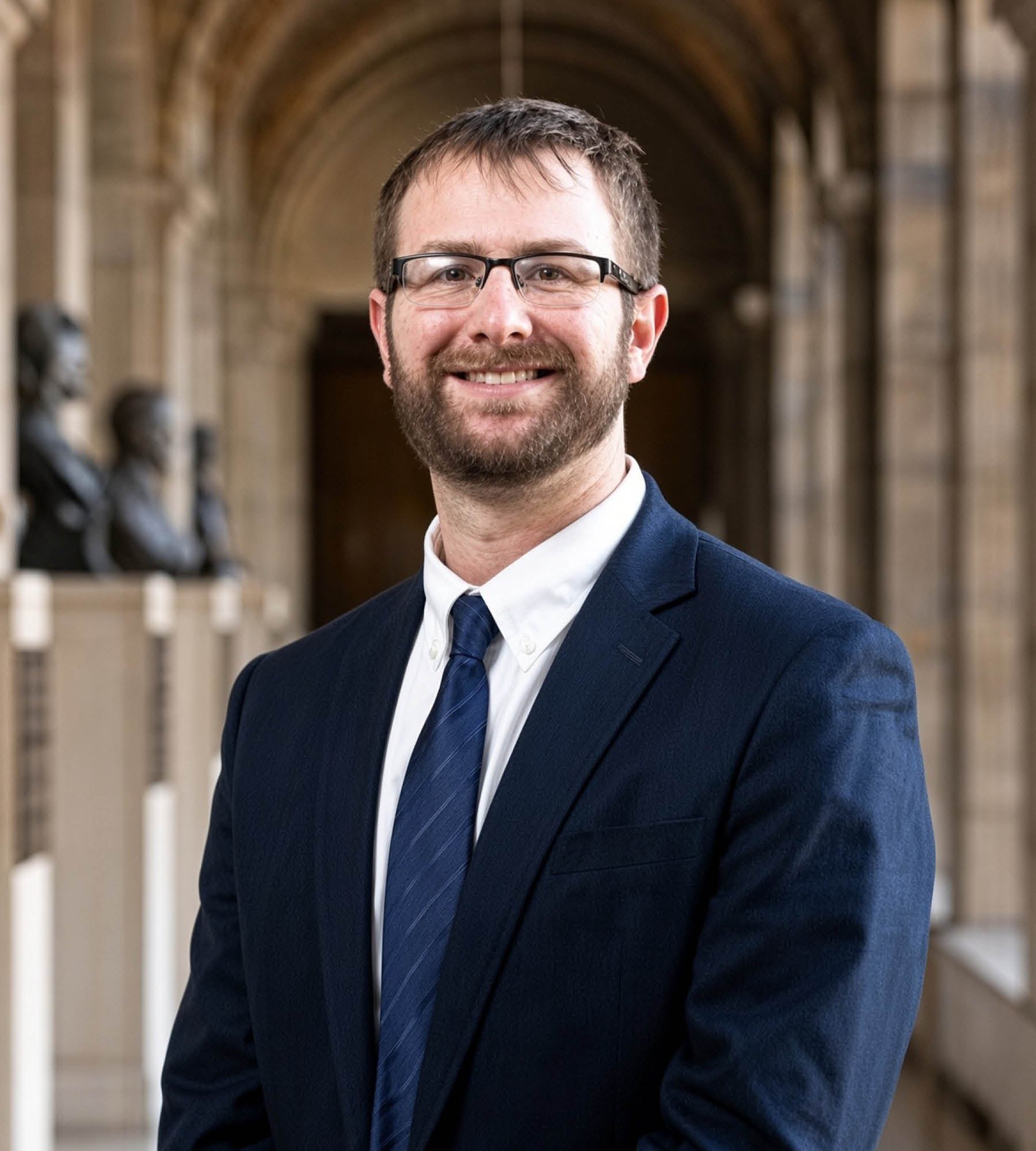
But for Srinivas Katkam, Executive Vice President and Head of Global Sales and Marketing for the API Business at MSN Group of Companies, the leap from research to the commercial world was less of a departure from his scientific identity and more of an extension of it.
“In today’s world, it’s rare that a scientist becomes a business leader,” he tells The CEO Magazine. “Very few scientists take a business role.”
After earning his PhD in chemistry and spending more than 20 years at Dr Reddy’s Laboratories, working across R&D, project and product management as well as customer-facing roles, he joined MSN Group in 2017.
By 2021, Katkam’s bold leap into business had proven to be a good move – his team has nearly doubled the value of the Group’s active pharmaceutical ingredient (API) business in just five years. His secret? Not luck, but a scientific approach to bridging the R&D and market requirements.

“It’s vital to know exactly how you create value for your customer and support them through the life cycle.”
Even as a scientist, he sought to understand not just how a product works, but how it created value for the customer whether through intellectual property advantage, regulatory strategy or commercial differentiation.
“The game-changing mantra is, ‘Innovation is not limited to R&D but deeply applicable even from business to all aspects of the value chain,’” he says.
MSN Group was founded in Hyderabad, India in 2003 by Dr MSN Reddy with a mission to make high-quality medicines affordable and accessible. It has grown to more than a billion-dollar company in the 20-plus years since its inception.
The Group operates 25 state-of-the-art manufacturing facilities across India and the United States and touches the lives of more than 500 million patients across the globe. Katkam leads the API division, which alone generates over US$650 million per annum from its global customer base of over 1,000 companies.
Leading the world’s most active filer of United States drug master files (DMFs) is not a position given to those who play it safe. MSN Group has filed 570 DMFs – a figure Katkam says dwarfs the nearest competitor, which sits at around 350. The company also adds 45–50 new product filings each year from a portfolio selected and overseen by Katkam himself, while drawing on the expertise of its extensive scientific workforce of over 1,200 scientists.
The API-generic market, however, is not for the faint-hearted. Competition is relentless and buyers hold the power. Katkam has watched these pressures build over the past five years and has responded with a strategic pivot to up the complexity curve.
“When you go to complex products, you have to invest more in R&D,” he explains. “You have to invest in your capacity and analytical capabilities, which is required for approval with the United States Food and Drug Administration and other regulatory agencies.”

Advertisement
MSN Group is investing heavily in high-value segments, including peptides, iron products, prostaglandins, oligonucleotides and hormones, which are areas where barriers to entry are significantly higher, but competitive intensity is lower.
Alongside this, the company has created a dedicated division of over 350 scientists focused entirely on product life cycle management, helping customers from the point of launch all the way through the full arc of commercialization.
“Being fast in the market is not enough,” Katkam stresses. “Once you launch, it’s vital to know exactly how you create value for your customer and support them through the life cycle.”
Customer centricity runs deep in MSN Group; in Katkam’s eyes, it is a must. As a business where development to commercial launch can take up to a decade or more, he sees long-term partnerships as non-negotiable.
“APIs can take several years to get commercialized, so it’s important to stay close to the customer during that time,” he says. “Quality, delivery, speed of response and consistency – this is needed year on year, which most companies miss.”
Katkam is quick to note that no company can succeed alone, especially in today’s complex, interconnected global market. MSN Group’s operations rely on an extensive network of suppliers, technical experts, manufacturers and strategic partners, spanning multiple countries and disciplines.
“You definitely can’t do anything alone in today’s world,” he acknowledges. “Partnerships are vital.”

“Innovation is not limited to R&D but deeply applicable even from business to all aspects of the value chain.”
MSN Group is diversifying its supply chain by adopting a ‘China plus one’ strategy.
“We cannot zero down the dependency on China,” Katkam points out. “But for risk mitigation, we are back-integrating in-house and building strategic partnerships in India to maintain the business sustainability.”
This means investing alongside vendors to help them scale.
“Our partnerships must always be win–win, creating value for both of us,” he confirms, citing Calibre Chemicals, whose collaboration exemplifies this model of mutual investment and shared growth.
When it comes to what differentiates great leaders from merely talented people, Katkam doesn’t hesitate.
“There are many talented people in any industry, but very few become leaders,” he points out.
“And the reason is the fear of letting go, which stops them from being leaders. But if they can get past these fears and create transparency and trust, they will become a leader. This enables them to cultivate the next generation of leaders.”
Katkam’s leadership model is built on four pillars: nurturing talent, fostering transparency, building trust and embracing humility.
“Keeping an eye on talent is always important in any industry,” he insists. “They may not be an expert today, but if somebody can mentor them, they will become a resource to be a great leader in today’s dynamic world.”
 RELATED ARTICLES
  SPOTLIGHTS ON LEADERS


 Home
Home
 Podcasts
 Covers
 Be Featured
 Community