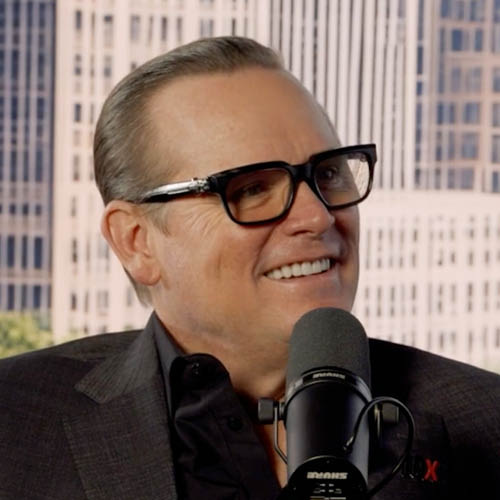
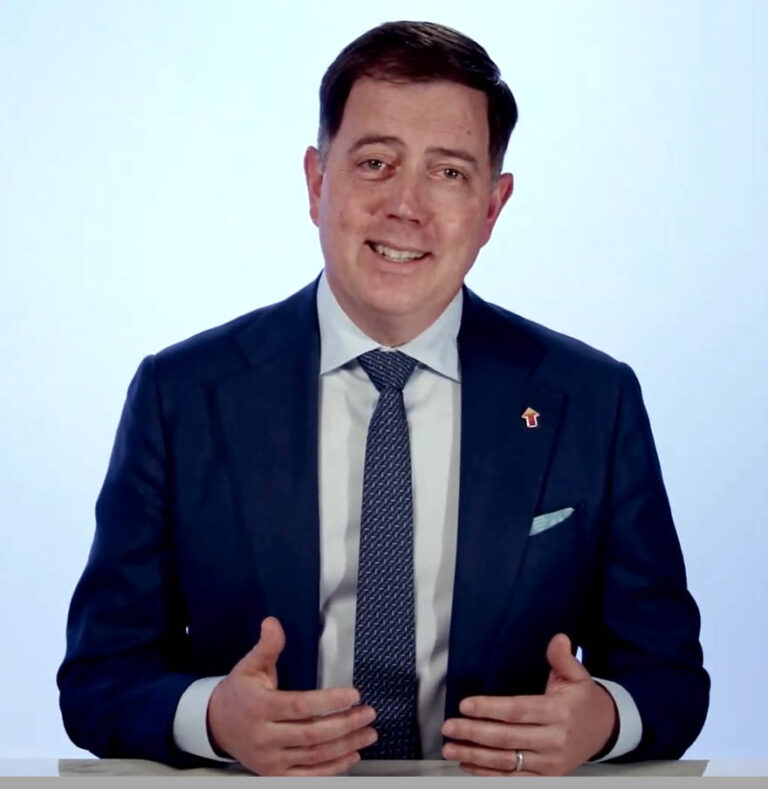
[00:00:00] David: Brandon, great to see you. Thanks for hosting us in this phenomenal studio.
[00:00:05] Brandon: Yeah. Well, thank you. I've, I've been very excited to get together with you. We're gonna do some great things together.
[00:00:09] David: We are. And tell us a bit about the plans for the studio.
[00:00:12] Brandon: Yeah, so we, uh, we have this studio, it's the only studio of its kind.
[00:00:18] Brandon: Um, we produce an enormous amount of content, but we also have almost a thousand entrepreneurs a month coming through our facilities here. And our training room downstairs holds 350 people and has screens like this everywhere, right? Um, where we teach them how to grow and scale their business, how to optimize their business, how to find people, attract 'em, bring 'em on board, get 'em to be productive, and then also how to exit their businesses at high value.
[00:00:43] Brandon: So this is an entrepreneurial school, um, and we really wanted to capture the essence of. These entrepreneurs, you know, I've been an entrepreneur, this is my fifth company. It's very hard to get people to recognize [00:01:00] you when you're successful as an entrepreneur. Yeah. Uh, most of the media out there has a lot of other things to talk about, and so, you know, you can do exceptional things and not ever get recognition.
[00:01:11] Brandon: So one of the things we love to do is recognize because it's so hard to have a successful business, those amazing entrepreneurs, and that's where you and I
[00:01:18] David: connected completely and very often those entrepreneurs perhaps feel, uh, nervous or don't want to kind of display and celebrate what they've done, but they absolutely should.
[00:01:29] David: Because, you know, entrepreneurs drive most good things in in society, and I think it's vital that they're, you know, prepared to take on that recognition. And
[00:01:38] Brandon: especially,
[00:01:39] David: you know.
[00:01:41] Brandon: Having a magazine that says CEO means something, right? Yeah. Because most entrepreneurs never make it to CEO status. They might give themselves a CEO title.
[00:01:50] Brandon: Yeah. But they don't really know what a CEO is. Yeah. And, and I think, I think one of the things I've seen with business owners is when they understand what a real [00:02:00] CEO is and the responsibilities of A CEO versus a business owner Yeah. And they start moving in that direction, they actually add so much more value to their business.
[00:02:08] Brandon: And, and so, uh, where I aligned with you and, and the magazine was more people need to understand that anybody can be a business owner, and 97% of 'em are technically failing business owners. You can be an entrepreneur and there's something that happens when you become an entrepreneur. You're either a failing entrepreneur or a successful entrepreneur.
[00:02:30] Brandon: And if you're a successful entrepreneur, you become a serial entrepreneur. Yeah. So there's different classifications of entrepreneur. Chief executive officers have an entirely different mandate than either of those categories, founders or entrepreneurs. And I think really getting the word out and supporting those people that have made those technical moves to a truce chief executive officer and recognizing them because it's a hard journey [00:03:00] and, and awarding and rewarding them and giving them the credit due, I think is where I fell in love with what you're doing.
[00:03:08] Brandon: Because I was like, man, I'm already doing it with the entrepreneurs and the founders and we have CEOs coming through here and it. People don't know the difference between a founder, an entrepreneur, and a CEO. And I think together we're gonna define that completely.
[00:03:22] David: And there's, there's so much focus often on the first, the zero to 1 million mark and how hard that journey is to make and to what you are saying.
[00:03:32] David: I think there's perhaps less focus on what the next step is. The one to 2 million or the one to 5 million, there's still a huge amount of failure there. And that's because that evolution perhaps doesn't happen from founder to CEO in the way saying Yeah.
[00:03:46] Brandon: And, and, and so the big statistics, right? Macro statistics, there's 34 and a half million small to midsize businesses, so we're talking about businesses under a hundred million dollars, right?
[00:03:58] Brandon: So from zero to a hundred million, [00:04:00] 34 million of those businesses, it. Generates that category generates 45% of the domestic GDP in the United States. It's a huge category. It's a $16 trillion marketplace. It employs between 46 and 48% of the domestic workforce in the United States. We're just talking, you're a global company.
[00:04:25] Brandon: We are just talking. In the United States, the failure rate is 97% over 10 years. Two thirds in the first five. Now, a lot of people will, I have 'em come at me and say, well, that's not really the failure rate. The failure rate is 65%. The actually out of business. And what I point out to people is that 26 million of the 34 million small businesses in the United States have one employee, the founder.
[00:04:51] Brandon: That is not a business, that's a job. So they've already failed in their attempt to build a business. Yeah, and that's why people talk about that [00:05:00] move, that technical move from zero to a million because. 80% of people are are between zero and a million. Yeah. What about those business owners? The 1.8% that bust through 3 million.
[00:05:14] Brandon: Think about this. If you're gonna build a business greater than 3 million to a hundred million, you now go into less than 2% of those 34 million business owners. Yeah, it's a micro percent. And when you get over 5 million and 10,000,020 5 million and 50 million, well, where do you become an actual CEO in a company?
[00:05:33] Brandon: It's north of 25 million. Until then, you're a founder run business. You're sloughing around trying to make it work. It isn't until you recognize I need to bring discipline. I need to bring accountability. I need to
bring long-term strategic planning. I need to think about a cap table. I need to think about debt to equity ratios.
[00:05:52] Brandon: I need to think about employees and driving long-term value to keep my best people. All those [00:06:00] kind of decision making, strategic thinking, cap table thinking. Debt to equity ratio thinking, culture alignment thing. That's what a CEO does. A CEO doesn't figure out how to go start something. A CEO takes it and makes it bigger and better.
[00:06:16] Brandon: Yeah. A lot of entrepreneurs struggle making that transformation. And so I think we get an opportunity together to really define the founder, the successful serial entrepreneur. Most of them hire CEOs by the way, um, and the ceo. And we get to lay it out for people to understand that journey, because I honestly have not heard anybody talking about it in the marketplace except for us.
[00:06:43] Brandon: Yeah. And except for you. Yeah. So I think by combining our resources and really bringing the message forward and resonating together that journey, it's gonna be super exciting. And we get to recognize so many remarkable people that are changing the world completely.
[00:06:57] David: And do you, [00:07:00] let's take a founder. Do you think their goal should be to become the serial entrepreneur?
[00:07:06] David: And is everyone capable of that?
[00:07:09] Brandon: Founders who are successful ultimately become serial entrepreneurs. Yeah. Founders who fail, don't. So when somebody figures out how to do something, they can do it over and over and over and over. When somebody can't figure out how to do something, they eventually give up.
[00:07:30] Brandon: Yeah. So founders that succeed and complete a cycle, which is an exit or an expansion or opening another business, they figure out it takes two things to build a business. It's not that complicated conceptually, but it is practically. The two things you need to build a business is context and contrast.
[00:07:54] Brandon: You know how you did it last time and it didn't work. You changed up how you did it and it [00:08:00] did, and you drove a result as you start curating context, contrast, context, contrast building, practicing trial, air failure, rebuild, practice, execute, win, that muscle memory is what creates a serial entrepreneur.
[00:08:18] Brandon: The question is, are you gonna be great at building zero to $5 million businesses or zero to 10 million, or five to 10 or 10 to 25 or 25 to 125 or 125 to a billion? To the extent that you're stretching and pushing those muscles and getting that experience and having the success. It doesn't matter what you do after that, you have the mental blueprint to do it.
[00:08:40] Brandon: Yeah. But if you're living a life of struggle and on the on the verge of always going outta business and having problems, then that's what you'll be known for and that'll be your muscle memory. And it's very difficult for those people to actually find true success.
[00:08:53] David: Yeah. And for those, a lot of people watching this won't.
[00:08:56] David: Probably know about your personal journey, but for those that are [00:09:00] new to you, just tell us a bit about your journey from founder to Absolutely.
[00:09:06] Brandon: Uh, interesting. Right. So, uh, I was a high performer running a sales team in my mid twenties. And I had an opportunity I saw in the marketplace I was in, in the medical device space.
[00:09:18] Brandon: Many of my customers were just shutting their businesses down. And I went to the founder of the company and said, Hey, you should be buying these or something 'cause we're losing customers. And he said, now it's a conflict of interest. I'm a manufacturer, I can't get into retail. I was like, ah. I'll go do it.
[00:09:32] Brandon: So I was the first guy to try to consolidate the hearing care space. So at 26 years old, I became my first founder of a company. Um, and I was very fortunate because I found a seller who was willing to sell me half of their company for no money down. 'cause I didn't really have a lot of money and take me under their wing and teach me.
[00:09:51] Brandon: And the interesting thing was it was a $3 million business. This person was in the financial space in Canada, in Vancouver, bc. His [00:10:00] wife owned the business. And he said to me, look, though I just had backed it into an Alberta Stock Exchange public company shell. So I have to teach you how to run a public company.
[00:10:09] Brandon: So my first company was a Mike Row. Public company, but micro public companies have to live with the same rules as a macro public company. So he taught me discipline, accountability, quarterly meetings, board
meetings, uh, investor presentations, certification of financials, and you go to jail if you don't do it right.
[00:10:31] Brandon: Like, like scary stuff. Right? But that was my first experience. So he pushed me very quickly into what a CEO had to be. Yeah. Now here I'm a 26, 20 7-year-old kid. I was running a sales team, but that gave me the foundational element to understand the difference between a founder owned business and a professional CEO operated business.
[00:10:56] Brandon: And, and so I kind of had the opportunity to go on that journey from the [00:11:00] beginning. And then I ended up raising, uh, in four equity transactions, my first million, then 6 million, then 18, then another 10 by the time I raised the 18. And the tenant was with War Pincus in New York City. Uh, most prestigious financial institution at the time.
[00:11:16] Brandon: I raised that money in, in, in 2000, uh, in 19, actually, 1996 or seven. And, and they had 18 billion or 22 billion under management. So that journey, and then I became the youngest person to ring the opening bell of the American Stock Exchange.
[00:11:33] David: So at
[00:11:34] Brandon: 29, I became a public company, US-based C-E-O-I-I. I had to bypass the founder to entrepreneur journey because it was just basically sucked down my throat.
[00:11:45] Brandon: It is like a fire hose, but it was a looking back, oh my gosh. To be able to be taught. What A CEO is supposed to do in your first journey in your early twenties? Yeah. Although my private equity guys sold [00:12:00] the business out, and I had to start over, but then I was like, I'm gonna start over, but I'm gonna take the founder entrepreneurial journey combined with my CEO experience of Wall Street and roll up strategies and consolidation theories and all these things, investor presentations.
[00:12:15] Brandon: And I created a hybrid model that if I could teach small businesses to behave the way I had to learn and I could figure out how to create an economic structure that didn't require anybody else's capital, that business could grow without needing access to money. Because the business was run dis with discipline.
[00:12:34] Brandon: The business had targets and it had incentive programs, and it had like, like the way I had to run my little public company. Right. You
couldn't. You couldn't just make stuff up. And I created that and launched that business in 2005 as a self-funded bootstrap business with the idea I was gonna create a new hybrid model, how to start, build, scale, optimize, and eventually exit businesses.
[00:12:56] Brandon: And we exited that company with a hybrid equity [00:13:00] model I created. I had to go around and around with the SEC six or seven times, had to get around some franchise laws. But I launched that business, which was a shared economics, uh, community owned independent businesses owning my business with me and my business, having rights to their business.
[00:13:19] Brandon: It was a decentralized democratized strategy where every quarter I met with those business owners and we voted on the things I needed to build for them to build an infrastructure company. Yeah, we sold that business in 2016 for 77 times ebitda, one of the highest values ever paid for a private company.
[00:13:36] Brandon: I wired 40 million out to my customers as. The way to go. We did it. 15 million of my employees, we sold to a billion dollar public company, and in 36 months we helped 'em go from $17 a share, expanding globally to seven or to $94 a share. We added three and a half billion in market value to that business in 36 months.
[00:13:54] Brandon: Wow. And then we launched this company, which after 10 years of research with FTI, OUTTA [00:14:00] Chicago from 2009, 10, 11, 12, uh, IGS outta Boston 16 17 18, what we did is we interviewed 10,000 business owners across hundreds of verticals to understand the difference between the businesses that succeed, what causes businesses to fail, and what are the elements you need to be successful leader.
[00:14:18] Brandon: Marketing, understanding conversion sales, understanding finance, understanding all the things that got me in trouble in my first company that I was learning on the fly. And I realized that is the dumbest way to do it. So that's what I've been spending my career doing. And then we launched this business in partnership with Grant Cardone in 2019.
[00:14:36] Brandon: And to prove to the marketplace that what I'm talking about works. We work with founders all over the world, but for them to have the courage and belief in me, I had to build some operating companies to show along the way. This is how you do it. Yeah. So I launched Cardone Ventures,
which is our business education and management company, uh, in partnership with Grant Cardone and my wife.
[00:14:56] Brandon: And, uh, we launched that business exactly six years ago this [00:15:00] month. No invested capital, no debt teaching what we teach. And we did 120 million last year bootstrapped, um, with, uh, 230 employees and. Exactly. Four years ago, September, I bought a $1.8 million healthcare company renamed at 10 X Health to show that you can do it in a product and services business.
[00:15:19] Brandon: And that business went from 1.8 million to twenty five seventy five, a hundred and twenty. We'll do 140 million this year. Uh, no invested capital, no debt. I bought the business for 200 grand and now we've engineered over $9 billion of businesses in the last 60 months. And we get all these business owners and entrepreneurs coming through wanting to emulate, copy, model, mimic and master what we proved works.
[00:15:40] Brandon: And then I met you and I'm like, oh my gosh, we have all these people ready to become CEOs. We should start talking about it. What a CEO does. It's the thing that made me successful. Nobody's talking about it, but you guys.
[00:15:53] David: Yeah. For people who want to find out a bit more about that journey, your book, the Nine Figure Mindset.
[00:15:59] David: Yes. [00:16:00] I read a lot of books, as you can probably imagine. And that book is the fastest. I've read a book from cover to cover. It's so accessible. Um, a lot of these books kind of over-engineer, they make it very theoretical. Yeah. But you were so just honest and the storytelling was phenomenal. So I would suggest to anyone who wants to learn more about that journey to, to pick up that book.
[00:16:25] David: Thank you. And you know, it's a trilogy.
[00:16:27] Brandon: That was the first book I had to explain how I became worth a hundred million dollars and the journey to get there. Yeah. I already own the title to the third book. The third book book is called Nine Figure Mindset was first. The, the third book is 10 Figure Mindset because in 60 months, by partnering with Grant Cardone, I've created two businesses that are both over a billion dollars of value now.
[00:16:51] Brandon: Yeah. And we're gonna go to the marketplace and demonstrate this. And, and so I want people to understand like, it's there, it's accessible, [00:17:00] it's just strategy, structure, execution, and it's science. And if you can learn the science. You can develop yourself to become whoever you want to become. It's actually easier than most people think, but we've been sold a bill of goods on how hard it is, and private equity doesn't pay any attention to that $16 trillion space.
[00:17:18] Brandon: It's way too small. And as soon as businesses unfortunately start to get big, that's where private equity starts trying to buy everything. And most business owners are struggling 'cause they're trying to grow and they're trying to break through and they're devaluing and then they sell 'cause they get nervous and private equity just comes and snaps 'em up.
[00:17:33] Brandon: Yeah. And so my mission is really. To build an entrepreneurial school and platform that can show people how to create massive value, not give it away, share it with their team, and restructure the whole equities market by pooling interests of entrepreneurs and like-minded businesses and accessing the marketplace together.
[00:17:53] Brandon: You know, 45% of the GDP, 47% of the workforce, 16 trillion a years in value in just the [00:18:00] United States and the economy. And yet they're only represented that group, less than 8% of the stock market. So none of those people are creating wealth, and that's what we're gonna do. We're gonna educate people together and show 'em how to become a CEO drive value and create wealth for them, their teams, and their constituents and shareholders.
[00:18:15] David: Yeah. So let's talk about that title, CEO.
[00:18:18] Brandon: Yeah.
[00:18:20] David: A few different ways to get there can be, like you talked about founding a company and then taking it on that journey. There's also the, perhaps joining a company and working your way up. Yep. How different do you think those paths are?
[00:18:38] Brandon: First, defining what a CEO is.
[00:18:40] Brandon: Chief Executive Officer, and I think we saw an example of this on the jumbotron recently at a cold play concert, that if you are the chief executive officer, you are the principal responsible for the culture, [00:19:00]
the operational effectiveness, the leadership, and the results of the enterprise or the organization you run.
[00:19:09] Brandon: That does not give you a lot of flexibility to just be whoever and whatever you want. And there's a different level of accountability for a chief executive officer and to be a chief executive officer, you have to be in command of a chief. Executive Chief Operating Chief Financial Chief Technology, chief Engineering.
[00:19:31] Brandon: Chief marketing. Like you gotta have the infrastructure around you because things have to be big enough for you to create value through your teams. That's the job of A CEO. Yeah. And to do it legally, morally, ethically, and compliantly that like when you understand your job as a CEO, you are like, okay, I got it.
[00:19:50] Brandon: Most founders are just winging it and figuring it out, and hoping they can hire good people. So the definition of what A CEO is really important. Anybody can choose to [00:20:00] become A CEO and you can learn by watching other people. But if you're not understanding what A CEO does and how A CEO evolves, you can't put yourself on the journey to become a CEO.
[00:20:10] Brandon: Yeah. You don't have to start your own business. In fact, I'll tell you what, the majority of businesses, when they break the 3 million mark and go to 125 million, they need young executives to grow and scale with the business. And I tell business owners, if you're under 25 million, you're not gonna hire anybody to solve your problems.
[00:20:27] Brandon: They're just gonna create more of a train wreck.
[00:20:29] David: Yeah. So you have
[00:20:29] Brandon: to develop that talent internally, and there's a process to do that. But once you understand your job is the 10 year plan. Protecting the balance sheet, protecting the capital structure, long term incentives for the people you need to help build the business strategy and results and leadership.
[00:20:50] Brandon: That definition is when you understand that you can start developing in each category. Because CEOs aren't an expert usually in one thing. [00:21:00] They're a generalist in all those things. Yeah. And they have to hold those things together through other people. And that is a talent that you have to develop. And I think anybody can do it, but you have to know what it is.
[00:21:11] Brandon: You have to have the patience and perseverance to pursue what you need to do to do that. And then you gotta be able to drive results through people. If you can't do those things, you're never gonna be a CEO. Yeah. But if you have the desire, yes. We'll, we'll, we'll even build a track to teach 'em how to do it.
[00:21:27] Brandon: How's that?
[00:21:27] David: Yeah. Sounds good. And for someone like someone like you who's been involved in so many different industries. How do you, how do you get yourself to the point where you're comfortable being that generalist? How can you be so confident to go into that industry and then go into this industry?
[00:21:44] Brandon: Yeah, great question. Well, there's commonalities in business. Um, and, and those commonalities when you understand what those commonalities are and you understand how they link and sync together, a CEO's job is to create massive value and a CEO [00:22:00] understands it has to happen through people. When businesses are small, there's no CEO, they don't understand it.
[00:22:06] Brandon: When businesses are struggling, they have the wrong leader. They. 'cause they, they're, they're, they're not bringing things together. Yeah. When there's cultural divide, you've got a problem. Now, I get criticized by people saying, you got reviews on the internet that say people work life balance. You guys are hard on people Management doesn't know what they're doing.
[00:22:25] Brandon: I, I, I, I just remind everybody, Gallup Poll does a survey every single year. The survey is of a hundred million US workers. And in that survey every year, it's never changed except for the year of COVID where everyone was getting paid to stay home. So everybody loved their job. Outside of that, the statistics never changed.
[00:22:43] Brandon: Two thirds say they're disengaged or actively disengaged. 18% say they're actively disengaged. Literally, they're, they're just sabotaging the business they work at. Yeah. My job in a business to go from zero to quarter of a billion dollars in 60 months is to find who the high performance [00:23:00] people are and not wait the company down.
[00:23:02] Brandon: With the 60% that are disengaged or actively disengaged. In fact, I have to create a culture where I drive the 60% away. Yeah. Now you can criticize that, but the fact is, A CEO says, results are the only thing that
ultimately matter and you can't, and then a naysayer will say, yeah, but people, and you say, well, you can't get results that are big without great people.
[00:23:26] Brandon: So see, you understand this stuff and you listen to how people communicate and what they're fixated and worried about and how the conversations are going inside their organization. It does not matter what that business does as long as it's legal, moral, ethically and compliant. If that business is having the wrong conversations with the wrong people, pointing to the wrong things, not focused on the right things, it is clear exactly what's gonna happen with that business.
[00:23:51] Brandon: And all the statistics will align with that. So for me, how I got good is first of all, doing research across thousands of businesses to see what failure, what, what [00:24:00] causes failure. Versus what success looks like. And we had an interesting cohort group that we interviewed, which were the business owners that failed multiple times and then they succeeded.
[00:24:09] Brandon: They had a great perspective on what did they do differently to cause a success. Yeah. And we just mapped all this stuff. So I always tell business owners, look, when you're up against a hard choice, remember 97% of all businesses fail. So the first inclination you have is probably the wrong one. So go ask somebody that's successful.
[00:24:30] Brandon: What did you do in this point in time? And get the right advice from the right people.
[00:24:34] David: Yeah. Well, from that research you did. What surprised you most from that group you mentioned? Failed once, failed twice, failed three times, and were then successful. What surprised you most about what they'd changed to become successful?
[00:24:50] Brandon: The central most common answer when we said what shifted and changed? Yeah. They said. People [00:25:00] aren't gonna like to hear this almost to a T. They said we stopped giving a shit what everybody else thought. Because if you're polling, this is how the research showed. If you are one of those people that own a business and you're running around asking everybody what you should do, the good people are gonna leave you and you're gonna get saddled with the people that recognize you have no idea what you're doing, and they're gonna take advantage of you.
[00:25:25] Brandon: Yeah. If you don't know what you're doing and you're the captain of the ship, you don't know which direction you're sailing, you don't
know where the muster stations are, you don't know what the rules are to be able to even be on the ship. You don't have your protocols. You're not managing your food, you're not managing your fuel, you're not managing your weather, you're not managing your teams.
[00:25:48] Brandon: You have no discipline in the organization of that ship that has to cross that huge canal on the other side or. Now it could encounter rough weather, it can encounter dangerous situations, or it could [00:26:00] just smooth sailing. Well, if it's just smooth sailing, almost anybody can say they were successful. Yeah.
[00:26:04] Brandon: But I've never met a business owner and I've never seen a single business model that forever. It was smooth sailing.
[00:26:09] David: Yeah.
[00:26:10] Brandon: In fact, if you go and just look at Bezos, look at all these people, uh, Steve Jobs lost his job, got fired, came back, didn't make any money. Apple was almost outta business in 20, uh, 2000 stock was pennies.
[00:26:22] Brandon: Well look at it today. So all you have to do is look at the examples of what changed, what, what was the difference, who had the courage, who had the stamina, who had the belief system? And so. People that fail that went around asking people their accountants and their CFOs, oh, I hired leadership. I should get their opinion.
[00:26:42] Brandon: Look here. John Maxwell wrote a book called 21 Irrefutable Laws of Leadership, and the first law is Law of the Lid. The lid is the cap. If I'm a five leader, I will not have sevens and eights around me. Well, I took that concept and worked with John Maxwell and Jim Collins and Story Musgrave, the only astronaut that flew all five space [00:27:00] shuttles.
[00:27:00] Brandon: Designed, deployed oldest astronaut in space. To fix Hubble. I wanted to understand what allows the mechanics of a business to work, and I identified three lids in the business. You have the belief lid, the lower you believe, the lower you succeed. The higher you believe, the more you can put pressure on success.
[00:27:16] Brandon: But without the operational effectiveness lid, the more effective you are across functionally, everything that you're doing, you'll succeed. If you're ineffective, your belief will go down because you won't hit
targets and goals. And you'll finally give up. John Maxwell Enters leadership. From zero to 8 million.
[00:27:35] Brandon: It's all about me, man. I gotta lead myself. I gotta have the courage. I gotta be a good person. I gotta fight to survive. And if you don't move from that mentality, which unfortunately digs people in to just fortifying, I am not gonna change If you don't make the technical move from me leadership to at least two or three people working with you, [00:28:00] complimenting you in different areas of the company to what I call we leadership.
[00:28:03] Brandon: Now there's three or four of us working together and we're pulling the whole team behind us because that Gallup poll, 60% of the people, you're dragging 'em up the hill. Yeah. 20% are trying to pull you off the hill. Yeah. Well, the move from 15 million to 25 million, that has to evolve to five. We leaders, the beautiful thing in business that we identified is once you're at 45 million ascending to 75 million, your culture kicks in.
[00:28:27] Brandon: And I call that US leadership because if you have a hundred or 200 employees, that 40% is strong enough to carry the other 60. Yeah. And some of the 60 says, Hey, why am I hanging out with that group down there, the bottom 30 and all of a sudden you're 60% becomes 50 or 60 polling with you. Different gradient levels, but pulling with you because they know where they're going.
[00:28:54] Brandon: They know where the other side of the ocean is. They accept, they might encounter rough sea, so they train [00:29:00] for it. They understand the rules of the ship and who's in charge. And they understand with absolute clarity, dedication, and commitment because they've sworn their oat to that. We're getting to the other side.
[00:29:09] Brandon: We're getting everybody there safe, and if we encounter anything along the way, we're gonna hunker down as a team, go to rely on our training and we're gonna get through it. Now, I'd like to ask anybody listening to this podcast how readiness their business is right now. For what? For for bad weather, rough seas, potential danger.
[00:29:28] Brandon: And if you can't say on a, with a seven to 10 certainty, we are ready.
[00:29:33] David: You're in trouble. Especially with the, the way the world is going, there's kind of black swan events every, every quarter. It's gonna happen right now happen. If you
[00:29:41] Brandon: don't recognize it's gonna happen every cycle, it's a six to eight year cycle.
[00:29:45] Brandon: It's always gonna be something catching you off guard. And you have to have the discipline and accountability to prepare your business for, and that's how A CEO thinks. Yeah. 10 years out, never What are we doing right now?
[00:29:56] David: Yeah. And the, you mentioned the CEO, [00:30:00] having belief in their ability and listening to their, perhaps their intuition.
[00:30:05] David: And I remember I, I became the CEO of a global company at 29 years old. Yep. And first thing I did was, okay, let's speak to all the leadership team, take their opinions on where we're at, where we can go. Pretty standard stuff. But if you're not careful, you have all these voices in your head. And that was a big thing for me was, and other
[00:30:25] Brandon: people, that's that polling, everyone has an opinion, everybody has a thought, everyone has an idea.
[00:30:29] Brandon: But you have to ask a question. Anybody speaking, have they ever done it? And if the answer is no, you need to learn to block it all.
[00:30:34] David: Completely. And something that's become very clear to me is the important of, call it what you want, the gut instinct, the intuition, the way the, what that is, is actually quite incredible.
[00:30:46] David: That's your subconscious that's taken on board. Everything that's happened in your life, thousands of decisions a day that you make without knowing you're making them. And that's then giving you the answer that's far more [00:31:00] powerful than perhaps just sitting there and thinking about a problem. So that's been a big thing for me, really being able to listen to that instinct and, well, it's called
[00:31:12] Brandon: entrepreneurial intuition.
[00:31:13] David: Yeah.
[00:31:15] Brandon: And here's the problem with it. For most business owners, they started their business because they did not want a boss. They did not wanna be told what to do. They did not want a limitation on their earnings. They did not wanna be held accountable. So they went and started their own business,
and now they're operating with that same broken system that everybody they hire.
[00:31:34] Brandon: Is like them. Yeah. And it becomes a disaster from the beginning. Yeah. What you described is the evolution of the entrepreneurial intuition to chief executive intuition. Chief executive intuition is what are the stats? Who are the people doing it? Yeah. How's it being done? What's the data We're looking at?
[00:31:58] Brandon: What's the purpose in the long-term [00:32:00] vision that we're succeeding at? What's our mission? What's our vision? What's our purpose? What's our culture gonna be? Is everything moving in that direction? Does everybody understand that direction? Yeah. And as you start to get more precise in how you view your business, your targets, your people, and you accept the responsibility for the long-term target, the more you become precise at that, the more you become an an intuitive CEO.
[00:32:27] Brandon: But what drives intuition for a CEO? Experience, personal development, a true assessment of what's going on around them. Looking for solutions, not identifying the problems. 'cause you're always gonna have the problems. Yeah. And then developing that intuition on how to handle things quickly, to drive, to target, to get a result.
[00:32:49] Brandon: And not being worried about some of the collateral damage that might occur along the way. Because look, you, you, A CEO understands when the house is on fire. You're trained to run in the [00:33:00] house and get anybody out of the house that's in there. And if you get burned along the way or you lose somebody along the way, or your, your, your cohort that's in there with you, somehow parishes, that's just part of the responsibility.
[00:33:12] Brandon: And A CEO acts that way. They're surgeons. They don't debate, they don't pull POLL. They pull PULL. I'm gonna get that person, I'm gonna pull their ass outta that burning house. They're not thinking about it, they're just gonna do it. Right. And the more you do it because you're, you have a problem, you work through a problem, you get a result and you're like, ah, I did it.
[00:33:34] Brandon: The more courage you have. Yeah. And what a CEO has to have that you're describing is that gut is really the gut of courage. Yeah. Okay. Being wrong, but moving to target as fast as possible and getting the result, self-assessing, going to the right mentorship, going to the right
leadership, doing the right work on yourself, communicate better, be more aware.
[00:33:54] Brandon: That awareness thing is what you just described. It's no longer [00:34:00] intuition. It's awareness.
[00:34:01] David: Yeah.
[00:34:01] Brandon: You've syn synthesized you awareness, you're hovering up here looking and you're paying attention. Most entrepreneurs are down doing what they're good at, ignoring everybody else that those are two entirely different operating planes.
[00:34:16] David: Yeah, completely. And, and let me ask you about the role of ego and. How we manage ego while maintaining self-belief. And, and you in particular, you're on the stage multiple times per week speaking to these crowds. Yeah. You are talking with confidence about these systems and this way of doing things. A lot of people might look at that and go, that's a big ego.
[00:34:47] David: However, for example, anyone who gets to know you or reads your book can see you're actually very capable of self-reflection. So how, how did, how do you find the balance between those two things and what are [00:35:00] your thoughts on that?
[00:35:00] Brandon: It's a great question. Um, people will confuse if they get me in a snippet, they'll confuse my confidence for ego.
[00:35:11] Brandon: Yeah. Now, what's the measurement between ego and confidence results? The reason I'm very confident is because I know what I'm a surgeon. Any surgeon who's an expert in the world is gonna be extremely confident about what they need to do in that moment of surgery. Right. That's me and I have to back up my confidence with results here is the extreme differentiator behind confidence and ego.
[00:35:46] Brandon: Yeah. Ego and people that rely on ego typically don't have much results. So they have defensive ego.
[00:35:55] David: Hmm.
[00:35:56] Brandon: And they wanna be right and they want to tell you how to do things, but they haven't actually [00:36:00] done shit. But they're a genius and an expert on everything. That's ego. May I have confidence? You know, to
build a bootstrapped a hundred million dollar companies, statistically, and anybody, anybody listening or watching this can go and google this stuff, or they can go to chat GT and ask it.
[00:36:15] Brandon: Right? The odds of building a business from zero to a hundred million in revenue bootstrapped over 20 years is 0.01%. The odds of building that same a hundred million dollar business bootstrapped over five years is 0.001%. The odds of building two entirely different companies bootstrapped from startup to both over 125,000,060 months is incalculable.
[00:36:44] Brandon: Yeah. So. Do I have an ego that I just did that to prove it can be done? Do I have an ego that I sold for 77 times EBITDA and shared $50 million with my investors, my partners, my employees? That's not ego. That's confidence. And [00:37:00] if you're listening to anybody and you're like, is that person egotistical or are they confident?
[00:37:06] Brandon: All you need to do is one test. Learn to ask three questions. What's the most amount of money you've ever made in a year? What's the biggest thing you personally not been a part of, but you personally started, built a team and built it. How big did that get? Yeah. And thirdly, what's the most amount of money?
[00:37:24] Brandon: Anything you bill ever sold for?
[00:37:26] David: Yeah.
[00:37:26] Brandon: And if they have the stats that are the stats you want to pursue, that's confidence. Yeah. If they don't, it's ego. Yeah. So anytime you want to differentiate between confidence and ego, you gotta look at the statistics. That's why I always ask three questions of anybody I'm gonna listen to biggest thing you've ever built, most amount of money you've ever made in a year, and the biggest thing, biggest exit you've ever had be.
[00:37:50] Brandon: And I'll tell you why I asked that question. There are a lot of advisors that have said, oh, I built a hundred million dollar company. I know what I'm doing. And there's a lot of these social media guys that have been gals that are out [00:38:00] there just talking, talk, talk, talk, sell classes. Look, I sell classes.
[00:38:03] Brandon: Yeah, absolutely. And I talk, but the difference is, is I quantify and qualify everything I've done has been public since I was 26 years old. Like everything has been public.
[00:38:14] David: Yeah.
[00:38:15] Brandon: So when you're listening to somebody. If they're protecting, like if you ask, Hey, what's the most amount of money you've ever made in a year?
[00:38:22] Brandon: You don't have to be a jerk to asset. If they're like, well, I can't tell you that's confident. It's because they haven't made any real money. Anybody I've ever met that's worth anything is proud of what they did. Yeah. Second, what's the biggest thing you ever started? You ever built and exited? Well, here's why this is important.
[00:38:35] Brandon: Let's say I say, well, the biggest thing I ever built is I built a hundred million dollar company and I exited it. And you're like, man, I wanna build a hundred million dollar company, so now I'm gonna listen to that person. The third question is, what's the most amount of money you've ever made on an exit?
[00:38:47] Brandon: If you got two mentors you can pick between someone who built a hundred million dollar company, sold it and made $35 million, or somebody who built a hundred million dollar company sold it and made $250 million, which [00:39:00] one should you actually listen to? Because there is a third category. The person that built a hundred million dollar company and sold it for nothing because they didn't build it right?
[00:39:07] David: Mm.
[00:39:07] Brandon: So you have three different categories of people that all three built a hundred million dollar companies. Which one should you actually follow? Because the fastest way to success is model, mimic, and master what somebody's already proven has worked.
[00:39:18] David: Yeah.
[00:39:19] Brandon: If you're not asking the questions and qualifying the inputs, how do you know who you should be following?
[00:39:24] Brandon: Well, I'll put those three people on a stage, and the one that built a hundred million dollars company and failed will probably have a much bigger ego than the one that built the a hundred million dollar company sold for a quarter of a billion. Because in my case, when people come to my events and I start talking about the pain or the things like in my book, or I'm
start coaching and I'm living in their pain, I will be confident with them, but I also cry with 'em because I cannot get out of how fricking hard it was to get to where I'm at.
[00:39:52] Brandon: Leaders with confidence that also have humility in snippets of time can look [00:40:00] like they have ego because you're looking at a 32nd clip and man, that guy sounds like he's egotistical. Yeah. But over a long period of time, that confidence combined with results and humility for appreciation of really what's involved for getting there.
[00:40:16] Brandon: Yeah. Is how you know who you should listen to. Yeah. And I think the difference between ego and confidence is one simple measurement results. Yeah. Now there are people that have big results that are egoistical and assholes. I just stay away from those people.
[00:40:32] David: That's one thing I really like about the way you operate as well.
[00:40:34] David: You, you use the, um, the comparison of a surgeon, which is interesting. I've not heard a CEO compared to a surgeon before. When a surgeon goes into a operating theater, they're not doing something for the first time, or hopefully not. And they're not doing it by themselves. No. They've got a team and they've done that procedure multiple times.
[00:40:54] David: And I imagine probably on the first few procedures, it didn't go particularly well, especially if they're in world [00:41:00] renowned.
[00:41:01] Brandon: Surgeon. Right? Everything before they walk in that room is choreographed with a specific target. Yeah. Think about that as a CEO. When you walk in that boardroom, do you know what the specific target is?
[00:41:13] Brandon: Yeah. Is it all choreographed or you just walking in and saying, Hey guys, how we doing?
[00:41:16] David: Yeah. Yeah. And the small details,
[00:41:21] Brandon: the difference between businesses that succeed in failure isn't in the idea or concept. It's in the micro, micro elements of execution that either work for you or against you. Yeah. It's not the big concept, it's the ability to recognize the last five or three or 8% of whatever initiative you're doing, how to drive to result because and And how many times have you said, Hey, we know this works, and someone says, no, I tried that.
[00:41:49] Brandon: It didn't work. My follow up on that is, did you try it? Right? Because if you're not major, and then they're like, absolutely. They say, great. Show me how you measured it. Show me exactly what you tracked. [00:42:00] Just take, take a timeline here, start finish, show me exactly 3, 5, 8 elements that you were looking at in real time to assess did you do it right?
[00:42:07] Brandon: And they're like, uh, uh, uh. 'cause they didn't do it. Somebody else did it. Somebody else told 'em it didn't work. And everybody runs around these faulty belief systems and everyone's deferring, deflecting. Uh, and you know how, you know that is all you have to do is look at the results. Anytime this business scale is maximizing what you have, scaling is the rapid expansion of what you can prove works.
[00:42:26] Brandon: Anytime you're in the scaling mode and you stagnate for 90 days, 180 days, now you gotta go back to scale. Well, when you go back to scale, you gotta be willing to whack people. You gotta be willing to cut a, this belief, oh, we gotta need all these systems. You gotta cut everything down to what your highest performance ratio was at any point in time and start from there over because something got outta alignment.
[00:42:48] Brandon: Somebody you hired or a group of people or initiatives going on and you don't know what they are. So what, what do you do? You, you're a surgeon, you cut to the bone and you skin graph. You don't apologize for it because you're saving the body [00:43:00] to get rid of the cancerous part of the body. And you do it with a vengeance.
[00:43:03] Brandon: Yeah. And with authority. And that is what A CEO does. And if A CEO doesn't do that, they don't make it as a CEO very long.
[00:43:11] David: And I think as well, it's a great point. It's about, as a CEO, you have lots of responsibility, but you don't have responsibility for everything that goes on in the world. So like for example, if you do have to make a difficult decision about perhaps cutting a department or a team.
[00:43:27] David: Yeah, that sucks. 'cause those people are gonna lose their job. But ultimately your responsibility is to, it's the body, keep the body safe, right? Correct. And those people, yes, that's sad and whatever else, but they are adults, they're not actually your responsibility. Your responsibility is to keep the business alive.
[00:43:45] Brandon: Well, the role of A CEO, so let me tell you, the founder, when it comes to people, the founder will hire people and throw 'em at things
and hope they figure it out. Yeah. The entrepreneur will surround themselves with some higher capable people because [00:44:00] they understand they need them and they'll rely on their expertise to help figure things out.
[00:44:05] Brandon: Yeah. The CEO will identify, find, specifically attract the target they're looking for, specifically align them with what they need and want them to do in the business specifically, we'll develop them to interop, operate amongst the group, and then have retainage programs in place that if they hit targets, they're gonna stay long term.
[00:44:29] Brandon: And if they don't, they're gonna get rid of them. Yeah. A CEO thinks those five things with one employee, a founder who goes, oh, I like that person. They're great. I'm gonna hire 'em. I hope they can help me. Yeah. That, that differentiator. Now you also have failing CEOs that have the titles, but they don't actually operate that way.
[00:44:46] Brandon: Right? Yeah. And eventually they get found out and get removed and everything else. There's a reason private equity groups have. CEOs of successful businesses that have completed full cycles. And when somebody says, what's a completed cycle? Start, stop, change, [00:45:00] exit. Yeah. That is a completed cycle. Yeah. And if you exit for a lot, you are excellent at start, stop, change, exit.
[00:45:08] Brandon: Yeah. If you're suck, you start stop change. You got a business or Or they replace you. Yeah. So you have to understand, and here's the thing. If you talk to any successful CEO, they always lead with a single question on every initiative. What is the value? Because people will bring all sorts of ideas. Great.
[00:45:30] Brandon: What is the value and how's it tie into the everything else we're doing?
[00:45:33] David: Yeah.
[00:45:34] Brandon: Like a CEO will always start any new initiative with why are we doing this? What's the value? Yeah. Whose idea is it? How well has it been thought through? Who else on the leadership team has seen it and agrees with it and aligns with it and believes in it?
[00:45:46] Brandon: Yeah, like CEOs curate super successful CEOs. 'cause you have non-successful CEOs as well. So how do we evolve to that? Well, somebody's gotta teach people and show 'em. And fortunately for me, I had
several mentors, 26, 27, [00:46:00] 28 years old that had to teach me how to do that. And it created a core discipline and then I screwed it all up and I had to go back and assess.
[00:46:07] Brandon: And the reason why when you read my book, there's so much humility there is because I was pissed at my private equity group from selling out my company, my public company is A CEO, but I made three or four technical mistakes. And if today I was them and I was dealing with the young version of me, then I would, if I could sell, sell and get a hundred percent of my money, plus a hundred percent gain, plus 12% compounded return overtime.
[00:46:32] Brandon: And I was in a situation in 2001 where the tech cycle busted, and I wanted to liquidate and convert the things that I could to cash that were okay, but not amazing. But I would've sold my company too. Yeah. And once I came to the conclusion that I created the conditions for that to happen, I own that.
[00:46:50] Brandon: Then I had a mentor say, now identify what you should have done and where you were weak and where you weren't Great. Work on that because the other [00:47:00] half of you, Brandon, is remarkable, but the half that isn't is what actually got you in trouble. Yeah. And if you're not willing to fix that, you'll just continue to rinse and repeat what didn't work.
[00:47:10] Brandon: And that was where I went on my journey and it was so profoundly impactful. I couldn't help but write about it because I think a lot of people are stuck in that position of being a victim when the truth is they created some conditions that caused that ultimately to happen. And if they pivot to the other direction, which is what did I learn from it?
[00:47:27] Brandon: What did I do great, what would I do differently given an opportunity And then go back at it. They'll crush it.
[00:47:31] David: Yeah. And in your experience, but the CEOs that you, you meet, you come across that, that come to you for, for help, how many of those people have these mentorship structures in place? Generally?
[00:47:47] Brandon: Uh, by the time they're real CEOs, they've cycled through.
[00:47:51] Brandon: Uh, if you gotta think about the size of business. Yeah. So the ones that become $10 million companies, they have a couple people that were [00:48:00] successful around them and they watch what they did and they
talk to 'em and they got 'em to 10 million and they're like, oh, they'll always have one or two names of somebody.
[00:48:08] Brandon: Right. The ones that get to 50 million that they've cycled out of those people to somebody else who's taken their hands and kind of coached 'em and shown 'em how to do it. The ones that get to a hundred, 125 million, they'll tell you exactly the person Yeah. That made that massive transformation. They'll, they'll say it with precision.
[00:48:25] Brandon: Yeah. And, and, and then the ones that get to a billion, we'll have two or three other people that help pull 'em up to that. And you gotta think to yourself as a CEO, like, who's pulling you? You're pulling everybody else who's pulling you. Yeah. They all, if you're gonna be successful, and that's where that humility comes in, title versus actual ability.
[00:48:49] Brandon: John Maxwell talks about title and he talks about ability. Dictatorship follows a title. Yeah. Inspiration. Um, and [00:49:00] collaboration is what a successful leader ultimately is and has to do. And you can see in the organization what's, what's actually there if you know what you're looking at. Yeah. And so both Jim Collins and John Maxwell almost si simultaneously and almost in the same titles, five levels of leadership, um, the, uh, level five leadership and five levels of leadership.
[00:49:27] Brandon: Yeah. And so when I got really close to John Maxwell, who was my mentor through his books, then I, he heard me speak and he was like, Hey, can I talk to you? Could you come in and help me in my company? We had a transformation in his company, and then he came and told my group for two years. Yeah, this is unbelievable.
[00:49:42] Brandon: And then we became dear friends, and today we're, we're literally family. I call 'em Papa John. Um. But he's the one that said, Jim Collins has to see this. And he brought Jim Collins in. And so I created this transformational growth platform in 2011, 12, 13, 14, based on the science. And I'm like, I gotta prove it and I gotta do it.[00:50:00]
[00:50:00] Brandon: And I've had such great mentors that have kept my head in the game. Um, in fact, when I, when when I was gonna launch with Michael Gerber, what I'm doing today in 2010, one of my mentors said, is too early all the promises you made to the Audigy group people, you haven't actually completed the cycle. And that's where I learned about completing a cycle.
[00:50:18] Brandon: I'm like, what do you mean? He says, well, you've been promising this high value, this big exit value. Everyone's gonna win as a group and collaborate together as a community. But it's never happened yet. You're all winning individually, but not as a community. So before you go, what he said, thin and wide, doing a bunch of things and maybe wrecking the thing that you've been promising, why don't you complete a cycle?
[00:50:38] Brandon: I was like, oh, so I'm not gonna go do all this. I'm gonna focus on completing this, which is why I put GY up for sale, sold for 77 times ebit. Then I went back to that mentor and I'm like, I did it. I got 77 times ebitda. All that money went out. We all celebrate. It's unbelievable. And he says to me, that's awesome.
[00:50:56] Brandon: What are you gonna do next? I said, I'm gonna go do 25 of these. He says, stop. [00:51:00] You have a new problem. I'm like, what problem do I have? I'm rich. Everything I promised worked, the science is unbelievable. He says, yeah, but you got a new problem. How many of these companies do you wanna build? I said, I don't know a hundred of 'em.
[00:51:13] Brandon: He says, okay, so you just got one of the highest values ever paid for a private company from a public company. It's all public, so, so like you killed it. But what happens if they screw it up and the next buyer comes along and says, yeah, somebody paid you a premium and it didn't work. Will you ever sell for high value again?
[00:51:30] Brandon: And I was like, oh no. And he goes, you need to go and tell 'em you're gonna come in and make it work for 'em. Yeah, I'm. I'm a free bird. He's like, you haven't closed yet. You close in three weeks. Call him and say, I wanna make this personally work for you. So I called the CFO and the CEO and I said, guys, I know you're buying my company without me, um, but I have an obligation for you and my team and my clients to make sure it works.
[00:51:53] Brandon: And they were like, oh, thank you Brandon. We could use your help. Hmm. And so we took that business from $17 a share. We closed, [00:52:00] uh, January 1st, 2016. And by January 1st, 2019, the stock was $94. It was, uh, worth three, four and a half billion. From a billion. And on the back of my book, the CEO of that company said the best decision we ever made was buying Brandon's company.
[00:52:17] Brandon: Now, consequently, we all left at the same time because the chairman decided he needed more sophisticated people. Now that it was four and a half billion, you know what it's worth today it's 13 a share. Wow. And this
is what happens with bad leadership. Yeah. They push thing into silos. They think they're smarter than everybody else.
[00:52:36] Brandon: They get everybody and fighting the emergency of the ego. Right? Ego. And so, look, we, we have such a great example just with that one business, everything was going amazing and then they just changed everything. 'cause a new guy came in and said, I'm smarter than everybody. Yeah. Okay. Well. Results. Did you get the results?
[00:52:52] Brandon: Now? Everyone's getting fired over there. Yeah. So look, it's, uh, results matter. And, and I think if you hold yourself to that standard as an [00:53:00] in, as a business owner and then as an entrepreneur, because the most beautiful part of the cycle is, think about this, at somewhere between startup and 15 million, you're founder, business owner.
[00:53:10] Brandon: You either fail or you succeed or you stagnate, which is failure. Um, if you evolve to an entrepreneur, you're like, I know where value is. I know how to create value. I'm gonna show value. I'm gonna share value because an entrepreneur's, like a successful entrepreneur, serial entrepreneur's, like, ha, I got it.
[00:53:24] Brandon: I gotta it figured out and I need people, I'm gonna share with 'em. The CEO move is like, I'm gonna make a big, massive fortify longevity value creation. Boom, we, we did it. The most beautiful place to get to once you're 125 million is investor. You know what investors know? Investors know my abilities as a human being and my money are two separate things.
[00:53:47] Brandon: Yeah. And if my money's gonna go to work. It has a job to do and whoever I'm giving it to needs to fulfill that job. Or I'm not putting it there. Me. If you want me, I have a value, and if you [00:54:00] want my value, you're gonna gimme something for it. So investors like that's, that's, that's where everyone should want to get to because you have maximum opportunities.
[00:54:07] Brandon: You get your money working for you, people work for you. And now you can play in a sandbox of doing all sorts of remarkable things. It's, it's, it's like the pinnacle, right? But you have to work through it to understand it. Otherwise what happens is you get a quick score and then you think you're good at something and then you go do the second and third one and you end up going bankrupt.
[00:54:26] Brandon: Yeah. And a lot of people have lost all the money they made because the first couple, they thought their ego got involved, they thought
they were great and then they went bust. And it's sad to see that, but it happens all the time. It does.
[00:54:38] David: And lemme ask you about what happened after you, you did the exit, you'd probably.
[00:54:47] David: Because a, a lot of us were kind of taught to think that that's the, the dream, right? That's it. Yep. That's it. Once you get there, you sell your company. You got a hundred million bucks. You're got a hundred million. [00:55:00] Yeah. You're in heaven. Yep. Life is perfect. From there on out, I can see on you like the energy coming out of you and the passion about, you know, what you do.
[00:55:13] David: So what is it that you now find joy in and did you experience that when you did sell the company?
[00:55:19] Brandon: It's a great question. Um, and I coach, so anybody that's listening to this, if you've had an exit and you've taken some serious money off the table, I personally now coach entrepreneurs and business owners that go through that cycle.
[00:55:38] Brandon: About eight outta every 10 go through a state of depression. I went through it too. I never thought I would. Yeah. And because you're just, you have this dream and you push and you get beat up. You're in the washing machine and you're getting pulverized for years and, and, and you, and you still have enthusiastic excitement.
[00:55:59] Brandon: But finally you [00:56:00] ring that bell. You like you do it. Everything you dreamed of you did. I hit every target I ever dreamed of and boom, I did it. And then all of a sudden you celebrate that for about 90 days or, or a few months. And then you realize, wait a minute, like I'm not around all the people that helped me do it.
[00:56:14] Brandon: Uh, I'm like on an island now. I'm on my own ship, but I have no crew. Yeah. I'm all by myself. And at first you're like, oh man, I've never relaxed. I gotta be with my family and everything else. But you start to realize and you start making buying decisions that you never made before. And you start to think about money and you start to think about what happiness looks like.
[00:56:33] Brandon: And once you get a couple cars and you go on a couple yacht trips and you get your airplane, once that starts happening, you're like, I
got nowhere to go. Like, I just bought a plane and I don't have anybody to go to. And so then you start questioning, is that really what's important to me? Now I have all this expense and I bought a plane and I bought a, opened a family office, and I got a bunch of employees managing my money and everyone's coming to me with new problems.
[00:56:56] Brandon: And yet it's all about management of things. It's not about [00:57:00] creation and building of things. And I'm just gonna pinpoint for every founder who's ever sold a business and ever went, dropped into that state of confusion or depression, I'm gonna pinpoint for you exactly with specificity what is actually happening.
[00:57:19] Brandon: You lost your purpose, the things that you believed in and the people you were conquering with, and the competitiveness and the striving and the pressure, and now all of a sudden you don't have to do anything. And instead of creating anything you're managing, I've yet found a successful founder. Founders have to be builders, CEOs have to be builders.
[00:57:46] Brandon: I've never met a CEO that's been successful. That's just a manager. And when you're no longer building as a successful founder or a successful CEO, you're no longer building. You're just simply managing. [00:58:00] Everything's about, should we be spending money on this? Should we go buy this? Should we invest in that?
[00:58:05] Brandon: That's just managing, and you've entirely lost the thing that propels you every day. The risk. Yeah. Jumping out of an airplane. Yeah, you got a parachute, but you could still die. So jump. Yeah. Now all of a sudden you're like, I don't need to do it anymore. I don't have to do it. No one wants to do it with me.
[00:58:26] Brandon: And all that excitement and enthusiasm, you start filling it with other things and the things you're filling it with aren't all good things. Yeah. And it compounds because now you start feeling like, I'm not adding value, I'm not creating. Yeah. You know, God put us all here on earth and he was a creator and we're all here to create.
[00:58:44] Brandon: Yeah. And when you've never created, you're okay not creating you. You're just like, oh, it's somebody else's job. When you are a successful creator and you're no longer creating, that is that precise moment where you realize you're not [00:59:00] at all remotely. Tapping into what you're capable of. And the other thing happens is you start saying, I got wealthy, but what about all the other people I could help?
[00:59:11] David: Mm.
[00:59:12] Brandon: And so for me, I pivoted in that state of depression. I had all this science, all this research, all this desire, and really my wife did it. She's half my age. She's like, dude, I didn't, I didn't fall in love with you because you, you were a high powered guy. Full energy, doing crazy things. I fell in love with that.
[00:59:26] Brandon: The guy at year and fat golfing, hanging out with billionaires, yachting, vacationing. I, I, I hate this life. I'm gonna go to work and you can do whatever you want to do. And I was like, well, screw that. I love her so much. I'm like, I'm gonna go to work with you. And we decided to build this business and, and have fun doing it.
[00:59:42] Brandon: And you asked me what drives me. I cycle tens of thousands of entrepreneurs, business owners, CEOs, board members through this business I've created. And I get to watch what happens when you remove friction resistance, [01:00:00] stress, anxiety. Fear and you get to pivot that to tapping into a creative side with science.
[01:00:09] Brandon: Yeah. And the amount of energy and momentum. And since we teach, you can't do anything by yourself, bring your whole team with you. So we're the ones that win and all of a sudden they move from all the pressure of them doing everything to doing it with a team and they start conquering together. That enthusiasm is unbelievable.
[01:00:23] Brandon: And that's what gets me going every day. Yeah. The rest of it's just work to get there.
[01:00:26] David: Yeah. I'm, um, I'm a big fan of Jordan Pizza and he, he talks about to have kind of purpose in life and therefore happiness and happiness is not the same as contentment. That too. Yeah. Two different things to have purpose, it comes from taking voluntary responsibility.
[01:00:47] David: The more responsibility you take on your shoulders, ultimately the more purpose you have. And ultimately the. Happier you'll be. And I think that's part of what you're talking about when you, you go from having, you know, this [01:01:00] huge business and all these responsibilities to oh, I get to let it all go. What a wonderful feeling.
[01:01:05] David: Maybe it does feel great for Wow. A month. And some people, look, I have take a vacation. I'll be honest
[01:01:10] Brandon: with you have a lot of friends that have worked their whole life. They have the big exit and they fricking love their life. Yeah. So I'm not, I'm differentiating me from somebody else, but there's a third category and it's the, the person that sold and then all of a sudden becomes unhappy.
[01:01:27] Brandon: Yeah. The warning side is as soon as you become unhappy, I, you need to fill that and replace it with something other than the things that you might lean into. Yeah. Alcohol buying, shit eating all the time. Becoming unhealthy. Like, like. And I love, don't get me wrong, I love cigars. I love I, I run a health company.
[01:01:47] Brandon: I like, you know, I like working out. I like being crazy. And I like our health business, man, our precision supplements and precision IVs and, and the treatments we do. I feel like I'm, I, I, I have more energy [01:02:00] and I feel stronger than I did 30 years ago and I'm 40 pounds lighter. And it's just like optimizing your body, optimizes your mind and then you can optimize your whole life.
[01:02:13] Brandon: Right? And I think that that's, when you see people on that track, they do what you do. They pop around everywhere. They do everything everywhere. They're always in a middle of a bunch of conversations making things happen versus. Looking like they're, and for my wealthy friends that are hearing this, God bless you if that's what you want.
[01:02:31] Brandon: You earned it, so do anything you wanna do. But if you're doing it and you're unhappy, that's the part where, 'cause that's where I see divorces. I have friends that sell billion to billion and a half, and all of a sudden they're divorced six months later. Yeah. And they're splitting it up and everybody's going different direction.
[01:02:45] Brandon: That's not happiness. Yeah. So, so you gotta, you gotta know that if you're feeling a little bit like, Hmm, there's a problem. It's a simple phone call. You'll figure it out and you can go very fast and, and that fixes stop making [01:03:00] it about you and start going to helping people that don't have what you have.
[01:03:03] Brandon: Yeah. And you'll find that appreciation again for how fricking hard it is. And you'll start celebrating yourself. Most importantly, you'll surround yourself with people who will celebrate you. And if they're winning because you're helping 'em, you're gonna feel like a gazillion dollars, not a billion dollars.
[01:03:18] Brandon: Completely not. Pressure is a
[01:03:19] David: privilege. Yeah. Ultimately. If you could leave the, the CEOs, the people who want to be CEOs who are watching this, if you could leave them with a sort of takeaway thought or question, what would that be?
[01:03:34] Brandon: Yeah. There's $5 trillion of wealth transfer happening over the next eight years of businesses owned by business owners that have never run them to make any money.
[01:03:49] Brandon: There are hundreds of millions of human beings on this planet that are desperate for somebody to take an act interest in their success. [01:04:00] If you have the skill. Bridging all those broken businesses that create trillions of dollars of value for, for this marketplace and around the world. It's even a bigger, it amplifies, it's a 10 x if you have the skillset bridging those broken businesses with the young talent that just doesn't know how to do it.
[01:04:23] Brandon: And putting those things together will give you the greatest rewards in life. And if you're sitting here trying to run your business and you're struggling right now, you're just technically out of alignment somewhere. So don't try to solve it yourself. The fastest way to success is to find somebody who did what you're trying to do, who you can ingratiate yourself to.
[01:04:47] Brandon: Give them a reason, to take an act of interest in you. Get everyone else outta your head. It has to be a living, breathing example of exactly what you're trying to do and ingratiate that person and go all in. That's what I did with Grant Cardone. [01:05:00] Boom, and then we've exploded. He's the only person on this planet in five years that's raised 2 billion from our community of crowdfunding for our $5 billion real estate.
[01:05:09] Brandon: We're doing it in private equity now for buying businesses. If you have that skill, you know the marketplaces in desperate need of it, and you know people are in need of that, put those three things together. Get excited again, if you're not excited, you're struggling, you're just a little bit technically outta line, just get in alignment, but don't lose the purpose of why all of us should be doing something.
[01:05:33] Brandon: To create a better personal, professional, and financial life for the people that we need to help us. And if you go fall in love with that, again, your people, even if you have to make a bunch of hard choices, when you
no longer love your people and you no longer love your ability to create impact, you're, you're going to fail.
[01:05:53] Brandon: So shift your point of focus from the problems to the people you get to work with, to change their lives, to help you solve those problems [01:06:00] and inspire them to go attack it and everything will get fixed.
[01:06:04] David: Brandon, thank you very much for today. I'm really looking forward
[01:06:07] Brandon: to working with you. You too, and impacting lives of all these experts out there
[01:06:11] David: completely.
[01:06:12] David: Thank you very much. Thank you. And there we have it, the CEO of Cardone Ventures, Brandon Dawson. What a fantastic conversation. If you enjoyed today's episode, please like leave a comment or subscribe, but even more importantly, if you know someone who could benefit. From the wisdom that Brandon has shared with us today, please go ahead and share the episode.
[01:06:38] David: I'm David Jepson. See you again next time for CEO: Behind the Scenes.



 340.3K
 159
159
 1
1
 1
1
 2
2


 POPULAR TOPICS
  FEATURED PODCASTS


 Home
Home
 Podcasts
 Covers
 Community
 Sign In