Language
You can read the magazine in one of the following languages

6-min read

 Bookmark now

 Copy Link
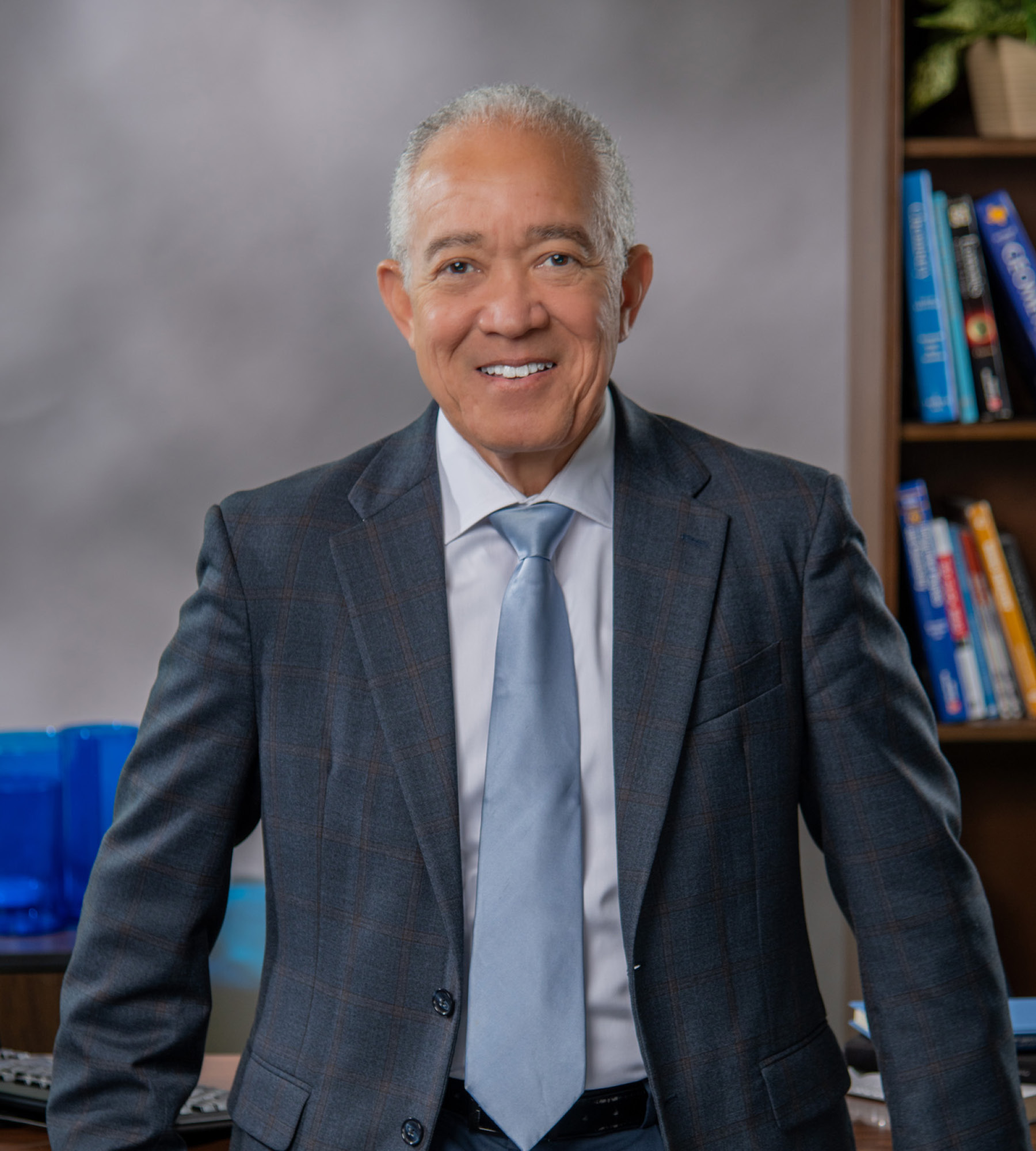
Mike Miles had the type of job that high school kids who grew up watching spy thrillers can only dream of: working on the Soviet desk in Washington, DC at the end of the Cold War.
A graduate of West Point, the United States Military Academy, he began his career as an army officer but soon transitioned to the State Department.
“Then I became a diplomat and served in Warsaw, Poland and Moscow, Russia,” Miles tells The CEO Magazine.

“I realized that education is the most important thing we can do to serve the country and the public.”
After starting a family abroad, he and his wife decided it was prudent timing to move back to the United States. As for the next step in his career?
“I thought about the most important role I could play to serve public interests,” he explains.
“I realized that education is the most important thing we can do to serve the country and the public – and I still think that it’s one of the most important things you can do.”
That realization led him to teaching. Now, as the Superintendent of the Houston Independent School District (ISD), Miles oversees a large urban district comprising 273 schools and 170,000 students.
Miles was appointed to the role in 2023, as part of an intervention from the state of Texas.
“That means the state took over the district by replacing the elected board with a board of managers,” he explains. “They also appointed a superintendent: me.”
Their mission was clear.
“We were to turn around the district and eventually hand it back over to an elected board,” he says.
Houston ISD’s schools were flailing: Texas has an A through F rating system, and when the intervention started, there were 121 D and F schools.
“We had to get that down to no schools with multiple years of D or F,” he says.
To do so, Miles introduced sweeping changes, including rolling out the New Education System (NES) program in 130 schools. The model includes a centralized curriculum to create a strong academic foundation.
Classes such as the Art of Thinking teach problem-solving and critical-thinking skills and students have opportunities to travel to expand their horizons. To facilitate this, Houston ISD has taken back much of the individual schools’ instructional autonomy.
“We have put in place what the profession calls a ‘managed instruction’ theory of action, meaning how we were going to define and improve the quality of instruction, the principals’ instructional abilities and the evaluation of teachers and principals around instruction, all of that is done centrally,” he explains.
The model has been key to turning around Houston ISD’s performance. In 2023, only 11 now-NES schools earned an A or B rating; last year, that number jumped to 94. Those schools outside the NES orbit have retained autonomy over budgets and curriculum, although the quality of instruction is centrally run to ensure that teachers are evaluated the same way in all schools.
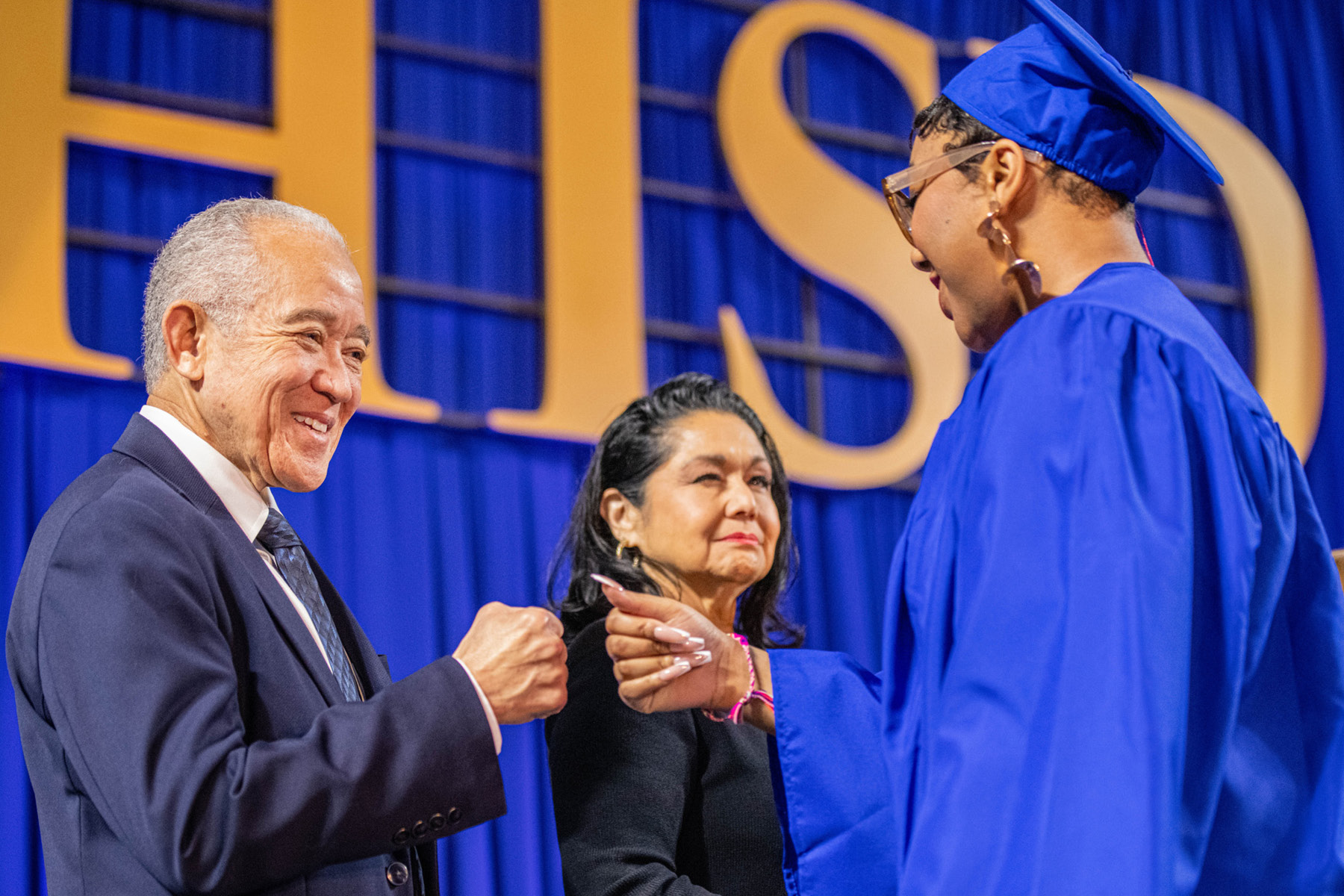
“We’re narrowing that achievement gap.”
That also means they follow a Pay-for-Performance model Miles has rolled out, with teachers rated through a Teacher Excellence System or TES.
Now that the district is closing in on the third year of the transformation, Miles explains that the goal is to allow those schools with the highest levels of performance to have full autonomy over everything.
Referring to it as ‘level five autonomy’, he says that four schools have put their hand up, having met the criteria: four years in a row of an A rating from the state and a minority achievement gap of less than a 25 percent, with that closing by five percentage points in three years.
What has also kept Miles busy since he started are the other facets to the intervention exit criteria: complying with state and federal special education law and policy and having a stronger, more effective governance system.
“My team and I have had the intervention as a backdrop for what we’re supposed to do, but I have approached it like any other superintendent and created a vision for the district and then taken action to achieve that vision,” he explains.
That vision?
“Number one, it is to significantly narrow the achievement gap. Secondly, to prepare kids for the world and workplace in 2035,” he explains.
“If we look at how fast the world is changing, and the workplace, one could argue that it’s even more important now, in a world where high-skill, high-wage and high-demand jobs are what our kids need to aspire to, for them to be able to read at grade level.”
Miles knows that in many places, vision statements are often little more than phrases to hang on the wall.
“For us, it guides the work – and we’ve been working on both pieces with some urgency for almost three years now,” he says.
He and his team are seeing the rewards of their efforts.
“We’re narrowing that achievement gap,” he says.
Houston ISD’s lowest-performing students and its students in the lowest-performing subgroups have raised their achievement over the past two-and-a-half years by 12–14 percentage points, based on the national average at the NWEA MAP assessment and the Texas STAAR exam.
“Our higher performance subgroups are also improving by three or four percentage points relative to the nation’s similar subgroups,” he says.

“We are getting the outcomes for kids that they deserve to get and that will better prepare them.”
Now that the first part of the mission is on track, Miles explains that the team is shifting its focus towards ensuring students are ready for the world in 2035 – or, in fact, even earlier.
“I’ve adjusted that to 2030, because the world and workplace are moving faster than most people think,” he says.
He’s also taken care to ensure that the human competitive advantage isn’t overlooked in preparation for a heavily AI-enabled workplace.
“They are areas like empathy, moral and ethical judgment and reasoning, decision-making, leadership and working in teams,” he says.
“Businesses might call them soft skills, but I call them year 2035 competencies, and that’s what we’re helping our students with.”
As Houston ISD raises the bar on academic rigor and increases the pathways and opportunities for a post-secondary education, relationships are playing a critical role.
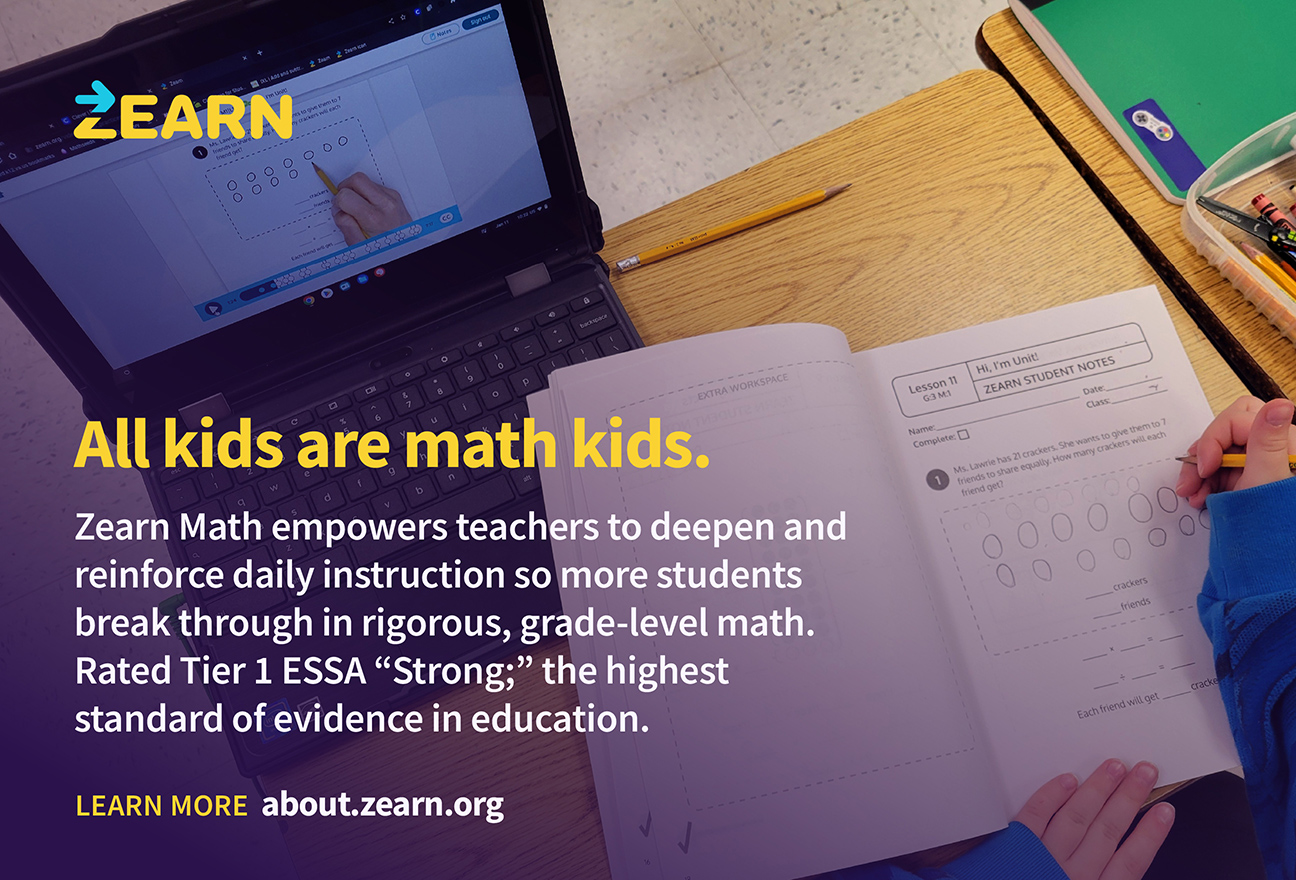
HISD recently signed an agreement with University of Houston-Downtown that allows students who achieve a 2.5 grade point average on core content to receive automatic enrollment. In addition, they have partnered with top-rated online math platform Zearn to strengthen classroom instruction in grades Kindergarten to Year 8.
Zearn ensures students build deep understanding and problem-solving skills, not just memorization, giving every child a strong foundation in math for long-term success.

Another key partner is Raptor Technologies, Houston ISD’s chosen school safety partner, providing software-as-a-service and mobile technology, as well as comprehensive training and consultation solutions across the entire school safety life cycle.
“Raptor supports our schools’ foundation of safety and wellbeing including emergency management, campus movement, student wellbeing and safety training and compliance,” Miles notes.
He explains that such partnerships are essential for the success of a public education system that is currently under threat.
“I’ve said publicly that I think the American public education system is in trouble,” he says. “It’s not responding while it’s not adapting, and it hasn’t been able to raise student achievement over the last 20 years, especially for our underserved populations. The whole system needs to be redesigned.”
There’s still a lot of work to do, he says, but Houston has been redesigned.
“We are getting the outcomes for kids that they deserve to get and that will better prepare them,” Miles concludes.
 RELATED ARTICLES
  SPOTLIGHTS ON LEADERS


 Home
Home
 Podcasts
 Covers
 Be Featured
 Community