Language
You can read the magazine in one of the following languages

6-min read

 Bookmark now

 Copy Link
When the end of the year rolls around, the only thing Australians dread more than Christmas shopping is fire season, and the annual worry about how bad fire season will be has instilled in the populace a different way of seeing the elemental threat.
That’s why the nation is home to some of the most innovative fire safety companies in the world. Endfire Engineering is among that collective of fire safety organizations informed by historically awful conditions.
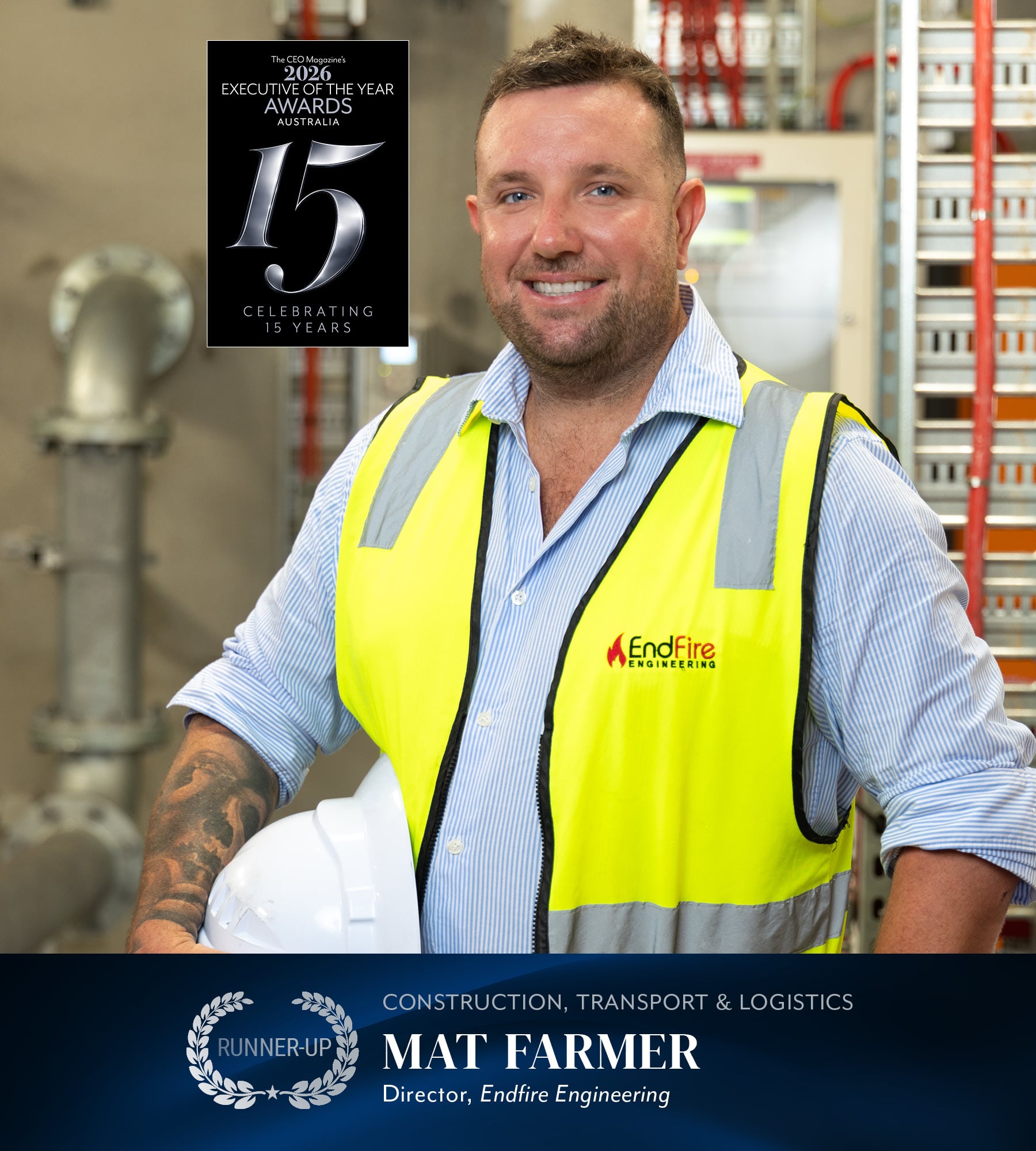
The company’s fire safety and security solutions can be found across a range of industries, from mining to healthcare and government to property development. And this year, its Director Mat Farmer was named runner-up in the Construction, Transport and Logistics category at The CEO Magazine’s 2026 Executive of the Year Awards – Australia.
“Without question, the biggest driver of our success has been our people,” he says. “We’ve created a culture where everyone is aligned around where the business is going.”
“Without question, the biggest driver of our success has been our people.”
Farmer joined Endfire Engineering as a Project Supervisor in 2008 after starting his career as a tradesperson.
“I didn’t finish Years 11 and 12. I completed my trade, but I always had this feeling that there was something more I wanted to achieve,” he recalls. “Eventually, I packed up my car and left the Gold Coast for Townsville.”
Farmer arrived in the Far North Queensland city without a job lined up or even a career plan.
“I just backed myself and believed there was a bigger opportunity out there if I was prepared to go and find it,” he adds.
That opportunity was Endfire Engineering, a one-stop shop for fire protection solutions. Despite some early hurdles, Farmer seized the chance he’d discovered and made the most of it.
“I worked my way through different positions, continued learning, took on more responsibility and eventually had the opportunity to take ownership of the business,” he explains.
In 2023, Farmer became its sole Director. The elevation meant big changes throughout the company; those changes have helped Endfire Engineering grow organically from a US$10.5 million (A$15 million) business to one with around US$49.2 million (A$70 million) in revenue, with continued growth on the horizon. Farmer says he’s living proof of the company’s values.
“As the business has grown, we’ve been able to unlock the potential of long-term employees who previously worked predominantly in operational roles and give them opportunities to step into management and leadership positions,” he says.
“Watching those people take ownership, make decisions, lead their teams and genuinely thrive has probably been more satisfying to me than any financial milestone.”
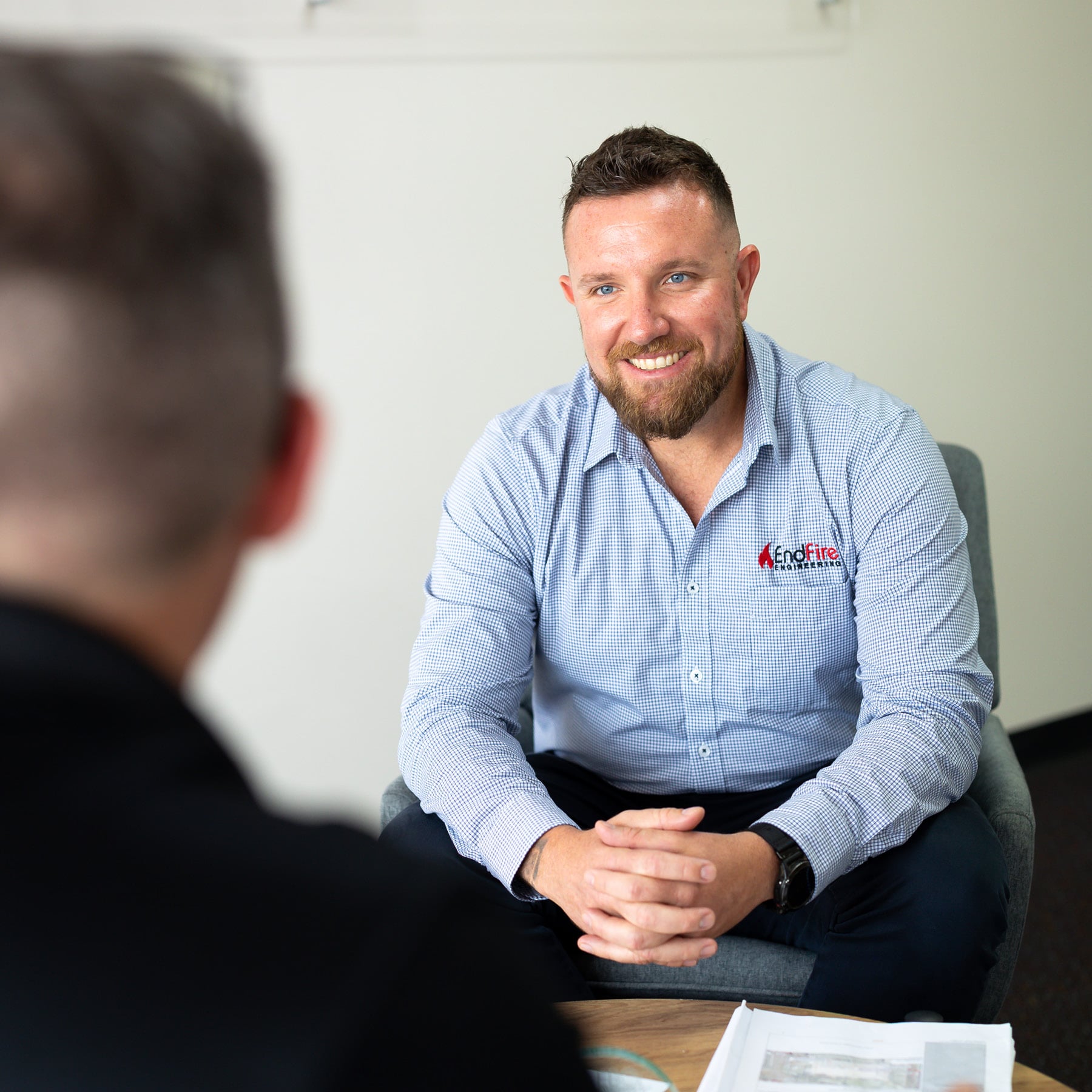
“I think that willingness to listen and give people a genuine voice has created real alignment and ownership within the business.”
People who have been with Endfire Engineering for years, much like Farmer himself, have received a new lease on their careers.
“My role is increasingly about supporting them and providing guidance when needed rather than making every decision myself,” he reveals.
It’s a collaborative approach to strategic planning that Farmer helped shape once he took over the business.
“We established executive strategic planning sessions and brought our key people into the process of determining not only where we wanted Endfire Engineering to go, but how we were realistically going to get there,” he says.
But it wasn’t a process where everyone present simply agreed with Farmer’s agenda.
“Some of the goals I initially put forward were probably unrealistic,” he admits. “I wanted a leadership team that was confident enough to tell me that.”
They did just that, challenging assumptions, raising concerns around workloads, resources and burnout and helping to develop a plan that was ambitious yet achievable.
“I think that willingness to listen and give people a genuine voice has created real alignment and ownership within the business,” he says.
“When people have contributed to the plan, they understand why we’re doing something and are much more invested in achieving it.”
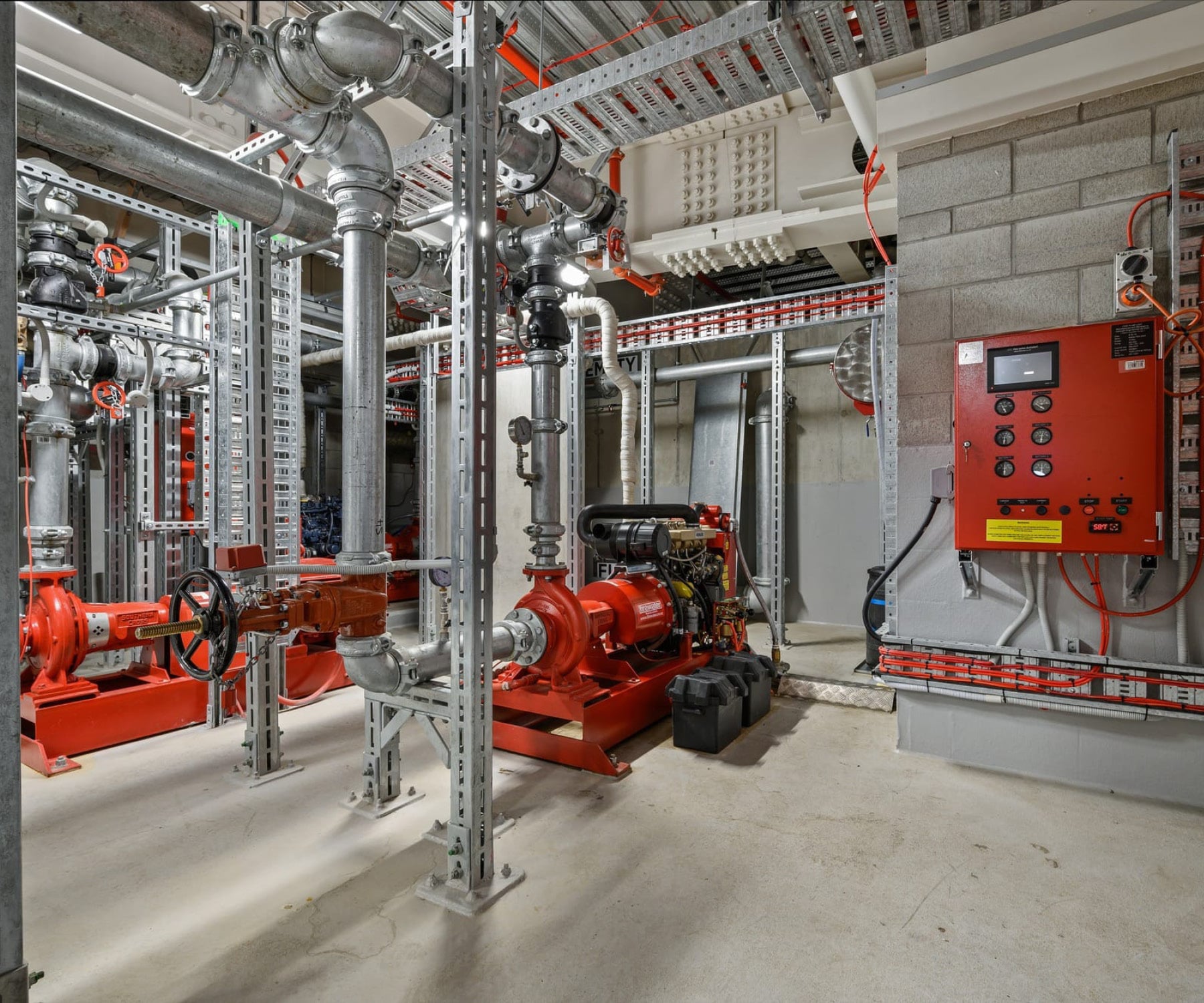
Endfire Engineering’s plan involves imbuing projects with the highest-quality fire protection infrastructure, from sprinklers and hoses to advanced detection and warning systems. All systems are designed in-house, as are installation, compliance and training procedures.
“The construction industry is in a unique position. We’re facing a significant skilled labor shortage at the same time as Australia is entering an extraordinary period of major infrastructure investment,” Farmer says.
Airport upgrades, new hospitals and correctional facilities, defense infrastructure, large commercial projects and, of course, data centers and the impending 2032 Olympic Games in Brisbane are all in need of the kind of work at which Endfire Engineering excels.
“For me, the biggest challenge isn’t simply winning the work, it’s making sure we have the capability to deliver it successfully,” he says.
The company’s strategy is to prepare as though a project is already a done deal.
“We ask ourselves beforehand, ‘If we won this tomorrow, how would we deliver it?’” he says.
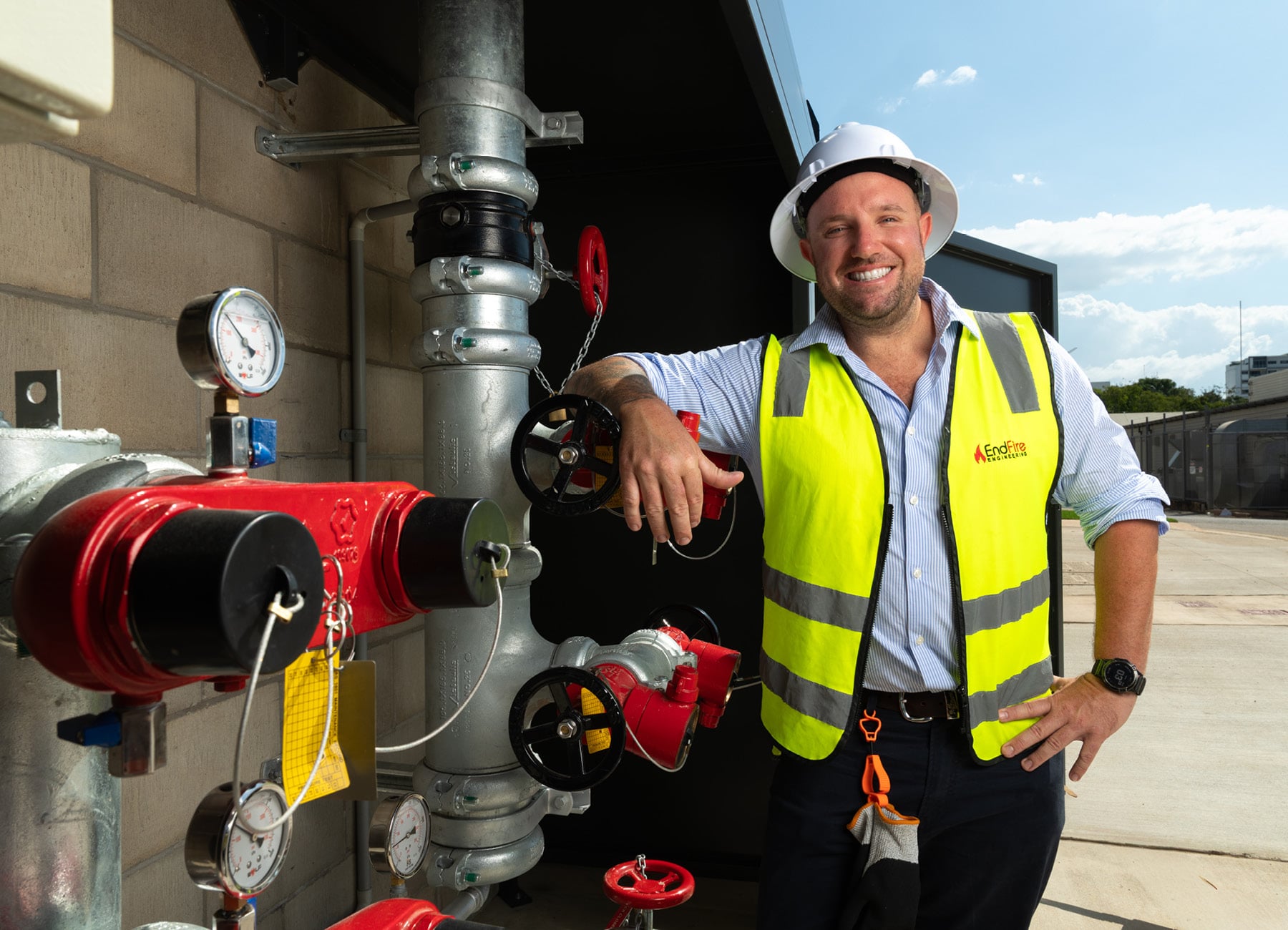
“The biggest challenge isn’t simply winning the work, it’s making sure we have the capability to deliver it successfully.”
Then it’s a matter of engaging with suppliers and original equipment manufacturers both at home and overseas to bring the best new technologies, systems and products to the project. It’s an approach to business Farmer has taken away from the office.
“I’ve continued studying in my spare time and have recently become qualified and licensed in both wet and dry fire design, as well as certification,” he says.
“Combined with my background in installation and construction, that’s allowed me to become heavily involved in early contractor involvement with our Tier-1 construction partners.”
It’s the kind of development Farmer encourages across the Endfire Engineering team, development he sees as an investment rather than a cost.
“Ultimately, our ambition isn’t to become the biggest fire protection contractor in Australia; it’s to become the best,” he says.
“We want Endfire Engineering to be known for being reliable, knowledgeable and capable, for delivering quality work and, most importantly, for being the contractor our clients can turn to when they need a solution.”
And the word is spreading. Farmer’s nomination in the Construction, Transport and Logistics category at this year’s Executive of the Year Awards was, he says, a surreal moment of recognition.
“I was looking at the caliber of awards and some of the previous winners and thought, ‘How did I end up here? I’m just a bloody ringer from the Top End,’” he says.
“It was incredibly humbling, but it also gave me an opportunity to stop and reflect on what we’ve built and the journey we’ve been on.”
His biggest takeaway from this process? It’s all tied up in the people around him.
“I don’t really like the idea of people simply ‘following’ me,” he admits. “I’d rather say they’re coming with me. We’re on this journey together, we back each other and there’s a genuine sense that we’re building something together.”
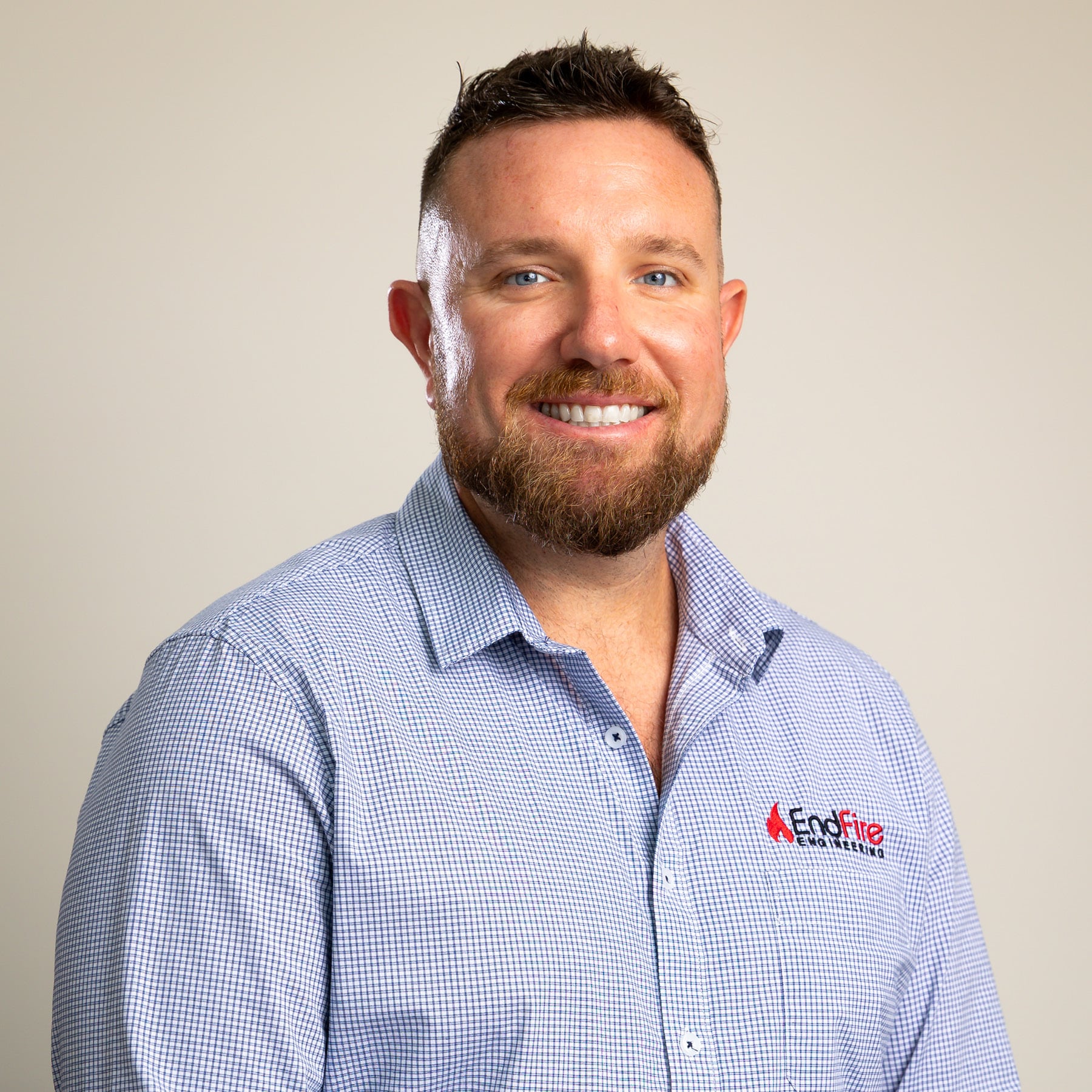
“We’re on this journey together, we back each other and there’s a genuine sense that we’re building something together.”
And that odyssey continues. Endfire Engineering has already expanded beyond its traditional headquarters in Queensland and the Northern Territory into Sydney, where it has been a part of some of Australia’s most involved infrastructure projects to date, including the Western Harbour Tunnel and the Coffs Harbour Bypass.
“We’ve now established an office in Adelaide and recently secured work on the Torrens to Darlington Project, the largest infrastructure undertaking in South Australia’s history,” Farmer says.
“We’ve also secured significant defense work in Western Australia and Malaysia and are actively pursuing other opportunities internationally.
“My view is fairly simple: if there’s one project, why can’t there be two? And if there can be two, why not three?”
While the company’s footprint and trail of quality may be spreading like the proverbial, Farmer says there have been plenty of mistakes along the way. If anything, they’ve helped.
“Some have hurt, but they’ve also been responsible for some of the most important lessons I’ve learned,” he says.
“Success isn’t about getting everything right. It’s about learning, continuing to move forward and having the courage to keep backing yourself.”


 Home

 Podcasts

 Covers
 Be Featured

 Community