Language
You can read the magazine in one of the following languages

5-min read

 Bookmark now

 Copy Link
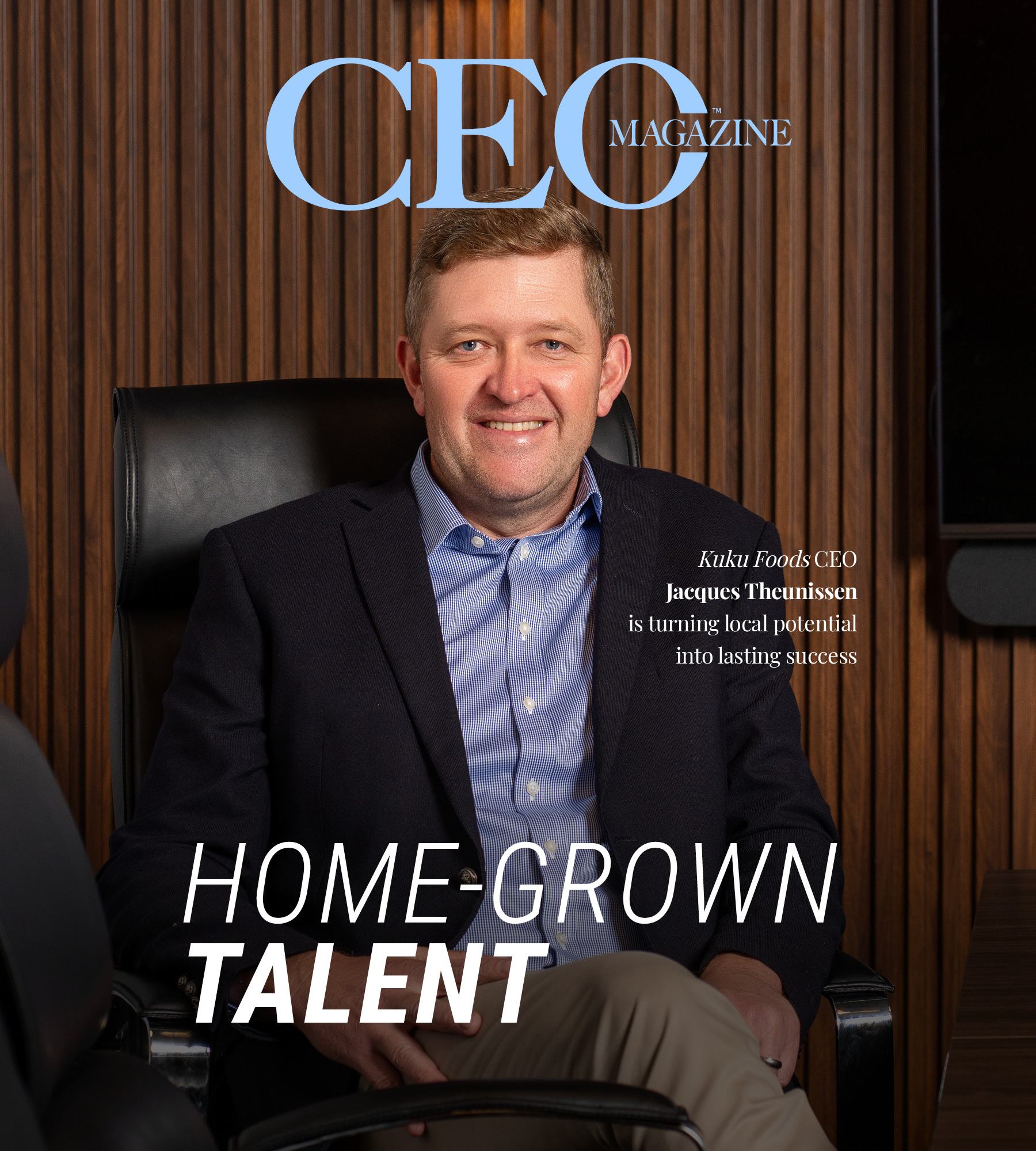
When Jacques Theunissen began working part-time as a waiter during his school years, he probably didn’t realize he was at the beginning of a journey that would one day see him leading one of East Africa’s fastest-growing quick-service restaurant businesses.
Under his leadership as CEO, Kuku Foods – the franchise operator of KFC in East Africa – has rapidly expanded across the region and now directly employs over 1,600 people.


But for Theunissen, running the business is about far more than just scale.
“It’s an amazing brand that aligns very much with my values,” he tells The CEO Magazine. “The investment in people and leadership is what’s kept me engaged and going into this business for such a long time.”
The business has become deeply linked to both his personal and professional life.
“It’s been a very interesting experience. KFC has been there for almost half of my life, and it has been an incredible journey,” he says.

Advertisement
Long-term prosperity for Kuku Foods goes beyond simply meeting profit targets, according to Theunissen, with trust and supporting people being essential parts of success for the business.
“If I can elevate as many people as possible and make a real difference and a real impact in their lives, I think we have achieved success,” he affirms.
As corporate leaders are acutely aware, managing a business is not often smooth sailing, with challenges being a natural part of the role. When Theunissen stepped into the role of CEO, he was tasked with turning around a loss-making operation.
“I think at that point we had just over 30 restaurants in total. Today, we have 75 restaurants and are a very healthy business,” he explains.

Advertisement
After more than doubling the business over the past six years, Theunissen has his sights set on continuing the transformation of Kuku Foods through tried and tested methods.
“We’ve grown by very responsibly deploying capital and funding, self-funding our growth out of the business itself,” he reveals.
In the past, the vast majority of suppliers were not local, making Kuku Foods susceptible to supply chain shocks. While it was far from an overnight process, Theunissen put in place a new supply chain localization strategy.
“In 2020, I think we probably had about 10 percent of items that we were buying locally, whereas today more than 99 percent of our items are sourced locally from approved suppliers that meet global standards,” he says.
“It is our job to make sure that we put the right systems and development programs in place to give people who work in our business as team members the opportunity to grow into leadership roles to achieve things they never thought possible,” he explains.
Bottom-line success isn’t the only recognition Kuku Foods has gained from the corporate turnaround, with the business receiving multiple international awards in recent years.
“We’ve won the Africa Franchisee of the Year Award twice. We’ve won developer of the year three times out of the last four years,” Theunissen says.
There’s no doubt that solid partnerships have played a central role in the transition Kuku Foods made to local suppliers.
“I’m a firm believer that business is built on relationships,” Theunissen adds.
The localization strategy could only succeed if suppliers were willing to invest in the business for the long-term.
“Our suppliers continued to invest even when we were not at scale, they believed in us, they believed in what we wanted to do,” he says.

Advertisement
Now, these relationships are creating value far beyond Kuku Foods itself. Some partners have even started supplying other countries, where Kuku Foods does not operate.
“There’s nothing that makes me happier than that,” he says.
Beyond suppliers of chicken, oil, packaging and fresh vegetables, which are all sourced through local suppliers across East Africa, Kuku Foods is also expanding technology, delivery and real estate partnerships. RSD BuildCo, a specialist in commercial, private and retail construction projects, is a key partner as Kuku Foods continues to add more restaurants.
Operating in Africa is a major advantage for Kuku Foods, according to Theunissen, as he believes the continent represents one of the world’s greatest growth opportunities.
“How do we put Africa on the map to show people that in Africa we can do things just as good or even better than the rest of the world? Because we have the capability,” he says.


In both technology and human capital, Theunissen has seen first-hand the potential offered by Africa to local people and investors.
“We have incredibly talented people in all of these countries where we operate and incredibly courageous people on this continent who are willing to invest and make big bets on the future. If you want to build tech for Africa, it’s going to be built by people in Africa for Africa,” he explains.

Advertisement
Africa’s demographics, too, are expected to create major long-term opportunities, with many young people working and innovating on the continent.
“I think it’s incredibly exciting. Africa is the place you want to be because this is where the next wave of growth is going to come from,” he says.
Theunissen’s goals reflect these positive signs as he continues to grow Kuku Foods all across East Africa.
“We have major ambitions to become one of the biggest KFC franchisees on the continent, if not the biggest,” he concludes.
 RELATED ARTICLES
5-min read
4-min read
 SPOTLIGHTS ON LEADERS



 Home
Home
 Podcasts
 Covers
 Be Featured
 Community