Language
You can read the magazine in one of the following languages

3-min read

 Bookmark now

 Copy Link
Sometimes, the hardest decisions in leadership are not about what to pursue, but what to walk away from – particularly when the consequences extend far beyond commercial performance.
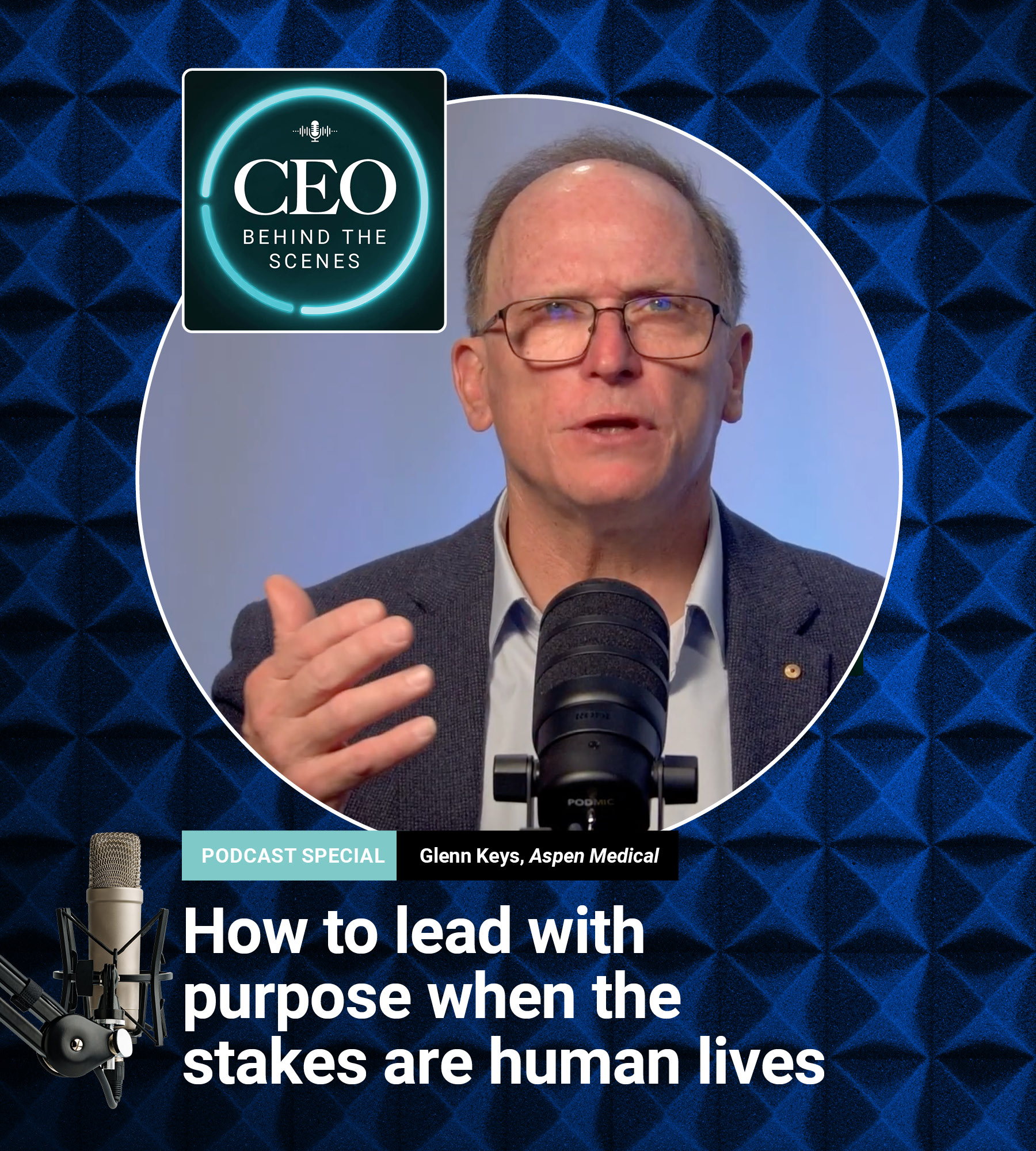
For Glenn Keys, Founder and Executive Chair of Aspen Medical, that distinction is fundamental to running a global healthcare business operating in some of the world’s most challenging environments.
“We are bold in what we do, where we go into environments where our staff may be at risk, but we are not risky,” Keys says.
Speaking on CEO: Behind the Scenes, Keys explains that the opportunities Aspen Medical declines are as important as those it accepts.
“If you can’t mitigate the risks to ensure that your staff will be safe, then you shouldn’t do it,” he says.
It’s a philosophy shaped by a career that began in the Australian Defence Force, where Keys learned that leadership depends on judgment, accountability and the willingness to draw on expertise beyond your own.
Those lessons now underpin his approach to building teams capable of delivering healthcare under extraordinary pressure, from conflict zones to remote communities.
“You need to get out of the way and let them get on with it,” he says.
Yet giving people autonomy does not mean relinquishing responsibility. Leaders must be prepared to absorb the consequences when decisions go wrong, rather than shifting blame onto their teams.
This is particularly significant in environments such as Ukraine, where Aspen Medical is helping accelerate the exchange of clinical knowledge between trauma surgeons, support prosthetics programs and advance research into PTSD treatment.

“What we love is when we can do ourselves out of a job.”
The measure of success is not simply delivering a service but creating meaningful improvements that endure long after the initial intervention.
“In actual fact, what we love is when we can do ourselves out of a job,” Keys says.
The same thinking informs Aspen Medical’s work with First Nations communities in Australia, where effective healthcare begins with listening, building trust and designing solutions alongside the people receiving care.
Purpose, however, also demands difficult commercial choices. Aspen Medical has rejected potentially profitable opportunities when the work conflicted with its values.
“We’ve walked away from business that did not align with our purpose,” Keys says.
A genuinely purpose-led culture becomes visible when employees independently question opportunities that don’t reflect the organization’s principles, but building that culture requires consistency from the outset, rather than treating purpose as something to introduce once commercial success has been achieved.
“If you just do it for the easy decisions and not the hard ones, people will see it’s just fluff,” Keys notes.

Listen to the latest episode of our CEO: Behind the Scenes podcast with Glenn Keys on Amazon, Apple or Spotify.
 RELATED ARTICLES
 SPOTLIGHTS ON LEADERS


 Home

 Podcasts

 Covers
 Be Featured

 Community