Language
You can read the magazine in one of the following languages

11-min read

 Bookmark now

 Copy Link
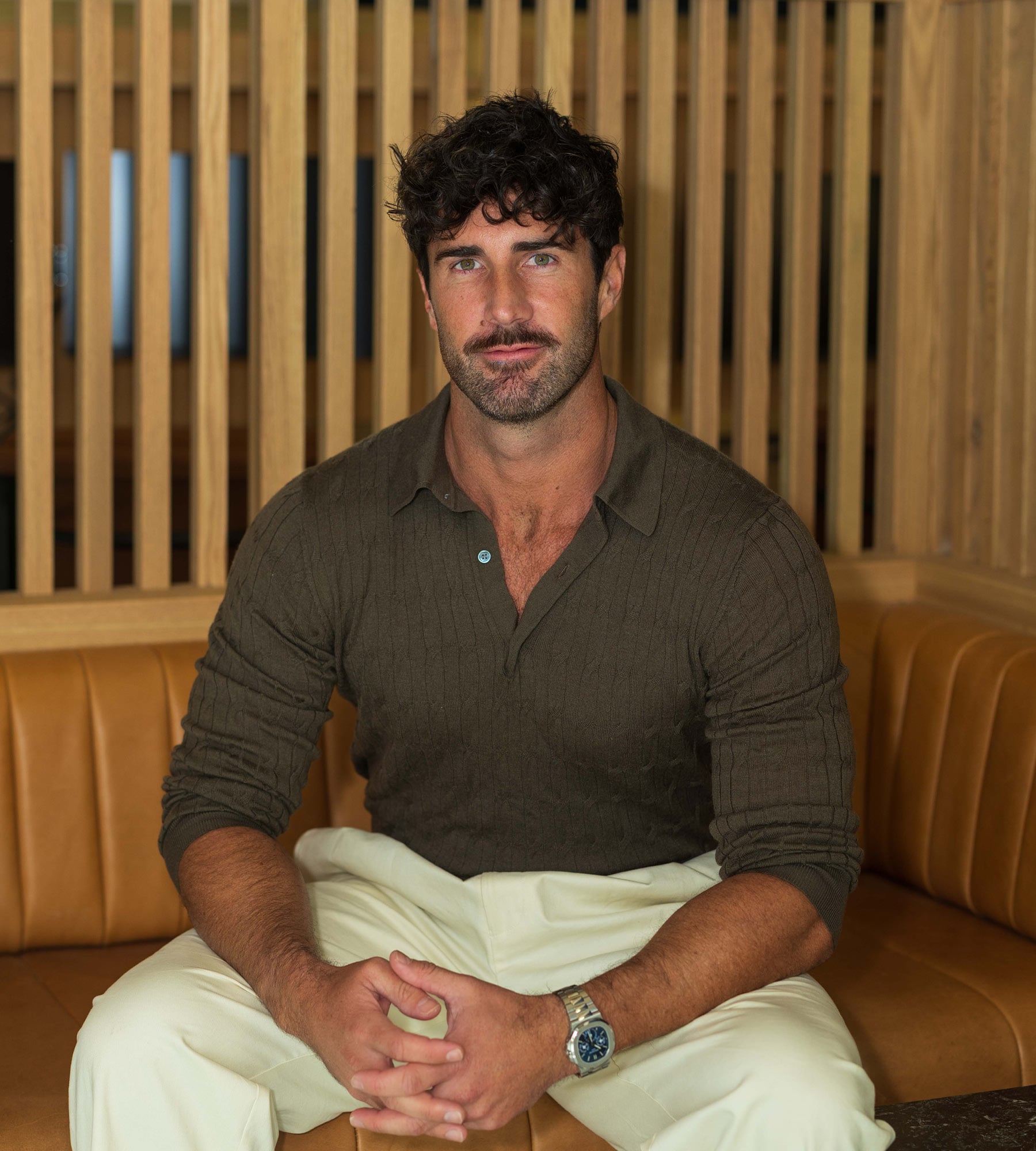
Christian Stevens never intended to become one of the most awarded mortgage brokers in Australia. After a decade of working in hospitality – mostly in events and promotions – he was looking for a new challenge.
Finance wasn’t on his radar, but fate had other plans. So when an opportunity to join a mortgage brokerage presented itself, the now CEO of Flint decided to take a chance.
“I came into the industry by accident,” he tells The CEO Magazine. “I’ve always had a love for marketing, and when the opportunity came up to join a brokerage, I quickly saw the potential to approach things differently.”


That approach was rooted in education. Rather than relying solely on traditional networking or referrals, Stevens began simplifying the complex process of mortgages for everyday Australians.
“From the start, my focus was on selling through education – breaking down what’s normally a complex process and helping people feel confident in their decisions,” he says.
He began sharing this knowledge on social media in simple, practical ways, and the response was overwhelming.
“I have generated billions of dollars of enquiries off the back of leveraging social media, without spending a single dollar on advertising,” he says with a grin.
Clearly, the formula worked. And what began as an experiment soon laid the foundation for Flint, the leading independent brokerage in Australia.
“Those early experiences taught me that broking didn’t have to follow the old playbook,” he reveals. “By combining a strategy-led approach with education and modern marketing, I was able to scale my reach and help far more people – that thinking became the foundation for Flint.”
Stevens credits Flint’s rise as a national powerhouse to building smart from the start.
“The key has been building strong foundations early and staying true to them as we’ve grown,” he says.
“Since the beginning, our focus has been on exceptional client outcomes, investing in the right people and creating a model where brokers can genuinely build something of their own.”


Flint has combined this with a clear growth strategy – attracting top talent, building specialist divisions and implementing systems and technology that allow scale without sacrificing quality.
“Brand has also been a major factor,” he adds. “We’ve used education and social media to reach people faster and more effectively than traditional methods, which has helped us attract both high-quality clients and top-tier brokers.
“That visibility has built a level of trust and credibility that’s hard to replicate.”
The next chapter of Flint’s story, Stevens says, is focused on expansion.
“Our first priority is rolling out state-based headquarters across the country. This isn’t just about adding more locations, it’s about becoming the first true national boutique brokerage in Australia,” he explains.
The aim is to combine local presence with national scale. Having physical offices in every major market will strengthen relationships, support brokers on the ground and deliver what Stevens describes as “a more personalized experience at scale”.
The second priority is growing specialist divisions like FlintInvest, FlintMedia, FlintAI, FlintEngine and FlintDirector – designed to provide tailored solutions for clients while giving brokers an edge.
“Every new vertical we launch is built around creating the most value for our brokers, our clients and the business long-term,” he says.


Finally, the third priority is investing in people, systems and technology.
“That means developing the next generation of brokers, growing our specialist credit and support teams, and ensuring our platform can keep scaling without losing the culture and quality that define Flint,” he says.
“We have a clear pathway for where we need to be – and we know the steps to get there. Our long-term vision is ambitious but achievable – to build a US$6.5 billion annual settlement network within five years, with an average broker efficiency of US$65 million per year.”
One of the most innovative aspects of Flint is its ownership model. In most brokerages, trail books – the recurring income stream from client loans – don’t belong to the broker. Stevens saw this as a fundamental flaw.
“The model came from seeing firsthand how most brokers in Australia work for years to build a trail book, only to later realize they don’t own it,” he points out. “In most brokerages, if you leave, you walk away with nothing – or you’re forced to sell it back at a discounted multiple.”
Flint changed the game. “At Flint, brokers own the asset they’re building. They’re not just earning an income; they’re building equity in a business that’s valuable and sellable.”
This shift has attracted brokers who want to operate like true business owners.
“This approach will reshape the industry because it attracts this different type of broker – one that’s entrepreneurial, driven and invested in their own success,” Stevens predicts.
“It also lifts the standard for clients because when a broker has skin in the game, they think long-term. And the result is a stronger, more sustainable industry that rewards the people actually creating value.”
The mortgage landscape is changing fast, and for Stevens, staying ahead means going all-in on technology.
“We’re a tech-focused brokerage, and we’ve made it a priority to be at the forefront of this wave,” he says. “The businesses that embrace technology – not just adopt it – will be the ones that lead.”
AI in particular, he says, will absolutely transform the industry.
“AI’s not here to replace brokers; it’s here to enhance them,” he insists. “The right technology removes repetitive tasks, speeds up processing, improves accuracy and frees brokers to focus on what really matters – building relationships and delivering solutions for clients.”


At Flint, technology isn’t just back-office efficiency. It’s a core differentiator.
“We’re integrating AI and automation across our processes, so we can deliver faster turnaround times, better accuracy and a more personalized experience,” he says.
“For us, technology is part of our competitive advantage and a key driver of our ability to scale nationally while still delivering the service and outcomes one would expect from a boutique firm.”
Central to that experience, Stevens says, is trust.
“Trust comes from clarity, transparency and delivering on your word. From the start, I’ve focused on making sure clients understand every step of the process. When people feel informed and in control, trust naturally follows,” he says.
Stevens’ approach is also grounded in honesty, even when things don’t go to plan.
“I’m upfront about the fact that we don’t always get it right,” he admits. “We’re dealing with complex transactions in a changing environment, and challenges are part of the job. What matters is how you handle them – owning the issue, fixing it quickly and learning from it.”
That mindset has become part of Flint’s culture.
“Every client interaction is about adding value, being responsive and following through,” Stevens explains. “And when we make mistakes, we treat them as opportunities to improve. Combined with consistent results, that’s how you build relationships that last well beyond a single deal.”
He notes that it’s these personal interactions that are most meaningful.
“Often, the most rewarding thing is the smallest; when you can genuinely change someone’s life for the better.”
For somebody who thrives on creating positive relationships, it comes as no surprise that Stevens believes culture is everything. Flint’s growth has been deliberate, but never at the expense of values.
“Culture means being client-first, supporting each other and maintaining a high standard in everything we do,” he stresses.
According to Stevens, recruitment plays a major role in protecting culture.
“We hire carefully to make sure new team members align with our values – not just the job description,” he says. “We invest heavily in training and mentoring, so everyone understands not only what we do, but also why we do it.”
Even as the company continues to expand nationally, Stevens is determined to maintain a sense of connection.
“Keeping that connection and collaboration you have as a smaller business is one of the challenges of scaling,” he admits.
“But that’s why we’ve built state-based headquarters, so even as we grow into a truly national brand, our teams feel supported, connected and part of something personal.
“The culture we’ve built is a huge part of what makes Flint different, and we work hard to protect it as we grow.”
Because culture is such an integral part of what makes Flint successful, it makes sense the company would be selective about who it partners with.
“It’s not just about capability, it’s about alignment,” Stevens says. “We look for partners who share our values, are committed to delivering exceptional outcomes for clients and operate with transparency.”


For Stevens, partnerships must be long-term and built on mutual trust.
“The right partnership should feel like an extension of our own team where we’re working toward the same goals and holding ourselves to the same standards,” he explains.
“We invest the time to build trust and make sure the relationship adds value for everyone, especially our clients. If the cultural fit isn’t there, no amount of opportunity will make it work.”
When asked about his proudest moment at Flint, Stevens doesn’t mention the awards or billion-dollar milestones. Instead, he points to people.
“There have been plenty of milestones – record months, mergers, industry recognition – but what I’m most proud of is the team we’ve built.”
Together with his business partner Redom Syed, for example, they’ve been able to take Flint to levels Stevens admits he couldn’t have achieved alone.
“Redom has been instrumental in our growth,” he says. “To operate at the scale we’re targeting, you need someone who can back the strategy, execute at a high level and make the vision real. And Redom is that person.”
Acknowledging that Flint is bigger than just him and Syed alone, his gratitude extends to the wider team.
“Seeing so many talented brokers, credit specialists and support staff choose Flint because they believe in what we’re building is incredibly rewarding,” he says, recalling a recent standout moment for the team.
“For our kickstart in July, we flew the entire team into Sydney from all over the country. Seeing everyone together, connecting, sharing ideas and building relationships in person was amazing.
“That sense of shared purpose and culture, while scaling to become the largest independent brokerage in the country, is something I’m deeply proud of. It’s proof that you can grow quickly without losing the values you started with.”
While his values remain unchanged, Stevens admits his mindset has inevitably had to shift as he’s leveled up.
“I’ve had to move from focusing on my own performance to building an environment where others can perform at their best,” he says.
“As a broker, success was measured by my individual results. But as a business leader, it’s about creating the structure, culture and resources that allow the entire team to succeed at scale.”


Stevens also admits that he’s had to learn to let go on occasion, which isn’t necessarily as easy as it sounds.
“In the early days, I was across every detail,” he notes. “But to grow something to the size of Flint took trusting the right people to lead their areas and make decisions.”
And it also required long-term thinking.
“As a broker, you’re focused on the next deal, the next month, maybe the next quarter,” he reveals. “But as a business leader, you must think in three- or five-year horizons and make decisions today that line up with the bigger picture.”
Stevens is quick to credit others for shaping him into the man and leader he is today. His parents instilled persistence and a passion for doing things the right way. His wife inspires him daily. And mentors such as Yasser Zaki and Marty Fox have provided invaluable perspectives.
But one moment in particular, he credits as life-changing – spending one-on-one time with Richard Branson on Necker Island.
“It’s something I’ll never forget,” he confirms. “His quote, ‘Train people well enough so they can leave, treat them well enough so they don’t want to,’ is one I’ve built Flint on.
“It’s a simple idea, but it’s shaped the way I think about leadership, culture and building a business that people want to be a part of for the long-term.”
Those lessons have also shaped initiatives like SheInvests, Flint’s female-led platform empowering women in property and finance.
“It’s about giving women the tools, confidence and community to take control of their financial future,” Stevens says.
If Stevens’ journey has taught him anything, it’s that breaking the mold can lead to some incredible outcomes.
“You don’t have to follow the traditional path to build something extraordinary. If you’re willing to think differently, back yourself and surround yourself with the right people, you can change the game in your industry,” he says.
“Flint was built on a simple belief – that we could create a business that puts clients and brokers first, delivers exceptional outcomes and grows faster by doing things differently. That belief has taken us from an idea to the fastest-growing and leading independent brokerage in Australia.”
For Stevens, the story is just beginning.
“I want people to know that it’s possible to scale, innovate and disrupt without losing your values – and that the right mindset and partnerships will take you further than you ever thought possible.”
 RELATED ARTICLES
11-min read
6-min read
 SPOTLIGHTS ON LEADERS



 Home
Home
 Podcasts
 Covers
 Be Featured
 Community