Language
You can read the magazine in one of the following languages
11-min read

 Bookmark now

 Copy Link
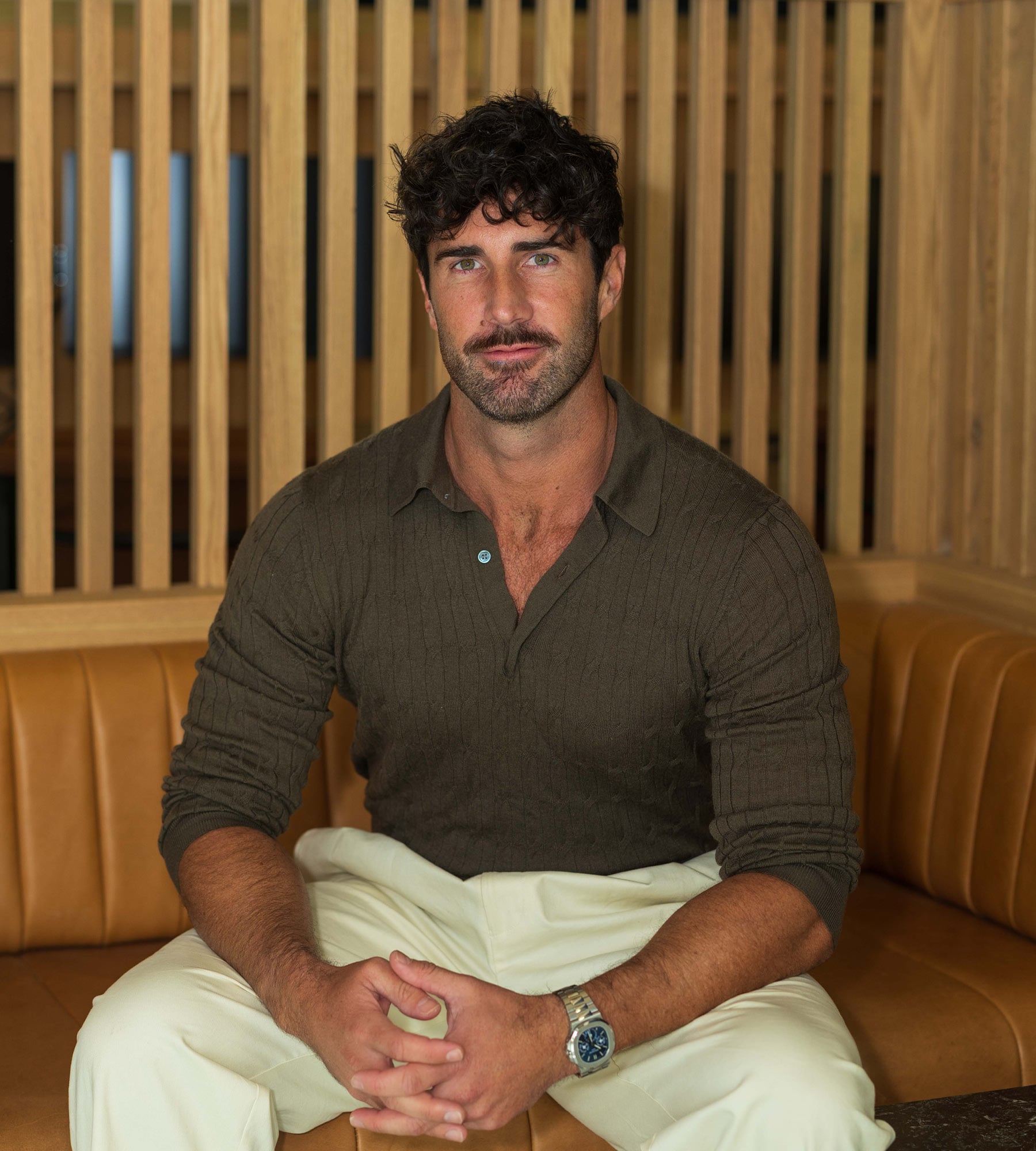
It’s late in the afternoon when Dr Chris Douglas finally sits down for our conversation, coffee in hand.
“It’s been a pretty crazy day today,” he tells The CEO Magazine, with a smile. “I just battled the traffic across the Harbour Bridge.”
His voice is surprisingly calm, considering the day he’s had. But it soon becomes evident that for Douglas, someone who’s used to moving fast while thinking long-term, the pace is nothing new. As Founder and CEO of Histopath Diagnostic Specialists (HDS), one of Australia’s leading pathology labs, his days are often full-throttle.
But right now, there’s something else in the air that feels more like anticipation. It’s easy to see why – Douglas is no longer just running a pathology lab. He’s quietly reinventing what diagnostics, patient care and even medical careers will look like in the years to come.
To understand where HDS is headed, it’s helpful to go back to when it began. Not just when the company was in the thick of the COVID-19 pandemic, becoming a household name for pre-flight testing for the virus, but long before that.
“Our core work is surgical pathology,” Douglas explains. “If you have a skin cancer, biopsy or a resection of a tumor, that comes to our laboratory and our team of pathologists makes the diagnosis.”


It’s the invisible work that sits at the heart of modern medicine, giving the final say on what kind of cancer a patient has, how advanced it is and what kind of treatment will follow. And for decades, that work has looked the same: lab coats, microscopes and physical slides for the specimens to rest on, waiting for their close-up.
But even before the pandemic pushed the entire healthcare system into a pressure cooker, Douglas could see that model wouldn’t hold.
“There’s a worldwide shortage of pathologists. There’s also a shortage of scientific staff who need to support us,” he points out. “That’s the environment we work in – costs are increasing, and there is difficulty within the health system in general.”
So at HDS, Douglas decided on a bold, new path where thinking differently became the norm. The result has been revolutionary.
“We’ve packed away our microscopes,” he says. “We now scan the slide and produce a digital image. It’s what radiology did with X-rays. And we’re the only practice in Australia that’s fully digitized.”


The shift from analog to digital and from physical to cloud-based has transformed the very nature of pathology. Now, it’s no longer tied to a single room, city or even time zone. The work can happen from anywhere with an internet connection.
“We centralize all of our processing in Sydney. But now, we have pathologists in Melbourne, Brisbane, the Gold Coast, Dubbo and Canberra,” Douglas says. “As long as they can connect with their computer, they can report cases.”
More than flexible, this new model is scalable as well. And in a country like Australia, with vast rural regions underserved by traditional health services, that matters.
“Australia is geographically challenged because of the centralization of the cities,” he says. “In rural towns, there are very few pathologists. But now, there can be.”
Digitizing the workflow hasn’t just made pathology mobile, it has also opened the door to a new kind of intelligence. Ever the pragmatist, Douglas has stepped through that door carefully.
“We have AI for prostate cancer diagnosis. It’s a generative, deep-learning model that’s highly accurate,” he says.
“We can diagnose very small cancers, those very early cancers, with the assistance of AI models.”


HDS is also applying AI to skin cancer, including melanoma. But that’s only part of the story. The real power, according to Douglas, is in AI’s ability to improve the safety net.
“One of the biggest issues in pathology is errors,” he reveals. “The worst thing we can do is get something wrong. AI can really help us make sure we don’t make a diagnosis on the wrong patient or perform a mastectomy on the wrong side.”
That’s where one of the company’s most promising tools comes in – a digital assistant the team calls ‘Wingman’.
“When we dictate our reports, Wingman will identify medical words, create the structure and check for consistency between what we’re saying and the patient’s clinical history,” Douglas explains.
“If there’s a discrepancy, like we’re referencing the wrong breast, for instance – it will flag that.”
Of course, innovation is never as simple as flipping a switch.
“It’s been a rugged journey,” Douglas admits. “We’ve had to develop a lot of this on our own.”


There was no textbook. No off-the-shelf solution. Just a global challenge and a willingness to rethink the system. At one point, Douglas even took a world tour to see how others were responding to similar pressures with regard to staffing.
“I looked at Mayo Clinic and saw what was happening in France and Sweden – there’s progress in Europe. They’re probably a bit ahead of us now because they’re in even more dire straits,” he acknowledges.
To make the tech work back home, HDS has built its own middleware with the help of Labflow, an Australian tech company, to stitch its various systems together.
“I almost feel as though I’m running an IT business these days rather than a pathology business,” Douglas muses. “But we’ve made it seamless.”
Much of the company’s progress has depended on the partners it’s chosen to work with. And Douglas doesn’t take these relationships lightly.
“We look for partners who are agile and responsive,” he says. “We enjoy working with those who think outside the box and are trying to do things differently.”
Sectra, a Swedish tech company, has helped HDS build its digital backbone.
“They are our digital platform – they’ve been digital leaders in radiology for many years and are now becoming involved in pathology,” he adds.


Partners, including Leica and 3DHistech in Budapest, manufacture their high-powered scanners. Each company also came with its own platform, quirks and limitations, which meant integration was a long road.
“We’ve had to do a lot of custom middleware development to get the systems talking to each other,” Douglas says.
Another trusted partner is Roche, whose openness to experimentation has fueled much of HDS’ testing innovation.
“They’re a very innovative company, and they’ve been happy to look at different ways of doing things,” he notes.
Beyond digitization, Douglas is also passionate about making pathology more human and accessible.
“There’s a philosophy we subscribe to, which is the idea of bringing pathology to the bedside,” he says.
Thanks to digitization, a patient can now sit with their GP and see their actual pathology images on an iPad – with overlays, annotations and insights. It’s a far cry from the days of vague charts and cryptic reports.
“Patients actually want to know,” he insists. “That’s something we learned in the pandemic. They take an interest in what pathology is and want to be involved in their own care.”


Even more, with digitization, turnaround time has been greatly reduced.
“Turnaround time is critical to patients, and we know there’s a lot of pressure in hospitals and big practices – it’s taking them weeks to get through work,” Douglas says.
“By automating, digitizing and applying AI, we can speed that up. We can get results back to people and get them treated quickly. It’s really rewarding.
“But the most important thing is, all of us in the medical community can keep focused on the patients. That’s the critical thing.
“People need to be involved as much as possible in their own care. As long as we keep these fundamental principles, we can keep AI and innovation going in the right direction.”
The work of HDS isn’t just changing care in Australia, it’s also starting to ripple out. Recently, Douglas and his team were invited to Tonga to consult on how the Pacific Islands might adopt a digital model.
“The Pacific Islands, as a whole, are really struggling. They don’t have resources, and they don’t have pathologists on-site who are able to report in the way we would,” he explains.
“They rely on fly-in, fly-out specialists. But if they were to digitize, we could become part of their ecosystem.”


It won’t be a quick fix, he acknowledges. But it’s a step toward something much bigger – healthcare that’s not limited by geography or legacy systems.
“We’re really proud of what we’re doing here, visiting and providing insights they need to thrive,” he says. “They need a lot of help. But it’s something we’re starting to work through – how to give them the infrastructure and IT to make this work.”
While locations in the Pacific Islands are up against cyclones that can completely destroy their infrastructure and ability to connect to the internet, Australia continues to have its own limitations as well.
The lack of internet connectivity and reliability poses a significant constraint to innovation and is a consistent point of frustration for Douglas.
“Besides being ahead of what’s available to us, the internet is one of our biggest challenges,” he says. “Particularly, the speed of the internet in remote areas.”


Even in some major cities, Douglas notes, upload speeds aren’t sufficient for the massive files generated by high-resolution pathology images.
“We’re looking at big images and writing reports remotely,” he explains. “If the network can’t handle that, it slows everything down.”
It’s a reminder that the technological process is never just about the tech itself; it often centers on the infrastructure that supports it. In Australia, it continues to be a work in progress.
For Douglas, the ability to look at things differently is a gift. When it comes to everything HDS built during the pandemic, nothing has faded. Instead, it’s being repurposed.
The team is actively reengineering its pandemic infrastructure to suit new kinds of care, including sexually transmitted infection (STI) testing.
“We’re trying different ways of doing things,” Douglas confirms. “We’re looking at STI testing, using some of the equipment we used in airports during the pandemic.
“We’re looking at repurposing that equipment we used on-site at a clinic, where people can go and be tested immediately and treated immediately, if necessary.
“That’s the point-of-care model we’re working on. Again, it’s new technology and not ready to be put into the community yet. But those are the sorts of projects we have going on behind the scenes.”
When asked what pathology will look like 10 years from now, Douglas doesn’t hesitate.
“There’ll be a lot more automation and end-to-end processing,” he predicts. “Right now, much of the work is still manual. But there are machines coming online, and we’re already integrating some of them.
“In 10 years’ time, those machines will have gotten to the point where they’re suitable to process specimens through. At the moment, they’re not perfect – nothing’s perfect at the moment. We are still in the process of validating and trying to work out how to get them to that point.
“But definitely, within the next decade, there’ll be automation and AI in surgical pathology.”
He also sees AI becoming more diagnostic – not replacing pathologists, but complementing them. And for those still resisting, he offers a story.
“One of my pathologists is in his 70s. And he was the first to go digital,” he says. “I asked him why. And he said, ‘Well, there was a time when people looked at a car and said there’s nothing wrong with the horse – I don’t want to be the last person riding the horse.’”


Douglas laughs at the memory, but not the message.
“We’re in a period now where people are anxious about these changes and trying to understand what digital and automation mean. What does AI mean? But we have to embrace it,” he stresses.
“The doctors and pathologists who don’t embrace AI will be on the sidelines. It’s not going to put us out of work. Doctors will never be out of work. But this will be a big change to what they do and make life a lot easier for them.
“It’ll also be better for patients. At the end of the day, if a pathologist’s workflow can be more efficient, more accurate and have more assistance in terms of quality control checking, that is much better for the patient.”
For a doctor trained to diagnose tissue under a microscope, Douglas’ career path has been anything but predictable.
“It absolutely blows my mind,” he reflects. “I never expected to be doing this and at the forefront of innovation.”
Yet here he is, leading Australia’s only fully digitized pathology lab and helping shape what modern healthcare can become. By doing that, he’s reminding the entire industry that the future isn’t something to be feared – it can be built more humanly and more deliberately, piece by piece.
“We have to do things differently in medicine as a whole,” he says. “The standard ways of doing things should always be challenged. That’s the only way we’re going to keep moving forward.”
And forward, in Douglas’ world, is exactly where things are headed.
 RELATED ARTICLES
 SPOTLIGHTS ON LEADERS



 Home
Home
 Podcasts
 Covers
 Be Featured
 Community