Language
You can read the magazine in one of the following languages

5-min read

 Bookmark now

 Copy Link
Most people never think about semiconductors. Yet these tiny chips sit at the heart of modern life, powering everything from smartphones and vehicles to data centers and the AI systems that are transforming industries around the world.
Behind every chip lies one of the most complex manufacturing processes ever developed, where precision is measured in nanometers and even the smallest disruption can carry enormous consequences.
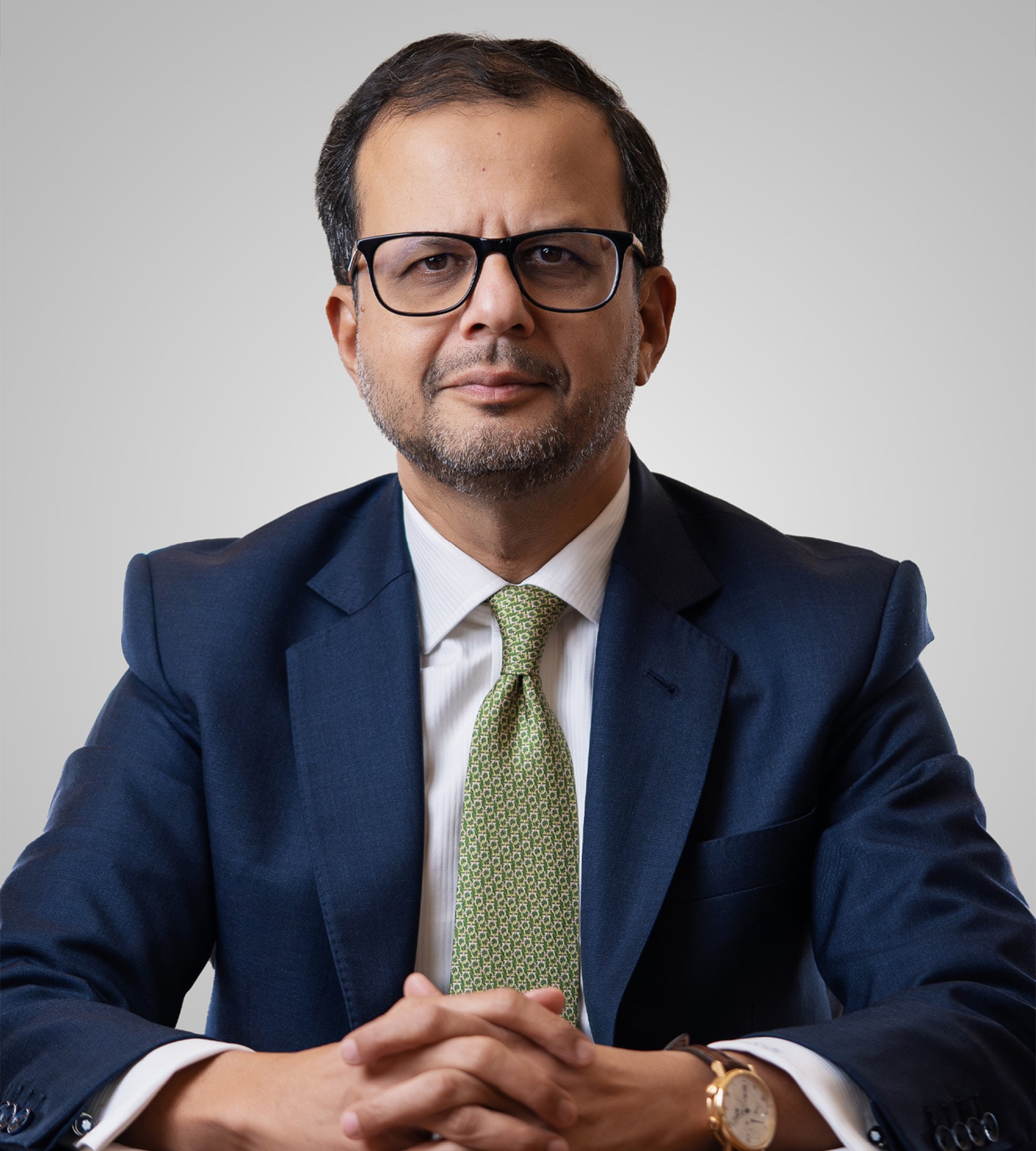
Few people understand that reality better than Anthony Lau. With decades of experience spanning wafer fabrication, assembly and testing operations, he has a deep understanding of the challenges semiconductor manufacturers face every day.
It’s a perspective that has shaped his approach to leadership and customer service.
“Because the products are so sophisticated and complex, customers depend on us to help them,” Lau tells The CEO Magazine. “I often tell my teams that our mission doesn’t end when we install the tool.
“Our real value is the value we continue to create for customers long after installation.”
Today, Lau leads the deep ultraviolet lithography systems that sit at the heart of global chipmaking. But he’s spent several years building the case that the machine is only the beginning.
Modern lithography, Lau says, is the most complex manufacturing system ever built by humankind. And its performance depends on far more than hardware alone.
“The scanner is not plug-and-play equipment,” he emphasizes.
“Application optimization, data analytics, predictive maintenance, application engineering and rapid service execution are very important.”

“Success in the China semiconductor industry requires global discipline and local understanding – there’s no trade-off.”
This conviction has driven significant investment in a comprehensive support ecosystem across China, including local engineering capability, customer support centers, remote diagnostic infrastructure and technical training facilities.
When the COVID-19 pandemic closed borders in 2020, the wisdom of that investment became undeniable. With overseas teams grounded, locally built self-sufficiency kept customers running.
“When people are not able to fly in, we can now rely on our remote capabilities to help our customers,” Lau says.
The result has become something greater than service delivery.
“In many ways, the service ecosystem has become an extension of the customer-owned manufacturing operation,” he points out.
“The level of integration of trust is something that will take years to build, but this is a significant long-term advantage.”
Managing operations across 70 customers in China’s semiconductor market – a landscape that blends global multinationals with rapidly scaling domestic players – demands a particular kind of operational thinking.
“To operate successfully requires two points. One is discipline because we need to stick to the standard,” he explains.
“But we also need to be agile because every customer has specific internal requirements. Agility and discipline are the key virtues for success.”
In practice, Lau manages this through what he calls the ‘80–20 rule’ where 80 percent processes, technical standards and governance remain globally consistent and the remaining 20 percent flexes for local customer variation.

Advertisement
Executing it across an organization of tremendous scale, considering geopolitical complexity, export controls and the relentless pace of semiconductor development requires constant calibration.
“Success in the China semiconductor industry requires global discipline and local understanding – there’s no trade-off,” he confirms.
Precision is just as crucial. Lau describes instilling a mindset he calls ‘first time, on time, every time,’ which pushes engineers and mid-level managers alike to understand that excellence is a necessity.
“A minor deviation, any mistake can create a very large impact on performance for our customers,” he stresses.
One of the clearest expressions of Lau’s leadership is how he views partner relationships. Logistics providers, infrastructure specialists, installation engineers – these are not, in his mind, suppliers.
“We do not view key partners as transactional suppliers,” he says. “We view them as long-term collaborators who share responsibility for our operational excellence.”
In a business where customer uptime is measured in hours and sometimes in minutes, the distinction matters. A small disruption anywhere in the ecosystem ripples outward.
Getting to a point where when the call comes, everyone moves without hesitation takes trust built over years. Cultivating that kind of partnership also demands a pragmatic approach to decision-making.
“When things have 70 percent clarity, we move on,” he says.
“There is a thing in the semiconductor industry called ‘learning on the fly.’ We don’t wait for a perfect process to land. We learn on the fly, move and keep getting better and better.”
Having moved through Singapore and China across a career spanning nearly three decades, Lau has a theory on what separates engineers who advance from those who plateau.
“The technical knowledge will always remain very important,” he says. “But engineers must also learn about customer impact – a skill that’s not acquired at university.”
Lau encourages young engineers then to spend time on the factory floor because, according to him, the most valuable lessons come from watching complex systems behave under real production conditions.

“Learning the why is important, but learning the how is even more important.”
Those who advance the fastest, he says, are the ones who can connect technical expertise, operational context and business outcome.
“Learning the why is important, but learning the how is even more important,” he insists.
Lau distills his advice into three Cs.
“Continue to develop your capability and have the courage to breakthrough,” he says.
In the semiconductor industry, the challenges and the rewards are inseparable – and in an era defined by AI-driven demand for chips, the opportunity has never been larger.
“The semiconductor industry is one of the most challenging in the world, but that’s also what makes it one of the most rewarding,” Lau concludes.
 RELATED ARTICLES



 Home
Home
 Podcasts
 Covers
 Be Featured
 Community