Language
You can read the magazine in one of the following languages
6-min read

 Bookmark now

 Copy Link
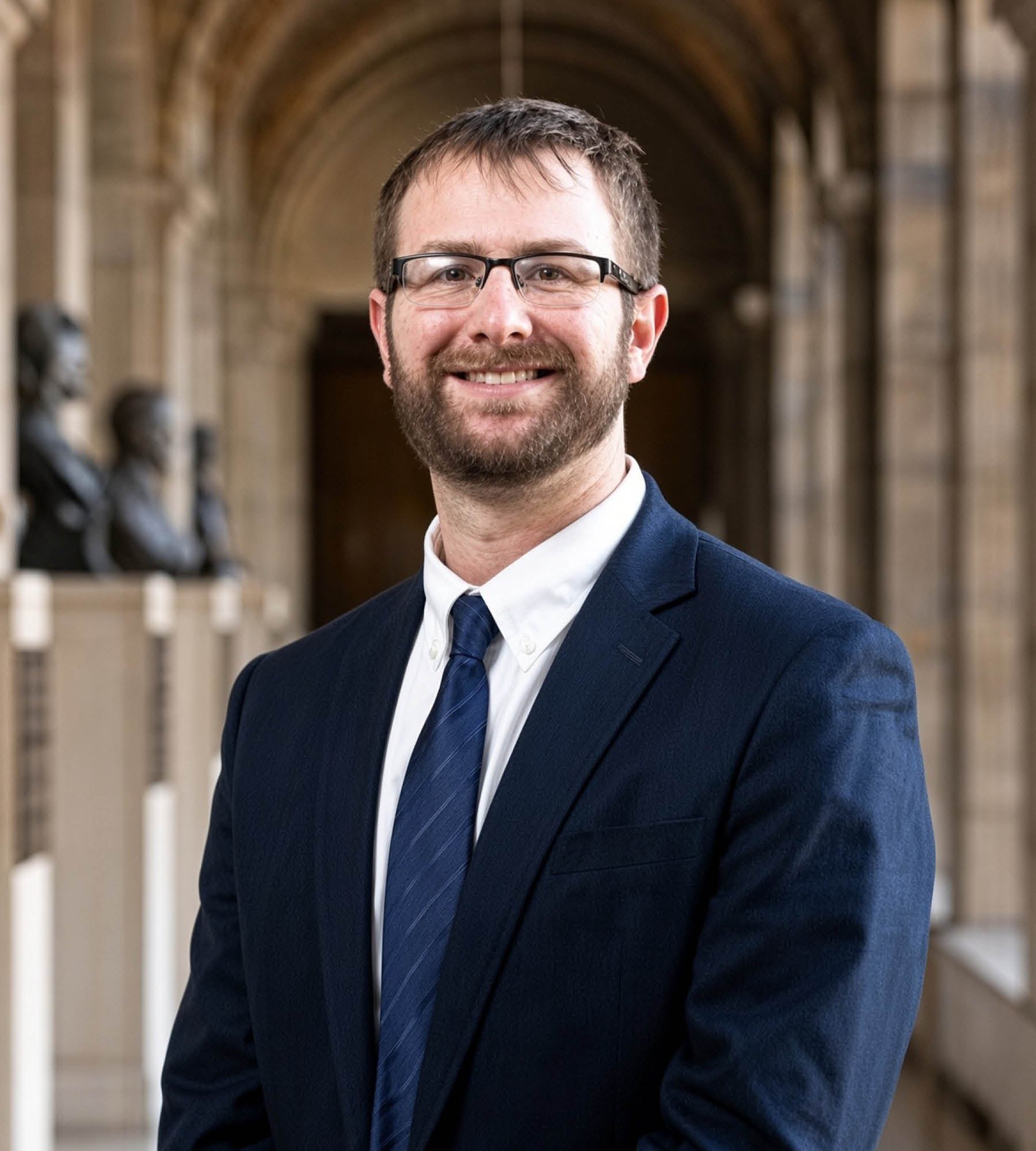
Aiste Dewulf has spent her career navigating the space between cultures and leadership traditions. From her Lithuanian upbringing to more than a decade spent living and working in Japan and now leading GLOBIS Europe as CEO, her perspective on leadership has been shaped as much by human connection as technical expertise.
Across industries and geographies, one idea has consistently informed her approach, though. It’s the Japanese concept of kokorozashi, often described as a deeply personal sense of purpose tied to a broader contribution and long-term impact.
“Once cultivated into conviction, kokorozashi becomes a source of the energy and direction needed for leaders to continue evolving, involving others and navigating continuous growth,” she says.
In conversation with The CEO Magazine, Dewulf reflects on the leadership lessons shaped by her cross-cultural experiences, the growing importance of purpose-driven learning and why human-centered leadership is becoming increasingly critical in a fast-moving world.
You’ve built a career that spans Lithuania, Japan and Europe, working across cultures and industries. What early experiences shaped the way you think about leadership and learning today?
A Lithuanian background is unique. It is a small country that emerged from the Soviet Union only a few decades ago and has continuously sought to position itself meaningfully in the world. Its culture is shaped by discipline, humility, hard work and a strong connection to nature, emphasizing interdependence in decision-making.
I first encountered Japan when I was five years old through exposure to concepts such as ki and Japanese philosophy. Together with later experiences across Europe and Indigenous perspectives in Canada, this shaped my belief that leadership cannot be defined by logic alone. Over time, I’ve come to believe that continuous learning is at the core of sustainable leadership. Pursuing growth wholeheartedly is both our privilege and responsibility as human beings.
You spent more than a decade in Japan and began your career there in a highly technical, operational environment. How did that experience influence your approach to problem-solving and organizational development?
I learned the essence of world-class execution there. In Japan, the more technical and complex a company’s business becomes, the more critical a human-centric approach is.
In both problem-solving and organizational development, success ultimately depends on how people feel, think and act. Strategies and systems can be designed, but nuanced adjustments and true understanding only happen when people are willing to go the extra step.
It was in this highly technical and operational environment that I came to understand that everything, ultimately, comes back to people.
Having worked extensively with both Japanese and multinational corporations, what are the most striking differences you’ve observed in how organizations approach leadership and talent development?
While I see more similarities than differences, I often compare Japanese and Western approaches to leadership development. Western organizations tend to formalize concepts, systems and rules early, whereas Japanese organizations have, historically, relied more on shared values, ethics and principles to maintain alignment.

“Continuous learning is at the core of sustainable leadership. Pursuing growth wholeheartedly is both our privilege and responsibility as human beings.”
This creates fundamentally different leadership dynamics. One emphasizes structure first, while the other emphasizes human responsibility and trust. Rather than viewing these approaches as opposing forces, I believe the future lies in striking a balance between them – combining clarity and agility with long-term, values-driven leadership. This is precisely where I believe Japan has much to offer the world.
You’ve designed and delivered learning programs across Japan, Europe and the Middle East. What’s the key to creating learning experiences that truly resonate across such diverse cultural contexts?
Essence is the key. Culture is an outer layer. The true connection lies underneath. When people connect at that essential level, learning can resonate across any context.
At GLOBIS, we focus on kokorozashi – the sense of personal resolve that goes beyond the individual and connects to broader impact. When participants connect through that shared sense of purpose, cultural differences become a source of richness rather than a barrier, and the learning experience becomes deeply meaningful.
How are you adapting GLOBIS’ Japanese roots and philosophy to meet the needs of European leaders and organizations?
I believe Japanese roots and philosophy have a great deal to offer the world, particularly through management. While most management theories originate from the West, management itself is universal.
Japan has traditionally exported hard skills, such as high-quality products and advanced technologies. However, the underlying philosophy, or the ‘soft side’ that enables these outcomes, has not been shared as widely.
I do not see my role as adapting Japanese philosophy but rather making it visible and understandable. At GLOBIS, we aim to act as a bridge by helping leaders globally discover a more sustainable and purpose-driven approach to business and society.
As a lecturer in Critical Thinking at GLOBIS University, you encourage leaders to examine their own patterns of thinking. Why is this self-awareness so critical in today’s business environment?
Self-awareness is an art. Even when we say ‘self’, we are never truly separate because we are constantly shaped by those we are interdependent with. Self-awareness is, therefore, the ability to sense, evaluate and adjust our own state and responses based on what is happening around us.
The only certainty in today’s business environment is disruption. In this context, self-awareness becomes a defining capability. It enables leaders to remain resilient and focused while building the relationships and networks needed to navigate complexity and continuously realign themselves and others toward what truly matters.
Many organizations still struggle to translate learning into real behavioral change. What separates programs that deliver lasting impact from those that don’t?
The most important element, in my opinion, is kokorozashi, or personal resolve. It is the key factor that determines whether newly acquired skills and broadened perspectives translate into meaningful behavioral change.

“The world needs leaders guided by a strong sense of purpose rooted in long-term impact and contribution beyond individual success.”
Kokorozashi is not easy to define in simple terms. It is personal in the sense that an individual chooses to pursue it, but it also reflects a broader aspiration that goes beyond individual success and contributes to society.
It is inherently long-term in nature and cultivated through deep reflection until it becomes conviction. Once that conviction is formed, it becomes a source of strength and energy that enables people to act, adapt, persist and continue moving forward despite obstacles and uncertainty.
Throughout your career, you’ve worked at the intersection of strategy, culture and capability building. How do you define effective leadership in a world that is increasingly complex and fast-moving?
Leadership in today’s world means leading with a strong sense of purpose while being grounded in long-term principles.
In an increasingly complex and fast-moving environment, effective leaders are those who can balance analytical thinking with deep human understanding and short-term pressures with long-term impact. Their decisions go beyond individual success, aiming instead to create sustainable value through a broader contribution to society.
For me, leadership is not only about making decisions but also about continuously evolving oneself, holding a consistent intention, providing clear direction and enabling others to grow and move forward together with confidence over time.
Looking ahead, what role do you see GLOBIS playing in shaping the next generation of global leaders – and what kind of leaders do you believe the world needs most?
I believe the world needs leaders guided by a strong sense of purpose rooted in long-term impact and contribution beyond individual success. These leaders must be able to handle pressure with confidence while protecting what truly matters: people, values and purpose.
At GLOBIS, we aim to support the development of such leaders while also bringing forward the often less visible ‘soft side’ of Japanese management, including its philosophy, values and human-centered approach to long-term success.
We believe Japan still holds many undiscovered insights and powerful hints for the global business world, and by connecting this perspective with a global context, we hope to contribute meaningfully to the future of leadership.
 RELATED ARTICLES


 Home
Home
 Podcasts
 Covers
 Be Featured
 Community